
Loading, please wait...
LOT 0528
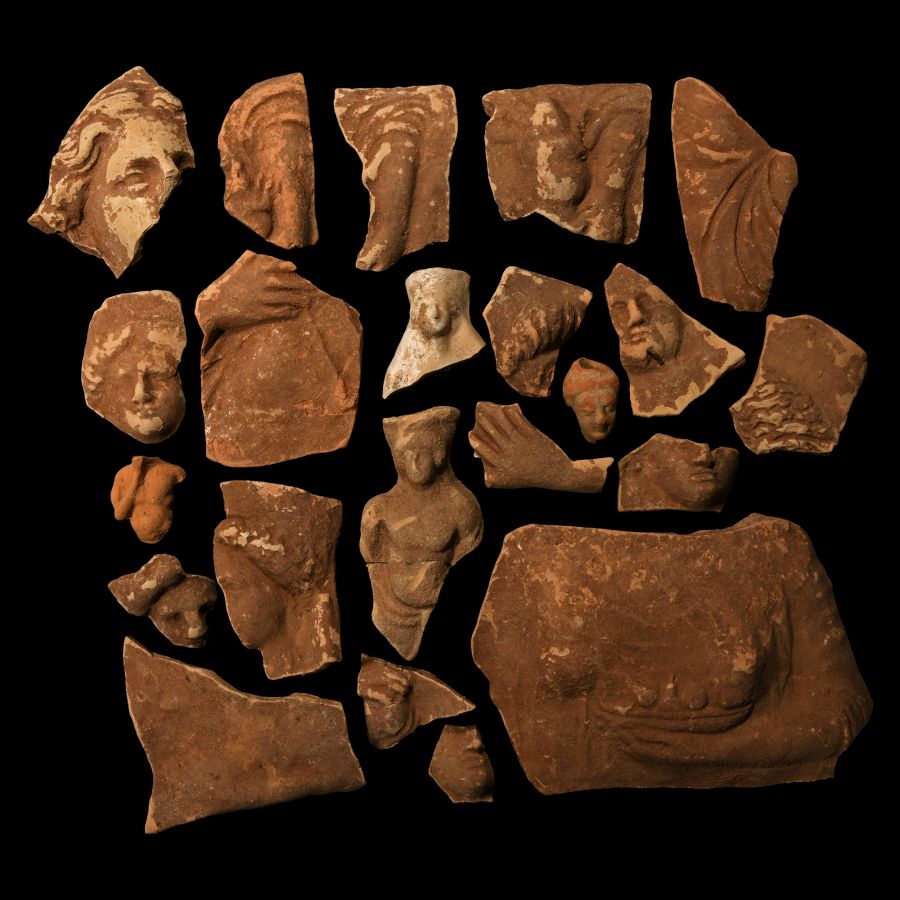
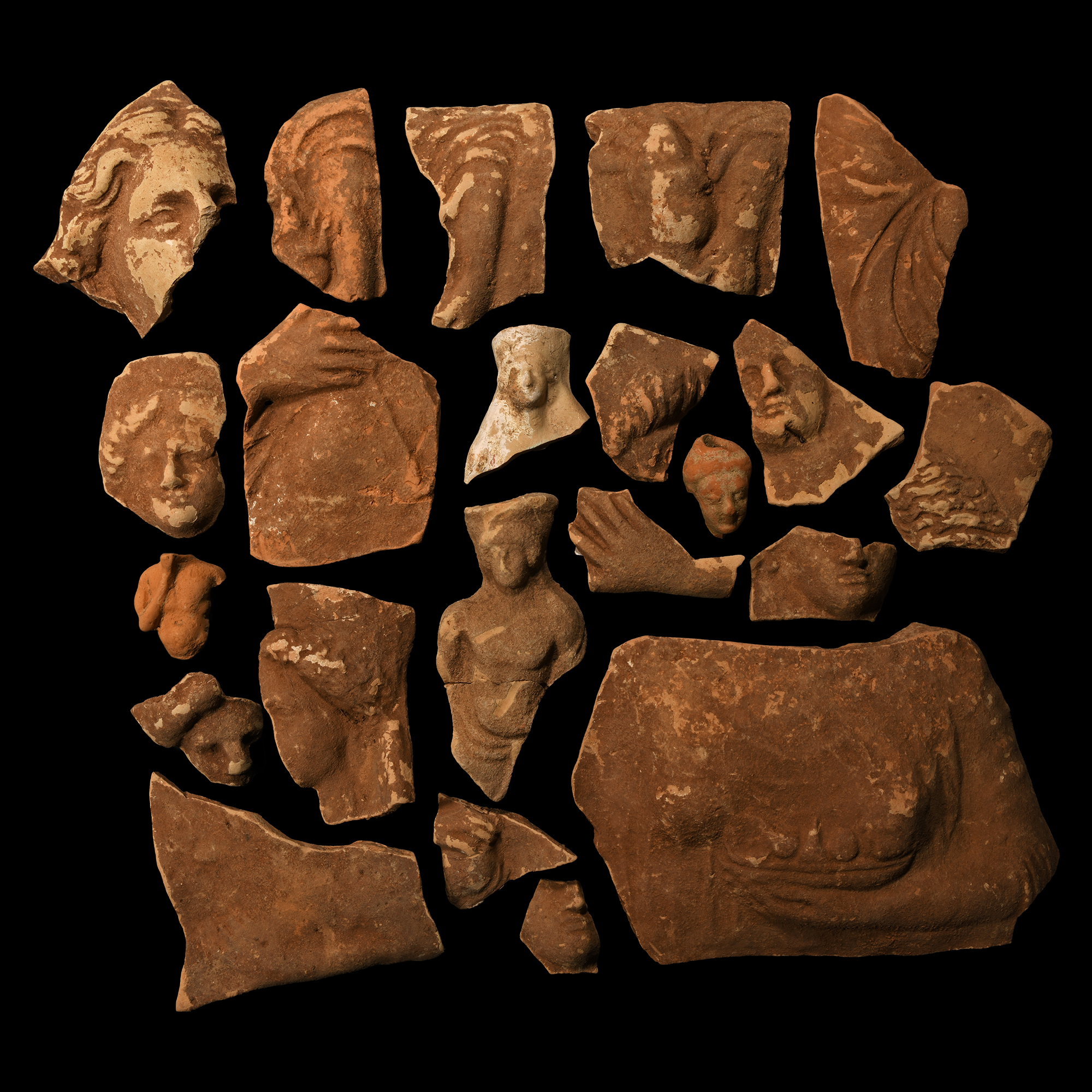
Greek Terracotta Votive Collection
5TH-3RD CENTURY B.C.
2 - 9 7/8 in. (2.2 kg total, 5.2-25 cm).
Comprising twenty-two ritually broken votive fragments, including heads, torsos, and larger pieces with dress and limb detailing. [22]
ProvenanceAcquired on the European art market in the 1970s.
with Herakles Numismatik und Antiquitäten GmbH, München, Germany.
Kept in the UK since 2000s.
TimeLine Auctions follows a vetting process to ensure the authenticity and legality of all items, reinforcing our commitment to integrity and responsible trading. Each antiquity, antique, and coin lot undergoes thorough examination by a vetting committee of at least ten external specialists, professional trade association members, scientists, and archaeologists: Our Vetting Process
AUCTIONS:
TimeLine is a leading auction house specialising in antiquities, ancient art, collectables, natural history, coins, medals, and books. Our auctions offer museums, collectors, historians, and enthusiasts the opportunity to acquire unique and historically significant pieces.
-
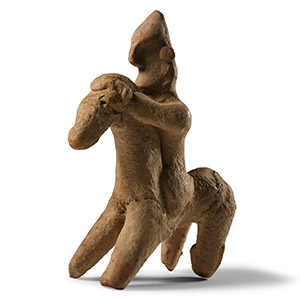
Cypriot Ceramic Horse and Rider Statuette
8th-7th century B.C.Sold for (Inc. bp): £260
Representing a warrior with conical helmet riding his mount, round earrings. 209 grams, 14 cm high
From a collection acquired on the UK art market from various auction houses and collections mostly before 2000. From an important Cambridgeshire estate; thence by descent.
The most popular animals in Cypriot coroplasts of the 8th and 7th centuries B.C. were horses, with or without riders, with long necks and decorated along the whole body like contemporary ceramics. It is worth remembering that the horse, in this period represented a status symbol for the military aristocracy and that bodies of sacrificed horses have been found in royal tombs. -
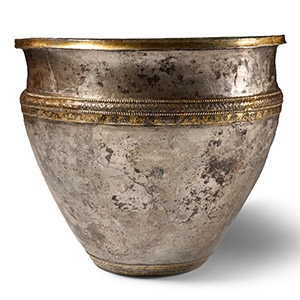
Hellenistic Silver Gilt Piriform Vase
2nd-1st century B.C.Estimate: £7,000 - 9,000 (+bp*)
Opening Bid: £3,889
Broad vase or jar with everted rim, carinated shoulder, gilt bands to the foot, shoulder and rim; some restoration. 472 grams, 13.1 cm
Ex London, UK, gallery, 1971. This lot has been checked against the Interpol Database of stolen works of art and is accompanied by search certificate no.12124-213139. -
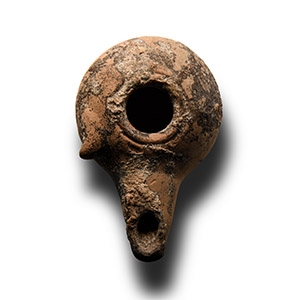
Greek Terracotta Oil Lamp
Late 2nd century B.C.Sold for (Inc. bp): £124
With low, swelling, globular body with unpierced lug on left side, rounded inward-sloping rim marked off by a shallow outer groove; large filling-hole, short rounded nozzle with large oval wick-hole, small raised circular base. 99 grams, 94 mm
Ex P.A. collection, Hertfordshire, UK, 1990s.
According to Howland, this type (33A), attested in the Athenian Agora during a period from the last quarter of the third century B.C. to the third quarter of the second century, is not well defined: ‘Its forms are irregular, not following a definite set pattern’. Specimens are also recorded in Magna Graecia (Paestum).
