
Loading, please wait...
LOT 0102
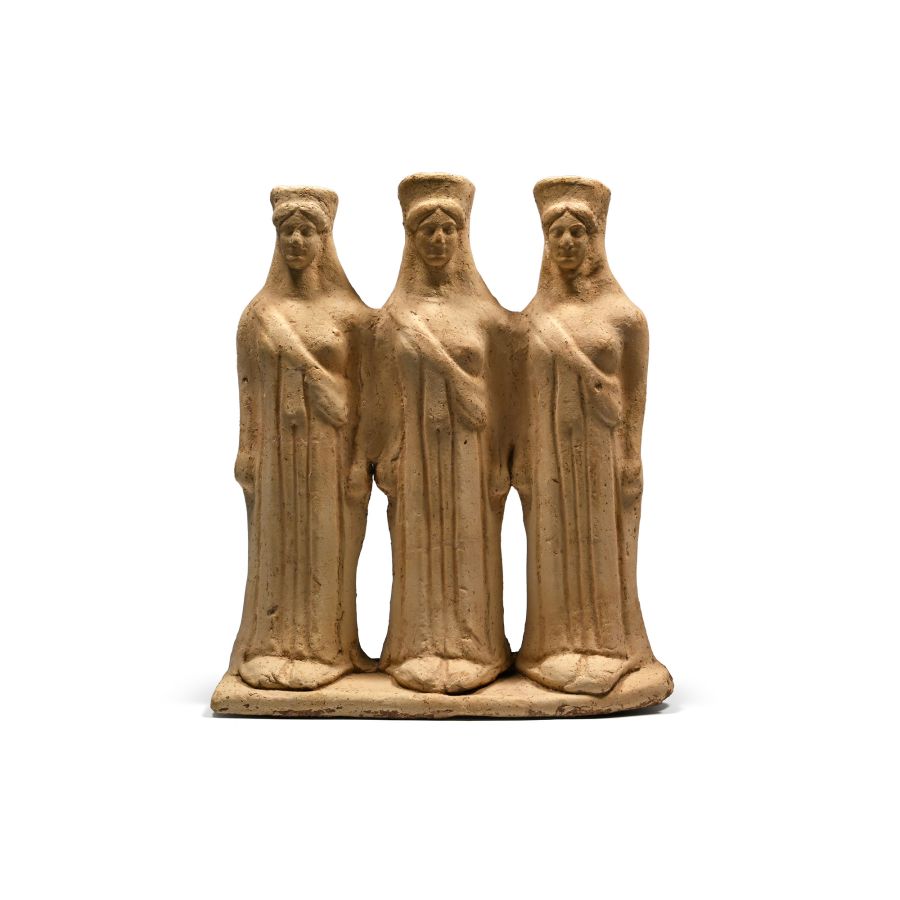
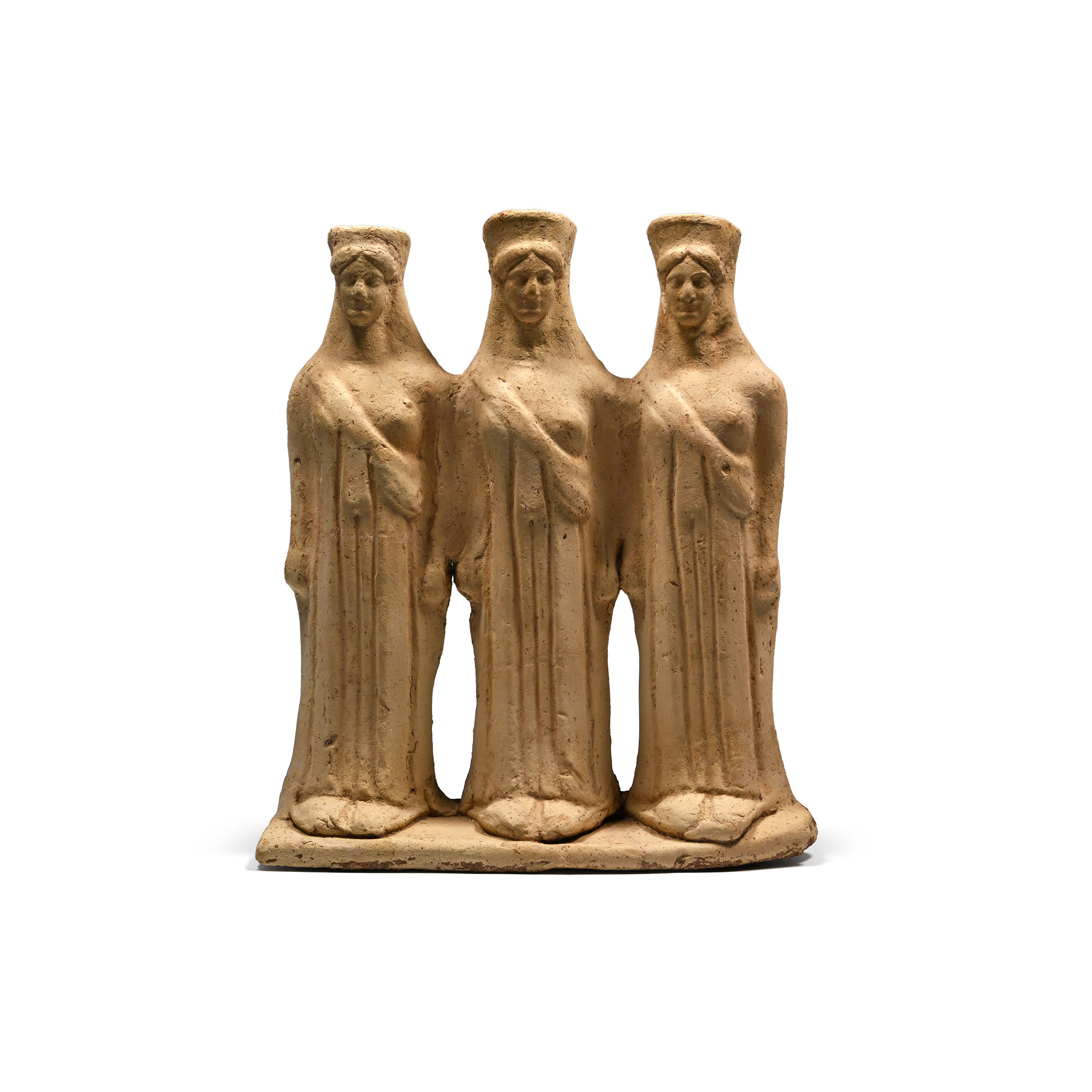
Greek Terracotta Triple Kore
CIRCA 450 B.C.
7 5/8 in. (480 grams, 19.3 cm).
Comprising three standing korai on a rectangular base, each wearing a chiton and a himation draped diagonally from the right shoulder, centrally parted hair topped with a polos crown; hollow back, middle head restored.
ProvenancePrivate Swiss collection, 1990s.
with Galerie Rhéa, Zurich, Switzerland.
This lot has been checked against the Interpol Database of stolen works of art and is accompanied by a search certificate number no.12665-236417.
This lot has been cleared against the Art Loss Register database, and is accompanied by an illustrated lot declaration signed by the Head of the Antiquities Department, Dr Raffaele D'Amato.
Cf. Franz Winter, Die Typen der fig. Terrakotten, Berlin und Stuttgart, 1903, Band III1.
FootnotesKorai (young women) were common votive dedications in the Archaic and Classical world, particularly at sanctuaries of Demeter, Persephone, and Hera. To have a group of maidens, such as this example, is highly unusual, and evokes the ritual dances of marriageable young women in the Greek world.
CONDITIONTimeLine Auctions follows a vetting process to ensure the authenticity and legality of all items, reinforcing our commitment to integrity and responsible trading. Each antiquity, antique, and coin lot undergoes thorough examination by a vetting committee of at least ten external specialists, professional trade association members, scientists, and archaeologists: Our Vetting Process
AUCTIONS:
TimeLine is a leading auction house specialising in antiquities, ancient art, collectables, natural history, coins, medals, and books. Our auctions offer museums, collectors, historians, and enthusiasts the opportunity to acquire unique and historically significant pieces.
-
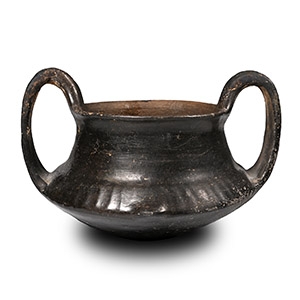
Villanovan Terracotta Two-Handled Bowl
9th-8th century B.C.Sold for (Inc. bp): £390
A squat vessel with a small base, raised neck and slightly projecting rim, carinated shoulder with two projecting bosses and a pair of high strap handles. 221 grams, 13.4 cm wide
Old Basel private collection. Elsa Bloch-Diener, Antike Kunst, Bern, 27 July 1990. Private collection, Bern, Switzerland. This lot is accompanied by an illustrated lot declaration signed by the Head of the Antiquities Department, Dr Raffaele D'Amato. -
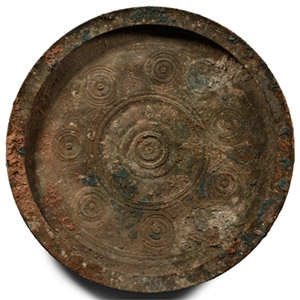
Hellenistic Decorated Bronze Mirror
2nd century B.C.Estimate: £300 - 400 (‡+bp*)
Opening Bid: £135
Discoid with slightly raised rim, low-relief concentric ring detailing to the reverse. 440 grams, 15.1 cm
Acquired in the mid 1995. Private collection, Switzerland, thence by descent. Private collection, since the late 1990s. This lot is accompanied by an illustrated lot declaration signed by the Head of the Antiquities Department, Dr Raffaele D'Amato.
The category of this mirror is similar to those of the Cesnola collection, from Cyprus at the Metropolitan Museum. They consist of heavy circular disks, provided with low cylindrical rims. They were made in pairs, and polished respectively on the recessed and flat sides. The unpolished sides were ornamented with concentric-circle ornaments and concentric mouldings. -
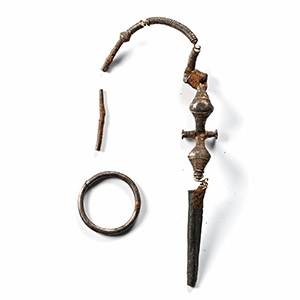
Greek Silver Wire Fibula
6th-4th century B.C.Estimate: £300 - 400 (‡+bp*)
Opening Bid: £135
With coiled spring and lateral lugs; tapering shank and separate ring. 9.11 grams total, 1.8-12.4 cm
Private collection, Switzerland, 1992. Thence by descent. Private collection, since the late 1990s. This lot is accompanied by an illustrated lot declaration signed by the Head of the Antiquities Department, Dr Raffaele D'Amato.
