
Loading, please wait...
LOT 0096
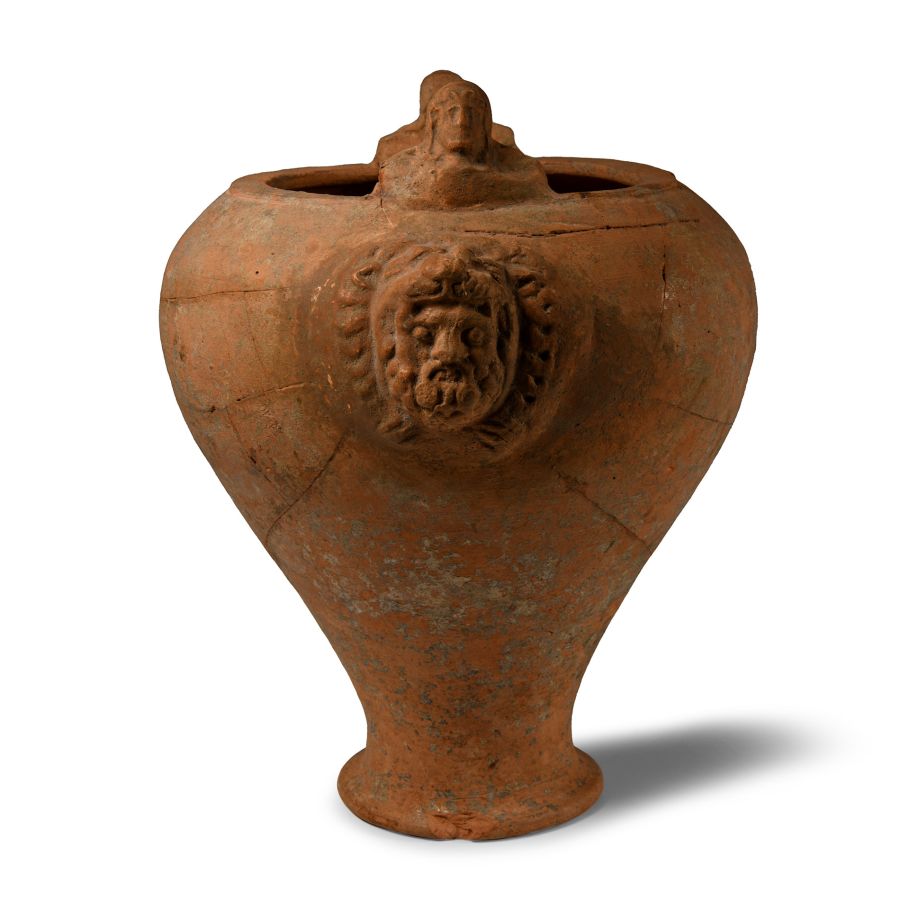
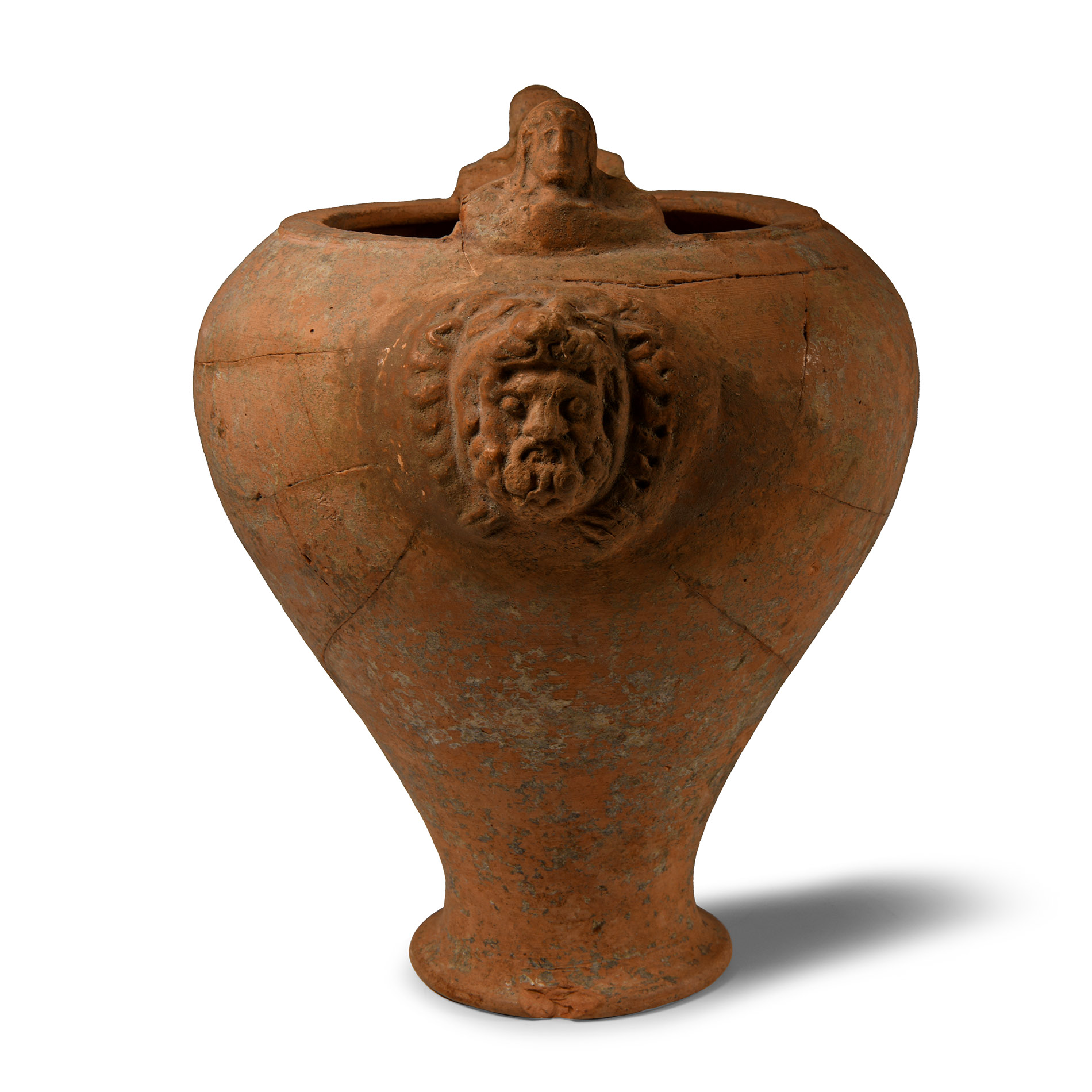
Greek Terracotta Situla
4TH CENTURY B.C.
9 7/8 in. (1.19 kg, 25 cm high).
Piriform in profile with broad shoulder, slightly raised rim, two raised lugs each formed as a male bust with crimped headdress, mask of Hercules below wearing the lionskin hood.
ProvenanceEx Marinescu-Roth-Virzi collection, Switzerland, 1970-1993.
Accompanied by a copy of a photograph of the artefact on display.
TimeLine Auctions follows a vetting process to ensure the authenticity and legality of all items, reinforcing our commitment to integrity and responsible trading. Each antiquity, antique, and coin lot undergoes thorough examination by a vetting committee of at least ten external specialists, professional trade association members, scientists, and archaeologists: Our Vetting Process
AUCTIONS:
TimeLine is a leading auction house specialising in antiquities, ancient art, collectables, natural history, coins, medals, and books. Our auctions offer museums, collectors, historians, and enthusiasts the opportunity to acquire unique and historically significant pieces.
-
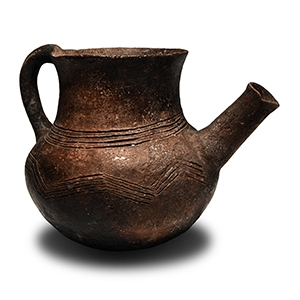
Cypriot Red Burnished Ware Round Bottomed Pouring Vessel
Bronze Age, 2300-1650 B.C.Sold for (Inc. bp): £338
With rounded bottom, broad body and neck, slightly flared rim, strap handle to the rear, spout with flared end, bands of incised lines and zigzags. 347 grams, 13.1 cm
From a collection acquired on the UK art market from various auction houses and collections mostly before 2000. From an important Cambridgeshire estate; thence by descent. -
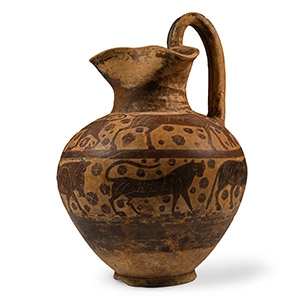
Corinthian Black-Figure Oinochoe
6th century B.C.Estimate: £4,000 - 6,000 (‡+bp*)
Opening Bid: £2,000
Decorated with two superimposed friezes of animals including panthers, bulls and grazing ibexes; flowers and rosettes in the field; restored. 675 grams, 26.5 cm
Private collection, Old City of Jaffa, Israel. with Archeological Center, Tel Aviv, Israel. Accompanied by a thermoluminescence analysis report no.N124d54 from Oxford Authentication. -
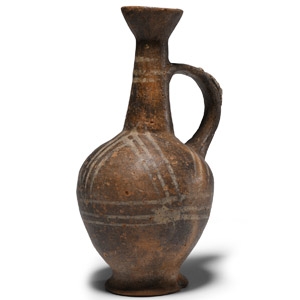
Cypriot Brown Burnished Ware 'Bilbil' Vessel
Late Bronze Age II, 1400-1200 B.C.Sold for (Inc. bp): £260
Unglazed tall juglet (bilbil) with flared foot, piriform body, tapering neck and flared mouth. strap handle; bands of bilinear ornament to the shoulder and neck. 103 grams, 13.7 cm
From a collection acquired on the UK art market from various auction houses and collections mostly before 2000. From an important Cambridgeshire estate; thence by descent.
