
Loading, please wait...
LOT 0532
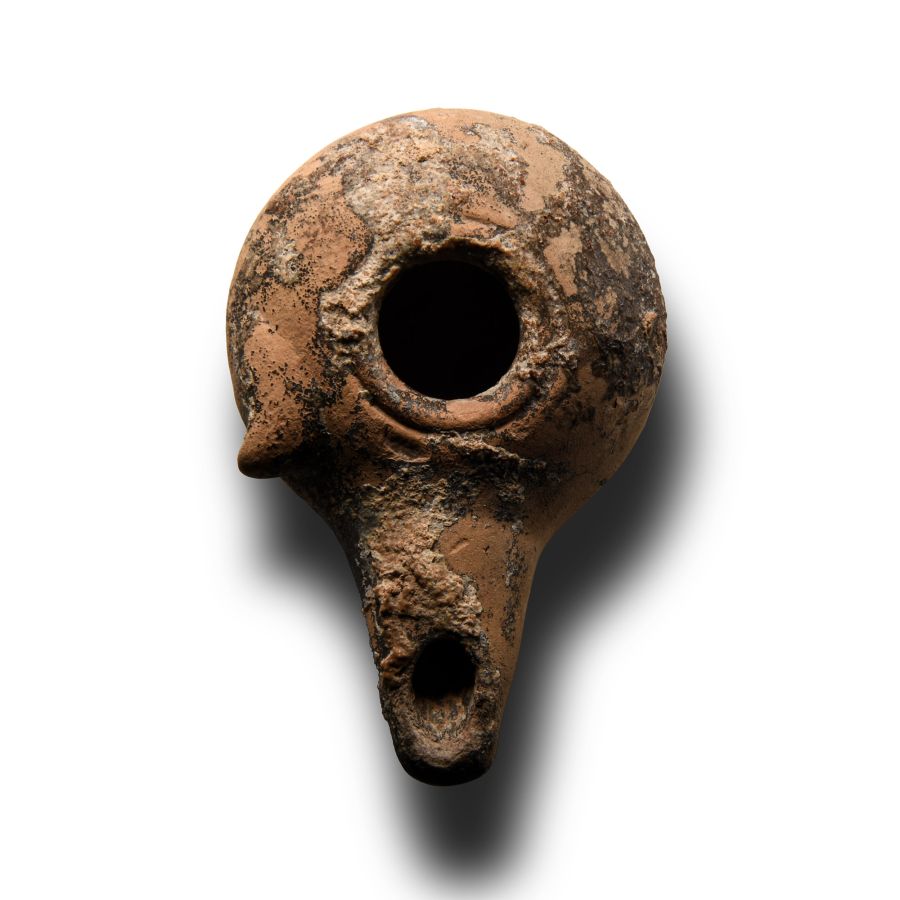
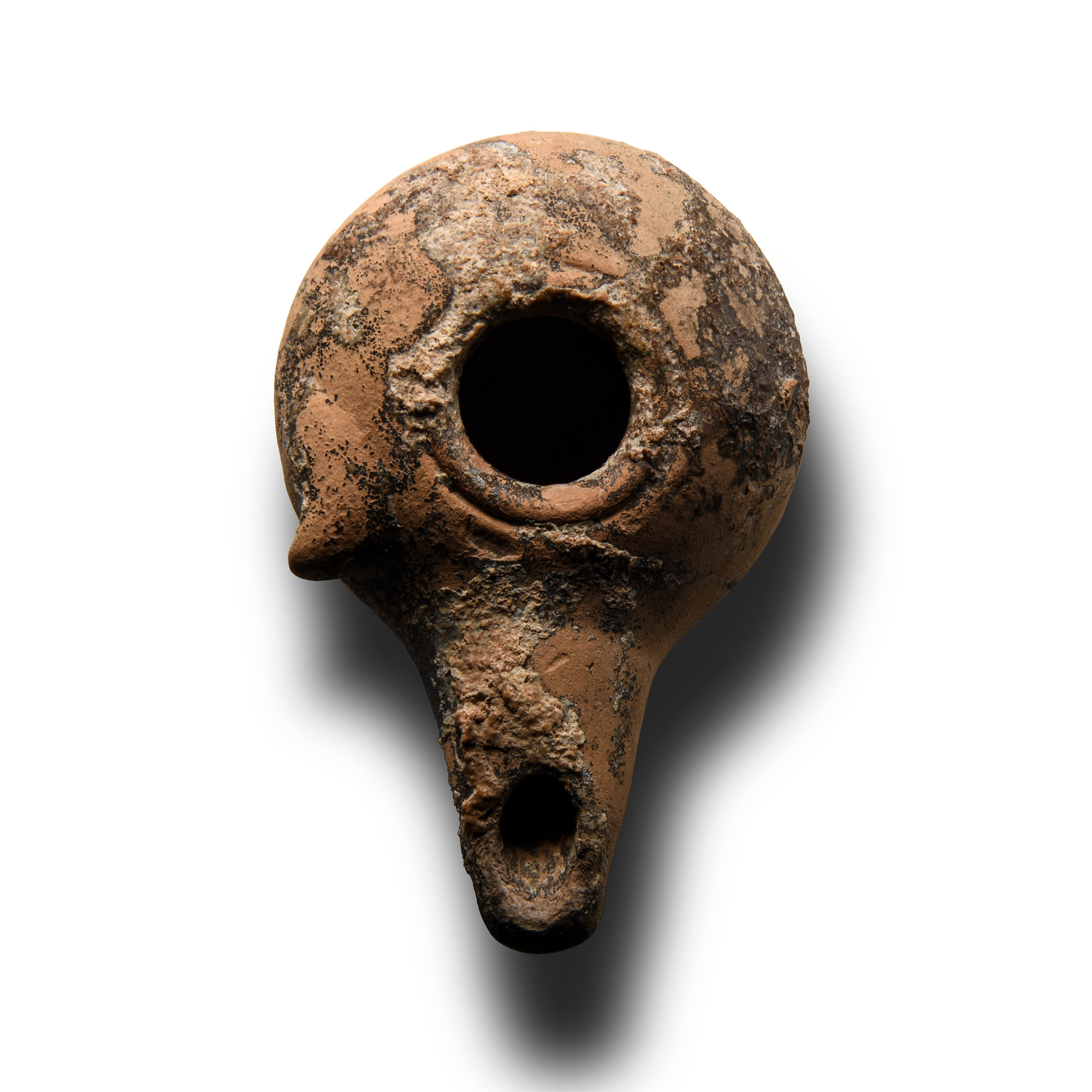
Greek Terracotta Oil Lamp
LATE 2ND CENTURY B.C.
3 3/4 in. (99 grams, 94 mm).
With low, swelling, globular body with unpierced lug on left side, rounded inward-sloping rim marked off by a shallow outer groove; large filling-hole, short rounded nozzle with large oval wick-hole, small raised circular base. [No Reserve]
ProvenanceEx P.A. collection, Hertfordshire, UK, 1990s.
LiteratureSee Bussière, J., Lindros Wohl, B., Ancient Lamps in the J. Paul Getty Museum, Malibu, 2017, no.16, p.18.
FootnotesAccording to Howland, this type (33A), attested in the Athenian Agora during a period from the last quarter of the third century B.C. to the third quarter of the second century, is not well defined: ‘Its forms are irregular, not following a definite set pattern’. Specimens are also recorded in Magna Graecia (Paestum).
CONDITIONTimeLine Auctions follows a vetting process to ensure the authenticity and legality of all items, reinforcing our commitment to integrity and responsible trading. Each antiquity, antique, and coin lot undergoes thorough examination by a vetting committee of at least ten external specialists, professional trade association members, scientists, and archaeologists: Our Vetting Process
AUCTIONS:
TimeLine is a leading auction house specialising in antiquities, ancient art, collectables, natural history, coins, medals, and books. Our auctions offer museums, collectors, historians, and enthusiasts the opportunity to acquire unique and historically significant pieces.
-
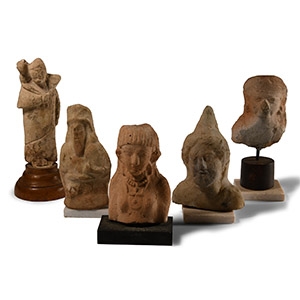
Phoenician Terracotta Figure Collection
Circa 6th-5th century B.C.Sold for (Inc. bp): £1,040
Including standing figure with a lamb across his shoulders, female with disc pendant between her breasts, bearded male bust with pointed headgear and other types, each on a custom-made stand. 690 grams total, 10.5-14.5 cm including stand
From a collection acquired on the UK art market from various auction houses and collections mostly before 2000. From an important Cambridgeshire estate; thence by descent. -
.jpg)
Graeco-Parthian Bronze Mirror with Animals
2nd-1st century B.C.Sold for (Inc. bp): £585
Discoid flat mirror with piriform attachment bracket developing to an addorsed pair of animal heads, equine but with a single curved plume or horn between the ears; mounted on a custom-made stand. 516 grams total, 16.6 cm
UK private collection before 2000. UK art market. Property of a London gentleman. -
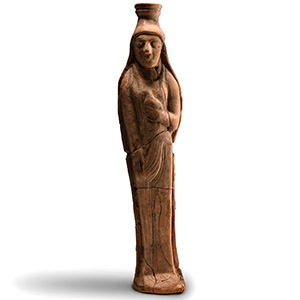
Archaic Greek Figural Alabastron
6th century B.C.Estimate: £800 - 1,000 (‡+bp*)
Opening Bid: £400
The free-standing perfume vase modelled as a standing and draped female figure, the neck and mouth of the vessel possibly formed as a modius worn on her head, holding what is possibly a dove to her chest; moulded and painted detailing to her face and garments; heavily repaired. 269 grams, 22 cm high
Acquired in Europe before 2001.
