
Loading, please wait...
LOT 0519
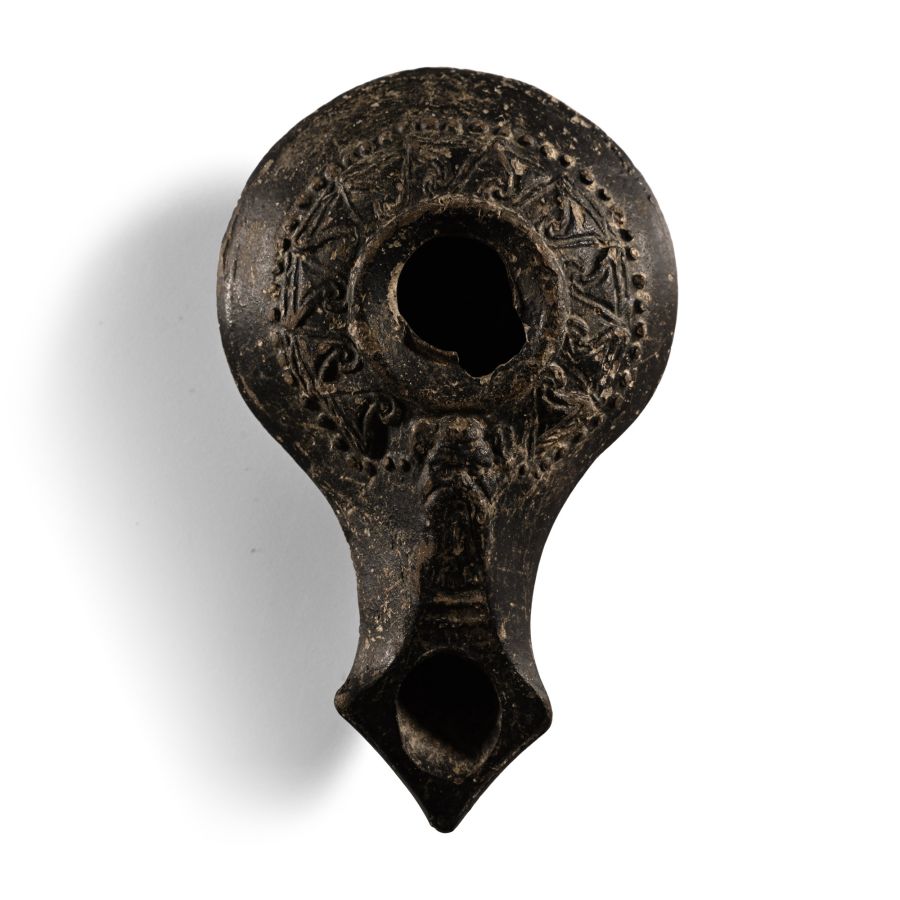
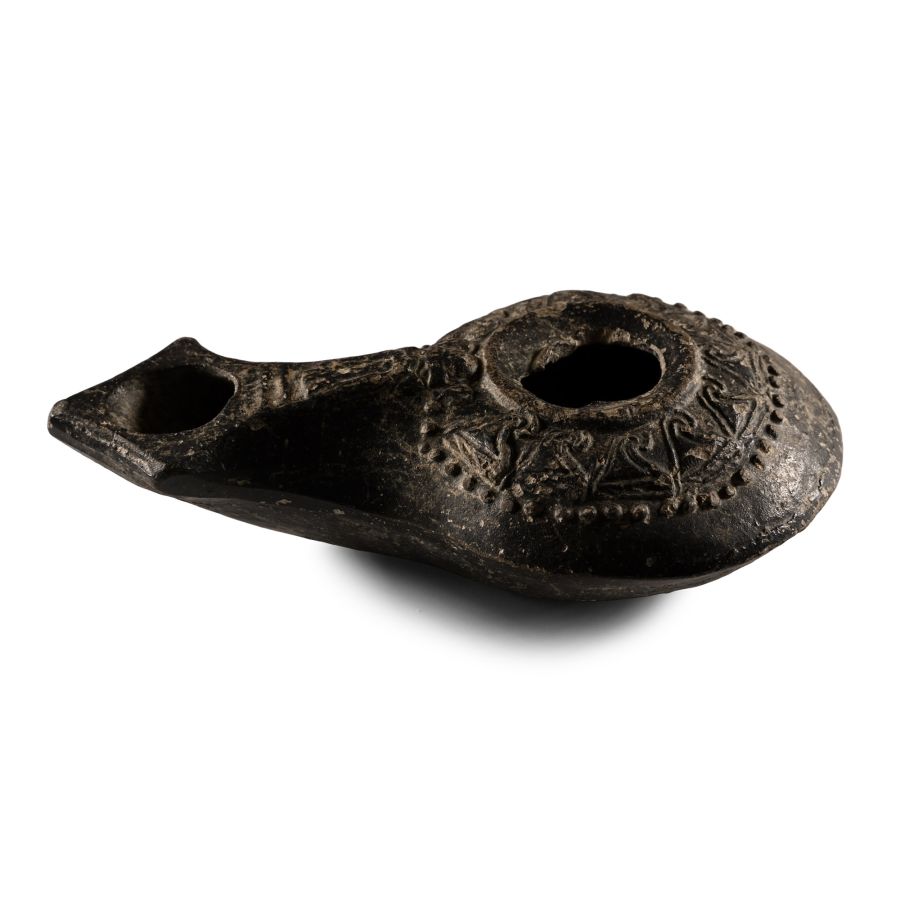
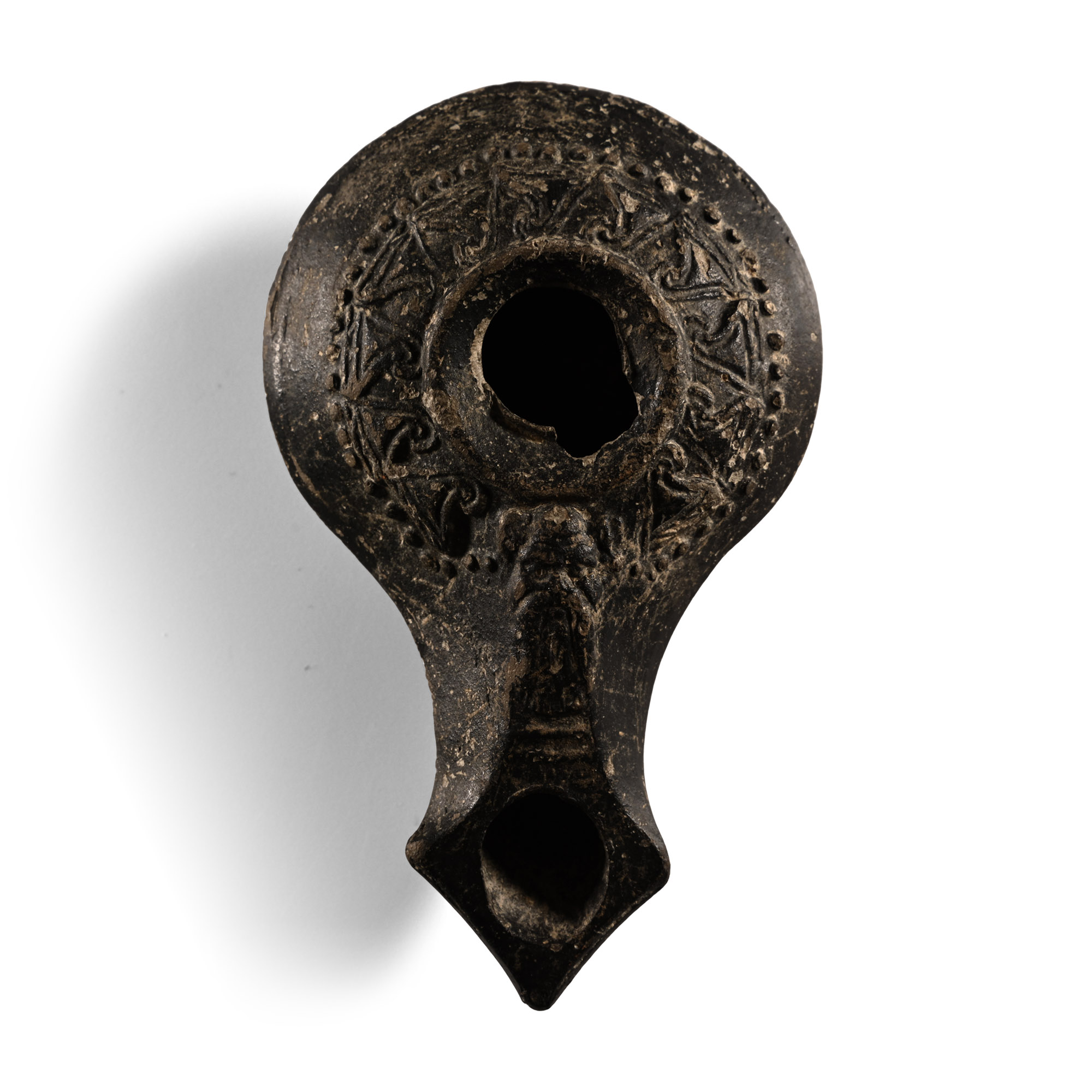
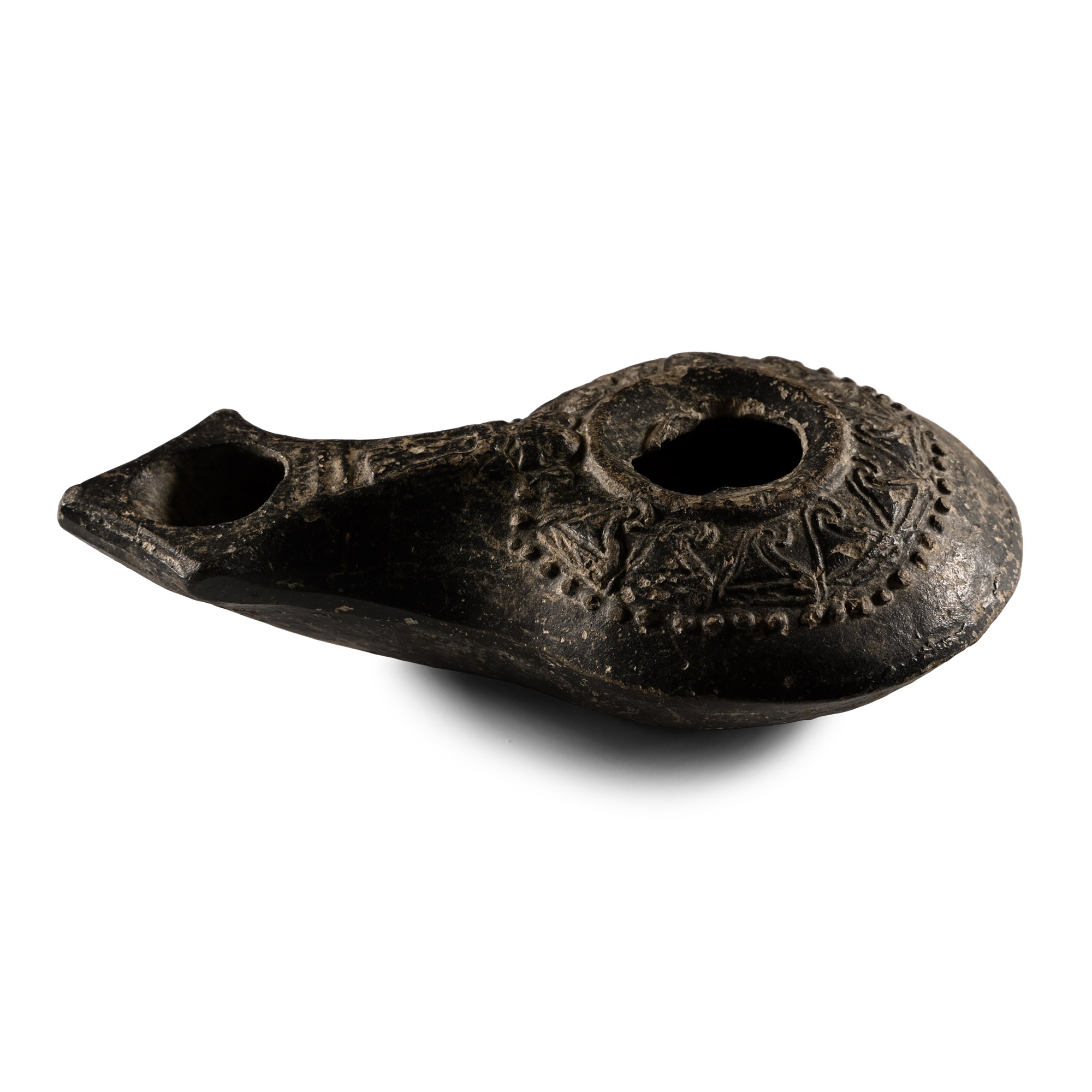
Greek Terracotta Oil Lamp with Silenus
4TH CENTURY B.C.
3 7/8 in. (31.8 grams, 99 mm).
With circular body and raised rim, round central filling-hole with wave-pattern to the discus; long nozzle with lozengiform finial; mask of Silenus to the neck.
ProvenanceAcquired on the German art market, 1989-1995.
with The Museum Gallery, 19 Bury Place, London, WC1, UK, 1998-2003.
Property of a London based academic, 2003 to present.
This lot is accompanied by an illustrated lot declaration signed by the Head of the Antiquities Department, Dr Raffaele D'Amato.
See Bussière, J., Lindros Wohl, B., Ancient Lamps in the J. Paul Getty Museum, Malibu, 2017, no.16, p.18, for type.
CONDITIONTimeLine Auctions follows a vetting process to ensure the authenticity and legality of all items, reinforcing our commitment to integrity and responsible trading. Each antiquity, antique, and coin lot undergoes thorough examination by a vetting committee of at least ten external specialists, professional trade association members, scientists, and archaeologists: Our Vetting Process
AUCTIONS:
TimeLine is a leading auction house specialising in antiquities, ancient art, collectables, natural history, coins, medals, and books. Our auctions offer museums, collectors, historians, and enthusiasts the opportunity to acquire unique and historically significant pieces.
LOT 0519
Greek Terracotta Oil Lamp with Silenus
Estimate £400 - 600€460 - 700 (for guidance only)$540 - 810 (for guidance only)
-
Greek Bronze Bird Figure
8th century B.C.Estimate: £100 - 140 (‡+bp*)
Opening Bid: £45
Amuletic pendant formed as a perching bird with long neck and stub legs, loop to the back. 21.9 grams, 42 mm
Acquired in the mid 1980s-1990s. Private collection, Switzerland, thence by descent. Private collection, since the late 1990s. This lot is accompanied by an illustrated lot declaration signed by the Head of the Antiquities Department, Dr Raffaele D'Amato. -
Greek Terracotta Model Fruit and Vegetable Group
4th century B.C.Estimate: £1,000 - 1,400 (‡+bp*)
Opening Bid: £500
Including pomegranates, apples and a gourd. 989 grams total, 4.5-18.7 cm
Estate of Mr Bruno Fellinger (1926-2016), Küsnacht, Switzerland. with Galerie Rhéa, Zurich, Switzerland. This lot is accompanied by an illustrated lot declaration signed by the Head of the Antiquities Department, Dr Raffaele D'Amato. -
.jpg)
Greek Terracotta Arm Pair
5th-3rd century B.C.Sold for (Inc. bp): £13
Comprising two arms modelled in the round with finger detailing. 17 grams total, 56-64 mm
Ex German art market, 2000s. Acquired from an EU collector living in London. From the collection of a Surrey, UK, gentleman. This lot is accompanied by an illustrated lot declaration signed by the Head of the Antiquities Department, Dr Raffaele D'Amato.
