
Loading, please wait...
LOT 0108
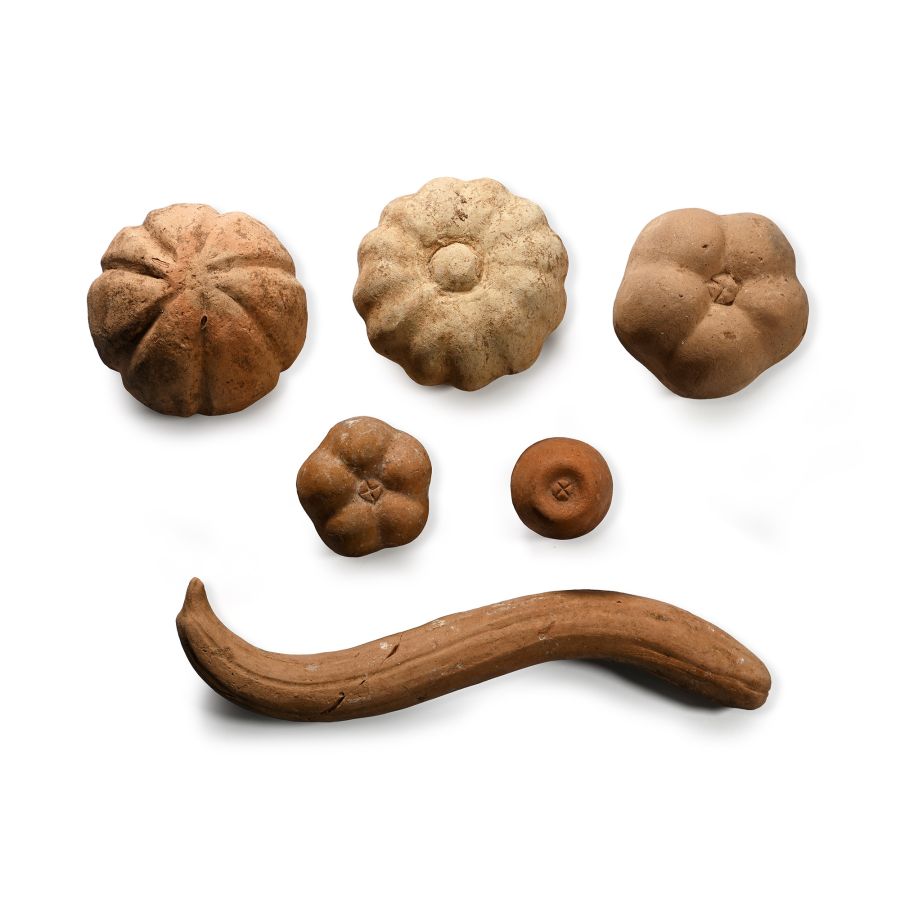
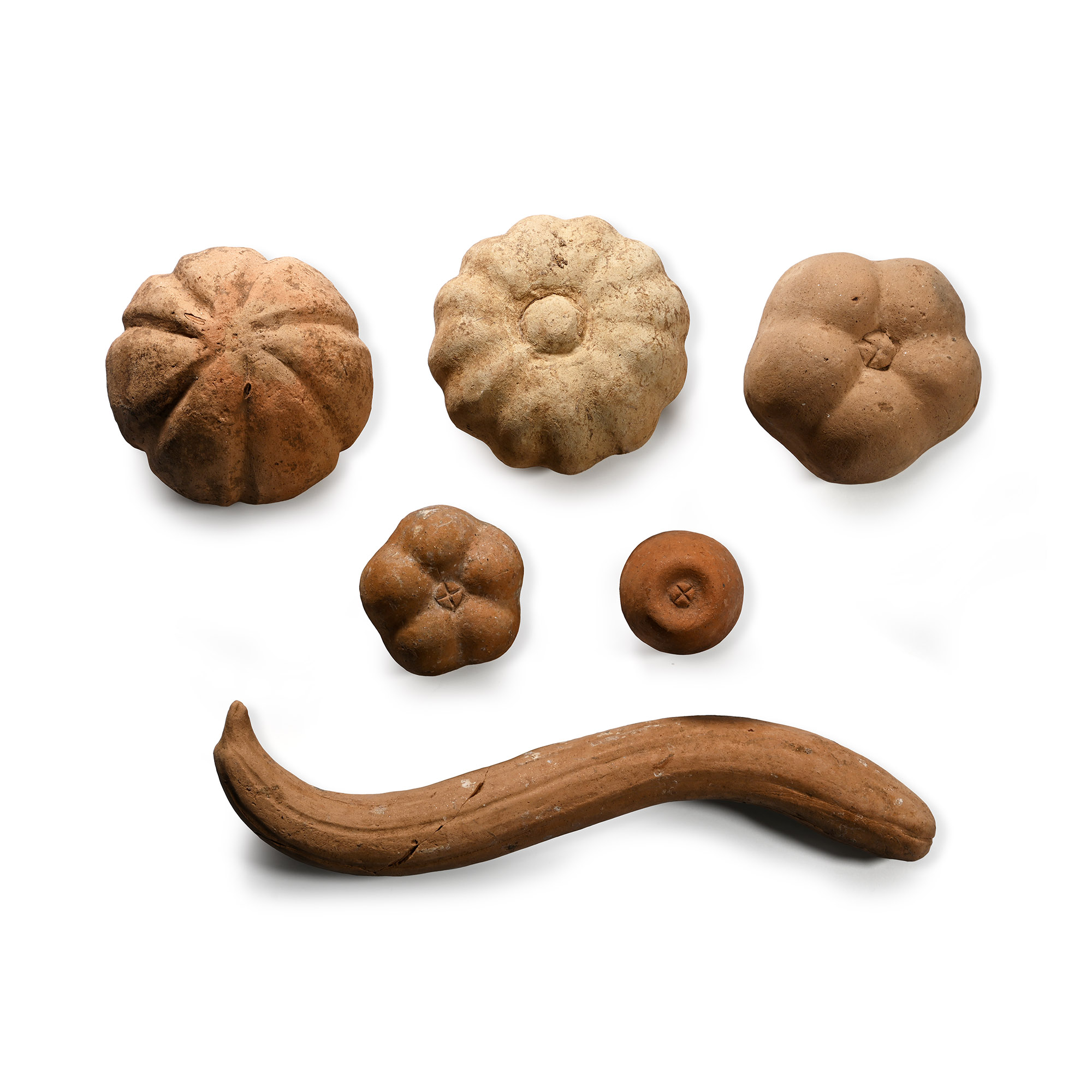
Greek Terracotta Model Fruit and Vegetable Group
4TH CENTURY B.C.
1 3/4 - 7 3/8 in. (989 grams total, 4.5-18.7 cm).
Including pomegranates, apples and a gourd. [6]
ProvenanceEstate of Mr Bruno Fellinger (1926-2016), Küsnacht, Switzerland.
with Galerie Rhéa, Zurich, Switzerland.
This lot is accompanied by an illustrated lot declaration signed by the Head of the Antiquities Department, Dr Raffaele D'Amato.
TimeLine Auctions follows a vetting process to ensure the authenticity and legality of all items, reinforcing our commitment to integrity and responsible trading. Each antiquity, antique, and coin lot undergoes thorough examination by a vetting committee of at least ten external specialists, professional trade association members, scientists, and archaeologists: Our Vetting Process
AUCTIONS:
TimeLine is a leading auction house specialising in antiquities, ancient art, collectables, natural history, coins, medals, and books. Our auctions offer museums, collectors, historians, and enthusiasts the opportunity to acquire unique and historically significant pieces.
LOT 0108
Greek Terracotta Model Fruit and Vegetable Group
Estimate £1,000 - 1,400€1,160 - 1,620 (for guidance only)$1,350 - 1,890 (for guidance only)
-
.jpg)
Greek Silver Ring for Skythos
Circa 5th century B.C.Sold for (Inc. bp): £3,120
Ellipsoid bezel with incuse figure of a running horse, Greek text 'ΣΚΥΘΟΑΓΑΘΗ' for 'the sake of Skythos'. 7.57 grams, 25.17 mm overall, 20.68 mm internal diameter (approximate size British R 1/2, USA 8 3/4, Europe 19.38, Japan 18)
Acquired in the mid 1980s-1990s. Private collection, Switzerland, thence by descent. Private collection, since the late 1990s. This lot has been cleared against the Art Loss Register database, and is accompanied by an illustrated lot declaration signed by the Head of the Antiquities Department, Dr Raffaele D'Amato. -
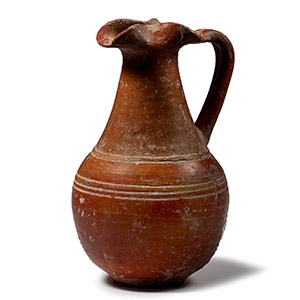
Phoenician Terracotta Jug with Handle
8th-7th century B.C.Estimate: £700 - 900 (‡+bp*)
Opening Bid: £350
Globular body decorated with circumferential banding, low foot, conical neck with pinched spout, strap handle to the rear. 395 grams, 18.5 cm
Acquired in the mid 1980s-1990s. Private collection, Switzerland, thence by descent. Private collection, since the late 1990s. This lot is accompanied by an illustrated lot declaration signed by the Head of the Antiquities Department, Dr Raffaele D'Amato. -
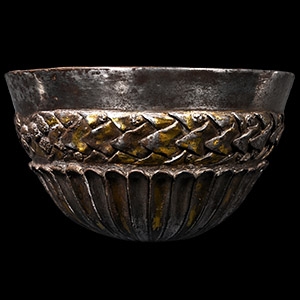
Hellenistic Silver-Gilt Drinking Cup
2nd-1st century B.C.Sold for (Inc. bp): £13,000
A heavy hemispherical vessel with simulated braid beneath the rim and Hercules' knot; the body with lotus-flower ornament. 508 grams, 10.9 cm
Acquired before 1983. Ex London gallery, 1990s. This lot has been checked against the Interpol Database of stolen works of art and is accompanied by a search certificate number no.12661-236259. This lot has been cleared against the Art Loss Register database, and is accompanied by an illustrated lot declaration signed by the Head of the Antiquities Department, Dr Raffaele D'Amato.
