
Loading, please wait...
LOT 0637
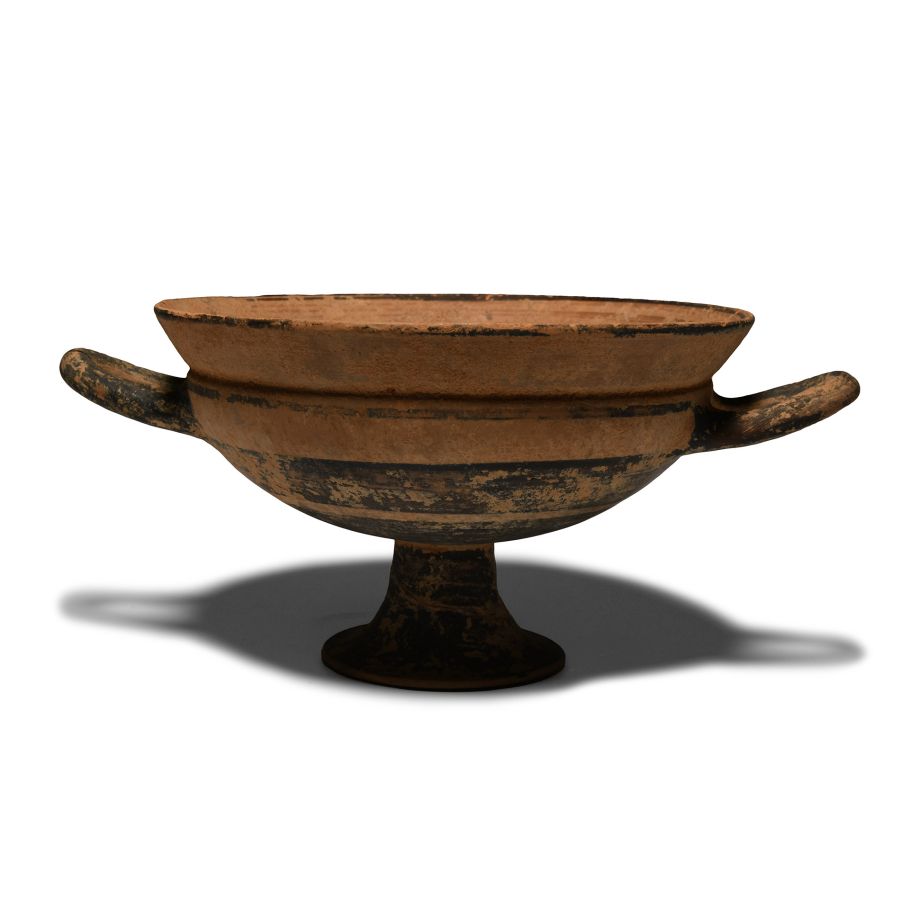
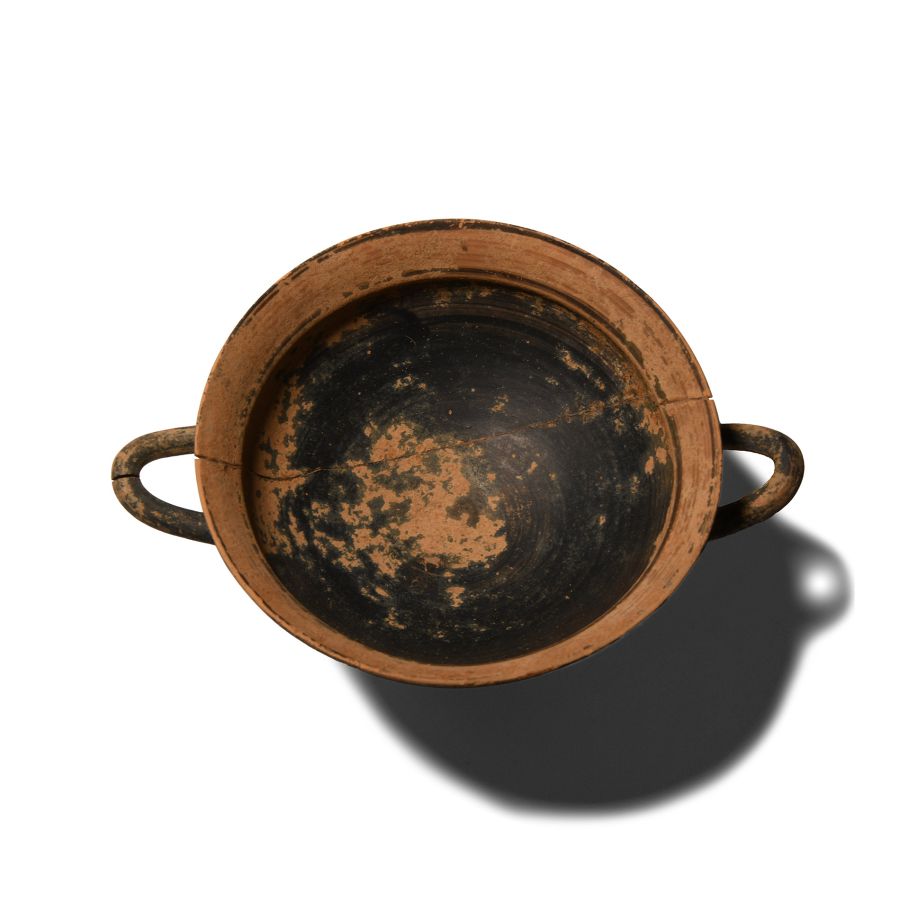
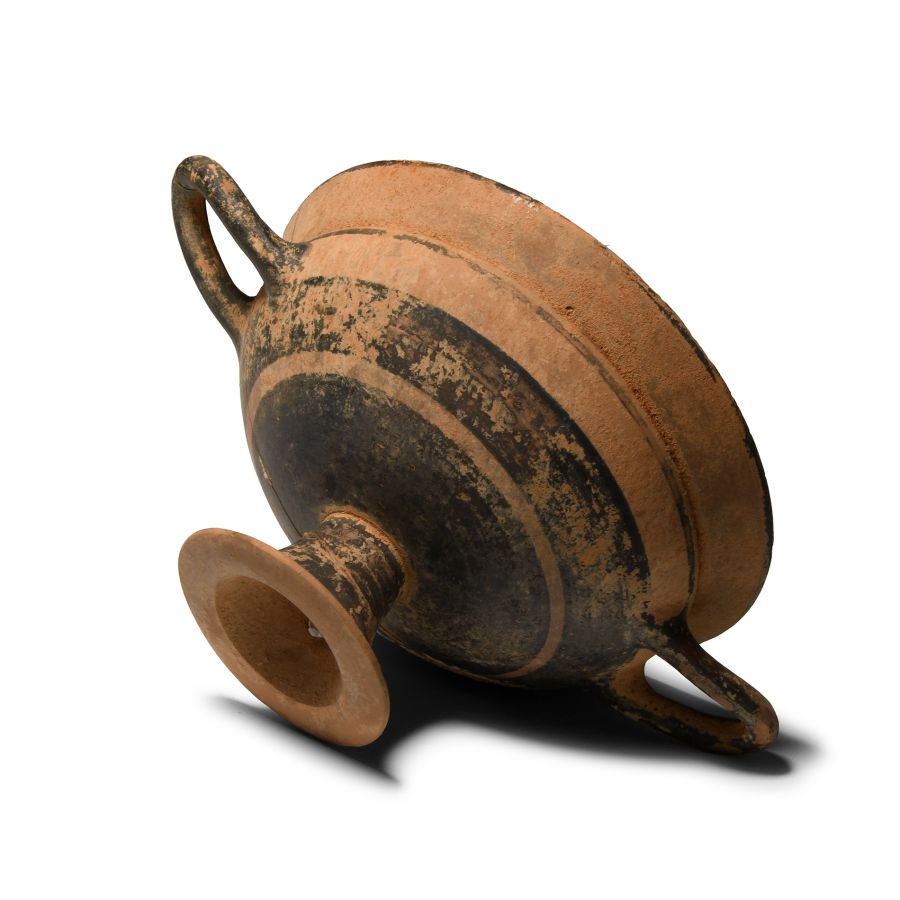
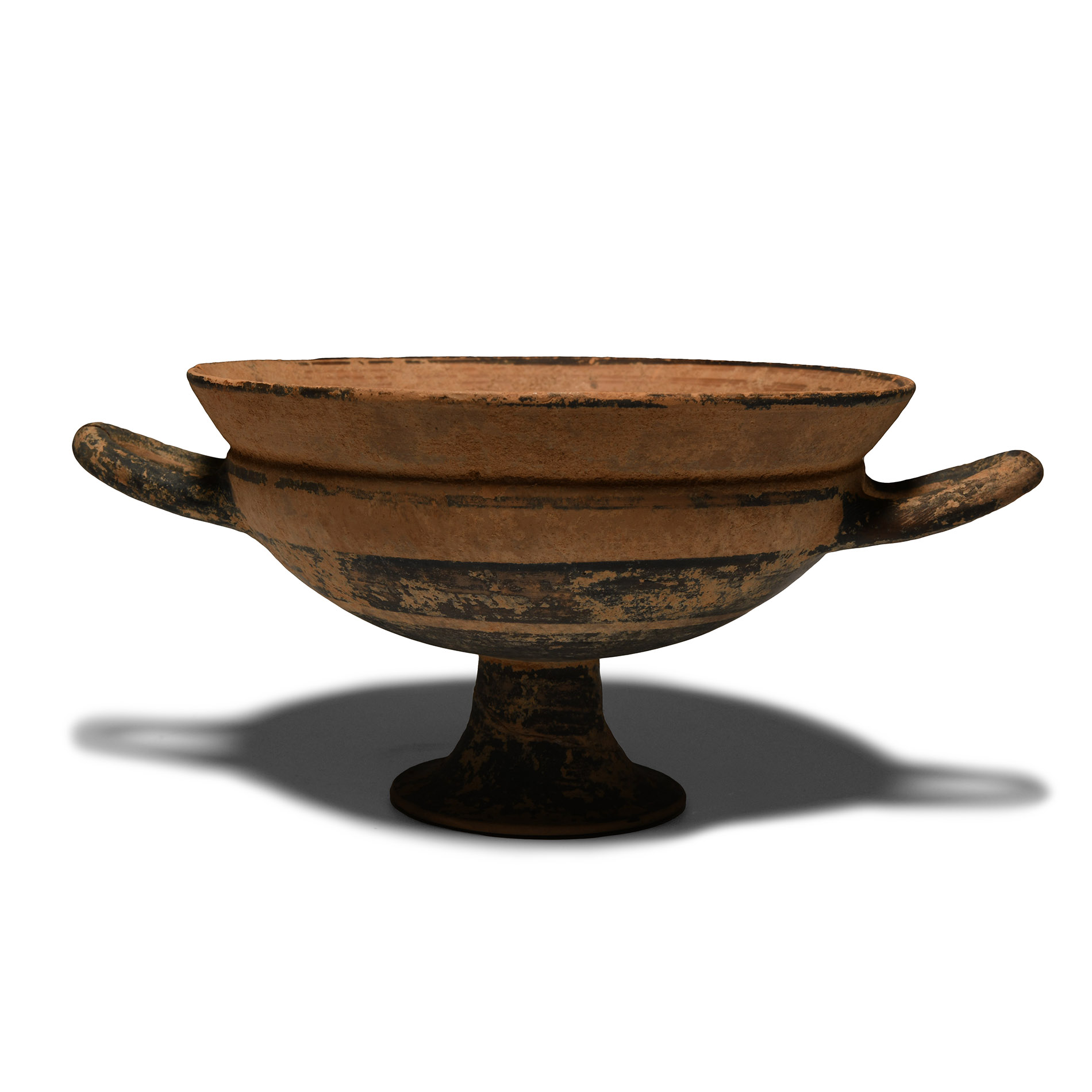
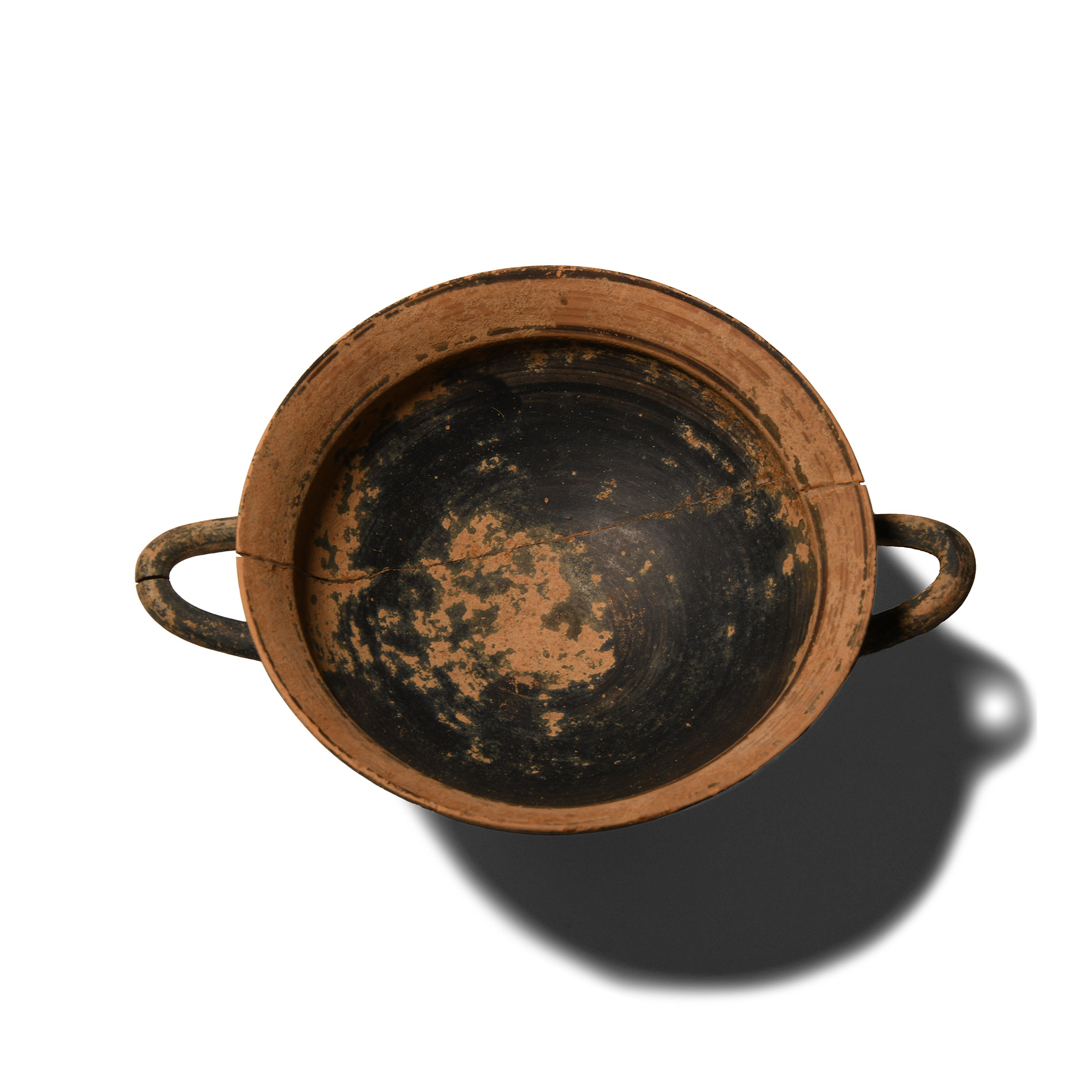
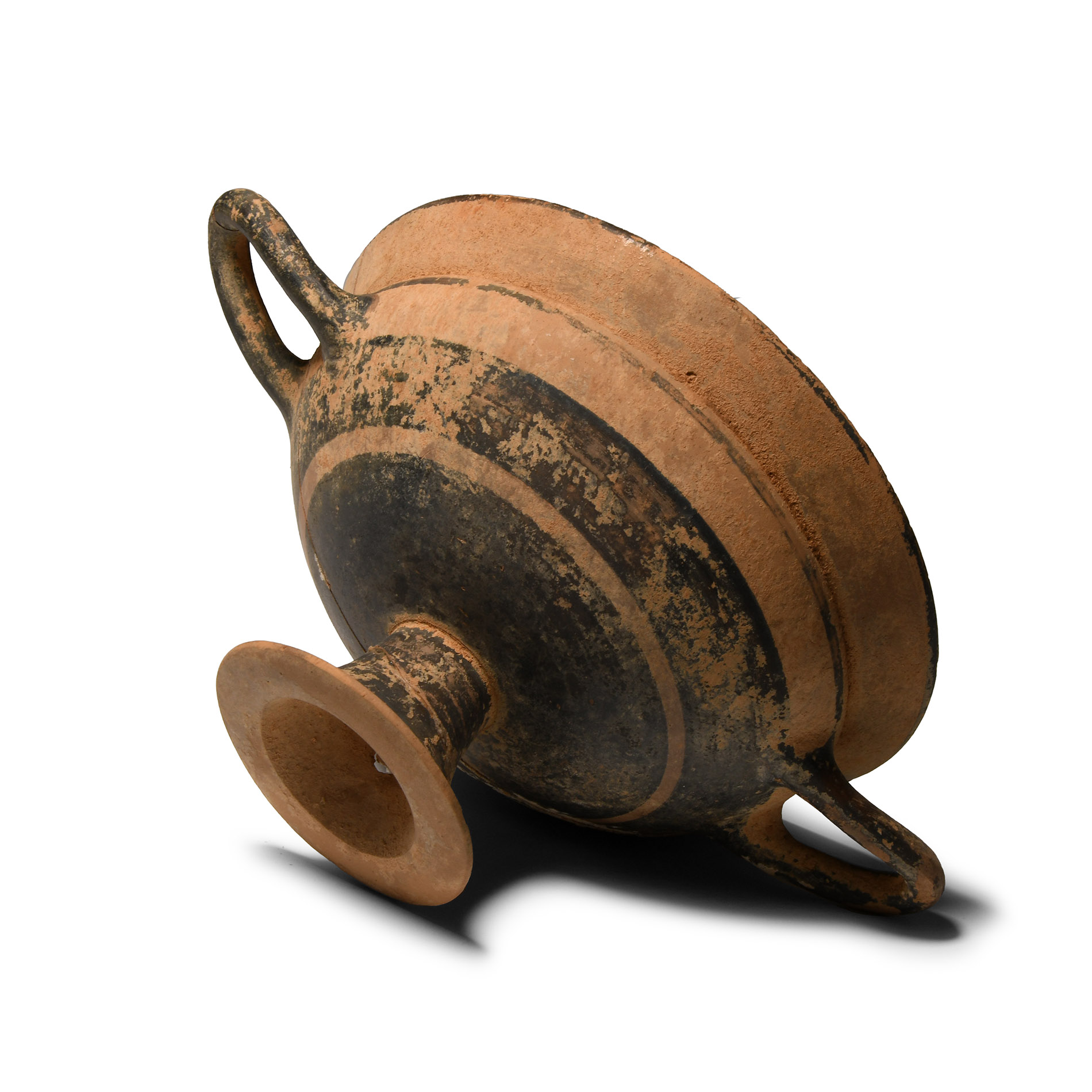
Greek Terracotta Kylix
6TH CENTURY B.C.
8 1/4 in. (249 grams, 21 cm wide).
With trumpet-shaped foot, broad bowl with carinated profile, flared rim, two lateral D-shaped handles; horizontal painted bands; repaired.
ProvenancePrivate collection of Mr S.A., Switzerland, 1990s, thence by descent.
LiteratureCf. similar item in the British Museum, London, under accession no.1839,0214.80, for type; similar black figure kylix in the British Museum, inventory no.1854,0519.2, in Smith, A.H., Pryce, F.N., Corpus Vasorum Antiquorum British Museum 2 / Corpus Vasorum Antiquorum: Great Britain 2, British Museum 2, London, 1926, III H e Pl. 12, 6.
CONDITIONTimeLine Auctions follows a vetting process to ensure the authenticity and legality of all items, reinforcing our commitment to integrity and responsible trading. Each antiquity, antique, and coin lot undergoes thorough examination by a vetting committee of at least ten external specialists, professional trade association members, scientists, and archaeologists: Our Vetting Process
AUCTIONS:
TimeLine is a leading auction house specialising in antiquities, ancient art, collectables, natural history, coins, medals, and books. Our auctions offer museums, collectors, historians, and enthusiasts the opportunity to acquire unique and historically significant pieces.
LOT 0637
Greek Terracotta Kylix
Estimate £400 - 600€460 - 700 (for guidance only)$540 - 810 (for guidance only)
-
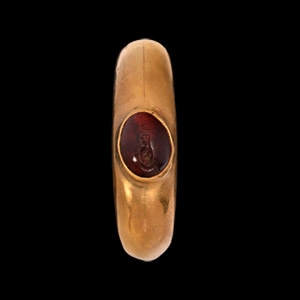
Hellenistic Osiris Canopus Gemstone in Gold Ring
2nd century B.C.Sold for (Inc. bp): £975
Hollow-formed shank with cell above, inset garnet cabochon with intaglio figure of Osiris Canopus. 5.05 grams, 27.35 mm overall, 18.25 mm internal diameter (approximate size British L, USA 5 3/4, Europe 11.24, Japan 10)
Ex H. Norry collection, 1980s-1990s. -
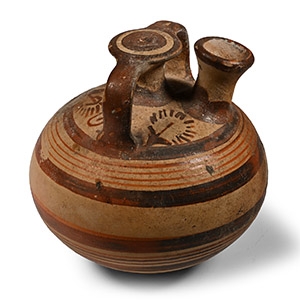
Mycenaean Terracotta Stirrup Jar
14th-13th century B.C.Sold for (Inc. bp): £1,170
Comprising a squat body, slender waisted spout and neck and similar central stem with two flanking handles; painted geometric ornament composed of concentric bands and clusters of blossom to the shoulder. 144 grams, 94 mm
Robert Hecht Jr, New York, 2004. Acquired by the present owner from the above. -
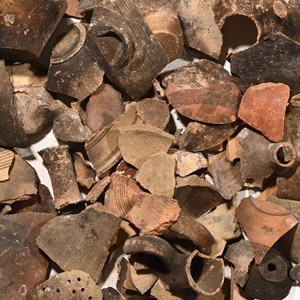
Cypriot Mixed Terracotta Vessel Fragments
3rd-1st millennium B.C.Sold for (Inc. bp): £124
Including fragments of storage vessel, cup, bowl and other items, some with handle and spout elements. 4.2 kg total, 2.3-16.5 cm
From a collection acquired on the UK art market from various auction houses and collections mostly before 2000. From an important Cambridgeshire estate; thence by descent.
