
Loading, please wait...

LOT 0074
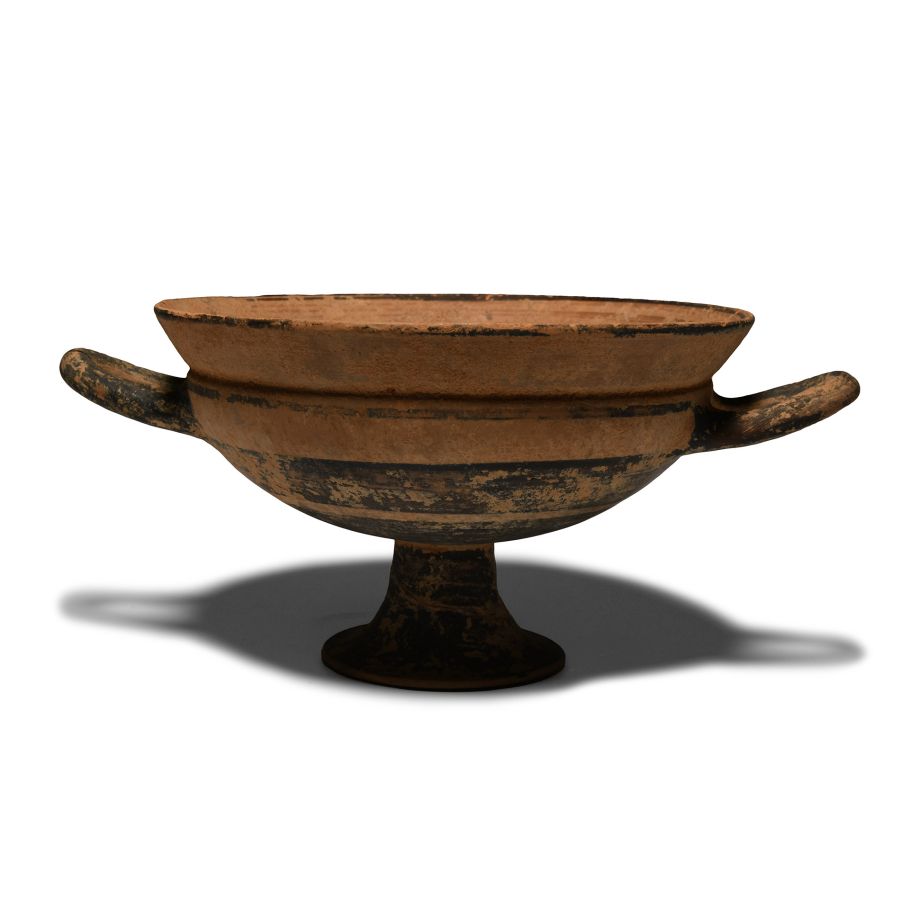
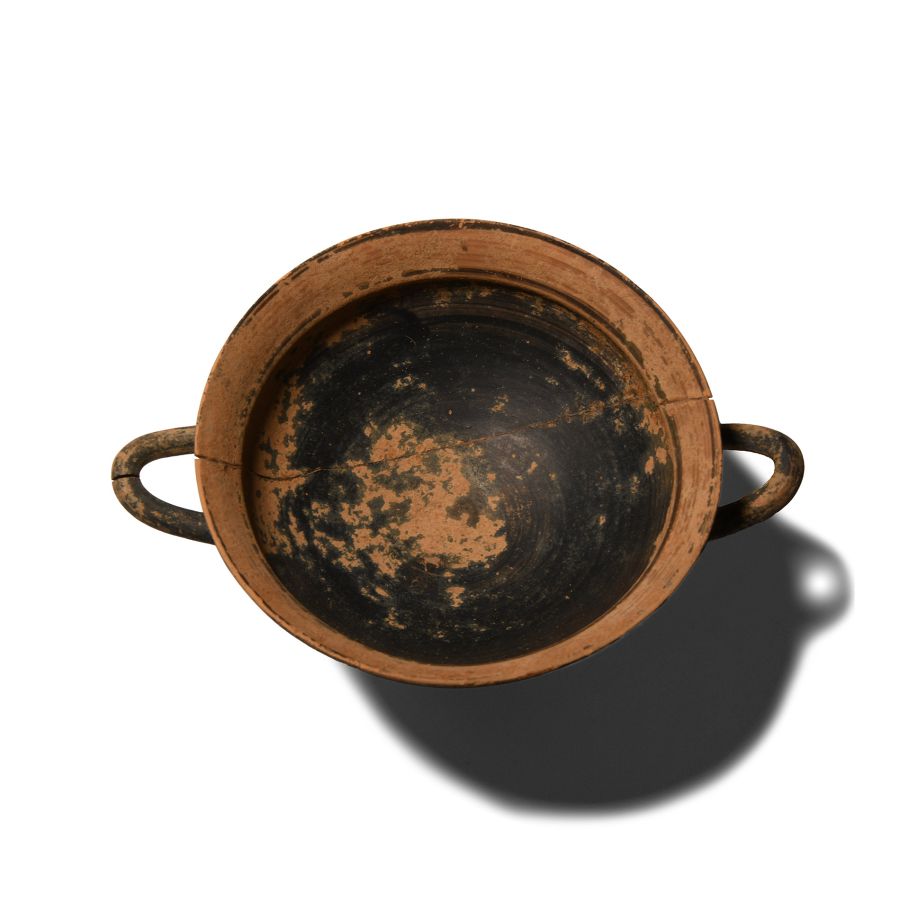
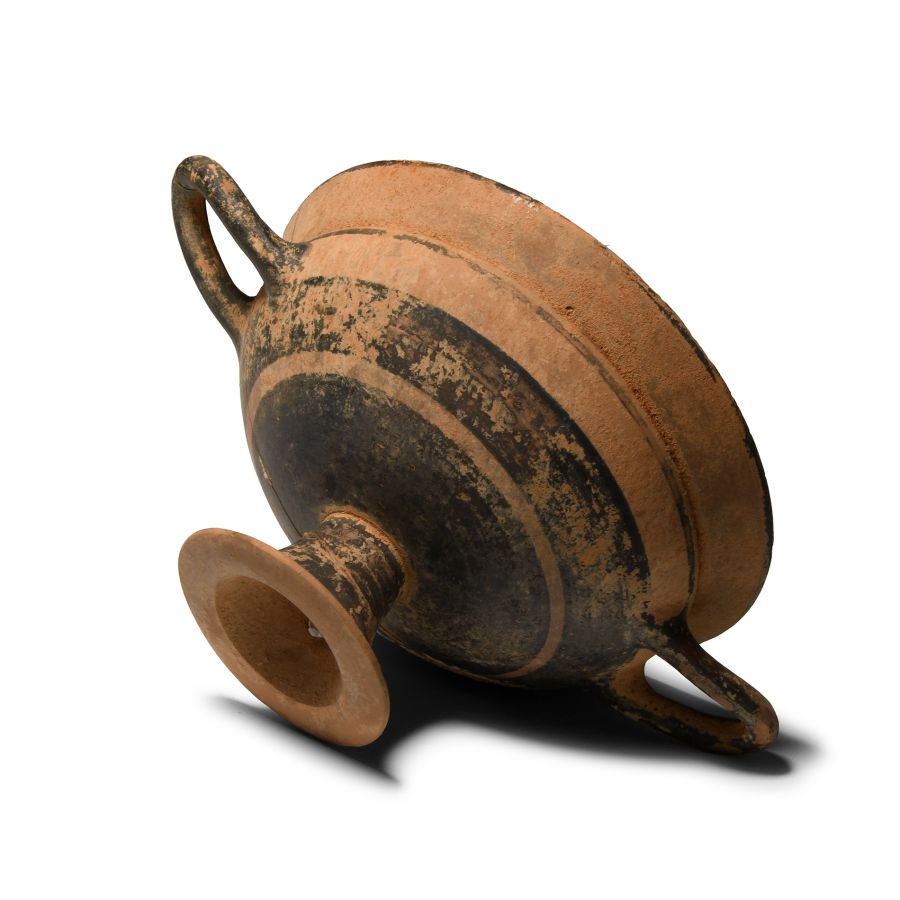
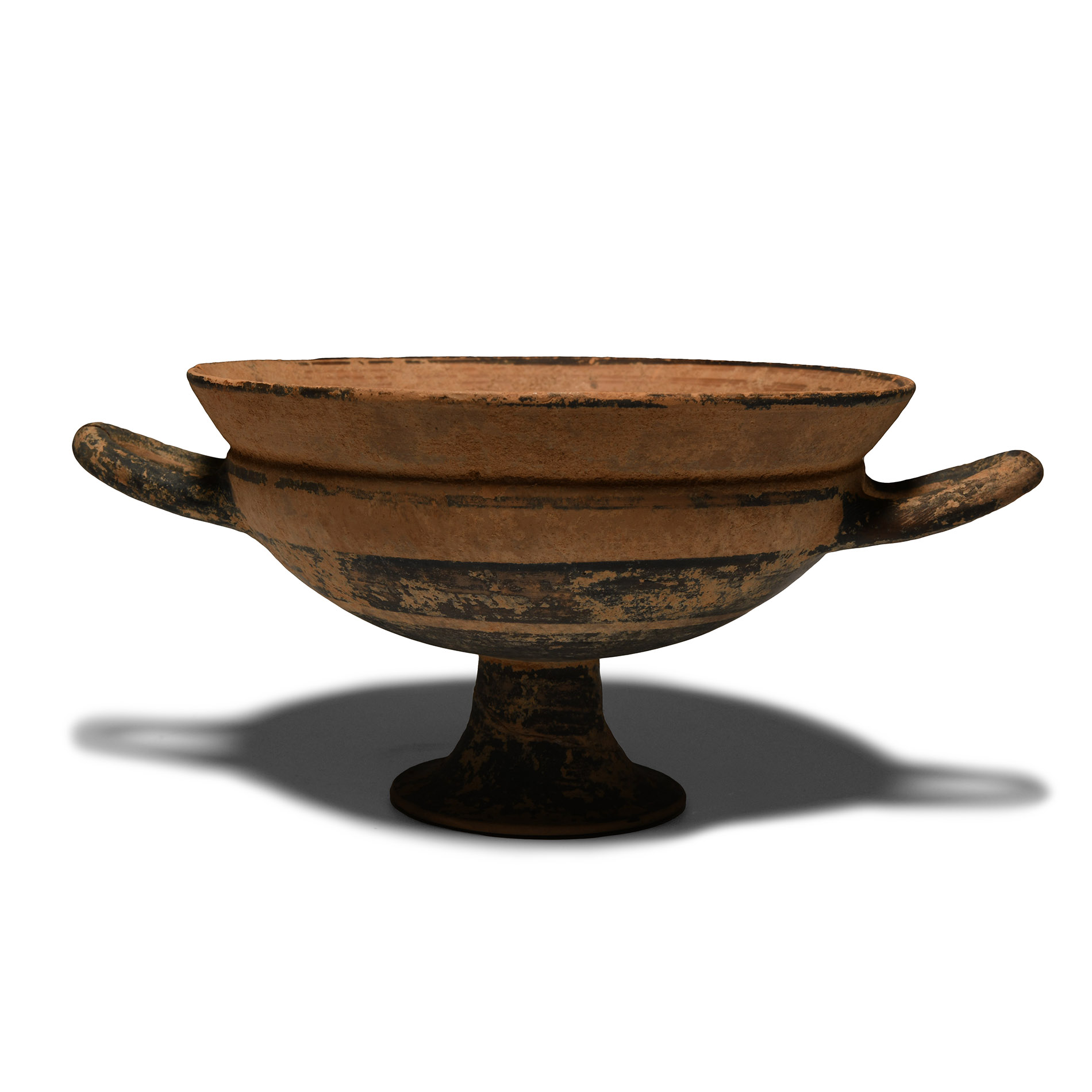
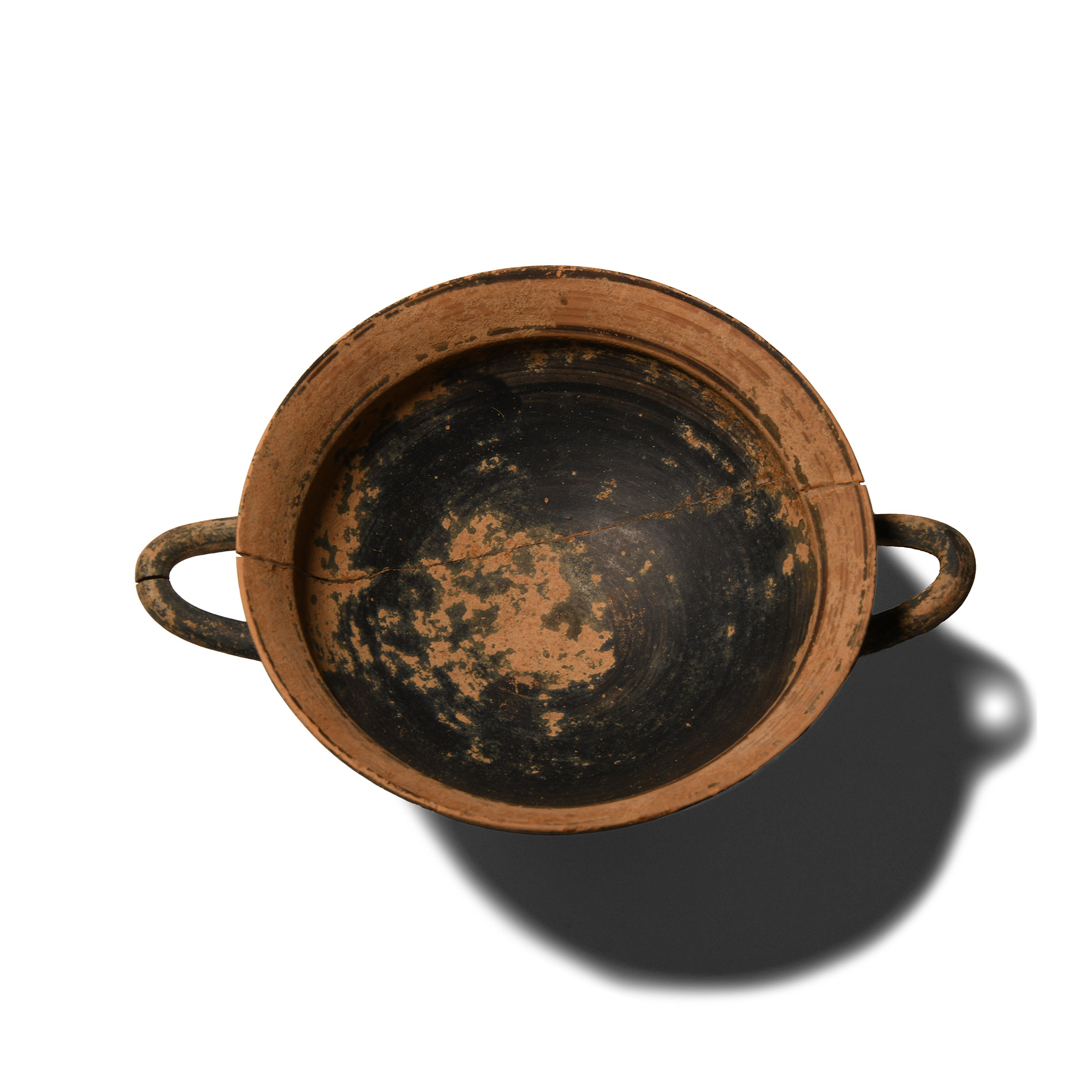
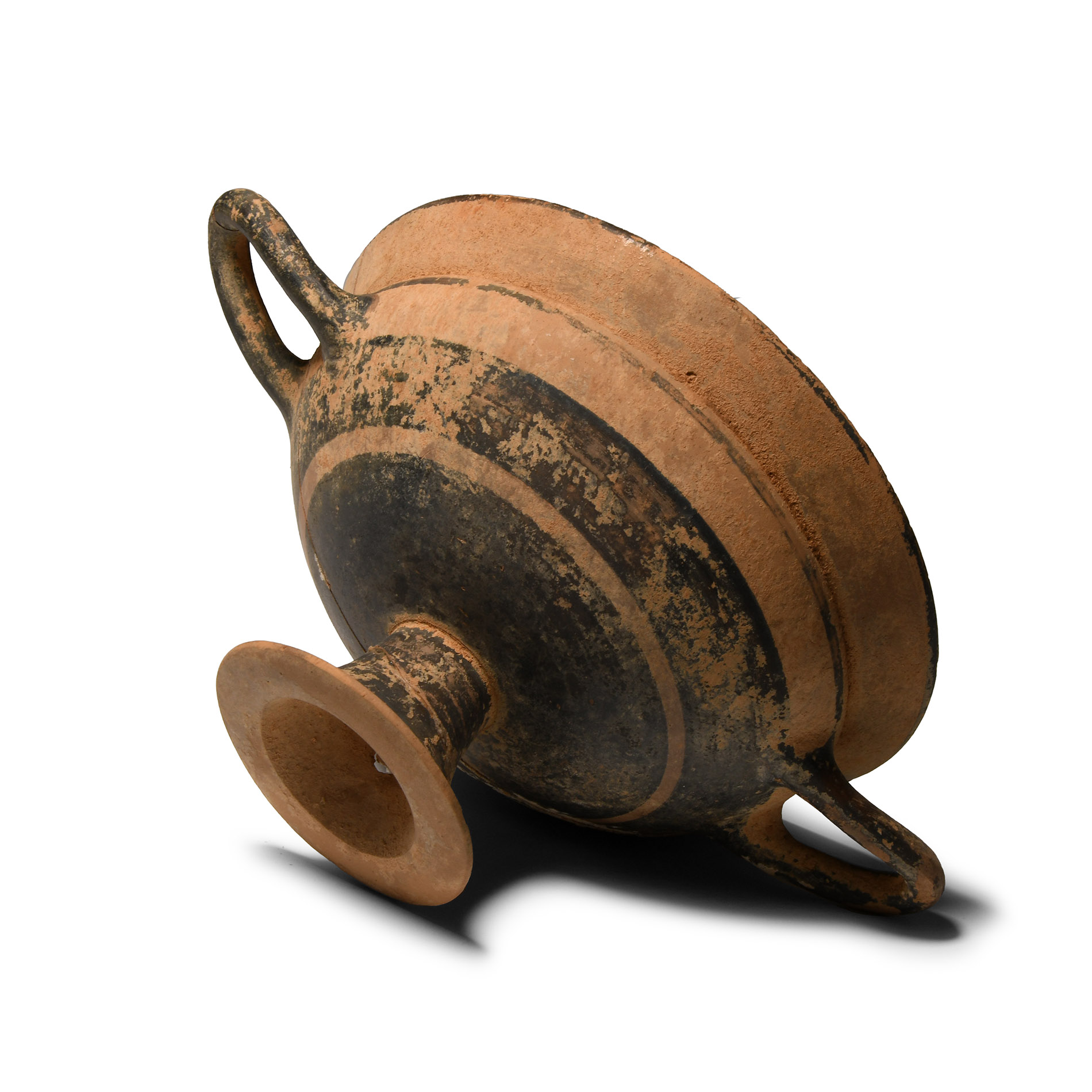
Greek Terracotta Kylix
6TH CENTURY B.C.
8 1/4 in. (249 grams, 21 cm wide).
With trumpet-shaped foot, broad bowl with carinated profile, flared rim, two lateral D-shaped handles; horizontal painted bands; repaired.
ProvenancePrivate collection of Mr S.A., Switzerland, 1990s, thence by descent.
LiteratureCf. similar item in the British Museum, London, under accession no.1839,0214.80, for type; similar black figure kylix in the British Museum, inventory no.1854,0519.2, in Smith, A.H., Pryce, F.N., Corpus Vasorum Antiquorum British Museum 2 / Corpus Vasorum Antiquorum: Great Britain 2, British Museum 2, London, 1926, III H e Pl. 12, 6.
CONDITIONTimeLine Auctions follows a vetting process to ensure the authenticity and legality of all items, reinforcing our commitment to integrity and responsible trading. Each antiquity, antique, and coin lot undergoes thorough examination by a vetting committee of at least ten external specialists, professional trade association members, scientists, and archaeologists: Our Vetting Process
AUCTIONS:
TimeLine is a leading auction house specialising in antiquities, ancient art, collectables, natural history, coins, medals, and books. Our auctions offer museums, collectors, historians, and enthusiasts the opportunity to acquire unique and historically significant pieces.
LOT 0074
Greek Terracotta Kylix
Estimate £500 - 700€580 - 810 (for guidance only)$680 - 950 (for guidance only)
-
.jpg)
Etruscan Gold Filigree Leech Brooch
7th century B.C.Estimate: £2,000 - 3,000 (+bp*)
Opening Bid: £1,000
Hollow-formed bow with applied floral detailing, filigree and granules, double-coiled spring and pin; tongue-shaped foot with dense granule detailing, globe finial with rosette above. 13.86 grams, 69 mm
Acquired in the 1970s. Property of a London lady, part of her family's collection. This lot has been checked against the Interpol Database of stolen works of art and is accompanied by search certificate no.12112-213116. -
.jpg)
Etruscan Bronze Figure of a Man
4th-3rd century B.C.Sold for (Inc. bp): £494
Standing with right hand extended, left hand supporting a spherical object, the body draped in a textile garment worn over the head like a cowl. 87 grams, 83 mm
Private collection of Mr S.A., Switzerland, 1990s, thence by descent. -
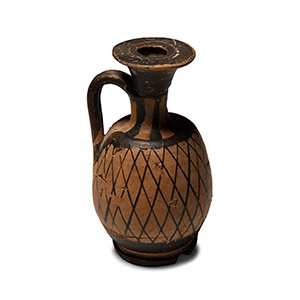
Greek Net-Painted Black-Figure Lekythos
Apulian, 4th century B.C.Estimate: £400 - 600 (‡+bp*)
Opening Bid: £200
The ovoid body decorated with cross-hatching, solid band to the shoulder and vertical bands to the slender neck, trumpet-shaped mouth, strap handle and discoid foot; repaired. 72 grams, 91 mm
Ex Mister X. (1931-2017) private collection. Sold in the benefit of the 'Croix-Rouge of Monaco'.
