
Loading, please wait...
LOT 0555
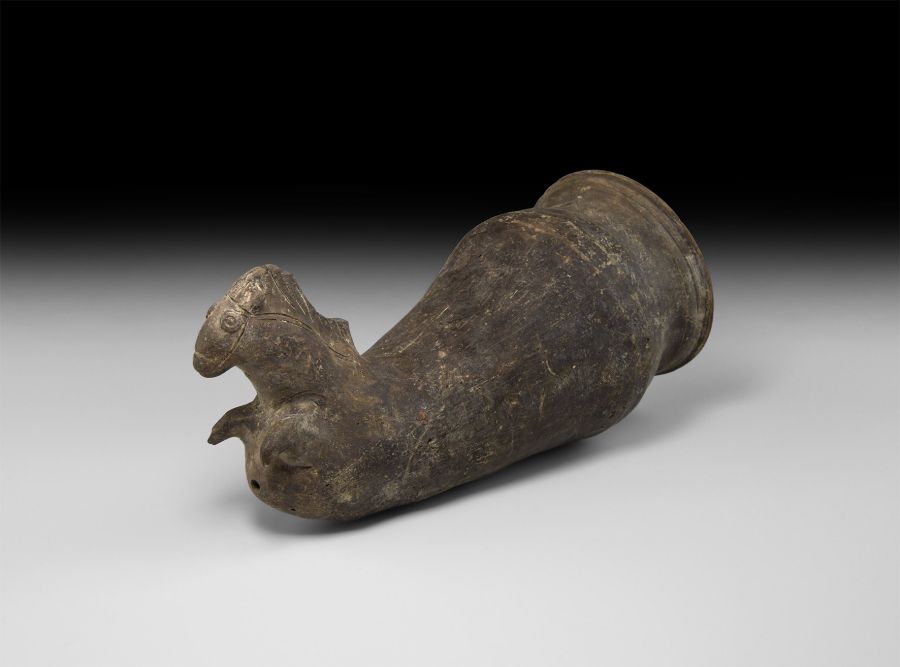
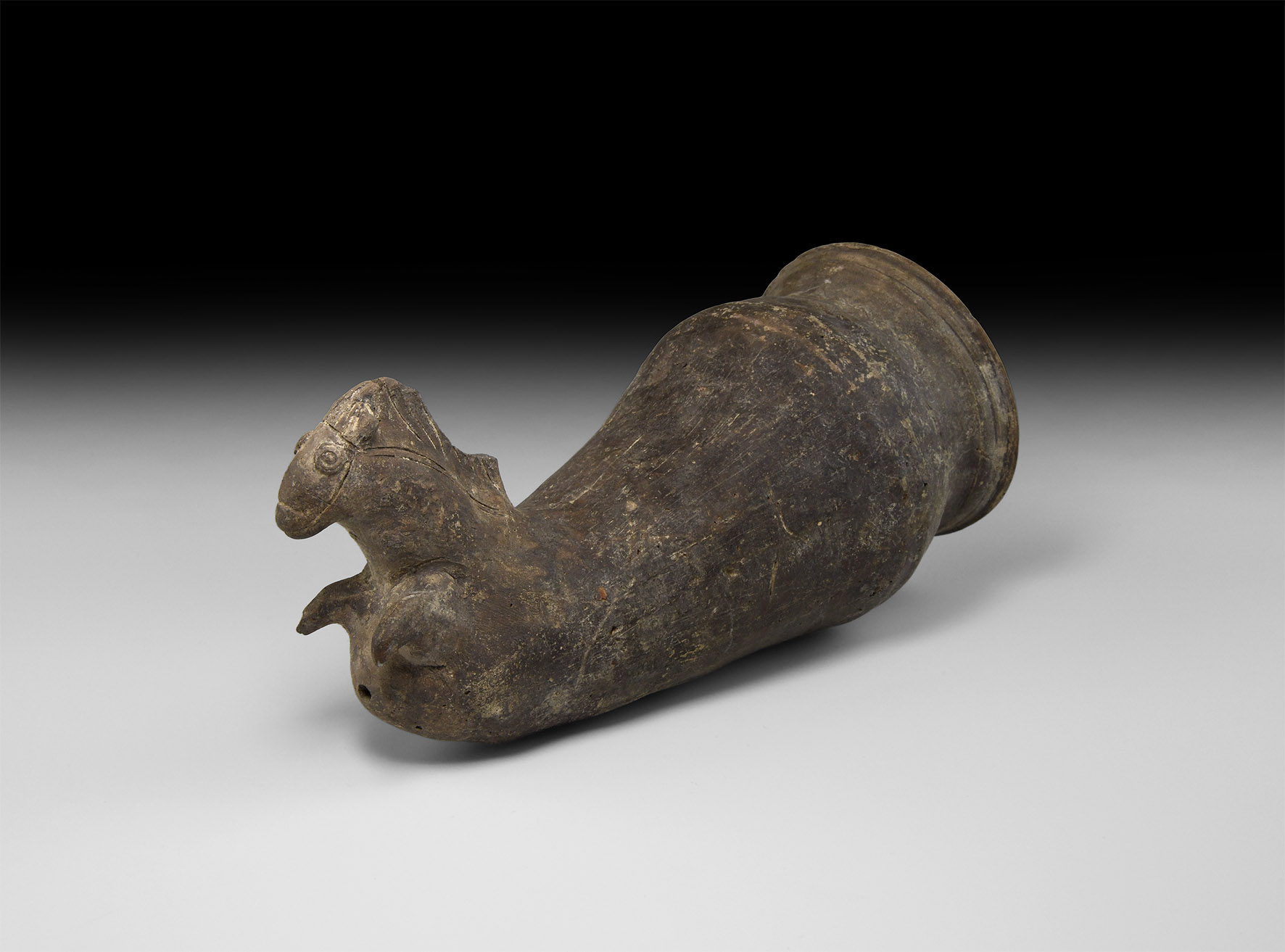
Greek Terracotta Horse Rhyton
5TH-3RD CENTURY B.C.
9 in. (704 grams, 23.5 cm).
Of bulbous tubular form and with a flared mouth, tapering to the foreparts of a horse with detailing to the eyes, mane and bridle, forelegs extended.
ProvenanceAcquired on the European art market in the 1990s.
Ex property of a Suffolk collector.
TimeLine Auctions follows a vetting process to ensure the authenticity and legality of all items, reinforcing our commitment to integrity and responsible trading. Each antiquity, antique, and coin lot undergoes thorough examination by a vetting committee of at least ten external specialists, professional trade association members, scientists, and archaeologists: Our Vetting Process
AUCTIONS:
TimeLine is a leading auction house specialising in antiquities, ancient art, collectables, natural history, coins, medals, and books. Our auctions offer museums, collectors, historians, and enthusiasts the opportunity to acquire unique and historically significant pieces.
-
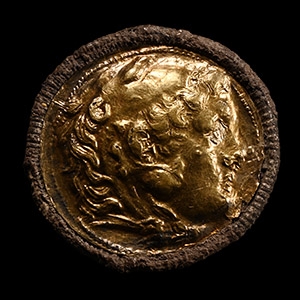
Greek Gold-Foiled Alexander the Great Coin Brooch
Circa 3rd century B.C.Sold for (Inc. bp): £4,550
Comprising a tetradrachm coin of Alexander III of Macedonia depicting his profile bust right wearing a lion-skin and, to the reverse, Zeus, seated left holding an eagle; set in a surround with hinge and catch affixed to the reverse. 22.03 grams, 33 mm
Acquired 1990s-early 2000s. East Anglian private collection. -
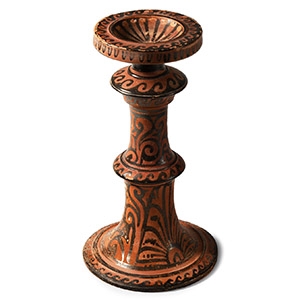
Greek Apulian Red-Figure Stand
4th century B.C.Estimate: £800 - 1,000 (+bp*)
Opening Bid: £444
Comprising a trumpet-shaped base, carinated balusters and broad upper face with dished centre; painted with running wave patterns to the baluster, base and top, the centre with a rosette; the base with the profile head of a lady of fashion with the earrings, necklace and diadem picked out in white. 847 grams, 25 cm high
French collection, 1990s-early 2000s. Ex Hampel Auctions, Munich, Germany, 1990s. -
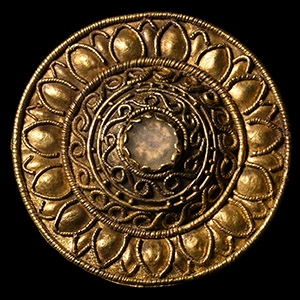
Eastern Greek Gold Turretted Brooch
5th-3rd century B.C.Sold for (Inc. bp): £845
Adorned with repoussé detailing and filigree borders and petals, domed centre with granules and applied scrolls, central corrugated claw set with glass(?); pin lug and catchplate to reverse. 8.74 grams, 40 mm
From the collection of a North American gentleman, formed in the 1990s.
