
Loading, please wait...
LOT 0649
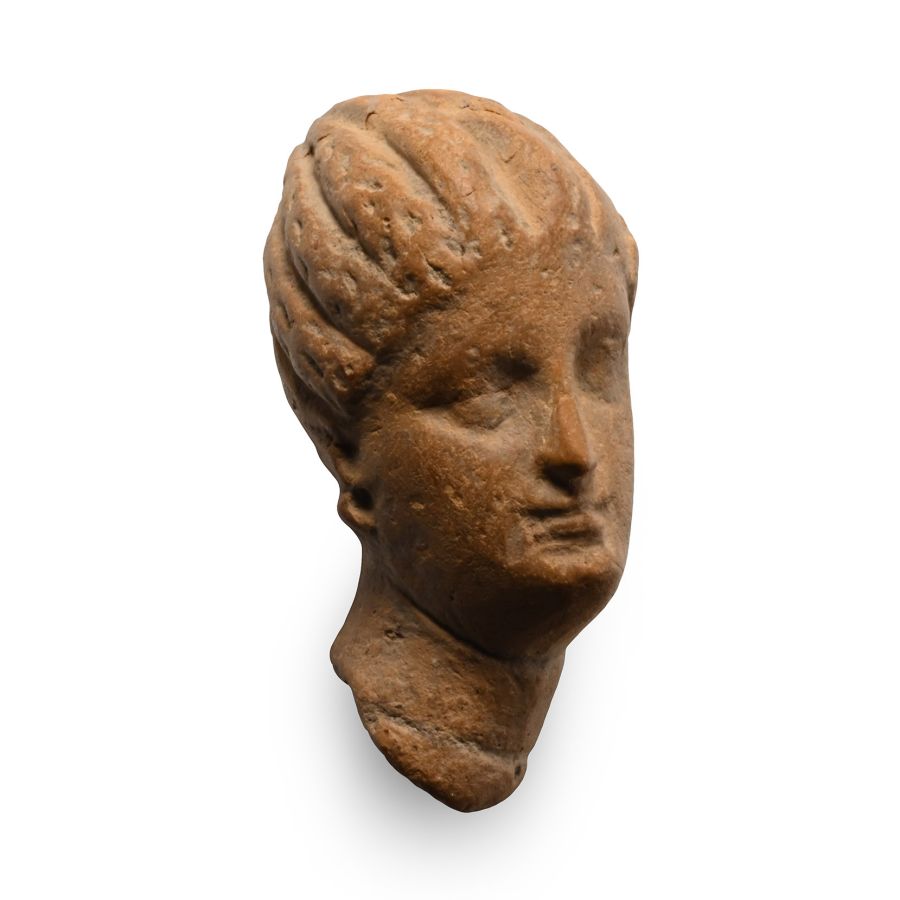
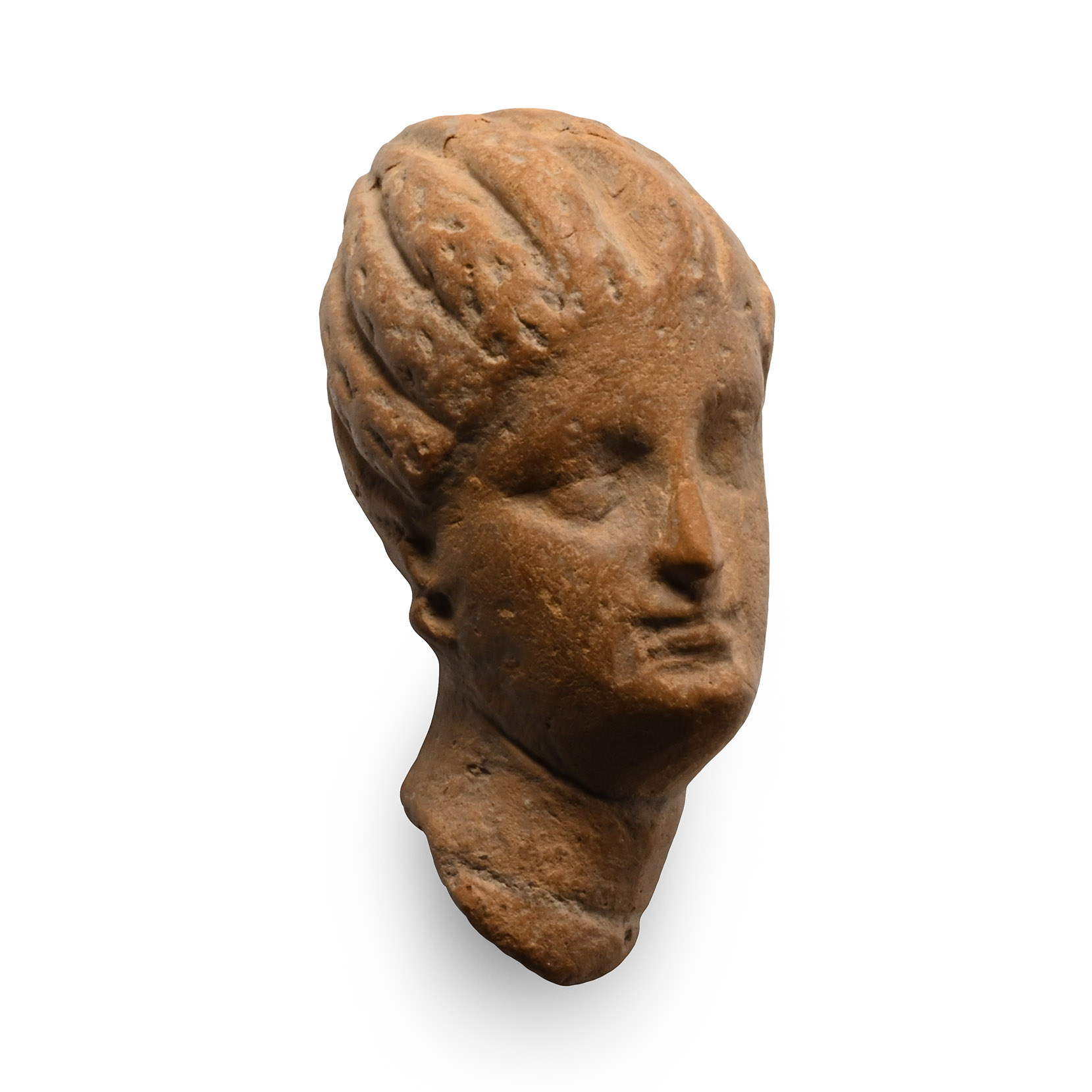
Greek Terracotta Head
TARENTINE, 3RD-1ST CENTURY B.C.
2 in. (22 grams, 49 mm).
Female head moulded with a segmented conical cap, pierced ears visible beneath; the head slightly turned and tilted downwards on a slender neck.
ProvenanceAcquired in the mid 1980s-1990s.
Private collection, Switzerland, thence by descent.
Private collection, since the late 1990s.
Cf. similar though larger Tarentine female head in the Metropolitan Museum under accession number: 2013.612.
CONDITIONTimeLine Auctions follows a vetting process to ensure the authenticity and legality of all items, reinforcing our commitment to integrity and responsible trading. Each antiquity, antique, and coin lot undergoes thorough examination by a vetting committee of at least ten external specialists, professional trade association members, scientists, and archaeologists: Our Vetting Process
AUCTIONS:
TimeLine is a leading auction house specialising in antiquities, ancient art, collectables, natural history, coins, medals, and books. Our auctions offer museums, collectors, historians, and enthusiasts the opportunity to acquire unique and historically significant pieces.
LOT 0649
Greek Terracotta Head
Estimate £180 - 240€210 - 280 (for guidance only)$240 - 320 (for guidance only)
-
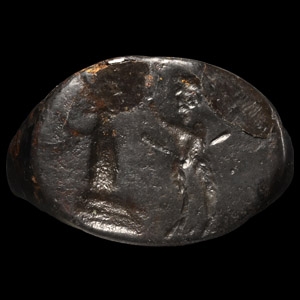
Greek Bronze Ring with Satyr
4th-2nd century B.C.Sold for (Inc. bp): £130
With ellipsoid bezel, incuse profile image of a satyr before a pillar (possibly a herm). 7.41 grams, 22.72 mm overall, 18.55 mm internal diameter (approximate size British L, USA 5 3/4, Europe 11.24, Japan 10)
Ex German art market, 2000s. Acquired from an EU collector living in London. From the collection of Surrey, UK, gentleman. -
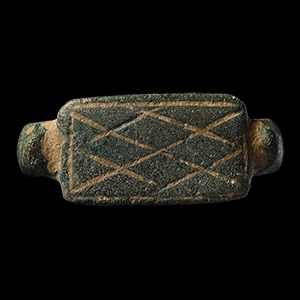
Greek Bronze Ring with Pattern
4th-3rd century B.C.Sold for (Inc. bp): £72
Comprising a plain hoop and rectangular plaque with incised hatching. 3.33 grams, 22.36 mm overall, 18.88 mm internal diameter (approximate size British O, USA 7, Europe 14.98, Japan 14)
Acquired 1980-2015. Ex Abelita family collection. -
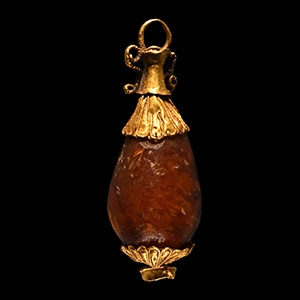
Hellenistic Gold Amphora-Shaped Pendant
3rd-1st century B.C.Estimate: £500 - 700 (‡+bp*)
Opening Bid: £278
Piriform carnelian centre with gold fittings, filigree loop handles. 3.64 grams, 30 mm
Acquired from the collection of Mrs L.G., an Italian noblewoman. European private collection.
