
Loading, please wait...
LOT 0598
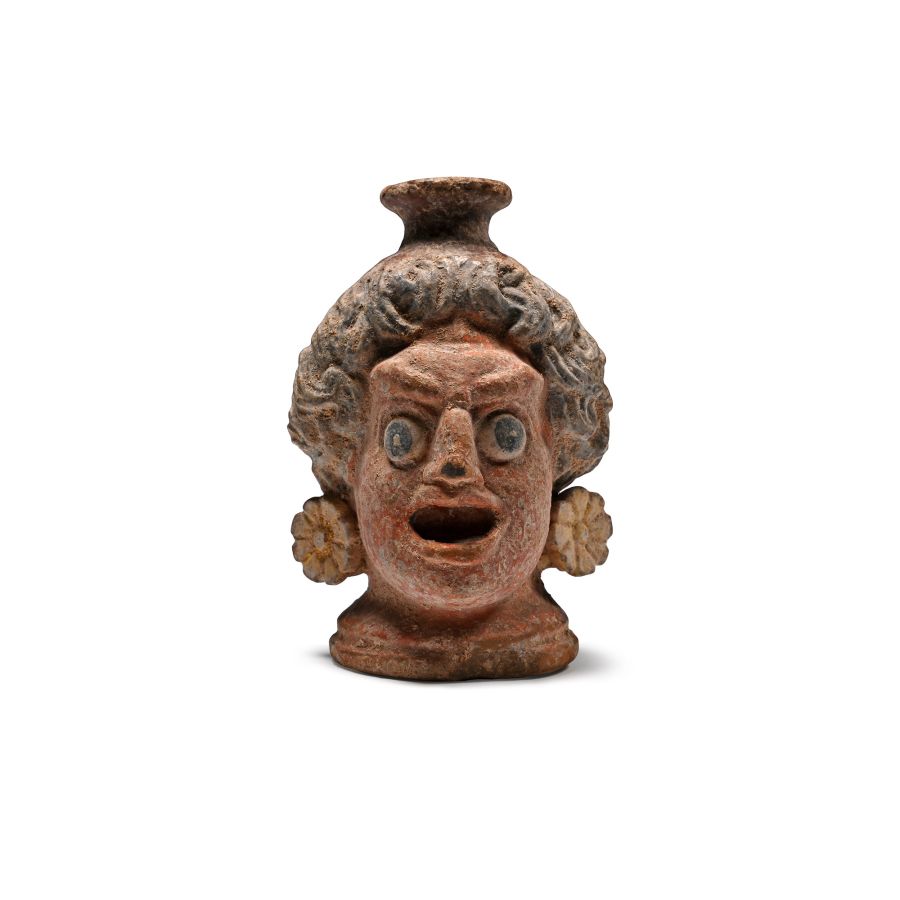
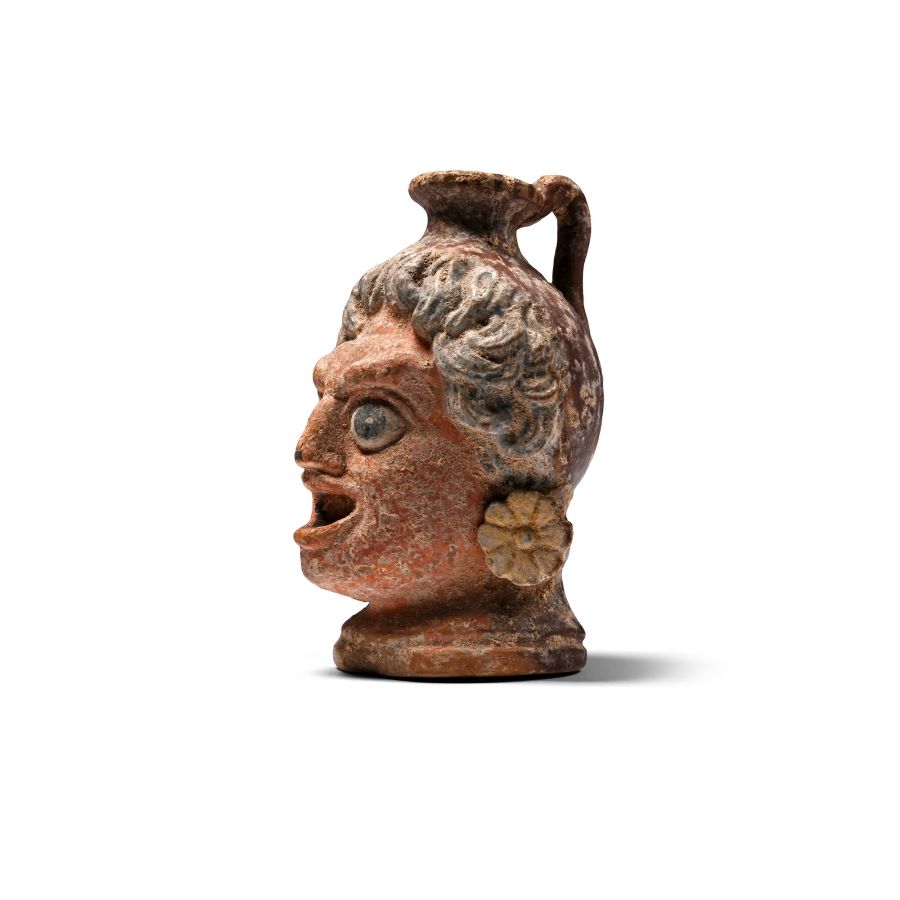
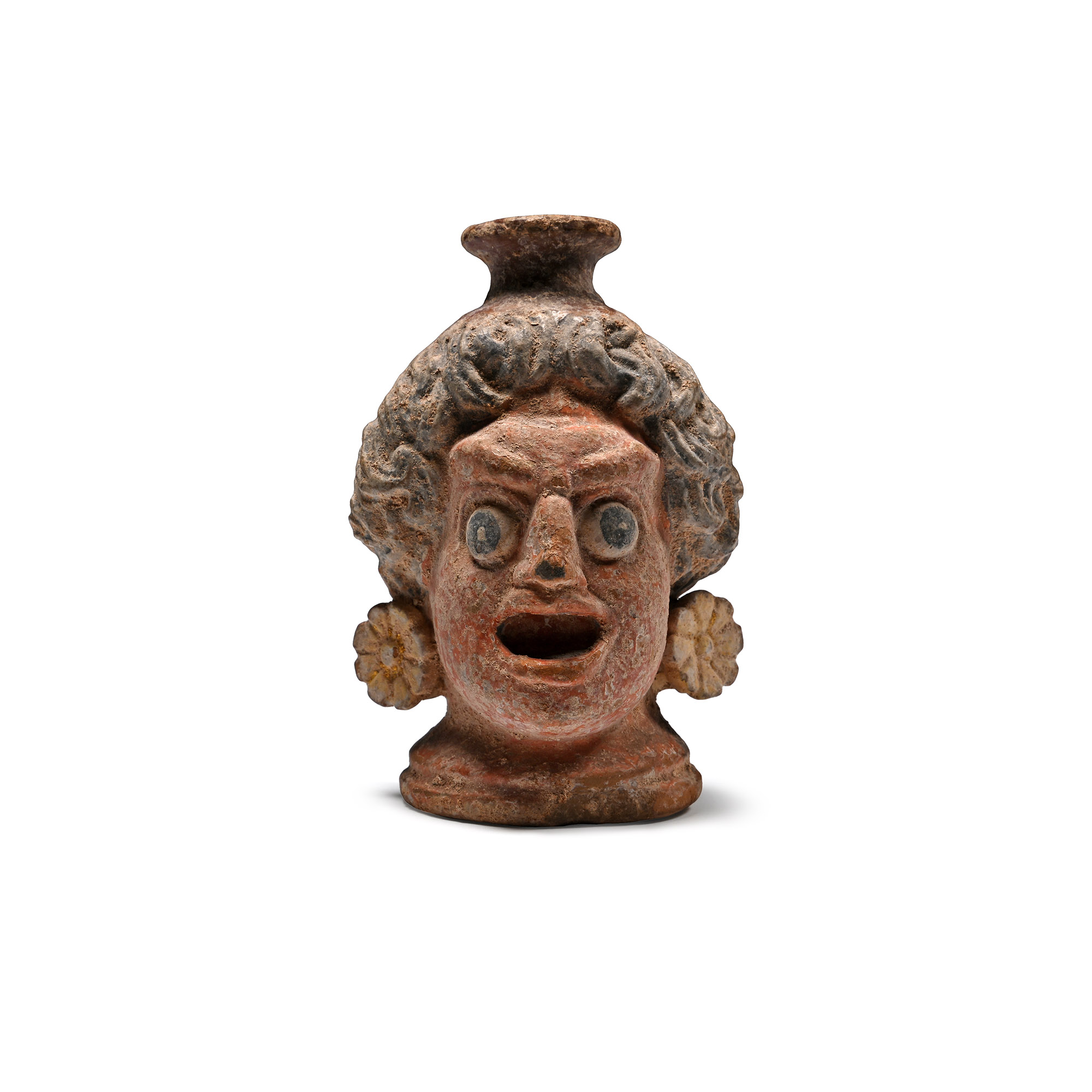
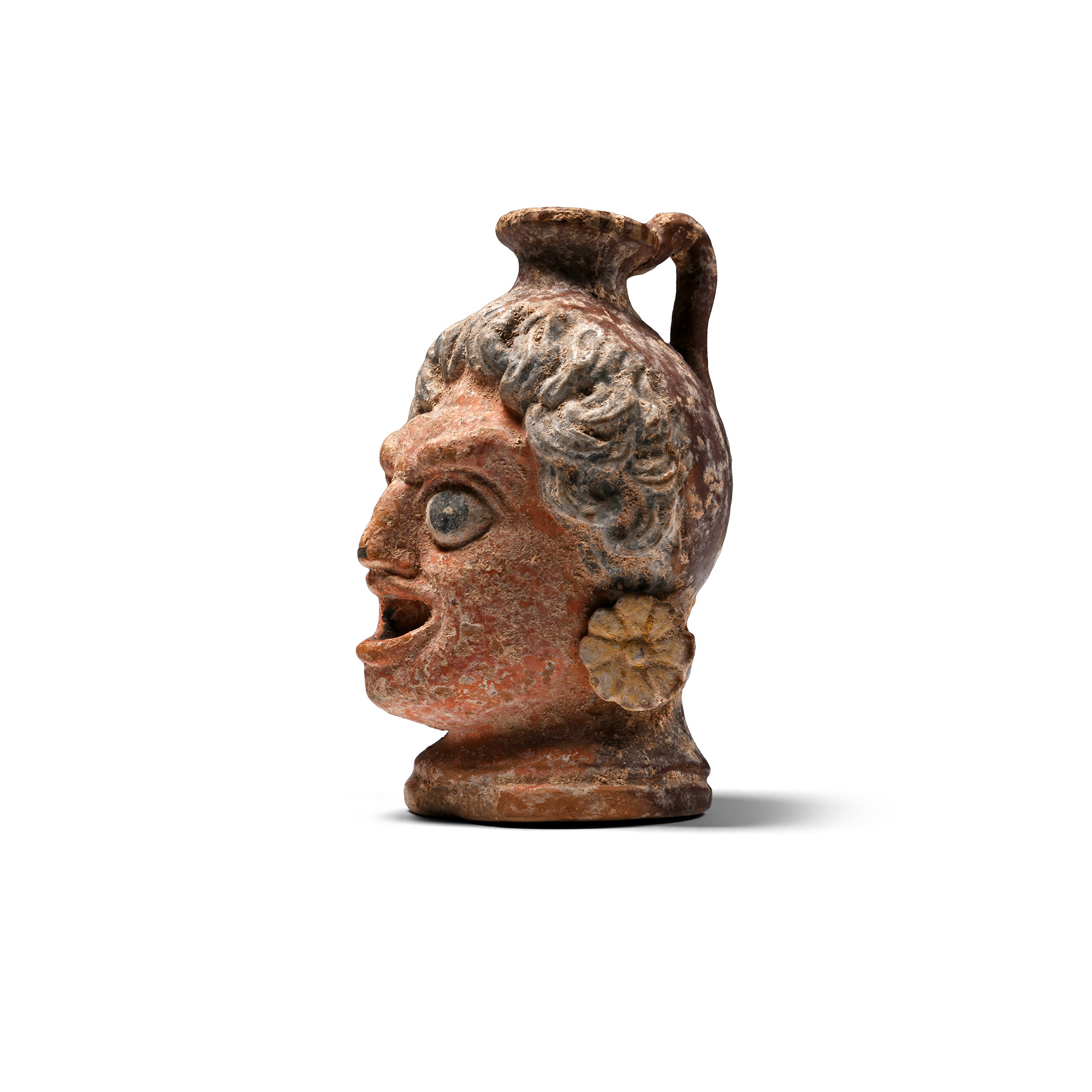
Greek Terracotta Head of an Actor
CIRCA 4TH CENTURY B.C.
3 in. (69.3 grams, 75 mm).
An expressive polychrome vase formed as the head of an actor wearing rosette earrings, open mouth and applied pupils, short neck with everted rim above and a small strap handle to the rear.
ProvenanceEx Louis-Gabriel Bellon, France, (1819-1899).
with Galerie Rhéa, Zurich, Switzerland.
This lot has been checked against the Interpol Database of stolen works of art and is accompanied by a search certificate number no.12667-236389.
TimeLine Auctions follows a vetting process to ensure the authenticity and legality of all items, reinforcing our commitment to integrity and responsible trading. Each antiquity, antique, and coin lot undergoes thorough examination by a vetting committee of at least ten external specialists, professional trade association members, scientists, and archaeologists: Our Vetting Process
AUCTIONS:
TimeLine is a leading auction house specialising in antiquities, ancient art, collectables, natural history, coins, medals, and books. Our auctions offer museums, collectors, historians, and enthusiasts the opportunity to acquire unique and historically significant pieces.
LOT 0598
Greek Terracotta Head of an Actor
Estimate £3,500 - 4,500€4,060 - 5,220 (for guidance only)$4,730 - 6,080 (for guidance only)
-
Parthian Terracotta Figurine of Camel Riders
3rd-1st century B.C.Sold for (Inc. bp): £169
With two female riders in a rectangular structure, some pigment remaining. 77.5 grams, 91 mm
Fine condition.
Ex an important Dutch collection; acquired on the European art market in the 1970s. From the private collection of John Meredith, acquired since the 1990s; thence by descent. -
Greek Terracotta Pedestal Dish
Apulian, 4th century B.C.Sold for (Inc. bp): £20
Broad and shallow with low foot, chamfered rim. 75 grams, 98 mm
From an old German collection. From the property of a late Lincolnshire, UK, gentleman. -
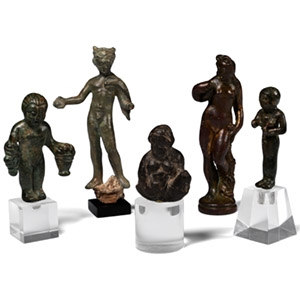
Greek and Roman Bronze Statue Collection
4th century B.C.-4th century A.D.Estimate: £3,500 - 4,500 (‡+bp*)
Opening Bid: £1,750
Comprising: an Etruscan figure of Turms (Greek Hermes), standing and holding a patera in his right hand, original lead mounting beneath; a standing figure of nude Aphrodite, possibly later; figure of a Baubo with her legs bent and right hand touching her genitals; two standing bronze figures holding offerings. 352 grams total, 63-96 mm
Hermes from the estate of a Swiss gentleman, Ticino, before 1970. Sardinian figure ex private collection of Prof. Dr Hans (1918-1984) and Dr Ines (1922-2013) Jucker, classical archaeologists, Bern, Switzerland. with Galerie Rhéa, Zurich, Switzerland. This lot has been checked against the Interpol Database of stolen works of art and is accompanied by a search certificate number no.12669-236450.
