
Loading, please wait...
LOT 0528
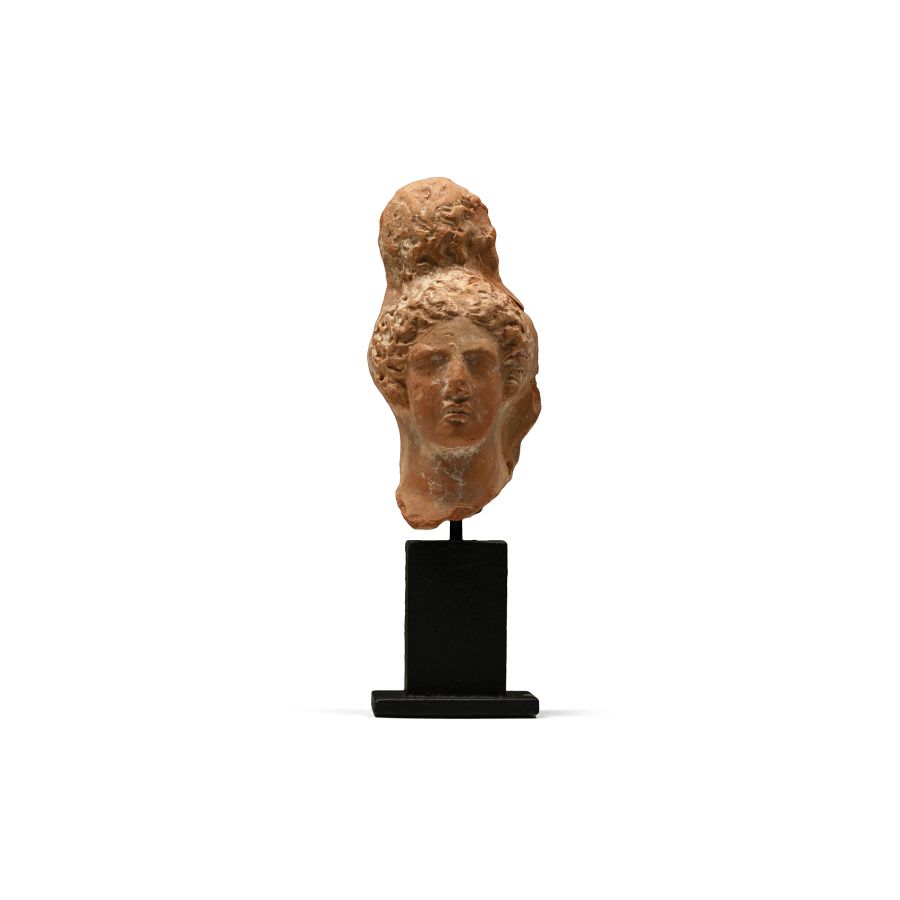
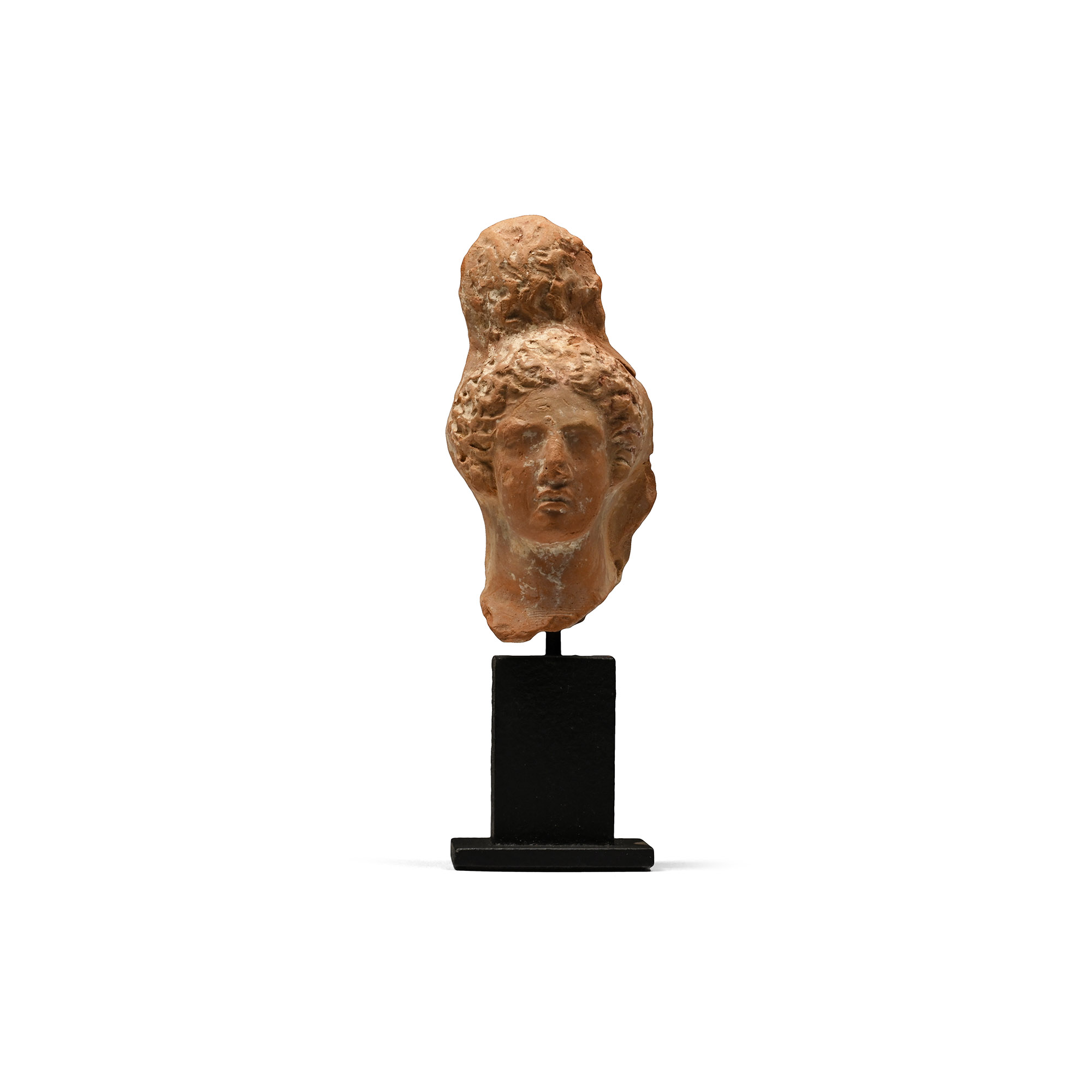
Greek Terracotta Head of a Goddess
CIRCA 4TH-3RD CENTURY B.C.
4 1/4 in. (64 grams total, 10.9 cm high including stand).
An attractive head from a statuette of a goddess, thick hair ornately coiffed, lips pouted, and the traces of the artisan’s fingerprints preserved along the neck; mounted on a custom-made display stand.
ProvenanceFrom the private collection of C.R., Ticino, Switzerland, before 1970.
with Galerie Rhéa, Zurich, Switzerland.
This lot is accompanied by an illustrated lot declaration signed by the Head of the Antiquities Department, Dr Raffaele D'Amato.
Bignasca, A., Antike Kunst, 1992, p.18ff, pl.5-14, Cg. Winter, 116/4.
FootnotesThe cults of Demeter and her daughter Persephone (kore) were particularly prominent in Magna Graecia, and likely this is a representation of one of these goddesses.
CONDITIONTimeLine Auctions follows a vetting process to ensure the authenticity and legality of all items, reinforcing our commitment to integrity and responsible trading. Each antiquity, antique, and coin lot undergoes thorough examination by a vetting committee of at least ten external specialists, professional trade association members, scientists, and archaeologists: Our Vetting Process
AUCTIONS:
TimeLine is a leading auction house specialising in antiquities, ancient art, collectables, natural history, coins, medals, and books. Our auctions offer museums, collectors, historians, and enthusiasts the opportunity to acquire unique and historically significant pieces.
-
.jpg)
Monumental Villanovan Impasto Kyathos
7th century B.C.Estimate: £4,000 - 6,000 (‡+bp*)
Opening Bid: £2,000
Fluted body tapering to a narrow foot, the shoulders decorated with tiered bosses, short neck with flared mouth; wide handle perforated with a triangle. 1.18 kg, 25 cm wide
Estate of Mr Bruno Fellinger (1926-2016), Küsnacht, Switzerland. with Galerie Rhéa, Zurich, Switzerland. This lot has been checked against the Interpol Database of stolen works of art and is accompanied by a search certificate number no.12648-236390. This lot has been cleared against the Art Loss Register database, and is accompanied by an illustrated lot declaration signed by the Head of the Antiquities Department, Dr Raffaele D'Amato. -
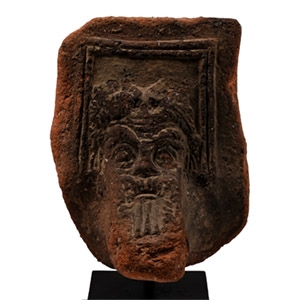
Hellenistic Terracotta Brazier Fragment with Face
3rd-1st century B.C.Sold for (Inc. bp): £156
A rectangular fragment with the head Silenus or satyr wearing an ivy crown, projecting beard, double border above the head; accompanied by a custom-made display stand. 319 grams, 10 cm (584 grams total, 13.8 cm including stand)
From a private collection formed in the early 20th century. with Gorny & Mosch, Munich, 17 December 2014, no.631. with Galerie Rhéa, Zurich. This lot is accompanied by an illustrated lot declaration signed by the Head of the Antiquities Department, Dr Raffaele D'Amato. -
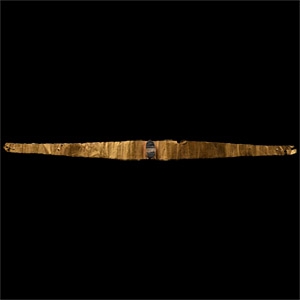
Greek Gold Diadem with Glass Gem
1st millennium B.C.Sold for (Inc. bp): £936
Sheet-gold with tapering finials, central raised cell set with a two-tone glass insert imitating banded agate; mounted on perspex backing. 76.87 grams total, 30 cm (36 cm including stand)
with Galerie Rhéa, Zurich, Switzerland. This lot is accompanied by an illustrated lot declaration signed by the Head of the Antiquities Department, Dr Raffaele D'Amato.
