
Loading, please wait...
LOT 0511
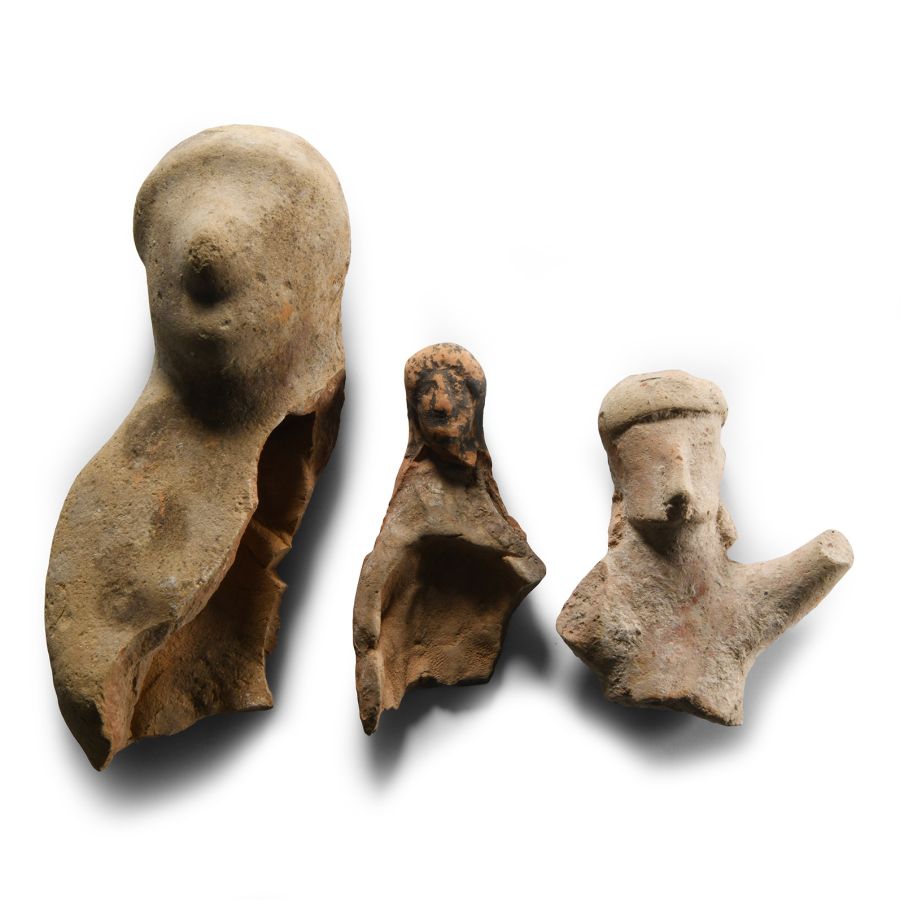
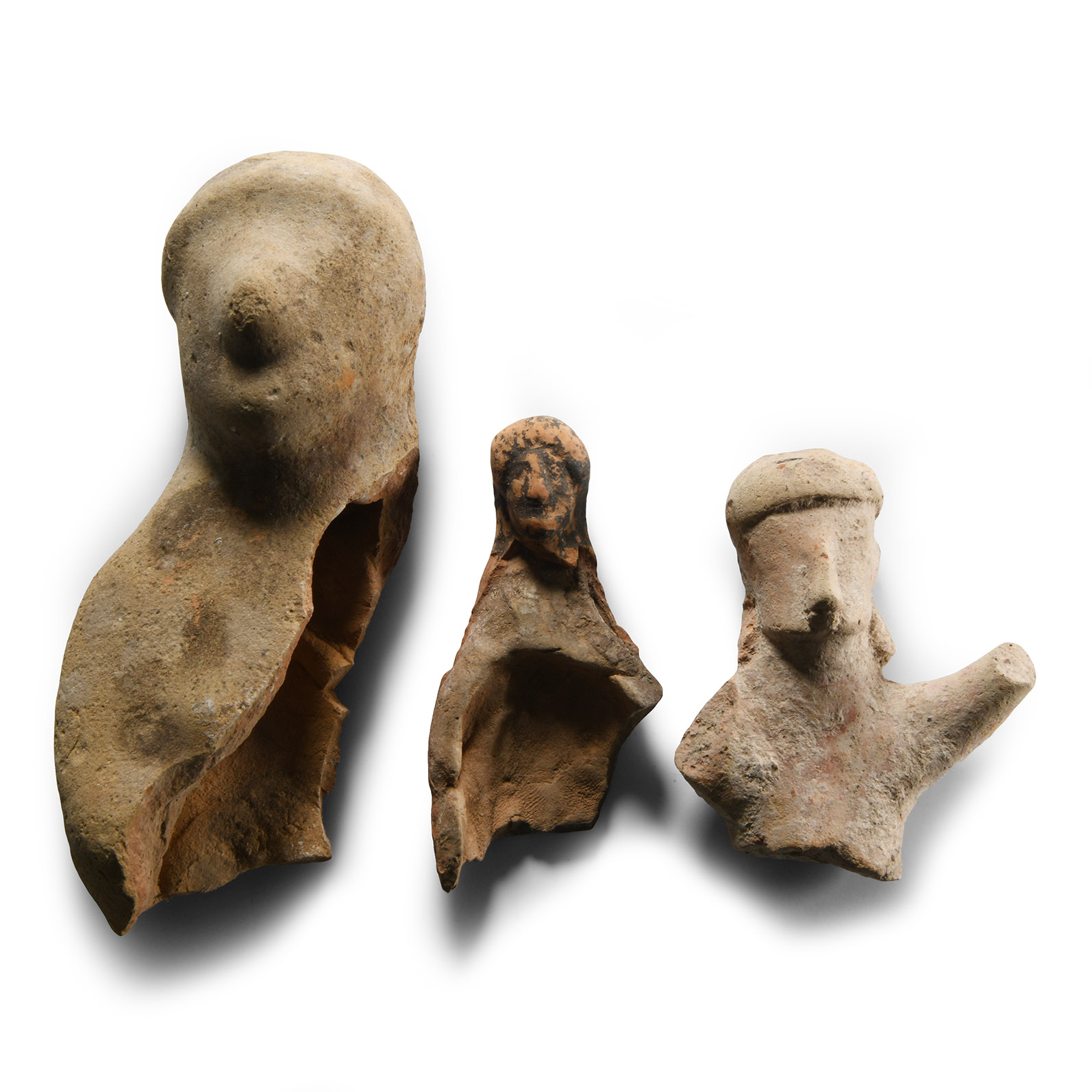
Greek Terracotta Fragment Group
CIRCA 4TH-2ND CENTURY B.C.
2 7/8 - 5 3/8 in. (223 grams total, 7.3-13.5 cm).
Including a Tanagra-type figure fragment with moulded head, and other types. [3, No Reserve]
ProvenanceFrom a collection acquired on the UK art market from various auction houses and collections mostly before 2000.
From an important Cambridgeshire estate; thence by descent.
TimeLine Auctions follows a vetting process to ensure the authenticity and legality of all items, reinforcing our commitment to integrity and responsible trading. Each antiquity, antique, and coin lot undergoes thorough examination by a vetting committee of at least ten external specialists, professional trade association members, scientists, and archaeologists: Our Vetting Process
AUCTIONS:
TimeLine is a leading auction house specialising in antiquities, ancient art, collectables, natural history, coins, medals, and books. Our auctions offer museums, collectors, historians, and enthusiasts the opportunity to acquire unique and historically significant pieces.
-
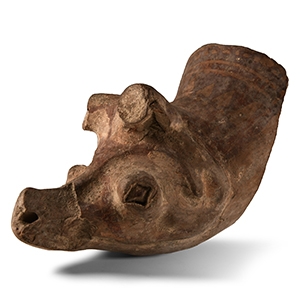
Greek Painted Terracotta Rhyton Fragment
Circa 4th-2nd century B.C.Sold for (Inc. bp): £111
Finial from a rhyton with stylised zoomorphic detailing: elongated snout, applied lozengiform eyes in lobe protrusions, horns or antlers above; curved conical body with tiered inner face, applied red pigment detailing. 442 grams, 15.5 cm
From a collection acquired on the UK art market from various auction houses and collections mostly before 2000. From an important Cambridgeshire estate; thence by descent. -
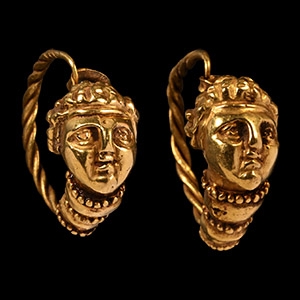
Greek Gold Earrings with Female Heads
Hellenistic, 2nd-1st century B.C.Estimate: £1,500 - 2,000 (+bp*)
Opening Bid: £750
Each a hollow-formed female head with stephane to the brow, granulated collars flanking biconvex bulbs, tapering twisted shank curved to meet the gussetted loop above the head. 5.93 grams total, 25-28 mm
From the collection of a gentleman, acquired on the London art market in the 1990s. -
.jpg)
Villanovan Impasto Kyathos with Openwork Handle
Circa 8th century B.C.Sold for (Inc. bp): £234
Modelled with wide and squat body; raised, biforal handle, saddle-shaped on top and grooved on the front with cross-hatch below; small projections emerging from the sides and an incised zigzag line around the lower body. 170 grams, 13 cm wide
Ex Carlton collection, Los Angeles, acquired 1965-1980. Acquired from Artemis Gallery, Colorado, USA, 21 November 2017, lot 24. Property of a South Australian private collector, with collection reference 17.08. Accompanied by detailed collector's catalogue pages including description and photograph. Accompanied by an Artemis certificate of authenticity dated 27 November 2017.
Di Genarro notes that the pottery forms appearing as standard grave goods are designed for containing, serving and drinking a beverage, which suggests the consumption of wine as a focus of funerary ideology.
