
Loading, please wait...
LOT 0065
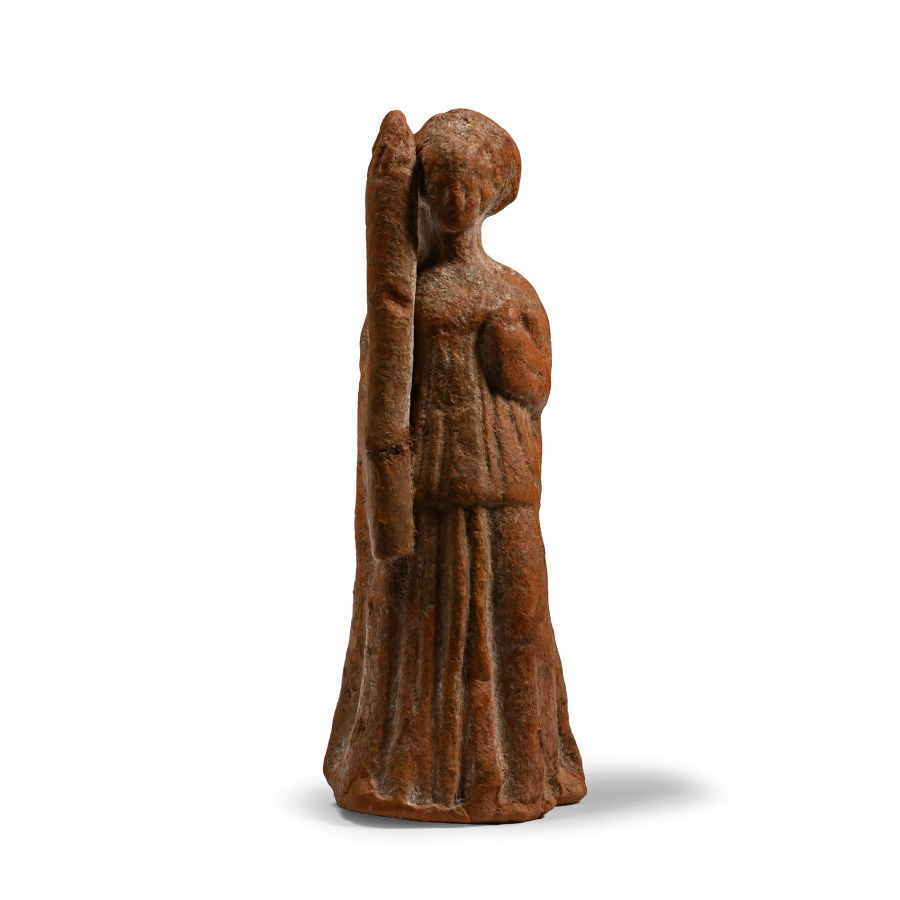
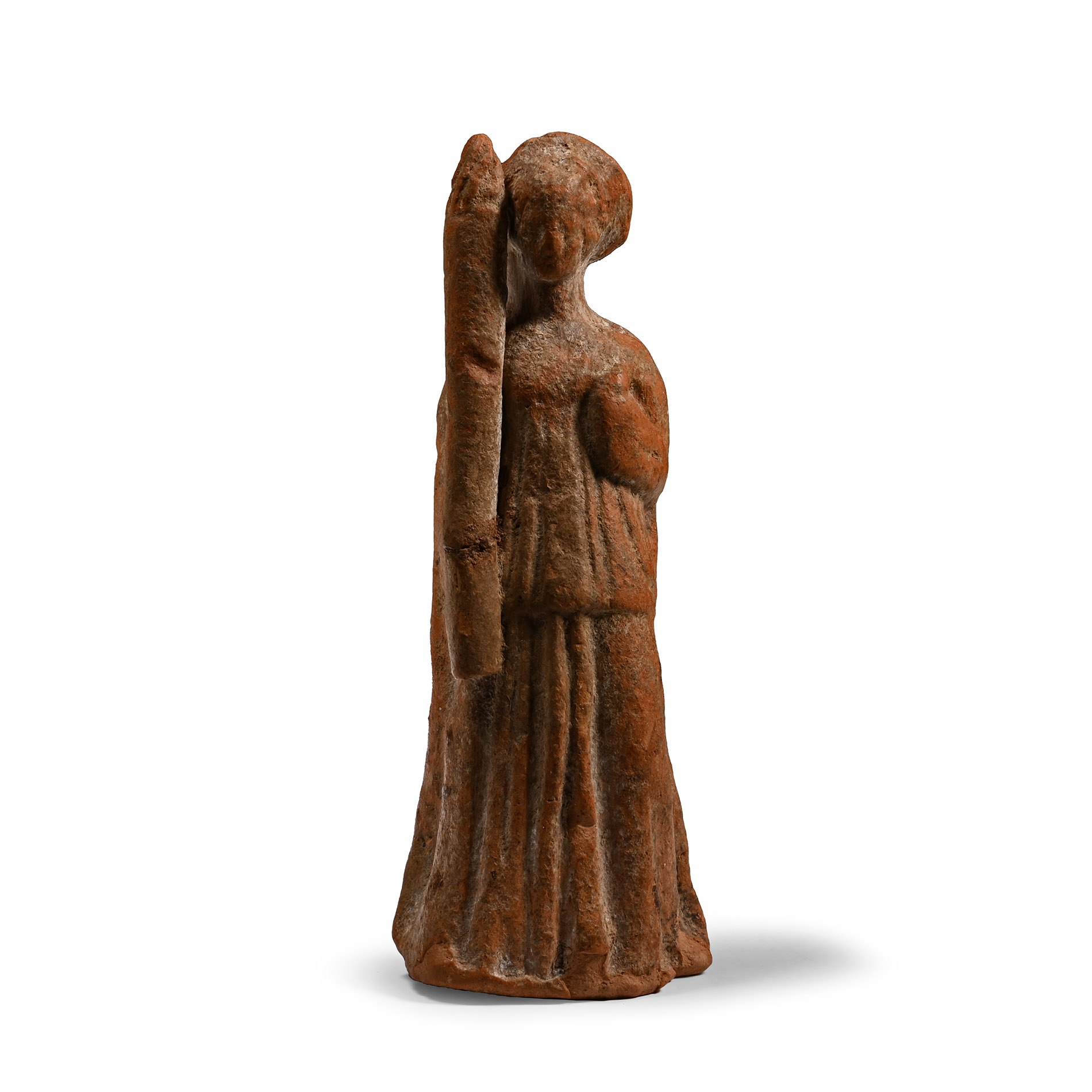
Greek Terracotta Figure
4TH-3RD CENTURY B.C.
4 3/4 in. (18 grams, 12 cm).
Tanagra type, hollow-formed with a void to the reverse, standing female in tiered robe wearing a diadem and with her hair drawn back, applied torch in her right hand.
ProvenanceEuropean art market.
Acquired in Münich in 2012.
European private collection.
See Dillon, S., The Female Portrait Statue in the Greek World, Cambridge, 2010.
CONDITIONTimeLine Auctions follows a vetting process to ensure the authenticity and legality of all items, reinforcing our commitment to integrity and responsible trading. Each antiquity, antique, and coin lot undergoes thorough examination by a vetting committee of at least ten external specialists, professional trade association members, scientists, and archaeologists: Our Vetting Process
AUCTIONS:
TimeLine is a leading auction house specialising in antiquities, ancient art, collectables, natural history, coins, medals, and books. Our auctions offer museums, collectors, historians, and enthusiasts the opportunity to acquire unique and historically significant pieces.
LOT 0065
Greek Terracotta Figure
Estimate £800 - 1,000€930 - 1,160 (for guidance only)$1,080 - 1,350 (for guidance only)
-
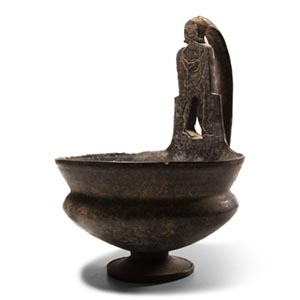
Etruscan Blackware Terracotta Kyathos
6th century B.C.Estimate: £1,200 - 1,700 (+bp*)
Opening Bid: £600
Squat bowl with pedestal foot and carinated profile, broad flared rim; tall loop handle with flat frontal panel with advancing nude kouros, the head turned and one arm bent, voided below respecting the inner outline of the legs; to the reverse, an incised gorgoneion with broad gaping mouth. 1.15 kg, 27 cm
English private collection. -
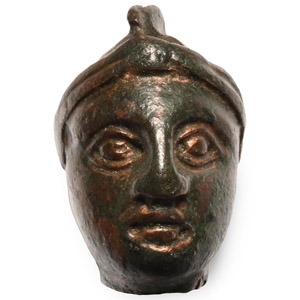
East Greek Bronze Helmetted Head
3rd-2nd century B.C.Sold for (Inc. bp): £124
Modelled in the round, wearing a low crested helmet, stylised facial detailing; socket to the neck. 40.1 grams, 29 mm
Ex German art market, 2000s. Acquired from an EU collector living in London. From the collection of Surrey, UK, gentleman. -
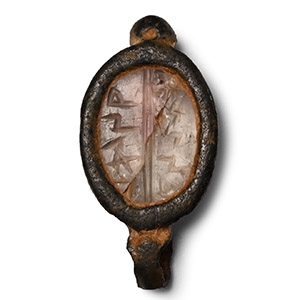
Phoenician Amethyst Gemstone with Aramaic Inscription
8th century B.C.Sold for (Inc. bp): £3,120
Rock crystal scaraboid in a bronze frame with suspension loop; reverse with two lines of Aramaic text; obverse cracked. 1.82 grams, 21 mm
From the collection of a gentleman, acquired on the London art market in the 1990s. This lot has been checked against the Interpol Database of stolen works of art and is accompanied by search certificate number no.12217-221658.
