
Loading, please wait...
LOT 0658
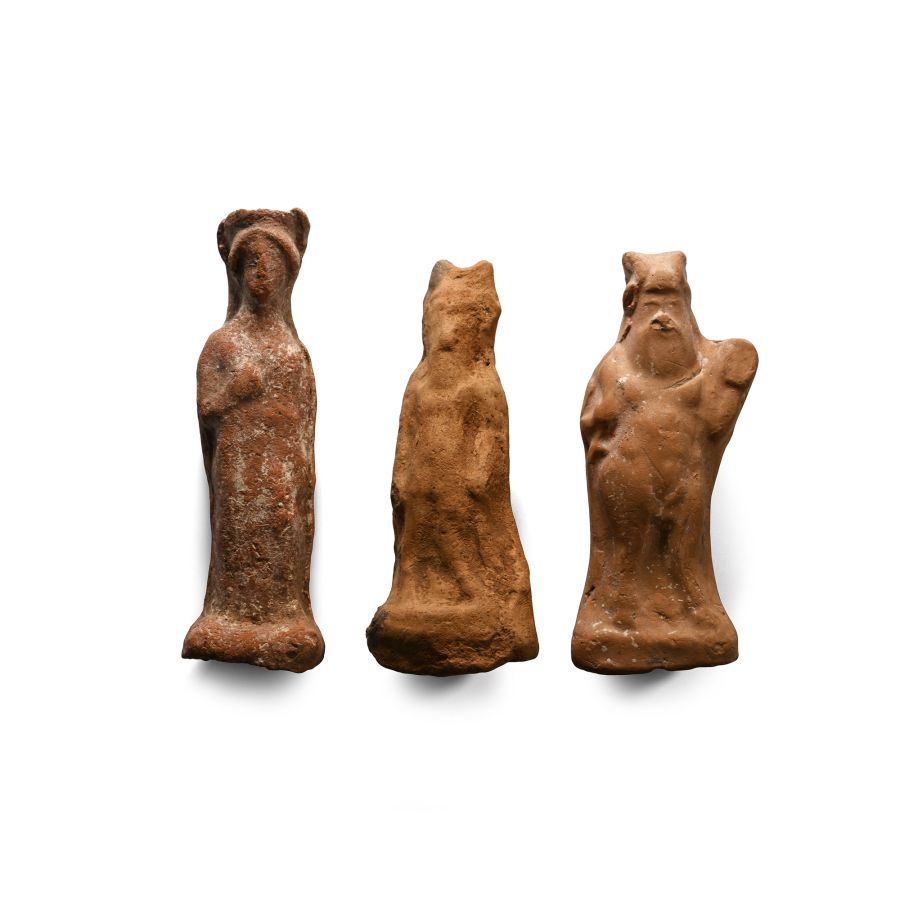
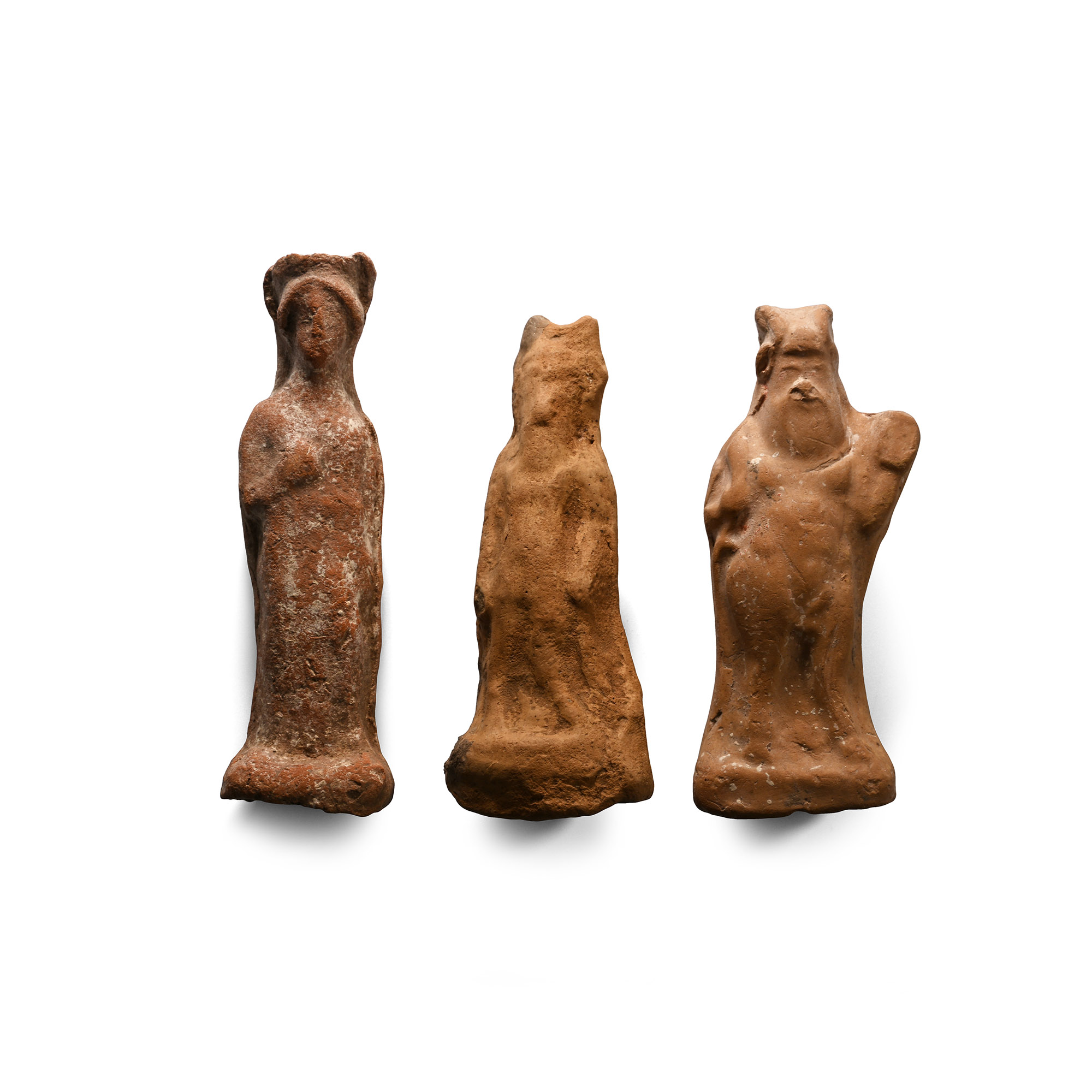
Greek Terracotta Figure Group
3RD-1ST CENTURY B.C.
4 - 4 3/8 in. (200 grams total, 10.4-11.1 cm).
Each moulded with plain reverse, some facial and body detailing to obverse with flared foot. [3]
ProvenanceAcquired in the 1990s.
Private collection, Switzerland, thence by descent.
Private collection, since the late 1990s.
TimeLine Auctions follows a vetting process to ensure the authenticity and legality of all items, reinforcing our commitment to integrity and responsible trading. Each antiquity, antique, and coin lot undergoes thorough examination by a vetting committee of at least ten external specialists, professional trade association members, scientists, and archaeologists: Our Vetting Process
AUCTIONS:
TimeLine is a leading auction house specialising in antiquities, ancient art, collectables, natural history, coins, medals, and books. Our auctions offer museums, collectors, historians, and enthusiasts the opportunity to acquire unique and historically significant pieces.
-
.jpg)
Large Etruscan Terracotta Caeretan Cylinder-Stamped Brazier
7th-6th century B.C.Sold for (Inc. bp): £3,120
Comprising a wide and shallow body with everted rim; the internal wall and the upper face of the rim decorated with a procession of nude men in knielauf position, some holding a lituus in their left hand with their right hand raised up towards the sky, the other figures with both of their hands raised up, the figures alternating with figures of lions and antelopes; rosette to the centre. 9.4 kg, 44.5 cm wide
Acquired on the European art market in the early 2000s. with Galerie Rhéa, Zurich, Switzerland. Accompanied by an academic report by Dr Raffaele D’Amato. This lot has been checked against the Interpol Database of stolen works of art and is accompanied by search certificate number no.12776-237862.
As can be discerned from the identifying marks under the vessels, Caeretan craftsmen used the potting wheel to produce the braziers, a technique introduced in Etruria in the 8th century B.C. They were usually decorated with one or more stamped friezes rolled onto the clay with a large cylindrical matrix before firing. The subjects of these friezes were adapted by the Etruscans from Near Eastern and Greek prototypes. Today, these braziers are found in chamber graves, but they were used in the daily life of Etruscans in domestic and sacred contexts, and employed as portable hearths. A famous example came from the Tomba Maroi III in the Banditaccia Necropolis at Cerveteri, now in the Museo of Villa Giulia, Rome (Pieraccini, 2003, fig.10). It was found perched on a stone seat, and within the burned brazier were burned remains, several eggs and three drinking cups. -
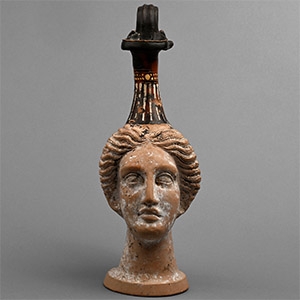
Gnathian Plastic Vase in the Shape of a Woman
4th-3rd century B.C.Sold for (Inc. bp): £7,540
Hollow-formed with broad chamfered base, body modelled as the head of a woman supporting the neck in the form of a trefoil oinochoe with a high, curving handle to the rear; moulded head with detailed swept hair wrapped in a cloth (sakkos), and stern facial features; circumferential painted band beneath the rim and vertical strokes; supplied with a custom-made stand. 1.34 kg total, 31 cm high excluding stand
Acquired from Galerie Simone de Monbrison, Rue Bonaparte, Paris, France, 1980. Accompanied by a thermoluminescence analysis report no.N125e36 from Oxford Authentication. Accompanied by a copy of French passport no.150924, dated 19 December 2013. This lot has been checked against the Interpol Database of stolen works of art and is accompanied by a search certificate number no.12666-234641. -
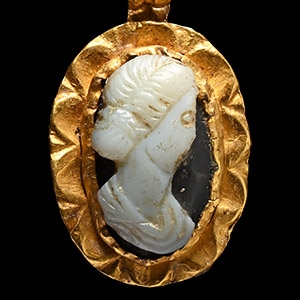
Roman Gold Pendant with Onyx Cameo
2nd century A.D.Estimate: £1,500 - 2,000 (+bp*)
Opening Bid: £750
Comprising a gold medallion and high-relief onyx cameo with female bust in profile facing right, the lower half of her face absent; the jawline and long neck finely carved, hair gathered in a low bun, drapery of the dress framing her face below; set within a gold sleeve and framed by a delicate border with a petal motif; gold loop for suspension. 4.03 grams, 26.90 mm
From the collection of a Cambridge lady, 1990s.
