
Loading, please wait...
LOT 0057
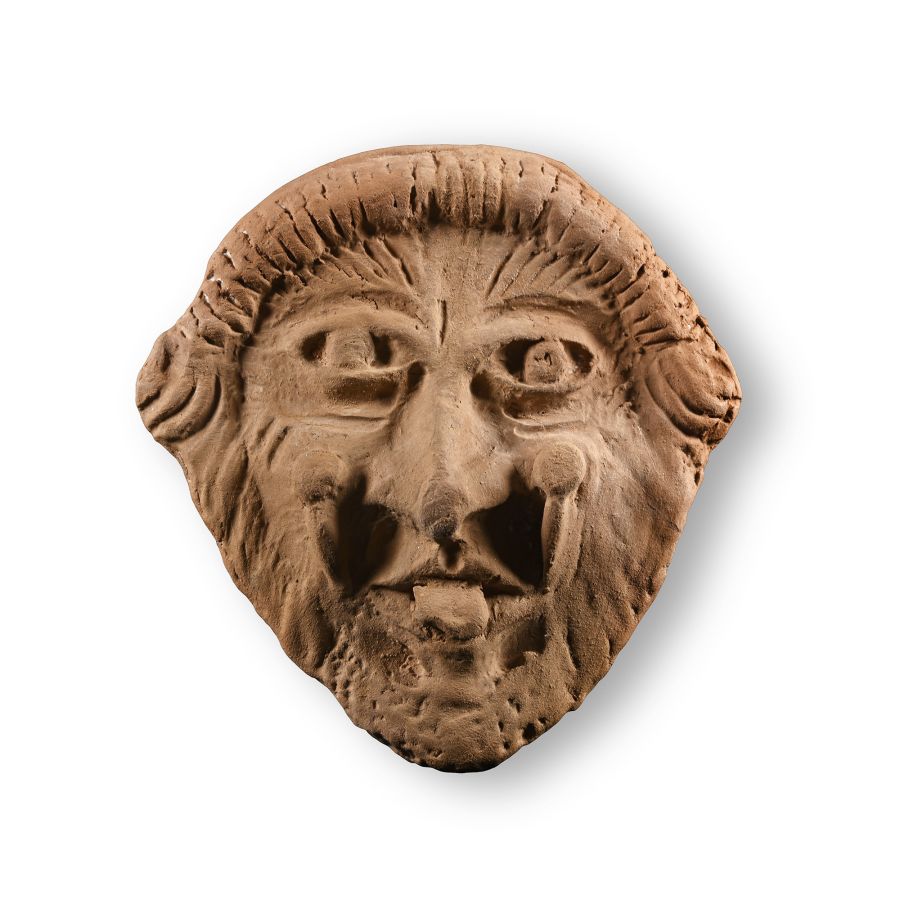
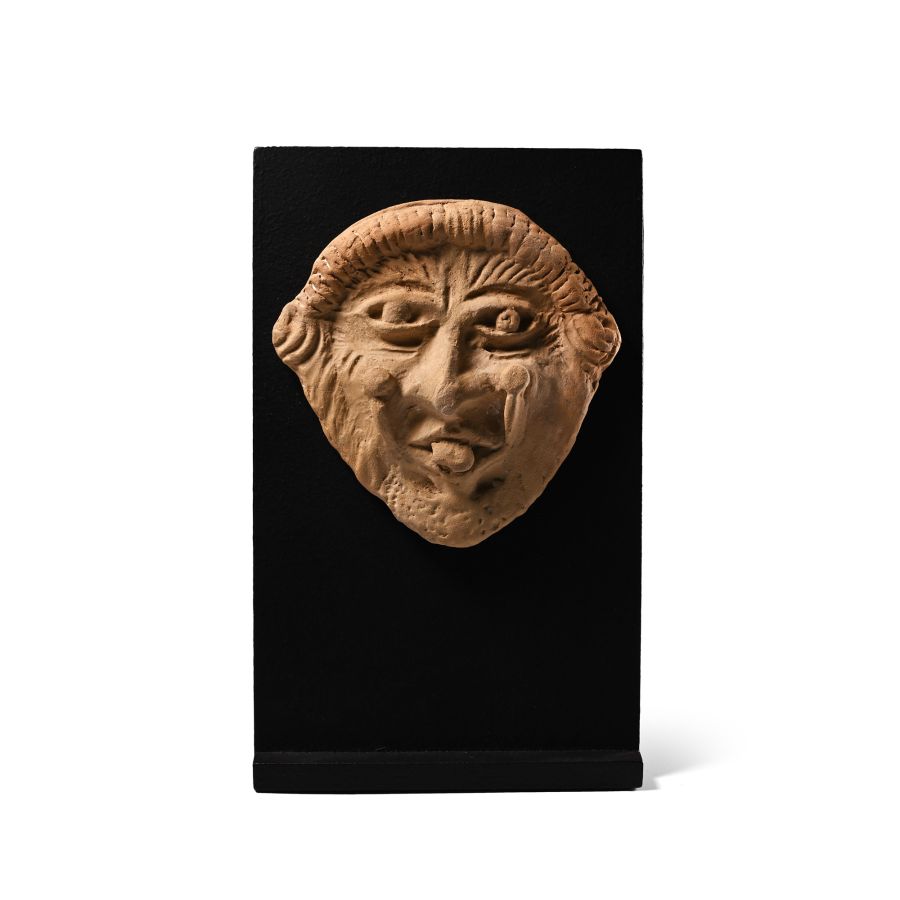
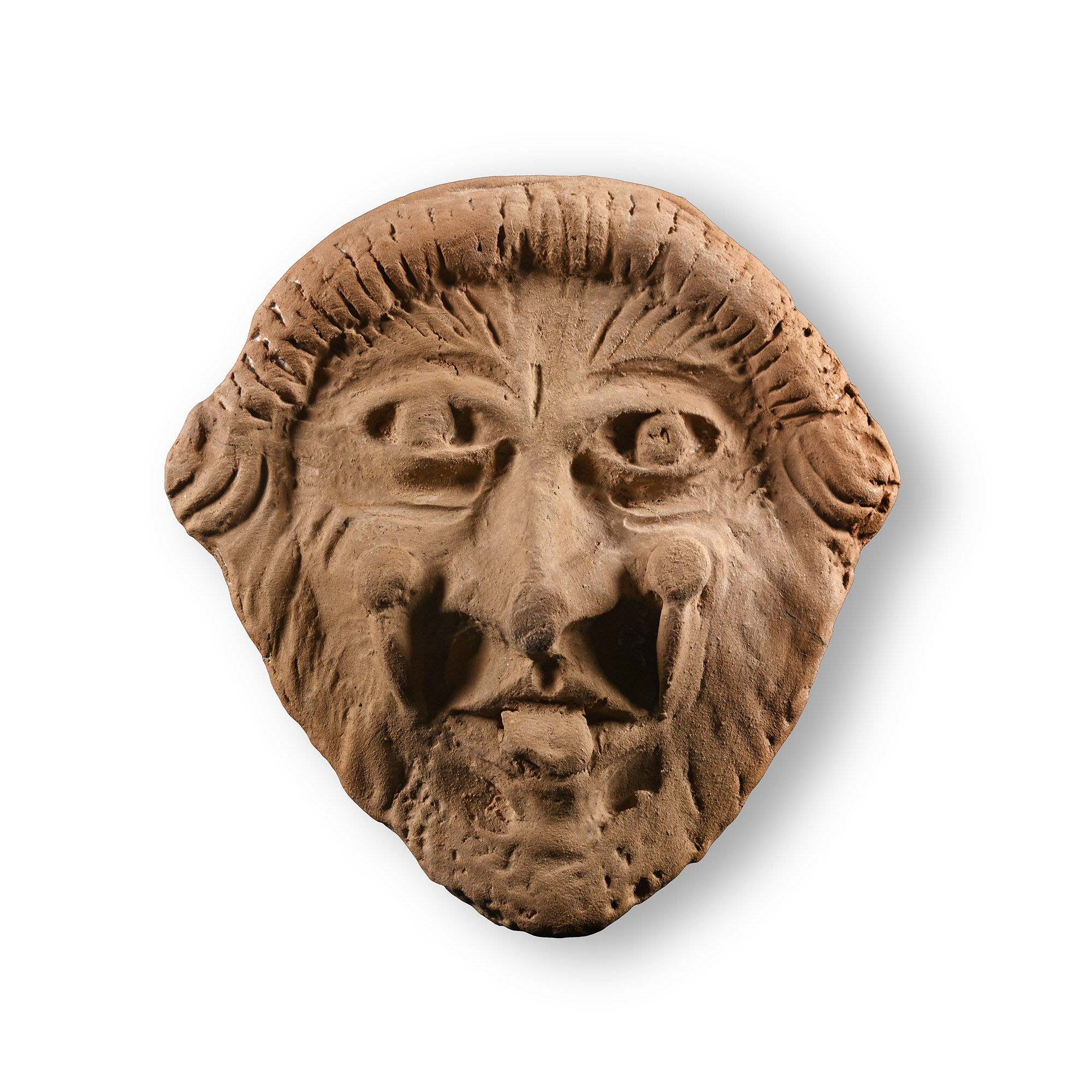
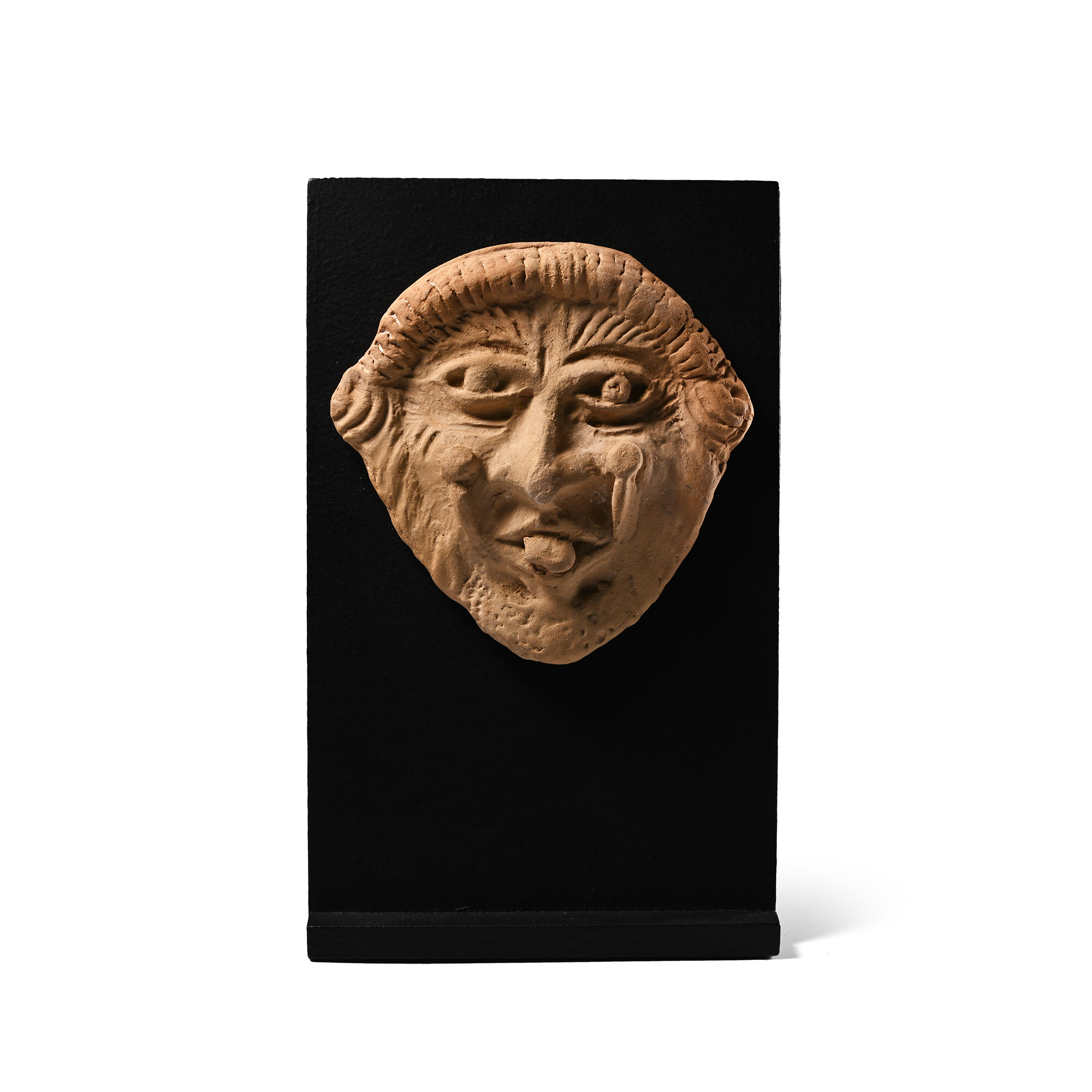
Greek Terracotta Face of a Gorgoneion
6TH-5TH CENTURY B.C.
6 1/8 in. (142 grams total, 15.5 cm including stand).
With large eyes and applied pupils, accentuated nose and open mouth with protruding tongue, hair indicated with regularly disposed lines; repaired, western Greek workmanship; mounted on a custom-made display stand.
ProvenanceEx Mr M.Q.F, Horgen, Switzerland, 1971.
with Galerie Rhéa, Zurich, Switzerland.
A Gorgoneion was a protective symbol in ancient Greek art that depicts the head of the Gorgon, a mythical creature with snakes for hair and a terrifying gaze that could turn people to stone. The Gorgoneion was believed to have the power to ward off evil and protect the person who wore it or displayed it. The image of the Gorgoneion was often used as an apotropaic symbol to ward off evil or bad luck. It was often depicted on shields, armour, or even as an architectural feature on buildings. The symbol was also sometimes used in jewellery, such as amulets or pendants, and was believed to bring good luck and protection to the wearer. The most famous depiction of the Gorgoneion is probably the one on the aegis of the goddess Athena.
CONDITIONTimeLine Auctions follows a vetting process to ensure the authenticity and legality of all items, reinforcing our commitment to integrity and responsible trading. Each antiquity, antique, and coin lot undergoes thorough examination by a vetting committee of at least ten external specialists, professional trade association members, scientists, and archaeologists: Our Vetting Process
AUCTIONS:
TimeLine is a leading auction house specialising in antiquities, ancient art, collectables, natural history, coins, medals, and books. Our auctions offer museums, collectors, historians, and enthusiasts the opportunity to acquire unique and historically significant pieces.
-
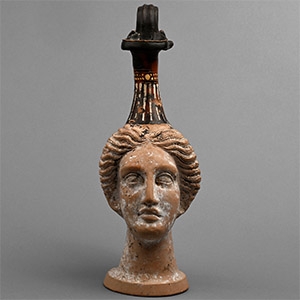
Gnathian Plastic Vase in the Shape of a Woman
4th-3rd century B.C.Sold for (Inc. bp): £7,540
Hollow-formed with broad chamfered base, body modelled as the head of a woman supporting the neck in the form of a trefoil oinochoe with a high, curving handle to the rear; moulded head with detailed swept hair wrapped in a cloth (sakkos), and stern facial features; circumferential painted band beneath the rim and vertical strokes; supplied with a custom-made stand. 1.34 kg total, 31 cm high excluding stand
Acquired from Galerie Simone de Monbrison, Rue Bonaparte, Paris, France, 1980. Accompanied by a thermoluminescence analysis report no.N125e36 from Oxford Authentication. Accompanied by a copy of French passport no.150924, dated 19 December 2013. This lot has been checked against the Interpol Database of stolen works of art and is accompanied by a search certificate number no.12666-234641. -
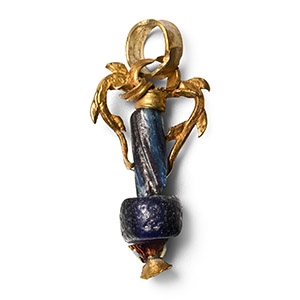
Hellenistic Gold Dolphin and Jasper Amphora Pendant
Circa 2nd-1st century B.C.Sold for (Inc. bp): £410
Formed as an amphora with cylindrical neck, biconical jasper body and small gold granulated bead; to the shoulders, two dolphins flanking the suspension loop, forming the handles of the amphora; each eye represented by a small circular cell to accept a gemstone; row of granulation down to the rear and around the perimeter of the eyes; loop added in antiquity for suspension. 1.17 grams, 25 mm
From a late Japanese specialist collector, 1970-2000s. -
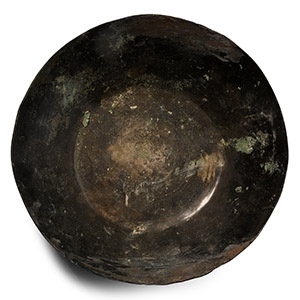
Parthian Bronze Bowl
2nd century B.C.-1st century A.D.Estimate: £100 - 140 (+bp*)
Opening Bid: £50
Broad and squat with flared sidewall. 153 grams, 17.5 cm
Ex 1990s collection and with a central London gallery.
