
Loading, please wait...
LOT 0642
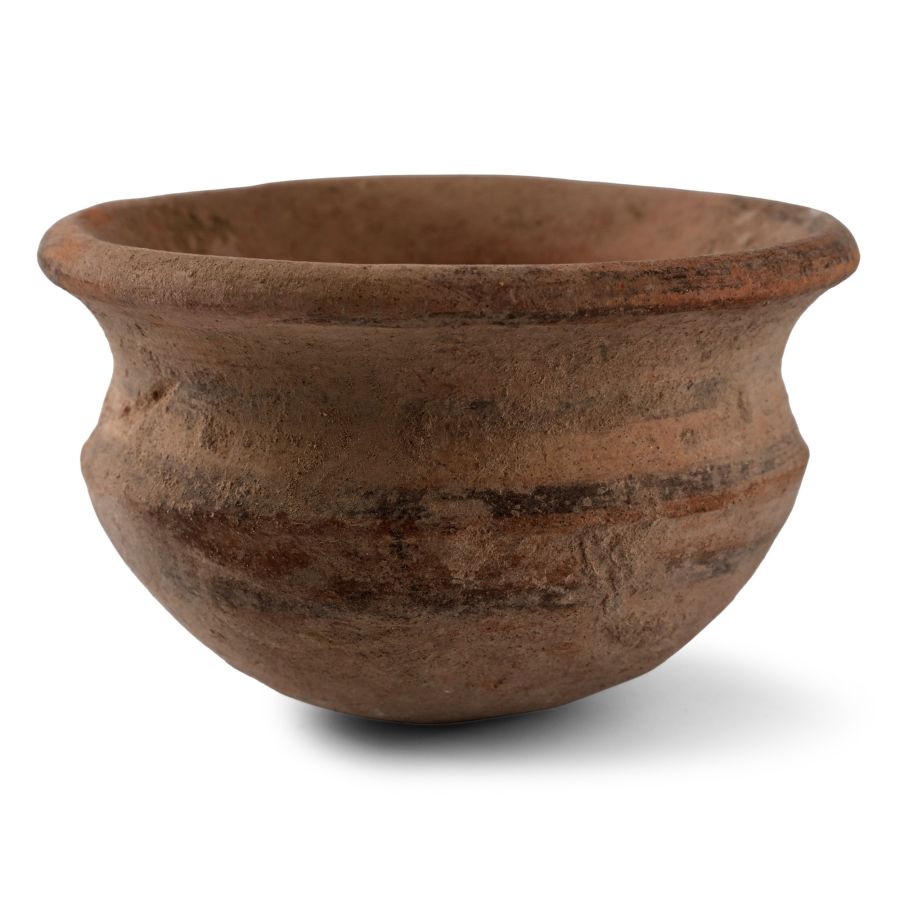
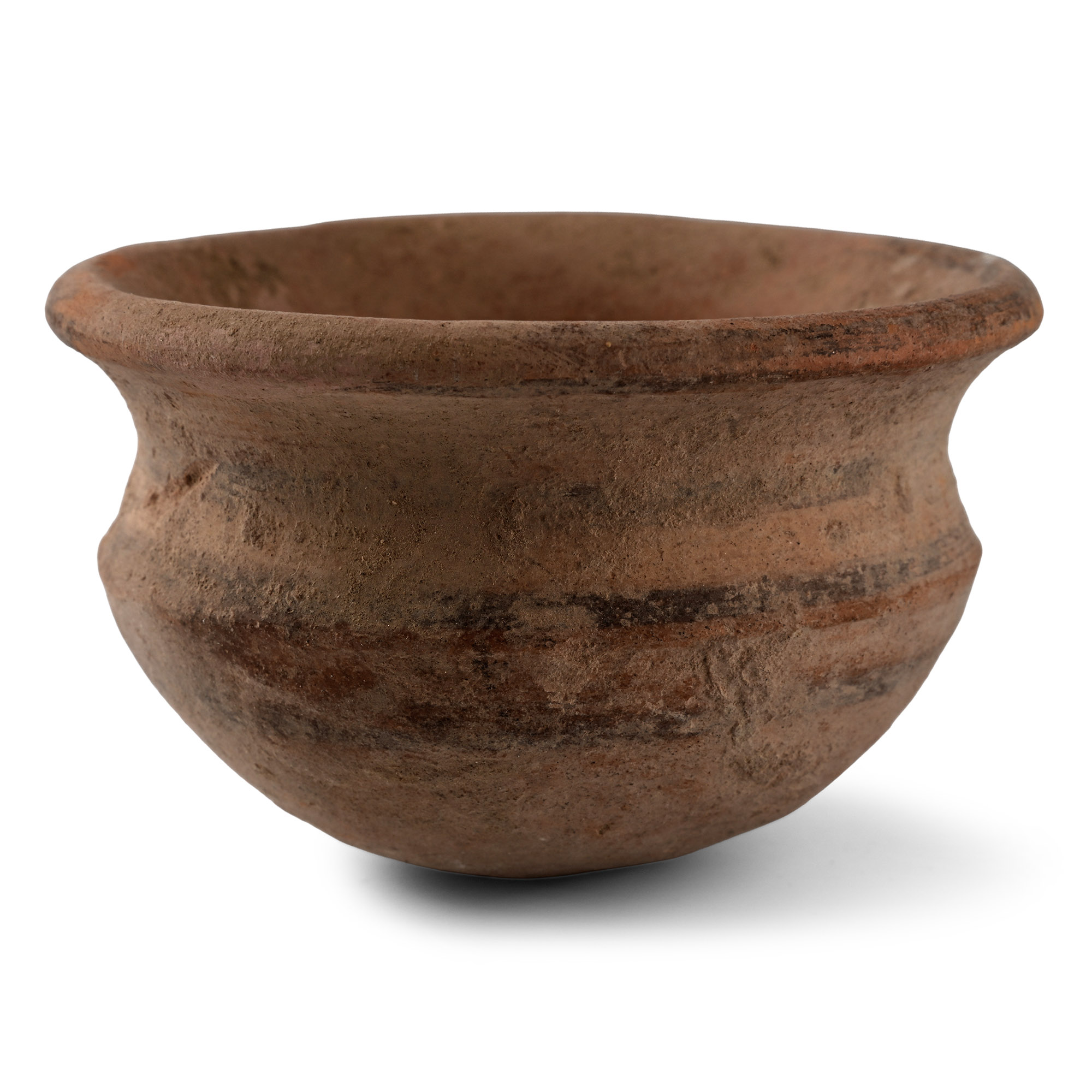
Greek Terracotta Cup
5TH-3RD CENTURY B.C.
3 3/8 in. (128 grams, 87 mm).
Squat in profile with carinated shoulder and everted rim, rounded underside. [No Reserve]
ProvenanceFrom an English collection formed in the 1990s.
Ex property of an Essex gentleman.
From the property of a late Lincolnshire, UK, gentleman.
TimeLine Auctions follows a vetting process to ensure the authenticity and legality of all items, reinforcing our commitment to integrity and responsible trading. Each antiquity, antique, and coin lot undergoes thorough examination by a vetting committee of at least ten external specialists, professional trade association members, scientists, and archaeologists: Our Vetting Process
AUCTIONS:
TimeLine is a leading auction house specialising in antiquities, ancient art, collectables, natural history, coins, medals, and books. Our auctions offer museums, collectors, historians, and enthusiasts the opportunity to acquire unique and historically significant pieces.
-
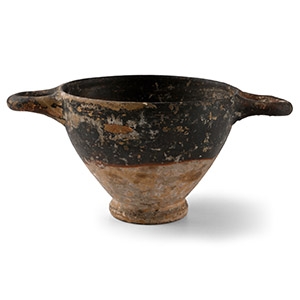
Greek Black Ware Skyphos
Apulian, 5th century B.C.Sold for (Inc. bp): £221
With a short stem and ring pedestal base, a steep-sided bowl and two looped round-section handles below the rim. 96 grams, 14.2 cm
From an old Canterbury collection formed in the early 20th century. From the property of a late Lincolnshire, UK, gentleman. -
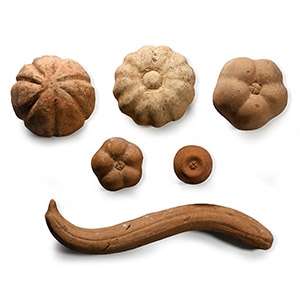
Greek Terracotta Model Fruit and Vegetable Group
4th century B.C.Estimate: £800 - 1,000 (‡+bp*)
Opening Bid: £444
Including pomegranates, apples and a gourd. 989 grams total, 4.5-18.7 cm
Estate of Mr Bruno Fellinger (1926-2016), Küsnacht, Switzerland. with Galerie Rhéa, Zurich, Switzerland. -
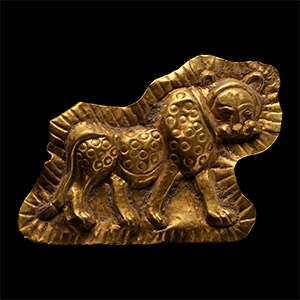
Scythian Gold Applique
4th-3rd century B.C.Sold for (Inc. bp): £975
Sheet-gold panel with repoussé advancing leopard motif surrounded by a hatched border. 1.94 grams, 44 mm
Ex Mayfair gallery, London, UK, pre 1999.
