
Loading, please wait...
LOT 0045
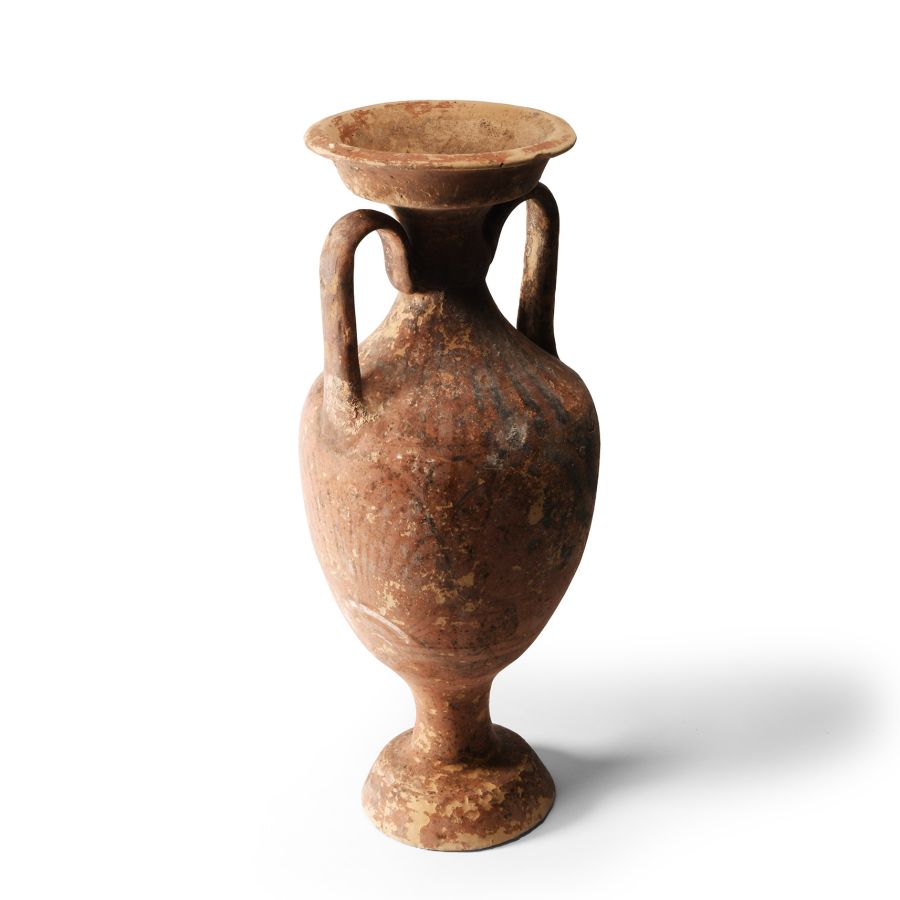
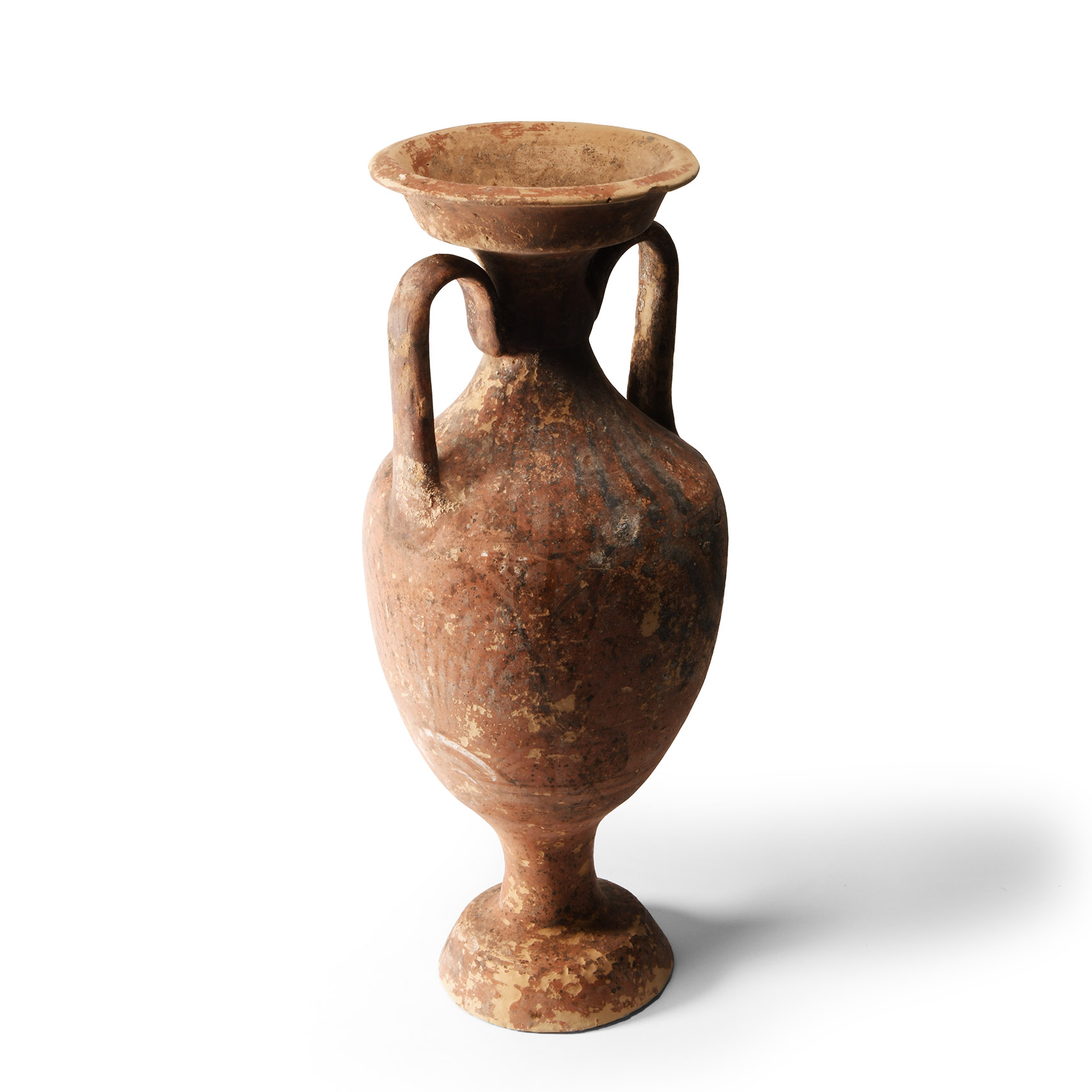
Greek Terracotta Amphora with Palmettes and Standing Figure
APULIAN, 4TH CENTURY B.C.
14 3/4 in. (1.6 kg, 37.5 cm high).
Piriform-bodied with two handles flanking a stepped neck and mouth, stemmed foot with chamfered edge; polychrome painted shell ornament together with a figural panel; possibly a marriage.
ProvenanceEx collection of a Suffolk, UK, gentleman, 1990s.
LiteratureCf. The J. Paul Getty Museum, number 79.AE.25.1, for a vessel of very similar form.
CONDITIONTimeLine Auctions follows a vetting process to ensure the authenticity and legality of all items, reinforcing our commitment to integrity and responsible trading. Each antiquity, antique, and coin lot undergoes thorough examination by a vetting committee of at least ten external specialists, professional trade association members, scientists, and archaeologists: Our Vetting Process
AUCTIONS:
TimeLine is a leading auction house specialising in antiquities, ancient art, collectables, natural history, coins, medals, and books. Our auctions offer museums, collectors, historians, and enthusiasts the opportunity to acquire unique and historically significant pieces.
LOT 0045
Greek Terracotta Amphora with Palmettes and Standing Figure
Sold for (Inc. bp): £572
-
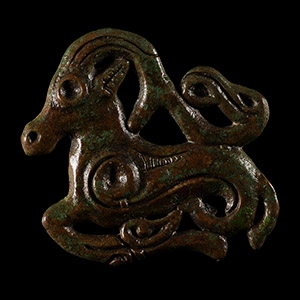
Scythian Bronze Galloping Stag Mount
4th-3rd century B.C.Sold for (Inc. bp): £910
In the form of a stag or other horned quadruped facing left, shallow geometric cells forming the eyes and other stylised anatomical detailing; mounting lug to reverse. 55 grams, 72 mm
Acquired 1980-2015. Ex Abelita family collection. -
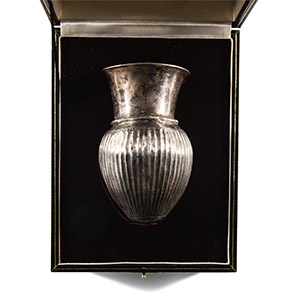
Eastern Greek Ribbed Silver Vase
Circa 3rd century B.C.Sold for (Inc. bp): £1,560
Of piriform shape with a small foot, multi-petalled rosette within the shallow kick-up to base, vertically fluted body, ovolo ornament to the shoulder and flared mouth with rolled rim; six strain holes to the shoulder; held within a custom-made felt-lined display box. 132 grams, 13.5 cm high ( 765 grams total, 22 x 17 cm including box)
with the Mahboubian Gallery, London, UK; acquired before 1972. with Bonhams, London, 26 October 2007, lot 213. Acquired on the London art market.
The straining holes are an indication that the vessel possibly once had a spout. -
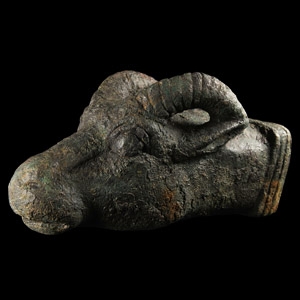
Parthian Bronze Attachment in the Form of a Gazelle's Head
Circa 3rd century B.C.Estimate: £4,000 - 6,000 (+bp*)
Opening Bid: £2,000
Modelled with naturalistic detailing; square-section collared socket with one square hole for attachment. 1.07 kg, 16.3 cm
Ex French collection, 1990s. French gallery 2000s. This lot has been checked against the Interpol Database of stolen works of art and is accompanied by search certificate number no.203557.
