
Loading, please wait...
LOT 1826
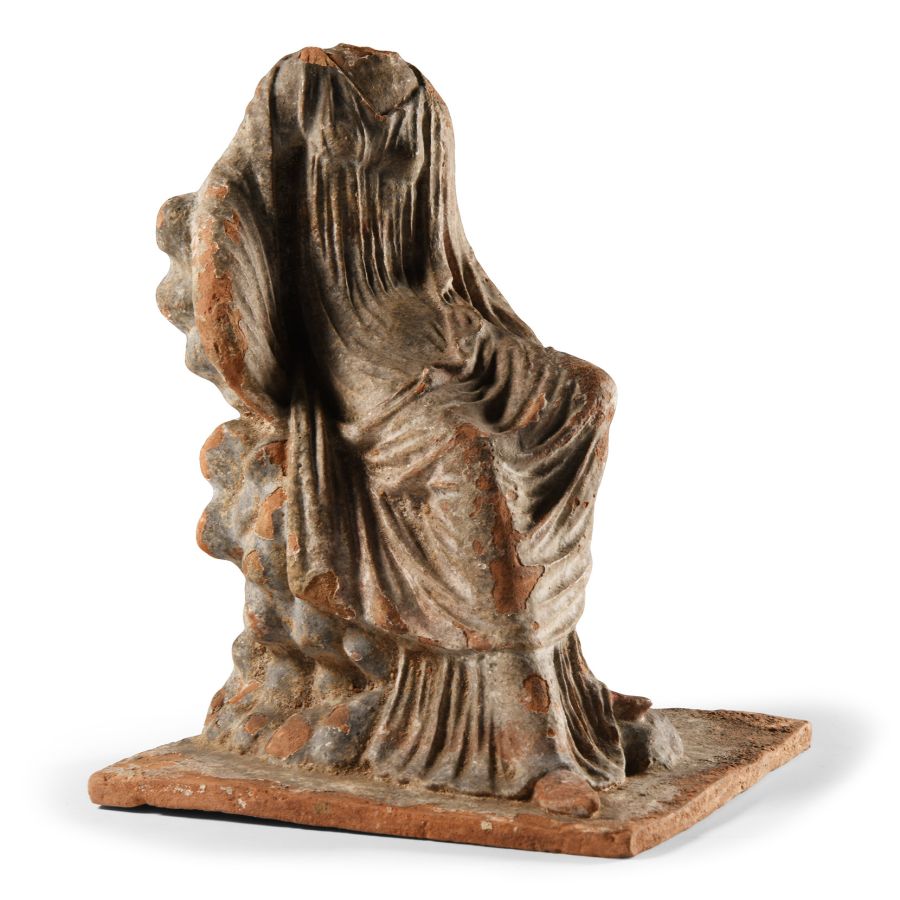
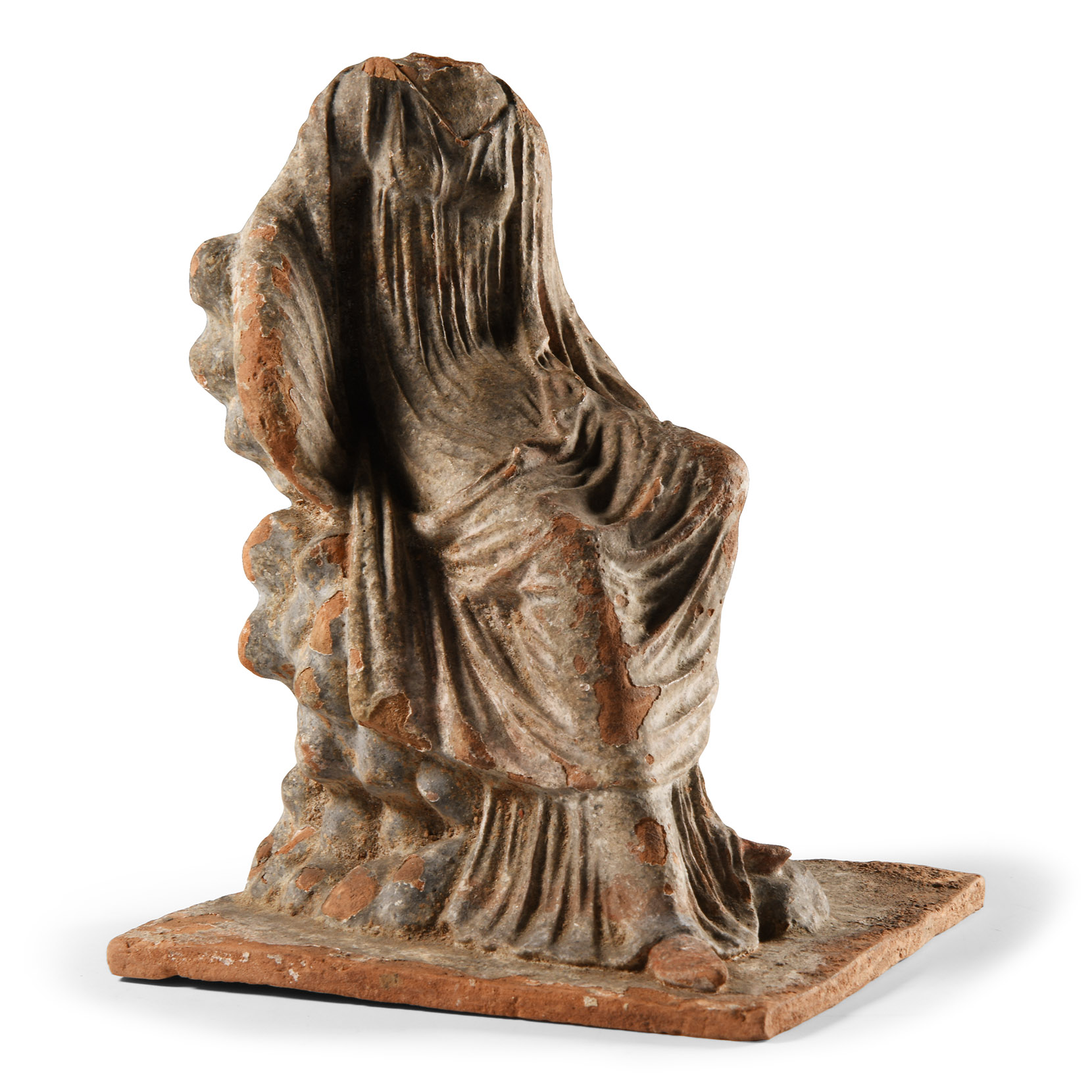
Greek Style Tanagra Torso Statue
20TH CENTURY A.D.
5 3/4 in. (247 grams, 14.5 cm).
Modelled in the round seated female figure in a long flowing robe, the limbs covered in the folds of the fabric; rectangular base, hollow to the underside, round void to the reverse. [No Reserve]
ProvenanceEx Paris collection, early 20th century.
CONDITIONTimeLine Auctions follows a vetting process to ensure the authenticity and legality of all items, reinforcing our commitment to integrity and responsible trading. Each antiquity, antique, and coin lot undergoes thorough examination by a vetting committee of at least ten external specialists, professional trade association members, scientists, and archaeologists: Our Vetting Process
AUCTIONS:
TimeLine is a leading auction house specialising in antiquities, ancient art, collectables, natural history, coins, medals, and books. Our auctions offer museums, collectors, historians, and enthusiasts the opportunity to acquire unique and historically significant pieces.
-

Framed Watercolour Painting
Persia, 20th century A.D.Sold for (Inc. bp): £26
With battle scene between the Ottomans and the Persians set on a hill, composed of a meleé of mounted warriors attacking each other with swords, on older paper; mounted in a glazed wooden frame. 981 grams, 44.5 x 28 cm
Fine condition.
Acquired on the UK art market, 1980s-1990s. The Woodbridge collection of Indo-Persian art. -
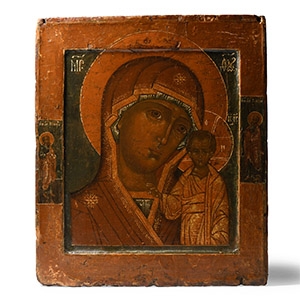
Russian Wooden Icon with Virgin of Kazan
17th-18th century A.D.Estimate: £3,000 - 4,000 (+bp*)
Opening Bid: £1,500
Painted on board with mounting panels to the reverse, gessoed surface with central painting of the Virgin of Kazan (also called the Virgin of Tenderness) in a recess, comprising the bust of Mary and standing figure of infant Jesus, both nimbate, monograms to the upper corners; miniature figures of Saints Peter and Paul to the border; on each side of the head of the Virgin inscriptions 'ΜΡ' and 'ΘΥ' (Μήτηρ (τοῦ) Θεοῦ = Mother of God), inscription in Greek letters 'ΙϹ ΧϹ' (ΙΗϹΟΥϹ ΧΡΙϹΤΟϹ = Jesus Christ) above the child, three letters (only two visible) inside the nimbus of Christ representing the continuous divine self-existence of Christ as God ('O ѾN' = The Only One who always exists); Yaroslavl School. 1.39 kg, 32 cm high
Fine condition.
Ex property of a London lady, part of her family's collection. This lot has been checked against the Interpol Database of stolen works of art and is accompanied by search certificate no. 11544-196360.
The original icon, also known as the Theotokos of Kazan, is thought to have originated in Constantinople in the 13th century before it was taken to Russia. When the Turks took over Kazan in 1438, the icon was most probably hidden to keep it safe. Ivan the Terrible liberated Kazan in 1552, and the town was destroyed by fire in 1579, after which the icon was found and brought to the Church of Saint Nicholas. It was subsequently stolen in 1904 and never found again, though there are many copies in existence. -

Lifesize Marble Statue of Venus
19th century A.D.Estimate: £2,500 - 3,500 (+bp*)
Opening Bid: £1,350
The upper body of a young female figure, likely the goddess Venus, shrouded in a palla mantle worn over the robe and draped over the head as a hood; the left arm bent to form folds and gatherings in the cloth, the right arm shown beneath the cloth held bent to the right breast; after the antique. 133 kg, 84 cm high
French collection, 1960s-early 2000s. From an important Paris gallery, France. This lot has been checked against the Interpol Database of stolen works of art and is accompanied by search certificate no.12090-213905.
In Roman mythology, Venus was the goddess of love, sex, beauty and fertility. Married to the god Vulcan, Venus' principal divine lover was Mars, with whom she was famously trapped in bed with a net by Vulcan. The goddess also had numerous mortal lovers - Adonis for example. The earliest known appearance of a temple dedicated to Venus was founded on the Aventine Hill in 295 B.C. She is most closely associated with the month of April, the beginning of the season of spring.
