
Loading, please wait...
LOT 0543
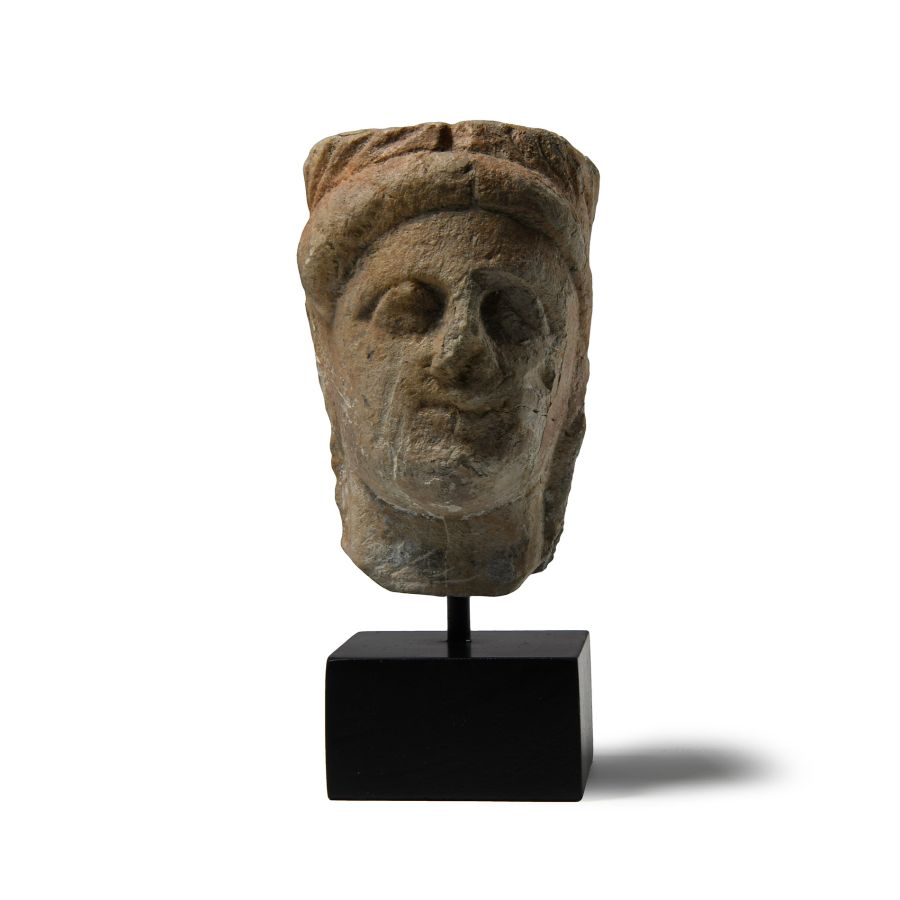
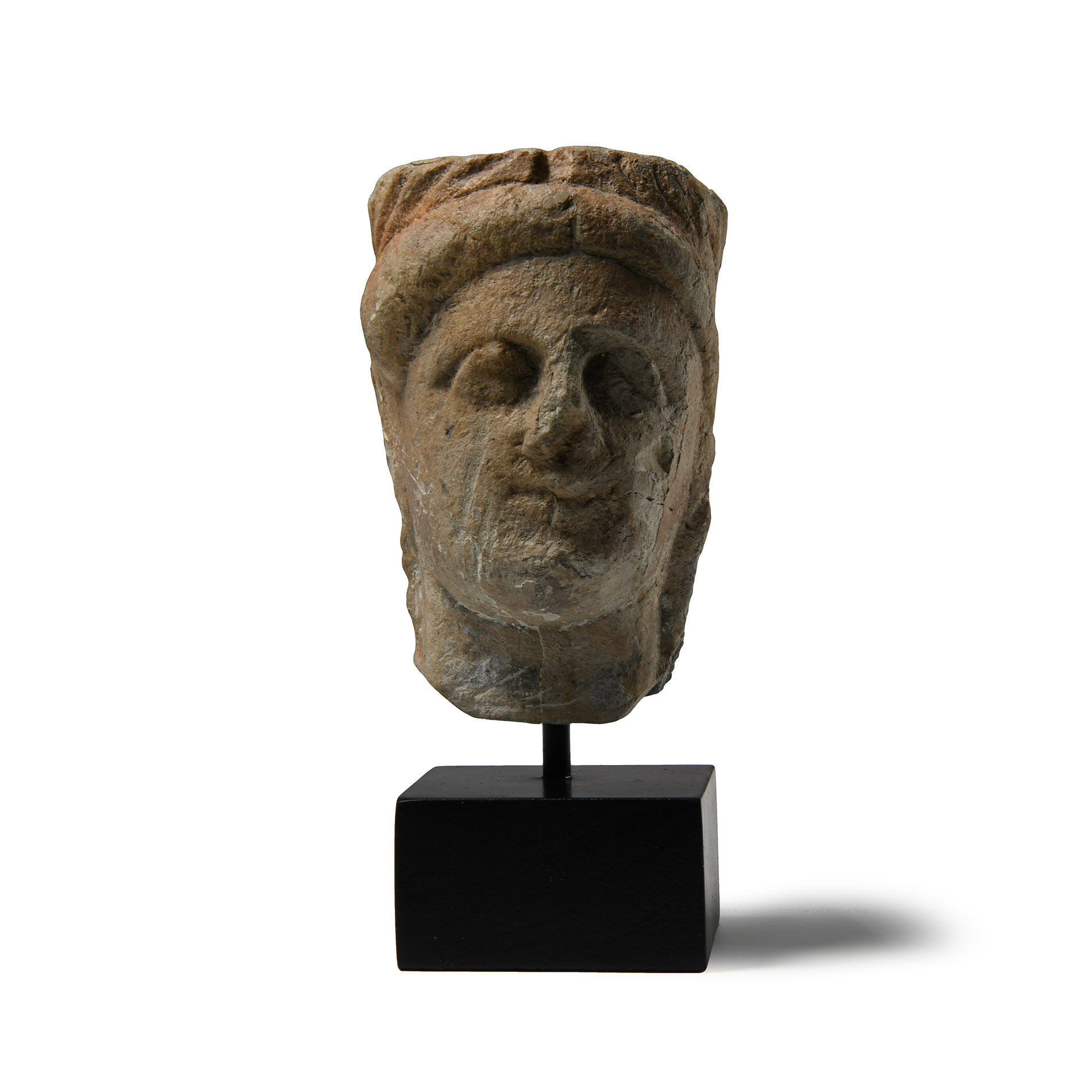
Greek Stone Head of a Caryatid
4TH-2ND CENTURY B.C.
5 5/8 in. (426 grams total, 14.2 cm including stand).
Modelled in the half-round with D-shaped face and short neck, transverse band of hair above the brow and ribbed panel above, flat-topped; slot to lower rear for attachment; mounted on a custom-made display stand. [No Reserve]
ProvenanceFrom a collection acquired on the UK art market from various auction houses and collections mostly before 2000.
From an important Cambridgeshire estate; thence by descent.
Cf. similar in the British Museum under accession no.1816,0610.128.
CONDITIONTimeLine Auctions follows a vetting process to ensure the authenticity and legality of all items, reinforcing our commitment to integrity and responsible trading. Each antiquity, antique, and coin lot undergoes thorough examination by a vetting committee of at least ten external specialists, professional trade association members, scientists, and archaeologists: Our Vetting Process
AUCTIONS:
TimeLine is a leading auction house specialising in antiquities, ancient art, collectables, natural history, coins, medals, and books. Our auctions offer museums, collectors, historians, and enthusiasts the opportunity to acquire unique and historically significant pieces.
-
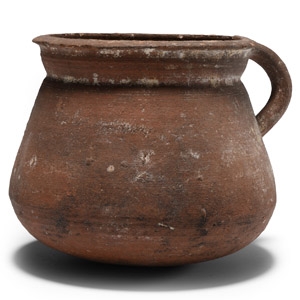
Greek Brown Ware Terracotta Cup
Circa 5th-3rd century B.C.Sold for (Inc. bp): £78
Squat in profile with rounded underside, broad mouth with carinated rim and single strap handle. 162 grams, 12 cm wide
From a collection acquired on the UK art market from various auction houses and collections mostly before 2000. From an important Cambridgeshire estate; thence by descent. -
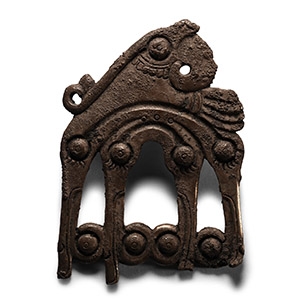
Thracian Silver Pendant
6th-3rd century B.C.Estimate: £500 - 700 (‡+bp*)
Opening Bid: £250
Openwork plaque depicting a stylised horse with curved body, bosses to the hips and shoulders, head turned backwards along the spine with looped reins; ribbed loop to the reverse. 41.5 grams, 75 mm
Acquired in the mid 1980s-1990s. From the family collection of Mr S.A., Switzerland, thence by descent. Private collection since the late 1990s. -
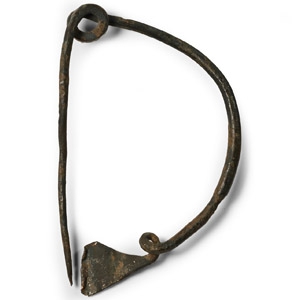
Greek Archaic Bronze Brooch
7th century B.C.Sold for (Inc. bp): £59
Comprising a simple arched bow, coiled pin and a flaring catch-plate. 2.58 grams, 47 mm
Property of the vendor's grandfather, thence by family descent, circa 1985. From the private collection of a New York, USA gentleman.
