
Loading, please wait...
LOT 0541
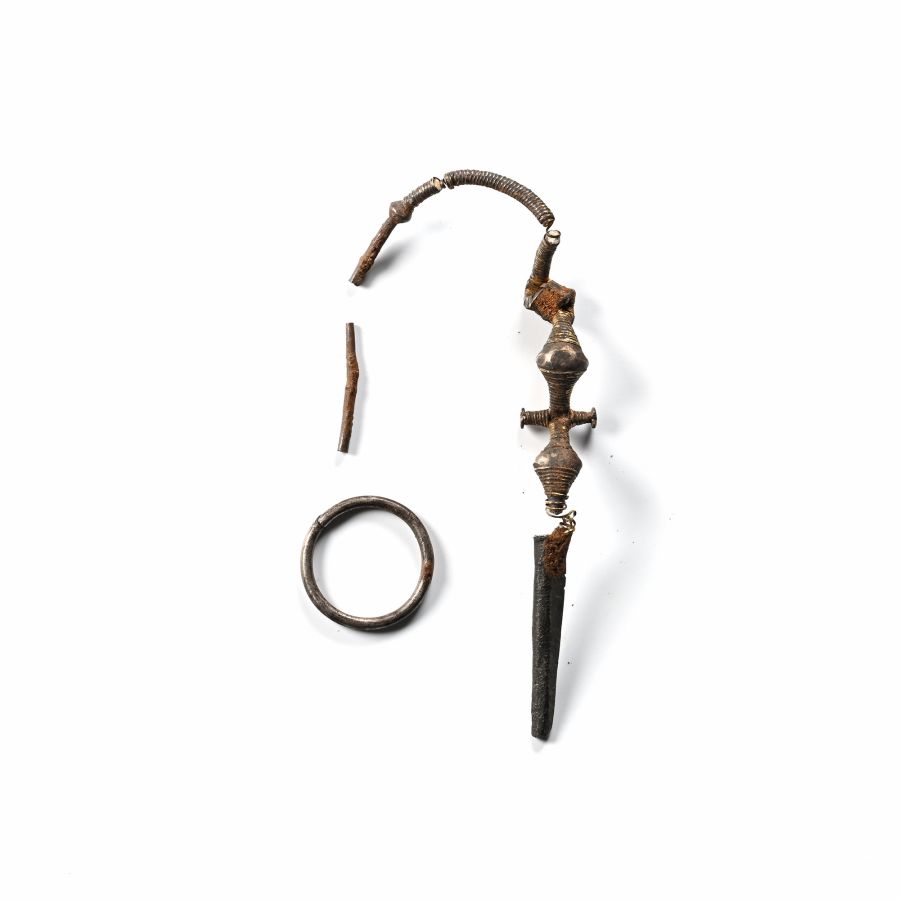
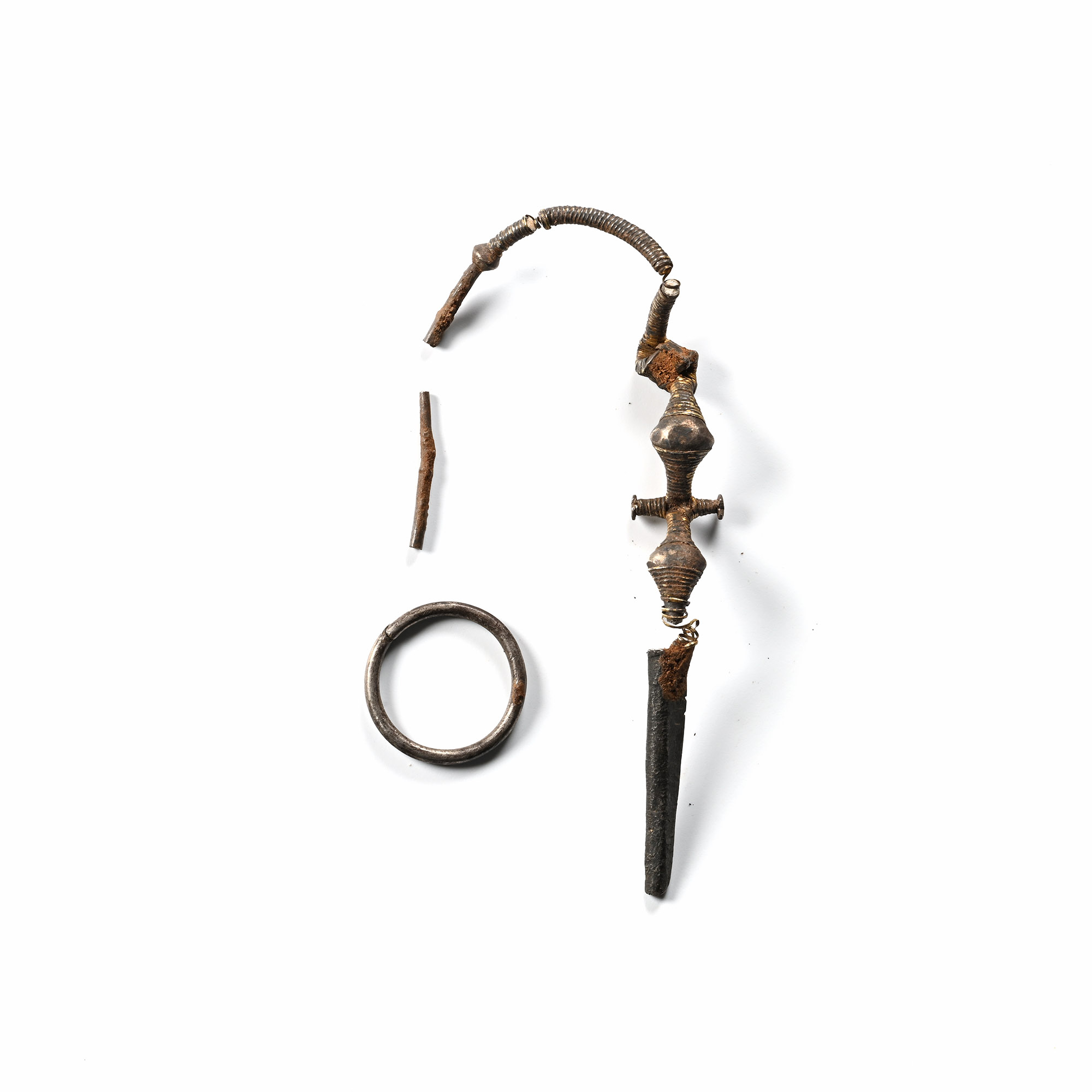
Greek Silver Wire Fibula
6TH-4TH CENTURY B.C.
3/4 - 4 7/8 in. (9.11 grams total, 1.8-12.4 cm).
With coiled spring and lateral lugs; tapering shank and separate ring. [3]
ProvenancePrivate collection, Switzerland, 1992.
Thence by descent.
Private collection, since the late 1990s.
This lot is accompanied by an illustrated lot declaration signed by the Head of the Antiquities Department, Dr Raffaele D'Amato.
TimeLine Auctions follows a vetting process to ensure the authenticity and legality of all items, reinforcing our commitment to integrity and responsible trading. Each antiquity, antique, and coin lot undergoes thorough examination by a vetting committee of at least ten external specialists, professional trade association members, scientists, and archaeologists: Our Vetting Process
AUCTIONS:
TimeLine is a leading auction house specialising in antiquities, ancient art, collectables, natural history, coins, medals, and books. Our auctions offer museums, collectors, historians, and enthusiasts the opportunity to acquire unique and historically significant pieces.
LOT 0541
Greek Silver Wire Fibula
Estimate £300 - 400€350 - 460 (for guidance only)$410 - 540 (for guidance only)
-
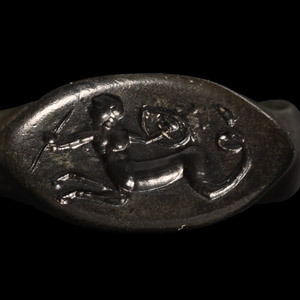
Greek Bronze Seal Ring with Hippocamp
Circa 5th-3rd century B.C.Sold for (Inc. bp): £228
Comprising a wide hoop and lentoid bezel with a leaping hippocamp holding a spear and a shield. 8.14 grams, 24.23 mm overall, 19.29 mm internal diameter (approximate size British S 1/2, USA 9 1/4, Europe 20.63, Japan 19)
Ex German art market, 2000s. Acquired from an EU collector living in London. From the collection of a Surrey, UK, gentleman. This lot is accompanied by an illustrated lot declaration signed by the Head of the Antiquities Department, Dr Raffaele D'Amato. -
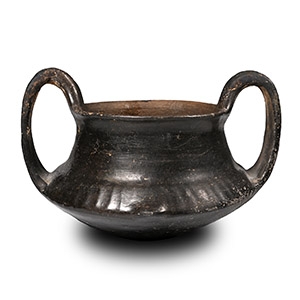
Villanovan Terracotta Two-Handled Bowl
9th-8th century B.C.Sold for (Inc. bp): £390
A squat vessel with a small base, raised neck and slightly projecting rim, carinated shoulder with two projecting bosses and a pair of high strap handles. 221 grams, 13.4 cm wide
Old Basel private collection. Elsa Bloch-Diener, Antike Kunst, Bern, 27 July 1990. Private collection, Bern, Switzerland. This lot is accompanied by an illustrated lot declaration signed by the Head of the Antiquities Department, Dr Raffaele D'Amato. -
.jpg)
Iberian Bronze Statuette
6th-4th century B.C.Estimate: £4,000 - 6,000 (‡+bp*)
Opening Bid: £1,800
Youthful male standing wearing a belted tunic with apron, arms spread wide, barefoot, bare-headed with short textured hair; mounted on a custom-made base. 215 grams total, 11.8 cm high including stand
Private collection, Paris, France, assembled in the 1950s-1960s. with Tessier-Sarrou & Associés, Paris, 2015. European private collection. Accompanied by a copy of an Art Loss Register certificate, no.S00107108. Accompanied by a copy of French cultural export passport no.167803. This lot has been checked against the Interpol Database of stolen works of art and is accompanied by a search certificate number no.12650-264612. This lot has been cleared against the Art Loss Register database, and is accompanied by an illustrated lot declaration signed by the Head of the Antiquities Department, Dr Raffaele D'Amato.
