
Loading, please wait...
LOT 0535
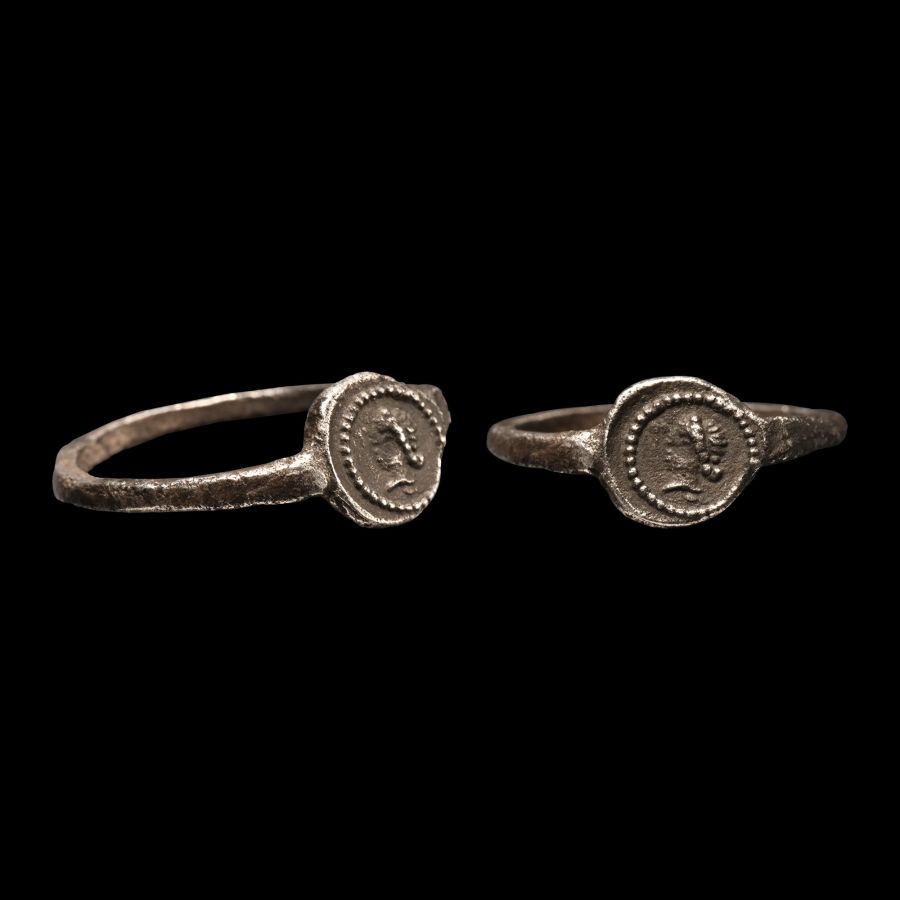
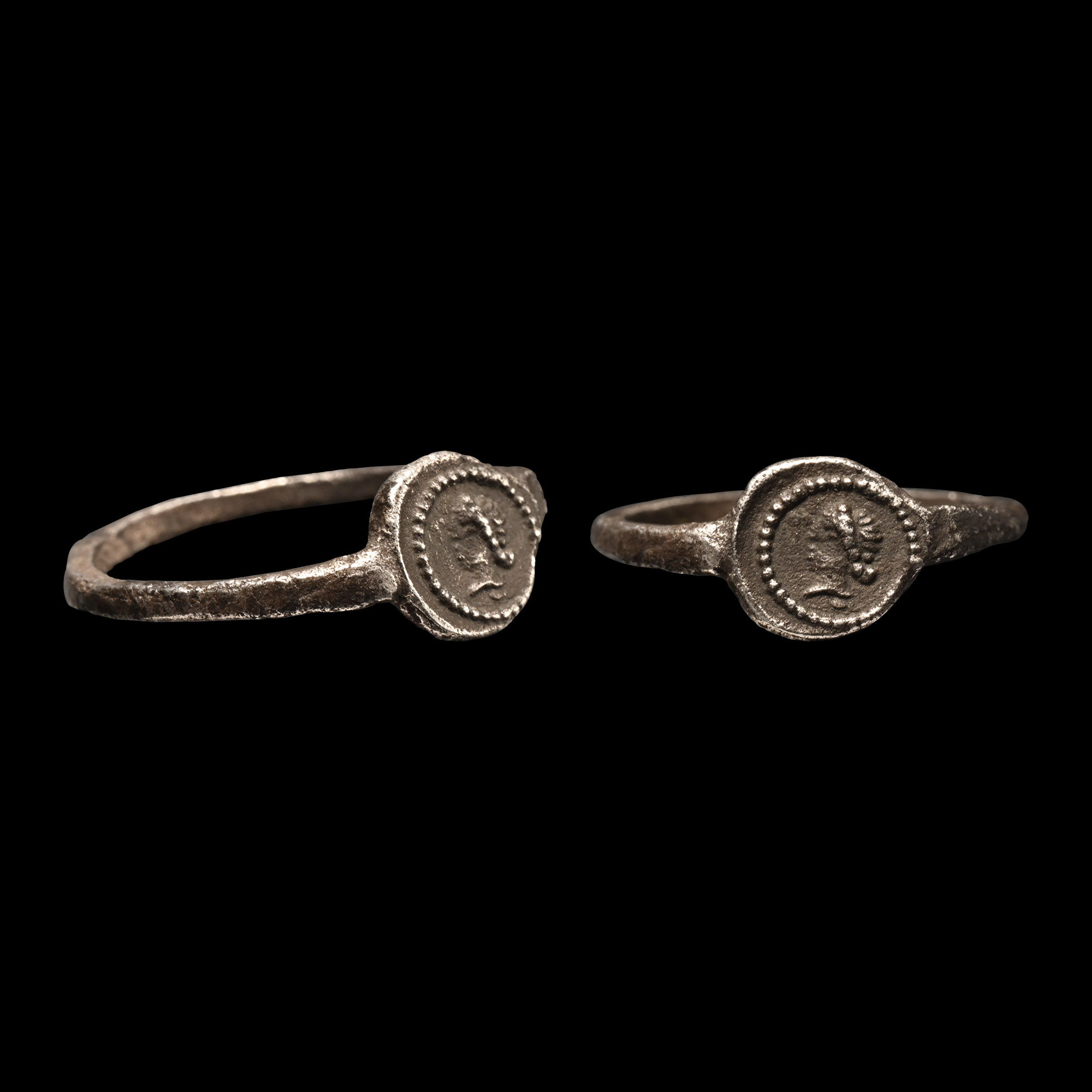
Greek Silver Ring with Portrait of Apollo
5TH-3RD CENTURY B.C.
5/8 in. (0.96 grams, 17.84 mm overall, 14.34 mm internal diameter (approximate size British G, USA 3 1/4, Europe 4.92, Japan 4)).
Comprising a slender square-section hoop and discoid bezel with low-relief image of diademed bust within pelletted border.
ProvenanceEx German art market, 2000s.
Acquired from an EU collector living in London.
From the collection of a Surrey, UK, gentleman.
This lot is accompanied by an illustrated lot declaration signed by the Head of the Antiquities Department, Dr Raffaele D'Amato.
TimeLine Auctions follows a vetting process to ensure the authenticity and legality of all items, reinforcing our commitment to integrity and responsible trading. Each antiquity, antique, and coin lot undergoes thorough examination by a vetting committee of at least ten external specialists, professional trade association members, scientists, and archaeologists: Our Vetting Process
AUCTIONS:
TimeLine is a leading auction house specialising in antiquities, ancient art, collectables, natural history, coins, medals, and books. Our auctions offer museums, collectors, historians, and enthusiasts the opportunity to acquire unique and historically significant pieces.
-
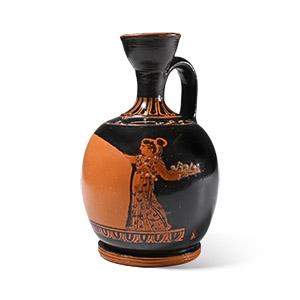
Greek Attic Red-Figure Squat Lekythos Attributed to the Meidias Painter
Circa 420-400 B.C.Estimate: £2,000 - 3,000 (‡+bp*)
Opening Bid: £1,000
Comprising a bulbous body with narrow neck and handle to the rear; radiating petals on the neck with a band of volute scrolls below, the body showing a female in a dynamic pose, dressed in an elaborate long dress and holding a plate of fruit with her left hand, a seated female before her; attributed to the Meidias Painter; some restoration. 95 grams, 10.9 cm
Ex Prof. Dr Hans (1918-1984) and Dr Ines (1922-2013) Jucker, classical archaeologists, Bern, Switzerland. with Galerie Rhéa, Zurich, Switzerland. This lot has been checked against the Interpol Database of stolen works of art and is accompanied by a search certificate number no.12645-236462. This lot has been cleared against the Art Loss Register database, and is accompanied by an illustrated lot declaration signed by the Head of the Antiquities Department, Dr Raffaele D'Amato. -
.jpg)
Scythian Gold Repoussé Animal Mount
Early 1st millennium B.C.Estimate: £450 - 650 (+bp*)
Opening Bid: £240
Formed as an advancing lion, hatching to hips and shoulders; mounted on a custom-made stand. 29.63 grams total, 22 mm wide (62 mm high including stand)
From the Robin Symes Mayfair gallery before 1999, and part of a collection exhibited at the gallery. Ex London, UK, collection. This lot is accompanied by an illustrated lot declaration signed by the Head of the Antiquities Department, Dr Raffaele D'Amato. -
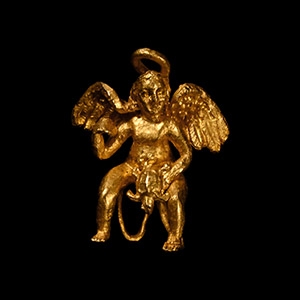
Greek Gold Eros Holding a Turtle Pendant
4th century B.C.Sold for (Inc. bp): £4,420
A delicately crafted pendant depicting a seated Eros with spread wings, holding a small turtle with his left hand and his right hand raised, feather detailing to wings and carefully modelled face with a smiling expression; a double suspension loop underneath and a single loop above; likely from an earring. 1.41 grams, 13 mm
Solothurn exhibition catalogue 1967, no.421. Notable Swiss private scholarly collection. with Galerie Rhéa, Zurich, Switzerland. This lot has been checked against the Interpol Database of stolen works of art and is accompanied by a search certificate number no.12671-236392. This lot has been cleared against the Art Loss Register database, and is accompanied by an illustrated lot declaration signed by the Head of the Antiquities Department, Dr Raffaele D'Amato.
