
Loading, please wait...


LOT 0597
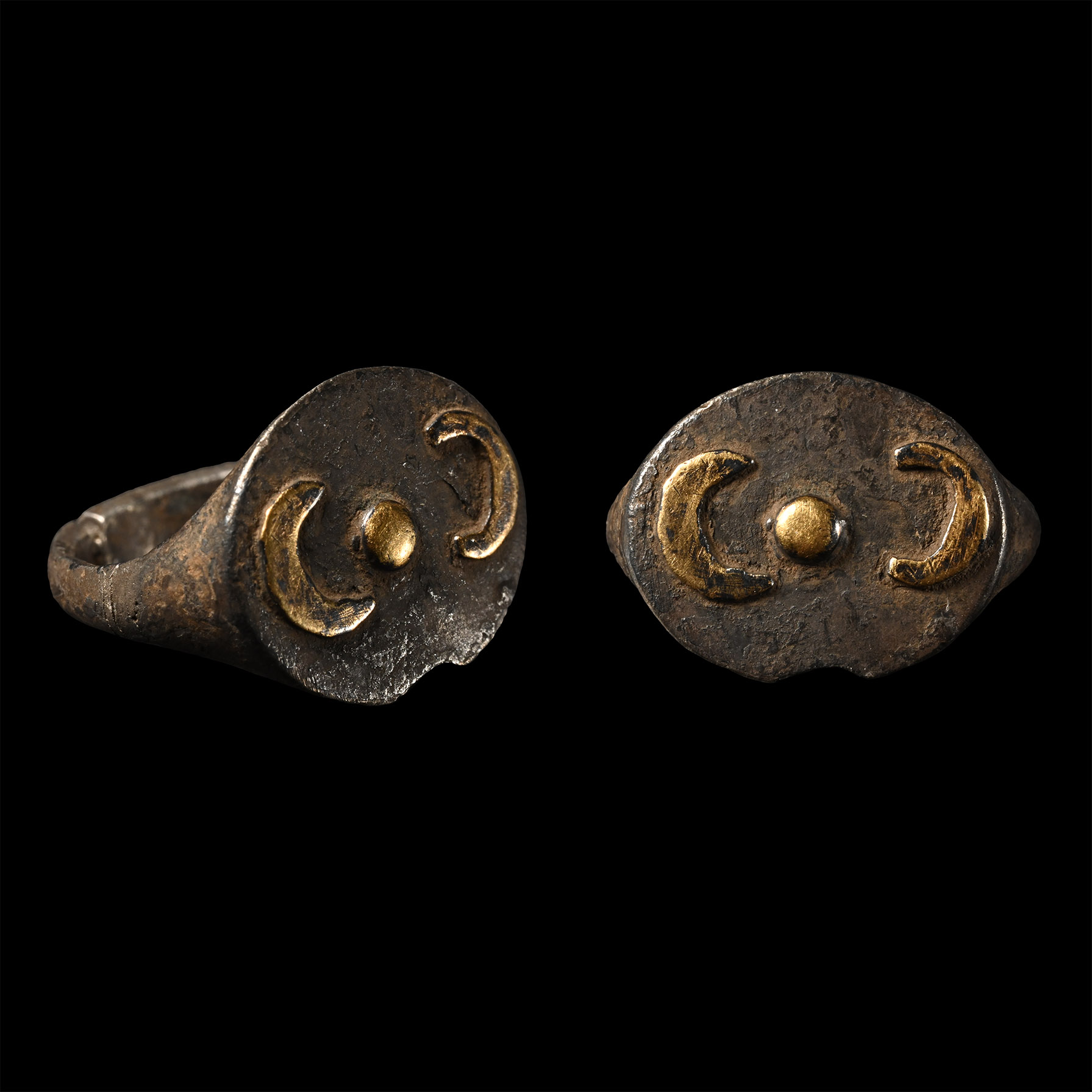
Greek Silver Ring with Gold Inlays
5TH-4TH CENTURY B.C.
3/4 in. (3.89 grams, 19.00 mm overall, 16.00 mm internal diameter (approximate size British J, USA 4 3/4, Europe 8.69, Japan 8)).
With ellipsoid plaque, applied silver-gilt central boss flanked by two applied crescents. [No Reserve]
ProvenanceFrom an old UK collection, 1980s.
CONDITIONTimeLine Auctions follows a vetting process to ensure the authenticity and legality of all items, reinforcing our commitment to integrity and responsible trading. Each antiquity, antique, and coin lot undergoes thorough examination by a vetting committee of at least ten external specialists, professional trade association members, scientists, and archaeologists: Our Vetting Process
AUCTIONS:
TimeLine is a leading auction house specialising in antiquities, ancient art, collectables, natural history, coins, medals, and books. Our auctions offer museums, collectors, historians, and enthusiasts the opportunity to acquire unique and historically significant pieces.
-
Greek Bronze Naked Youth Statuette
Archaic, circa 6th century B.C.Sold for (Inc. bp): £1,170
Effigy of a kouros standing nude with arms at his sides, left leg slightly advanced, the hair cut straight and draped across the shoulders and upper back; pegs beneath the feet; provided with an old custom-made base. 376 grams total, 20.5 cm including stand
Private collection, England. This lot has been checked against the Interpol Database of stolen works of art and is accompanied by search certificate number no.12203-215580. -
.jpg)
Greek Terracotta Antefix
Archaic, 6th-5th century B.C.Estimate: £3,000 - 4,000 (‡+bp*)
Opening Bid: £1,500
Mould-made figure of a female upper body with tall curved and conical headdress, hair dressed in braids falling to her shoulders and flanking her breasts, arms spread and right hand curled to grip a handle or sword-hilt; beneath, a tapering mounting peg for attachment to a roof. 411 grams, 26 cm
Acquired in the mid 1980s-1990s. Private collection, Switzerland, thence by descent. Private collection, since the late 1990s. Accompanied by an academic report by Dr Raffaele D'Amato. This lot has been checked against the Interpol Database of stolen works of art and is accompanied by search certificate number no.12207-222349. -
Iron Age Italic Bronze Bow Brooch
10th-8th century B.C.Sold for (Inc. bp): £91
Fibula with two spring coils, scooped catch and curved pin. 10.3 grams, 94 mm
From the collection of the famous author, writer and speaker, Gordon Bailey, Essex, UK; formed since 1968.
