
Loading, please wait...
LOT 0544
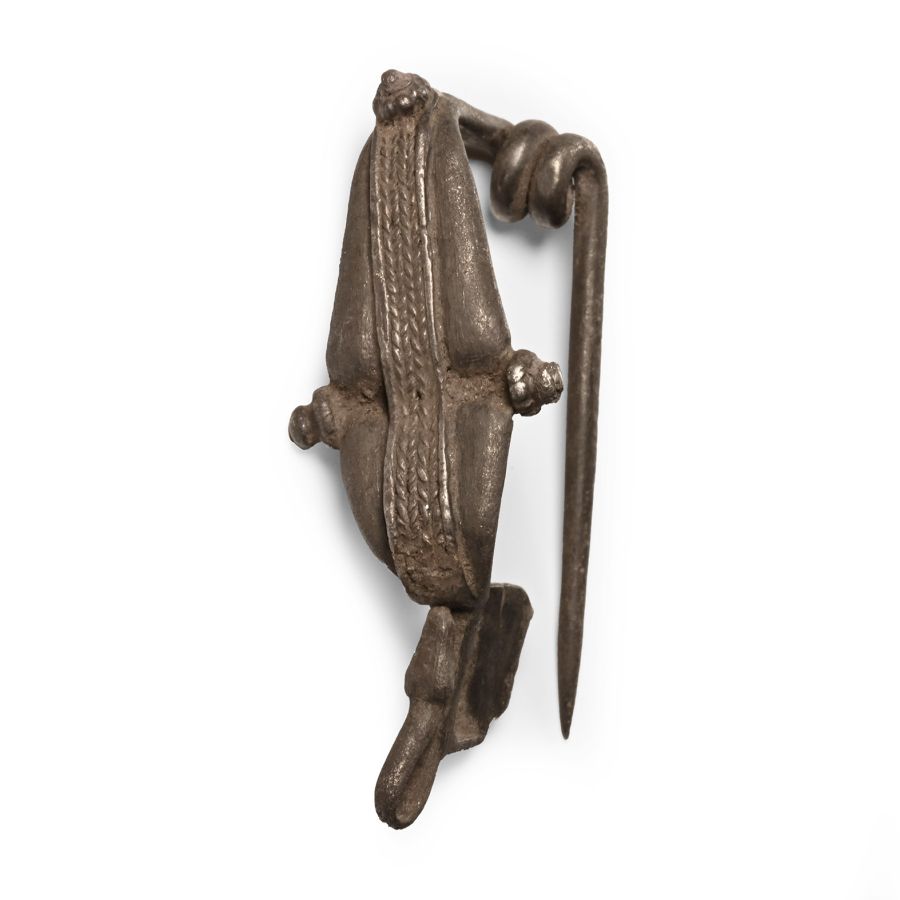
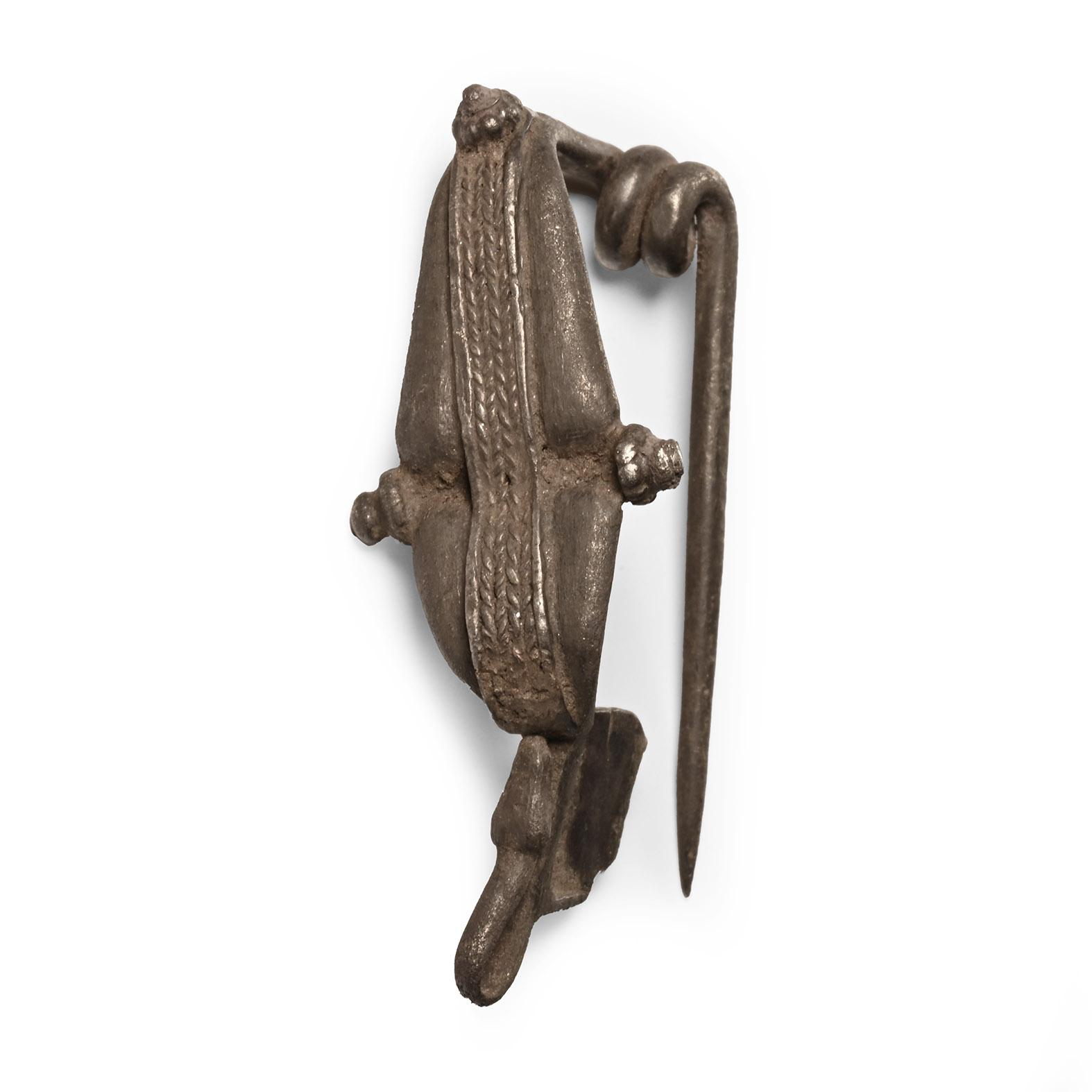
Greek Silver Fibula
5TH-4TH CENTURY B.C.
1 5/8 in. (6.86 grams, 42 mm).
Comprising an ellipsoid bow with lateral knops (one absent) and applied collars, longitudinal band of applied filigree braid, knop finial with collar, perpendicular two-coil spring and long pin; footplate with incised saltire with reversed-loop finial, square catchplate with pointillé gammadion and frame.
ProvenancePrivate European collection, 1994, thence by descent.
CONDITIONTimeLine Auctions follows a vetting process to ensure the authenticity and legality of all items, reinforcing our commitment to integrity and responsible trading. Each antiquity, antique, and coin lot undergoes thorough examination by a vetting committee of at least ten external specialists, professional trade association members, scientists, and archaeologists: Our Vetting Process
AUCTIONS:
TimeLine is a leading auction house specialising in antiquities, ancient art, collectables, natural history, coins, medals, and books. Our auctions offer museums, collectors, historians, and enthusiasts the opportunity to acquire unique and historically significant pieces.
LOT 0544
Greek Silver Fibula
Estimate £180 - 240€210 - 280 (for guidance only)$240 - 320 (for guidance only)
-
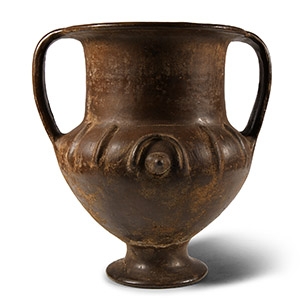
Villanovan Impasto Handled Amphora
Circa 750-700 B.C.Estimate: £800 - 1,000 (+bp*)
Opening Bid: £400
Comprising a wide foot beneath a squat stem with a bulbous body, a sloped shoulder beneath a columnar neck, a flared rim, and a pair of applied strap handles arching between rim and shoulder; body decorated with eight slender, vertical ribs surrounded by pecked stippling; two lateral bosses beneath a parabolic arch; surface burnished throughout; foot restored. 1.29 kg, 22.1 cm
From the collection of Eleanor Hilowitz (1913-2007), an abstract expressionist painter and sculptor, New York, USA; acquired between 1956 and 1975. Acquired by Randall Hixenbaugh of Hixenbaugh Ancient Art, New York, USA, in 2007. with Artemis Gallery, 26 September 2019, lot 54 (US$2,000-3,000). Property of a South Australian private collector, with collection reference 20.03. Accompanied by detailed collector's catalogue pages including description and photograph. -
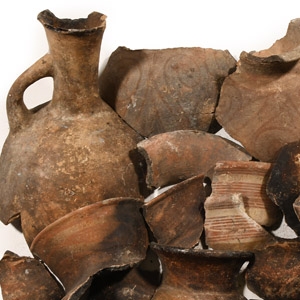
Greek and Other Pottery Fragment Group
Circa 1st millennium B.C.Sold for (Inc. bp): £72
Including amphora, bowl, cup and other fragments. 5.6 kg total, 5.5-33 cm
From a collection acquired on the UK art market from various auction houses and collections mostly before 2000. From an important Cambridgeshire estate; thence by descent. -
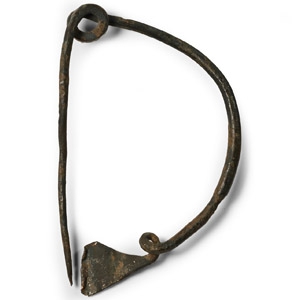
Greek Archaic Bronze Brooch
7th century B.C.Sold for (Inc. bp): £59
Comprising a simple arched bow, coiled pin and a flaring catch-plate. 2.58 grams, 47 mm
Property of the vendor's grandfather, thence by family descent, circa 1985. From the private collection of a New York, USA gentleman.
