
Loading, please wait...


LOT 0599
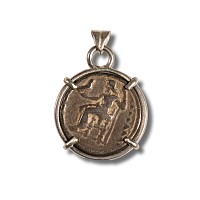
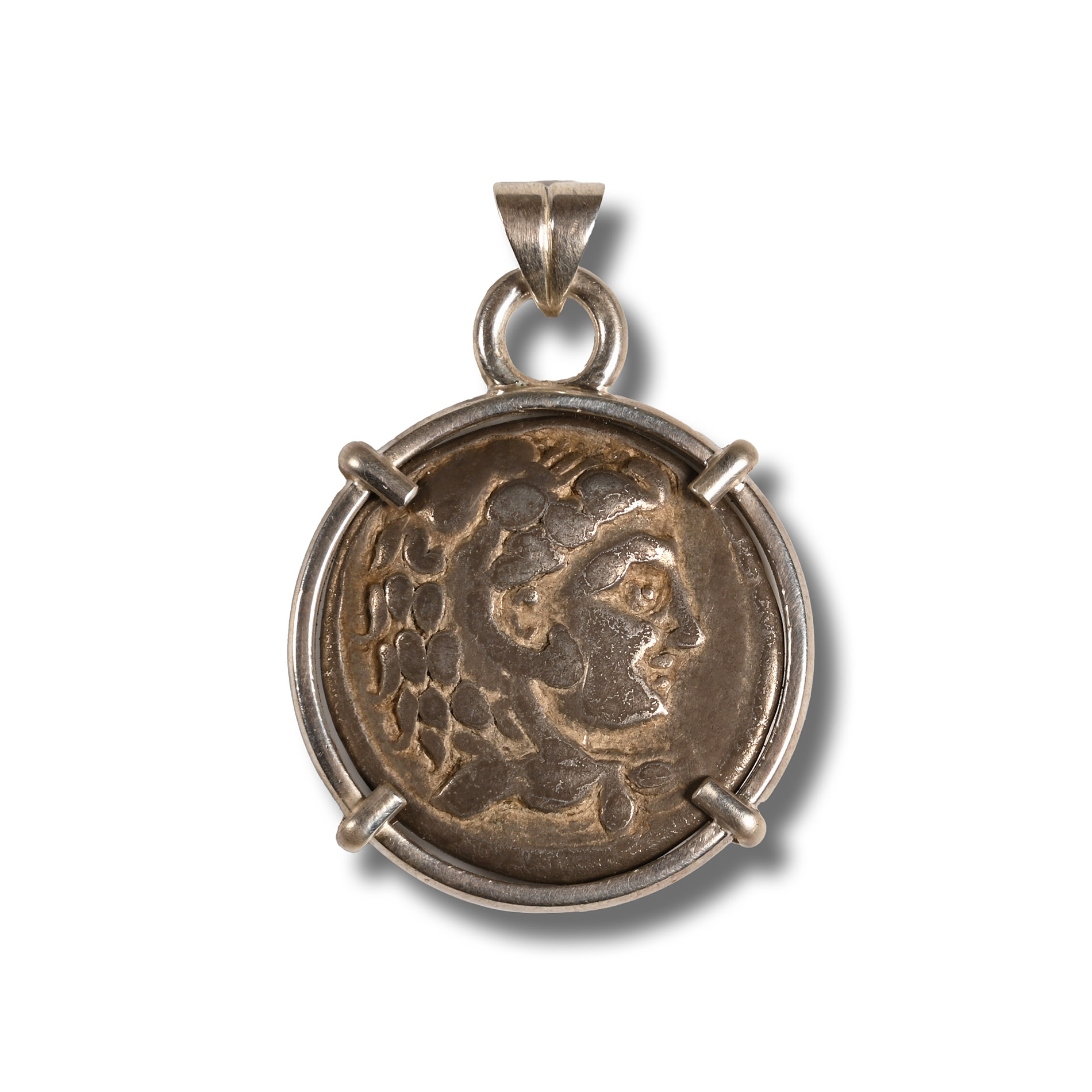
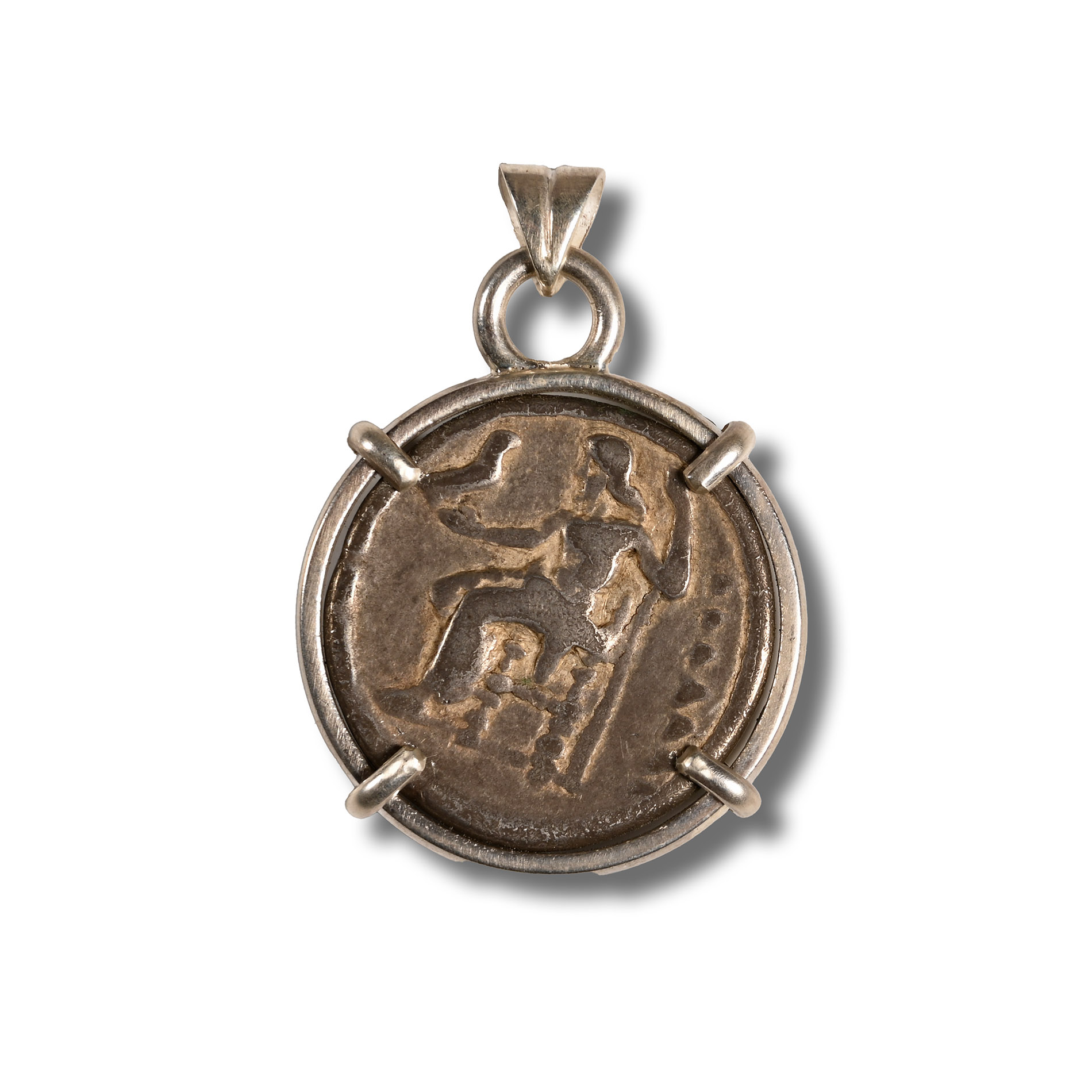
Greek Silver Alexander the Great Tetradrachm Coin Pendant
3RD CENTURY B.C. AND LATER
1 5/8 in. (21.1 grams, 41 mm).
Silver tetradrachm with profile bust to obverse, seated figure with bird to reverse; clasp-mounted in a modern silver frame with ring and baile.
ProvenanceEx German art market, 2000s.
Acquired from an EU collector living in London.
From the collection of Surrey, UK, gentleman.
TimeLine Auctions follows a vetting process to ensure the authenticity and legality of all items, reinforcing our commitment to integrity and responsible trading. Each antiquity, antique, and coin lot undergoes thorough examination by a vetting committee of at least ten external specialists, professional trade association members, scientists, and archaeologists: Our Vetting Process
AUCTIONS:
TimeLine is a leading auction house specialising in antiquities, ancient art, collectables, natural history, coins, medals, and books. Our auctions offer museums, collectors, historians, and enthusiasts the opportunity to acquire unique and historically significant pieces.
LOT 0599
Greek Silver Alexander the Great Tetradrachm Coin Pendant
Sold for (Inc. bp): £286
-
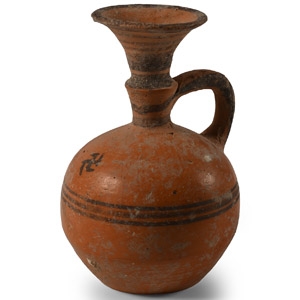
Cypriot Terracotta Vessel
8th-7th century B.C.Sold for (Inc. bp): £338
With globular body and flat base, trumpet-shaped neck and mouth with stepped profile, strap handle to the rear; three painted bands to the equator, painted detailing to the mouth and handle; gammadion to the shoulder. 45 grams, 78 mm
Acquired in the mid 1980s-1990s. Private collection, Switzerland, thence by descent. Private collection, since the late 1990s. -
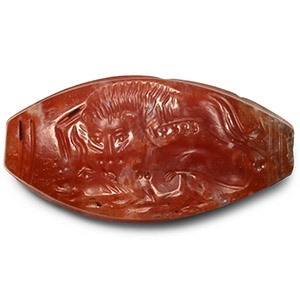
Minoan Stone Bead Seal
2nd millennium B.C.Sold for (Inc. bp): £6,240
Scaphoid in plan, plano-convex with stepped profile; intaglio scene with a lion attacking a prone ibex. 5 grams, 28 mm
From a London, UK, collection, 1980s. This lot has been checked against the Interpol Database of stolen works of art and is accompanied by search certificate number no.12216-222295. -
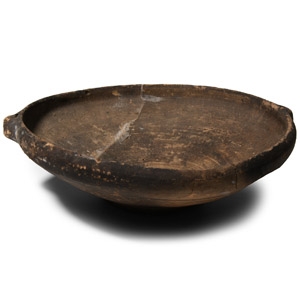
Cypriot Terracotta Bowl
Cypro-Geometric, circa 1050-750 B.C.Sold for (Inc. bp): £52
Broad and shallow with low foot, chamfered rim with two small loop handles. 587 grams, 21.5 cm
From a collection acquired on the UK art market from various auction houses and collections mostly before 2000. From an important Cambridgeshire estate; thence by descent.
