
Loading, please wait...
LOT 0621
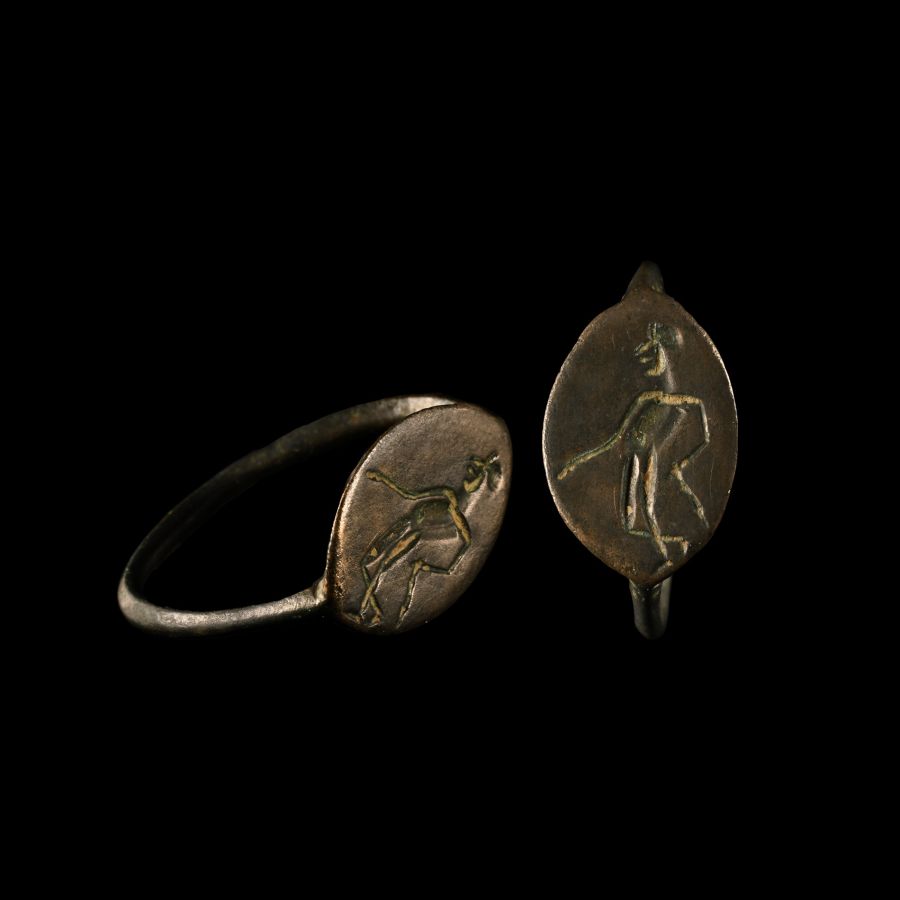
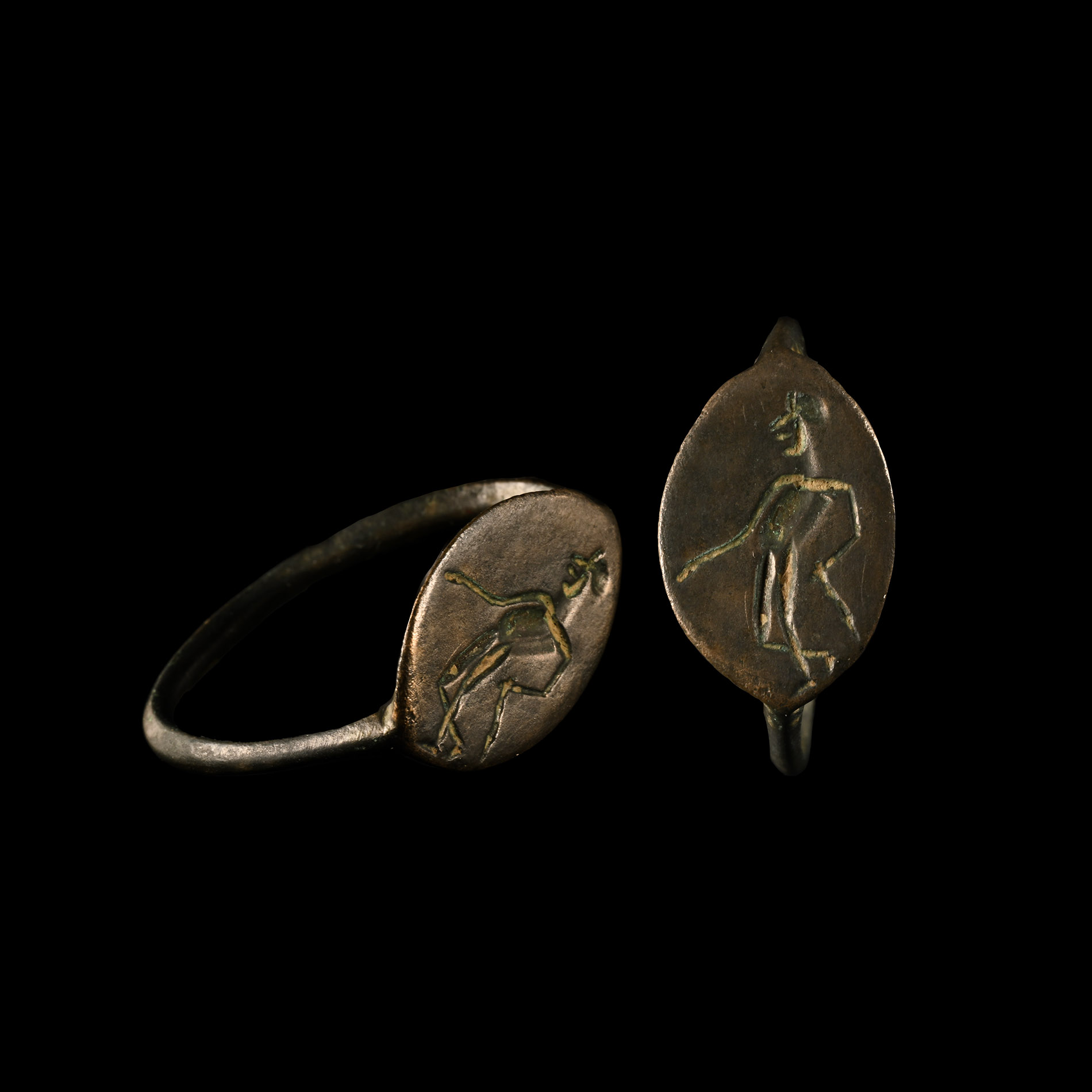
Greek Ring with Standing God
5TH-4TH CENTURY B.C.
7/8 in. (3.38 grams, 22.28 mm overall, 17.72 x 20.25 mm internal diameter (approximate size British P 1/2, USA 7 3/4, Europe 16.86, Japan 16)).
Scaphoid bezel with intaglio figure of Mars with helmet and sword. [No Reserve]
ProvenanceUK private collection before 2000.
UK art market.
Property of a London gentleman.
TimeLine Auctions follows a vetting process to ensure the authenticity and legality of all items, reinforcing our commitment to integrity and responsible trading. Each antiquity, antique, and coin lot undergoes thorough examination by a vetting committee of at least ten external specialists, professional trade association members, scientists, and archaeologists: Our Vetting Process
AUCTIONS:
TimeLine is a leading auction house specialising in antiquities, ancient art, collectables, natural history, coins, medals, and books. Our auctions offer museums, collectors, historians, and enthusiasts the opportunity to acquire unique and historically significant pieces.
-
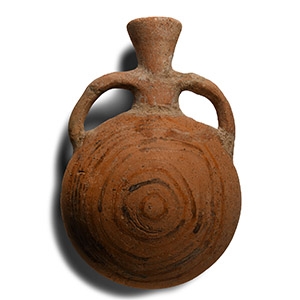
Cypro-Archaic Buff Pottery Pilgrim's Flask
Levant, circa 1050-700 B.C.Sold for (Inc. bp): £104
Biconvex body with trumpet-shaped mouth and two lateral loop handles; painted concentric circles to the body. 330 grams, 15.3 cm
From an old Lebanese family collection moved to Germany in the middle of the 1970s. Acquired from Bonhams, London, 20 October 2005, no.424 (part). From an important Cambridgeshire estate; thence by descent. Accompanied by copies of the relevant Bonhams catalogue pages and the original Bonhams lot tag. -
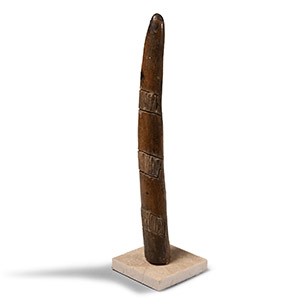
Cypriot Terracotta Votive Horn
2100-1850 B.C.Sold for (Inc. bp): £247
Tapering round-section votive with reserved bands of dense linear hatching; repaired and mounted on a custom made display stand. 127 grams total, 18 cm high
From the celebrated personal collection of art formed by the famous anthropologist, artist, and television presenter Desmond Morris. with Christie’s, South Kensington, 14 May 2002, no.19 (part). From a collection acquired on the UK art market from various auction houses and collections mostly before 2000. From an important Cambridgeshire estate; thence by descent. Accompanied by copies of the relevant Christie's catalogue pages. -
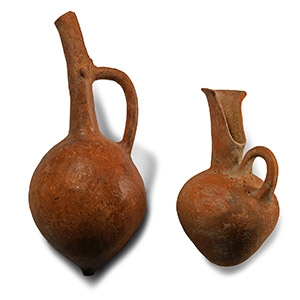
Cypriot Red Polished Ware Zoomorphic Jug Group
Middle Bronze Age, circa 2000-1800 B.C.Sold for (Inc. bp): £1,105
Each with burnished surface, globular body with conical underside, tall spout with open rear face, loop handle; one with lateral lugs to the spout forming 'eyes'. 780 grams total, 19.5-27 cm
with Christie's, London, 11 December 1974. Formerly from the collection of Lord Dayton of Corran, formed between 1960-2000. Acquired from Bonham's, New Bond Street, 27 April 2006, lot 313 (part). The smaller vessel is from a collection acquired on the UK art market from various auction houses and collections mostly before 2000. From an important Cambridgeshire estate; thence by descent. Accompanied by a copy of the relevant Bonhams catalogue pages.
The plain red polished ware was dominant in Cyprus in the early Bronze Age. It included jugs with nipple base, cutaway sprout, and paired, blunt projections near handle attachment points.
