
Loading, please wait...
LOT 0078
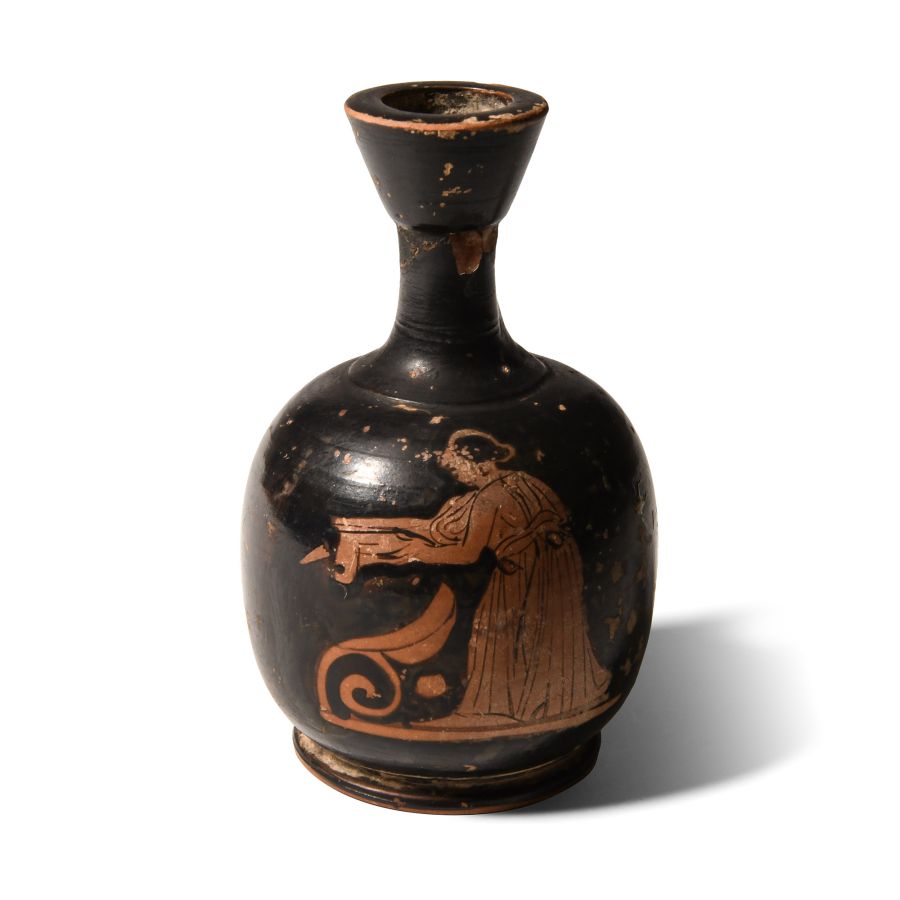
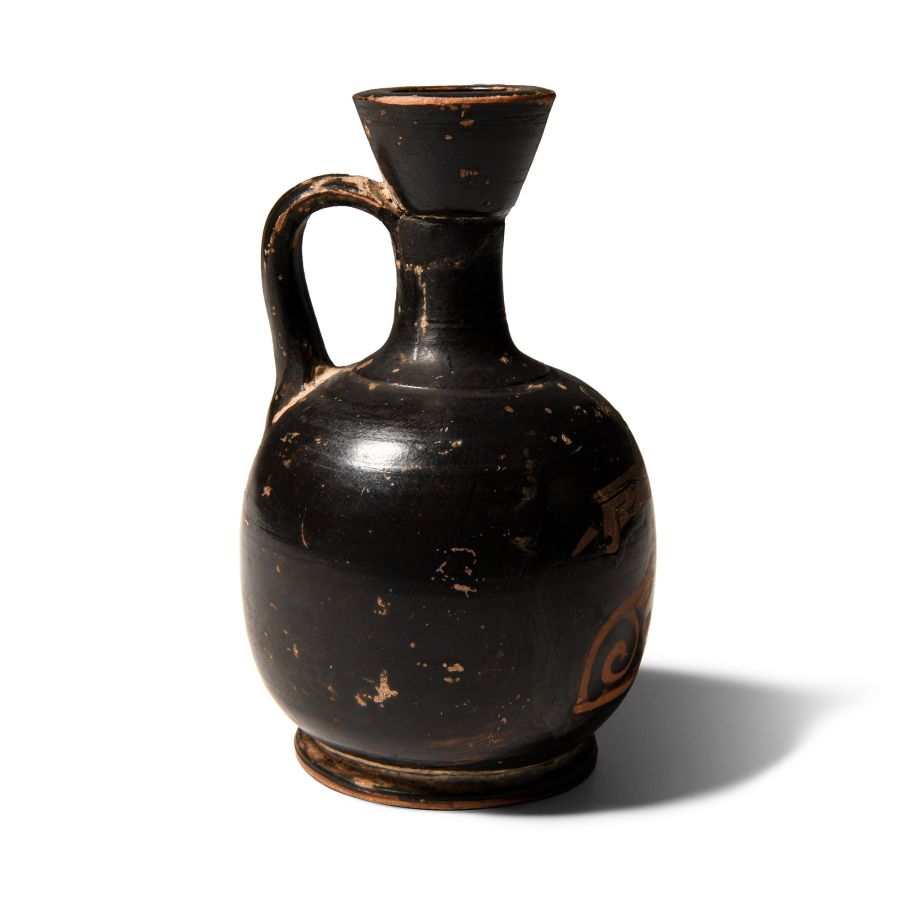
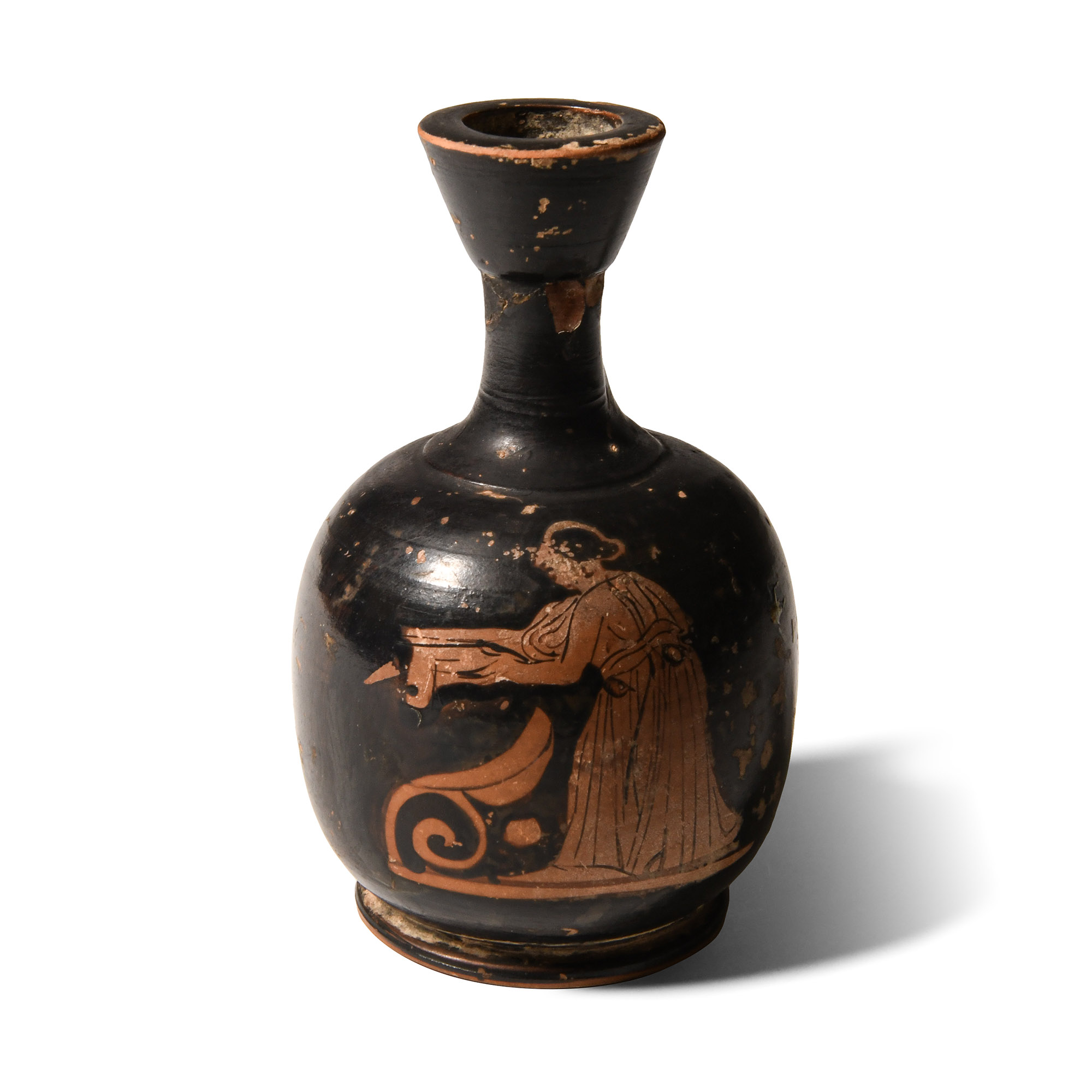
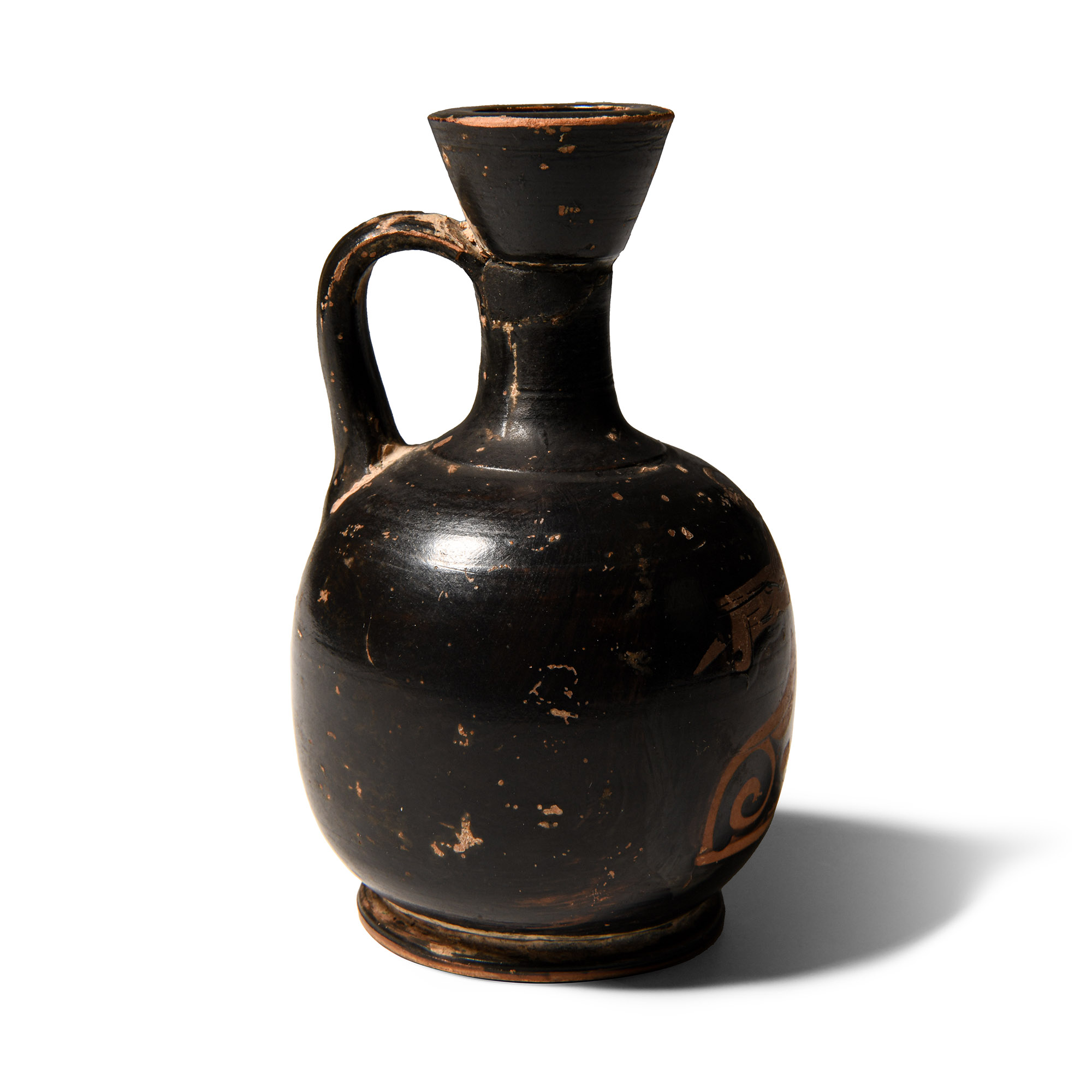
Greek Red-Figure Lekythos
5TH CENTURY B.C.
4 3/8 in. (106 grams, 11 cm).
Of ovoid form with trumpet-shaped spout and strap handle, reserved image of a lady wearing a large himation, on a baseline with scrolled foliage.
ProvenanceEx German collection, 1970.
with Galerie Chenel, Paris, 22 July 2008.
Cf. similar item (undecorated) in the Metropolitan Museum of Art, New York, under accession no.41.162.237; cf. also a lekythos with image of an Amazon in Isler, H.P., Archäologische Sammlung der Universität Zürich. Jahresbericht Nr. 33, 2006-2007, Zürich, 2007, p.6, under nos.1259-1292.
FootnotesThe word lekythos had a wide meaning in ancient Greece, probably generally meaning all oil jugs, including the athletes' oil bottle (now called aryballos) as well as the types now given this name by archaeologists. Certain lekythoi resemble certain oenochoe superficially, at a first glance. Oenochoes, however, were wine-pitchers and in most cases were larger than the lekythoi, which were small jugs for oil, perfumes, etc.
CONDITIONTimeLine Auctions follows a vetting process to ensure the authenticity and legality of all items, reinforcing our commitment to integrity and responsible trading. Each antiquity, antique, and coin lot undergoes thorough examination by a vetting committee of at least ten external specialists, professional trade association members, scientists, and archaeologists: Our Vetting Process
AUCTIONS:
TimeLine is a leading auction house specialising in antiquities, ancient art, collectables, natural history, coins, medals, and books. Our auctions offer museums, collectors, historians, and enthusiasts the opportunity to acquire unique and historically significant pieces.
LOT 0078
Greek Red-Figure Lekythos
Estimate £1,200 - 1,700€1,390 - 1,970 (for guidance only)$1,620 - 2,300 (for guidance only)
-
Attic Black Figure Kylix with Processional Scenes of Satyrs and Maenads and Pegasus
Circa 5th century B.C.Estimate: £4,000 - 6,000 (+bp*)
Opening Bid: £2,000
With broad flat foot and short stem, broad bowl with carination at the shoulder and two strap shoulders; under each handle an ivy leaf; a painted frieze in coarse style on the outer face comprising two scenes of satyrs and maenads, some on horseback; the centre with a winged Pegasus; foot restored. 368 grams, 27 cm wide
Fine condition, foot restored.
From a private German collection, 1960s. Accompanied by an academic report by Dr Raffaele D’Amato. This lot has been checked against the Interpol Database of stolen works of art and is accompanied by search certificate number no.12014-213567.
The kylix is pertinent to the style of the Haimon painter, who flourished in the first half of 5th century B.C., especially in the rendering of the facial features, and feet. The imagery on the exterior of kylikes used in the symposia varied a lot. -
Cypriot Red Polished Ware Jug Group
Early-Middle Bronze Age, circa 2700-1900 B.C.Sold for (Inc. bp): £1,040
Group of three burnished redware jugs, two smaller examples with loop handle to the neck, larger with handle to the shoulder; all with incised linear ornament. 1.06 kg total, 14-21 cm
From a collection acquired on the UK art market from various auction houses and collections mostly before 2000. From an important Cambridgeshire estate; thence by descent. -
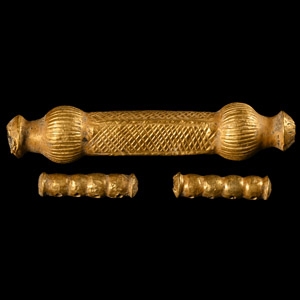
Gold Pendant Bead Group
1st millennium B.C.Sold for (Inc. bp): £572
Comprising two Hellenistic or Mesopotamian ribbed tubular beads and a larger bead with hatched sides, ribbed bulb to each end. 5.74 grams total, 17-52 mm
From a late Japanese specialist collector, 1970-2000s.
