
Loading, please wait...
LOT 0039
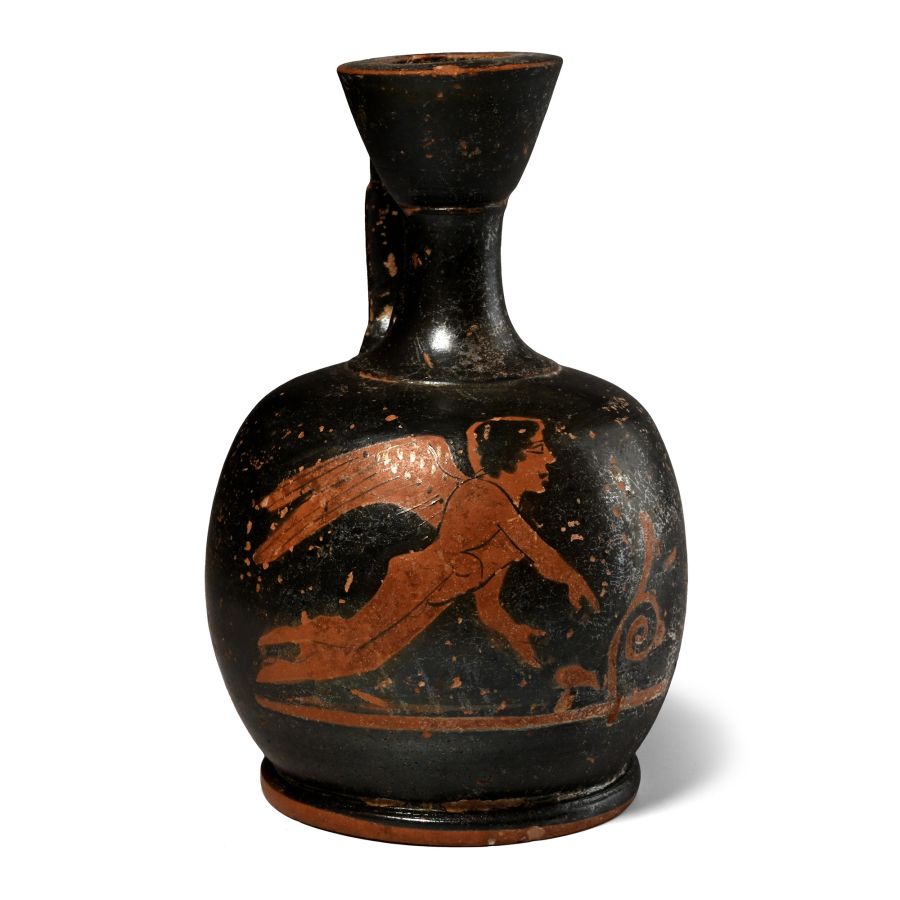
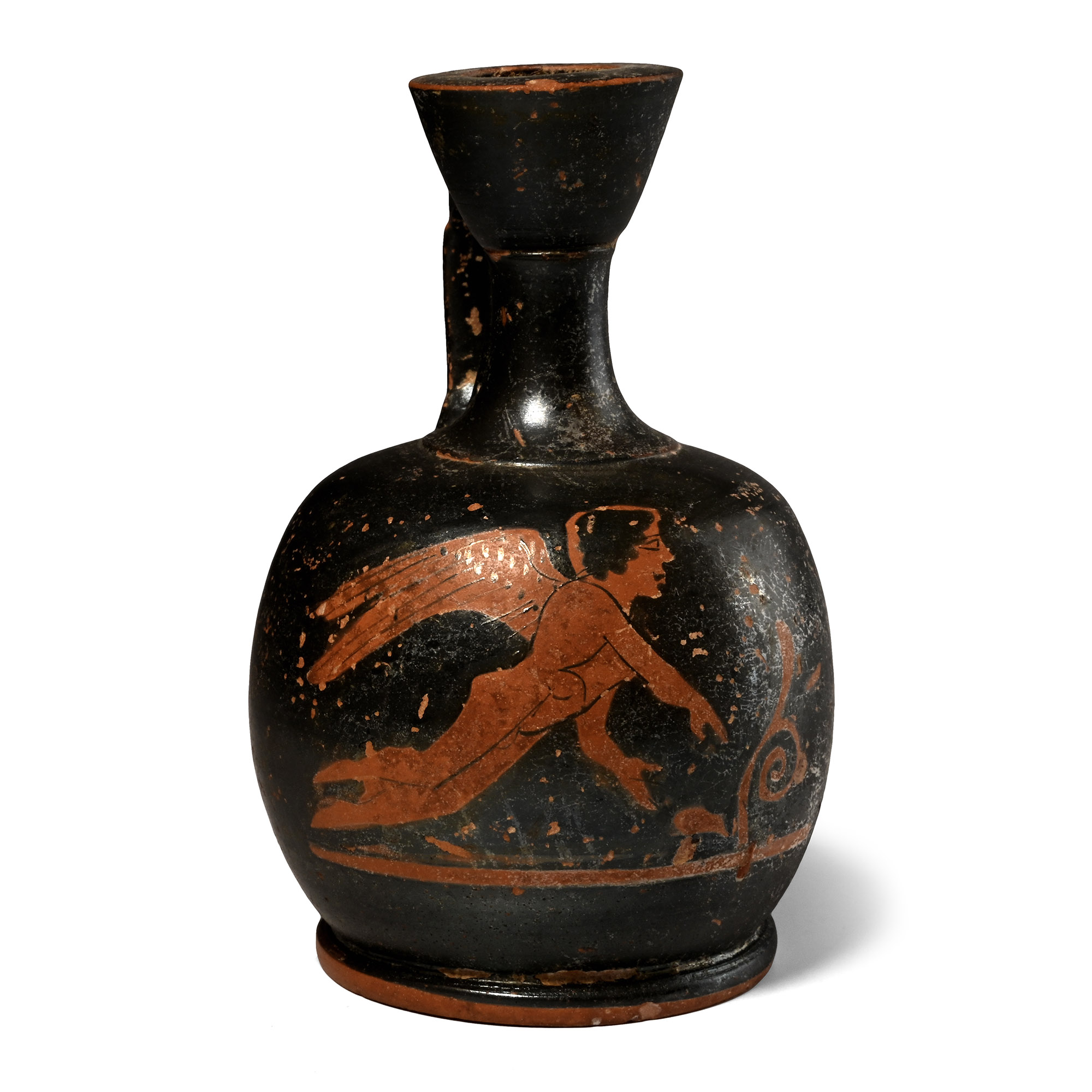
Greek Red-Figure Lekythos with Eros
ATTIC, CIRCA 4TH CENTURY B.C.
4 1/4 in. (106 grams, 10.9 cm).
With flared foot, waisted neck and everted rim, strap handle to the rear; painted with a scene of winged Eros in flight above a baseline, with frond. [No Reserve]
ProvenanceProperty of a private Rutland, UK, collector, formed from at least from the 1990s.
LiteratureCf. Metropolitan Museum of Art, New York, accession no.07.286.68, for type.
CONDITIONTimeLine Auctions follows a vetting process to ensure the authenticity and legality of all items, reinforcing our commitment to integrity and responsible trading. Each antiquity, antique, and coin lot undergoes thorough examination by a vetting committee of at least ten external specialists, professional trade association members, scientists, and archaeologists: Our Vetting Process
AUCTIONS:
TimeLine is a leading auction house specialising in antiquities, ancient art, collectables, natural history, coins, medals, and books. Our auctions offer museums, collectors, historians, and enthusiasts the opportunity to acquire unique and historically significant pieces.
-
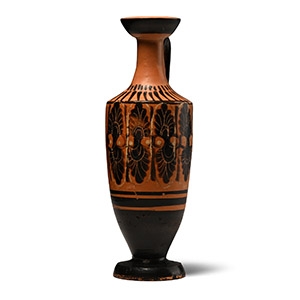
Greek Blackware Lekythos with Palm Fronds
Magna Graecia, circa 4th century B.C.Sold for (Inc. bp): £286
Cylindrical in profile with stepped foot, slender neck and flared mouth; radiating strokes to the shoulder, four blocks each of two palmettes with white painted detailing; strap handle to the rear. 104 grams, 13.5 cm
Property of a private Rutland, UK, collector, formed from at least from the 1990s. -
.jpg)
Monumental Early Etruscan Impasto Kyathos
7th century B.C.Estimate: £3,500 - 4,500 (‡+bp*)
Opening Bid: £1,750
Fluted body tapering to a narrow foot, the shoulders decorated with tiered bosses, short neck with flared mouth; wide handle perforated with a triangle. 1.18 kg, 25 cm wide
Estate of Mr Bruno Fellinger (1926-2016), Küsnacht, Switzerland. with Galerie Rhéa, Zurich, Switzerland. This lot has been checked against the Interpol Database of stolen works of art and is accompanied by a search certificate number no.12648-236390.
Buccheroid impasto is the name attributed by modern archaeologists to wheel thrown pottery. The clay in these specimens is less refined, and the firing techniques less precise than in the later bucchero ware. -
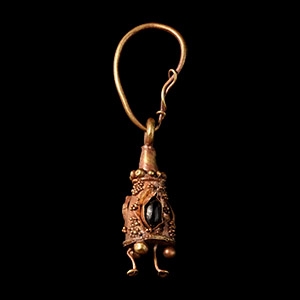
Greek Gold Earring with Garnets
Circa 5th-3rd century B.C.Sold for (Inc. bp): £390
Comprising a conical body with applied granules and three inset teardrop-shaped garnets, three pellets below with wires to accept separate bead inserts; wire loop above. 1.87 grams, 40 mm
From the collection of a gentleman, acquired on the London art market in the 1990s.
