
Loading, please wait...

LOT 1456
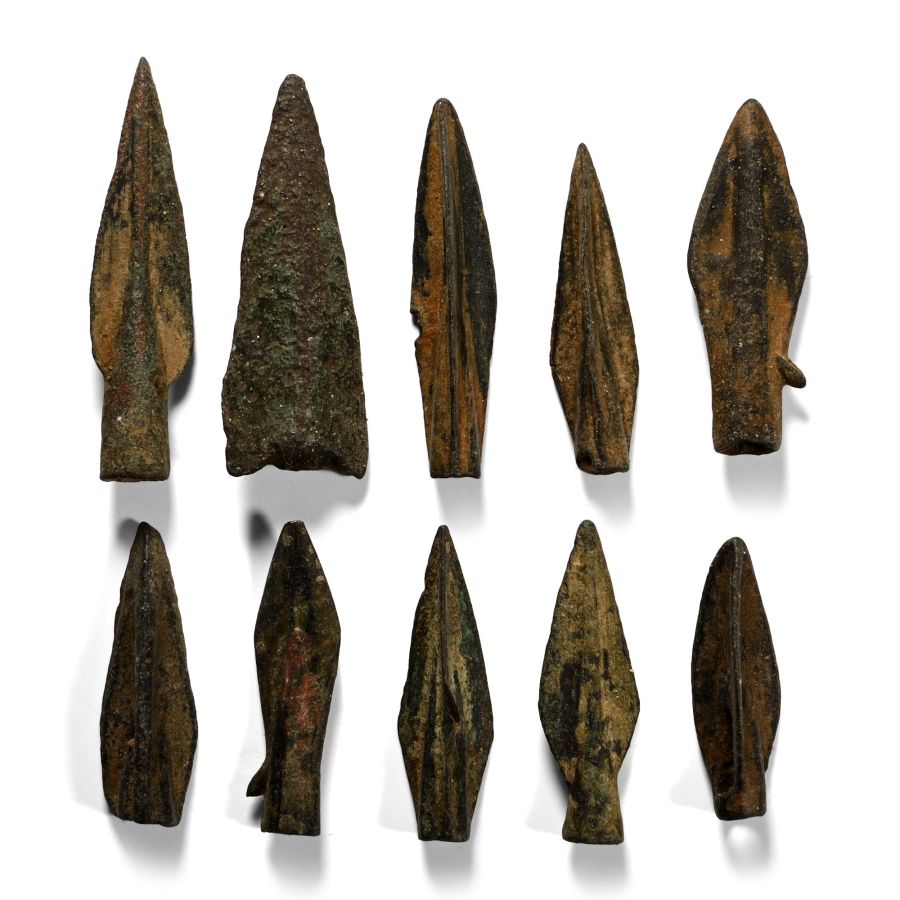
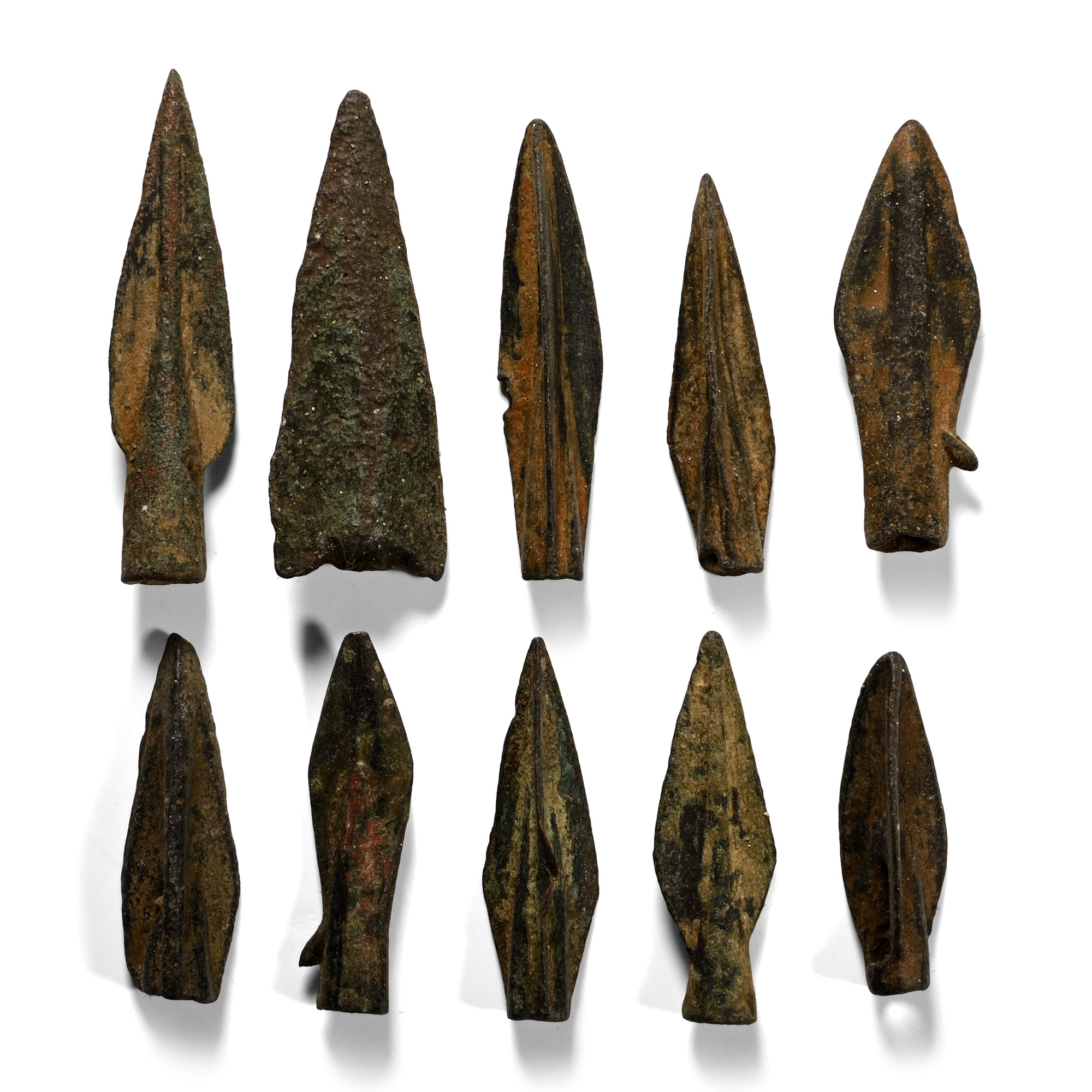
Greek Period High Quality Large Bronze Arrowhead Collection
5TH-3RD CENTURY B.C.
1 1/8 - 1 3/4 in. (50 grams total, 30-45 mm).
Mostly long leaf-shaped types with short socket. [10, No Reserve]
ProvenanceFrom an English collection formed before 2000.
This lot is accompanied by an illustrated lot declaration signed by the Head of the Antiquities Department, Dr Raffaele D'Amato.
TimeLine Auctions follows a vetting process to ensure the authenticity and legality of all items, reinforcing our commitment to integrity and responsible trading. Each antiquity, antique, and coin lot undergoes thorough examination by a vetting committee of at least ten external specialists, professional trade association members, scientists, and archaeologists: Our Vetting Process
AUCTIONS:
TimeLine is a leading auction house specialising in antiquities, ancient art, collectables, natural history, coins, medals, and books. Our auctions offer museums, collectors, historians, and enthusiasts the opportunity to acquire unique and historically significant pieces.
LOT 1456
Greek Period High Quality Large Bronze Arrowhead Collection
Sold for (Inc. bp): £65
-
.jpg)
Marlik Bronze Spearhead
14th-10th century B.C.Sold for (Inc. bp): £195
With rounded shoulders and square-section mid-rib running to the tip; short tang. 280 grams, 38.5 cm
Acquired 1980-2015. Ex Abelita family collection. This lot is accompanied by an illustrated lot declaration signed by the Head of the Antiquities Department, Dr Raffaele D’Amato. This lot is accompanied by an illustrated lot declaration signed by the Head of the Antiquities Department, Dr Raffaele D'Amato.
The blade belongs to the type VI of Marlik spearheads according to the Khorasani classification, with a long blade and a short tang, slightly rounded shoulders and pronounced midrib. Such spearheads have been excavated from the Marlik Royal Cemetery by Dr Negahban in Tomb 15, Trench XIII G. -
Greek Period High Quality Large Bronze Arrowhead Collection
5th-3rd century B.C.Sold for (Inc. bp): £65
Mostly long leaf-shaped types with short socket. 50 grams total, 30-45 mm
From an English collection formed before 2000. This lot is accompanied by an illustrated lot declaration signed by the Head of the Antiquities Department, Dr Raffaele D'Amato. -
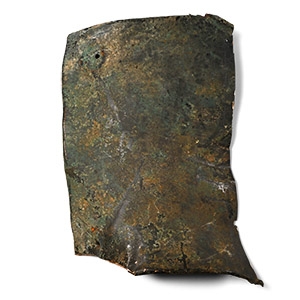
Greek Bronze Cuirass Section of Thorax Stadios
4th-3rd century B.C.Sold for (Inc. bp): £143
Possibly the lower left side element of a cavalry armour of thorax stadios (muscled armour) typology, upper, lower and external side with well preserved edge, fastening holes visible. 250 grams, 22 cm
UK private collection, acquired in 1996. This lot is accompanied by an illustrated lot declaration signed by the Head of the Antiquities Department, Dr Raffaele D'Amato.
Armour for cavalrymen in classical Greece were specially designed with these characteristics. They were very broad on the hips to enable their wearers to sit a horse. Important parallels are known from South Italy, one of them preserved in the Bari Museum.
