
Loading, please wait...
LOT 1459
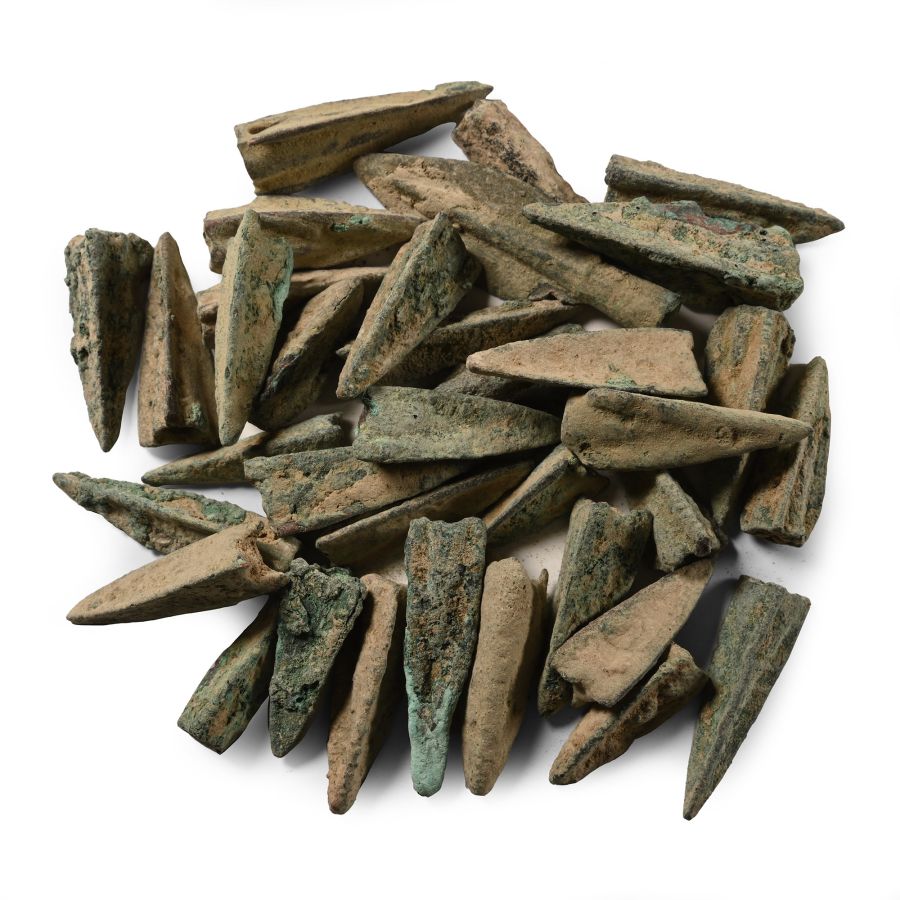
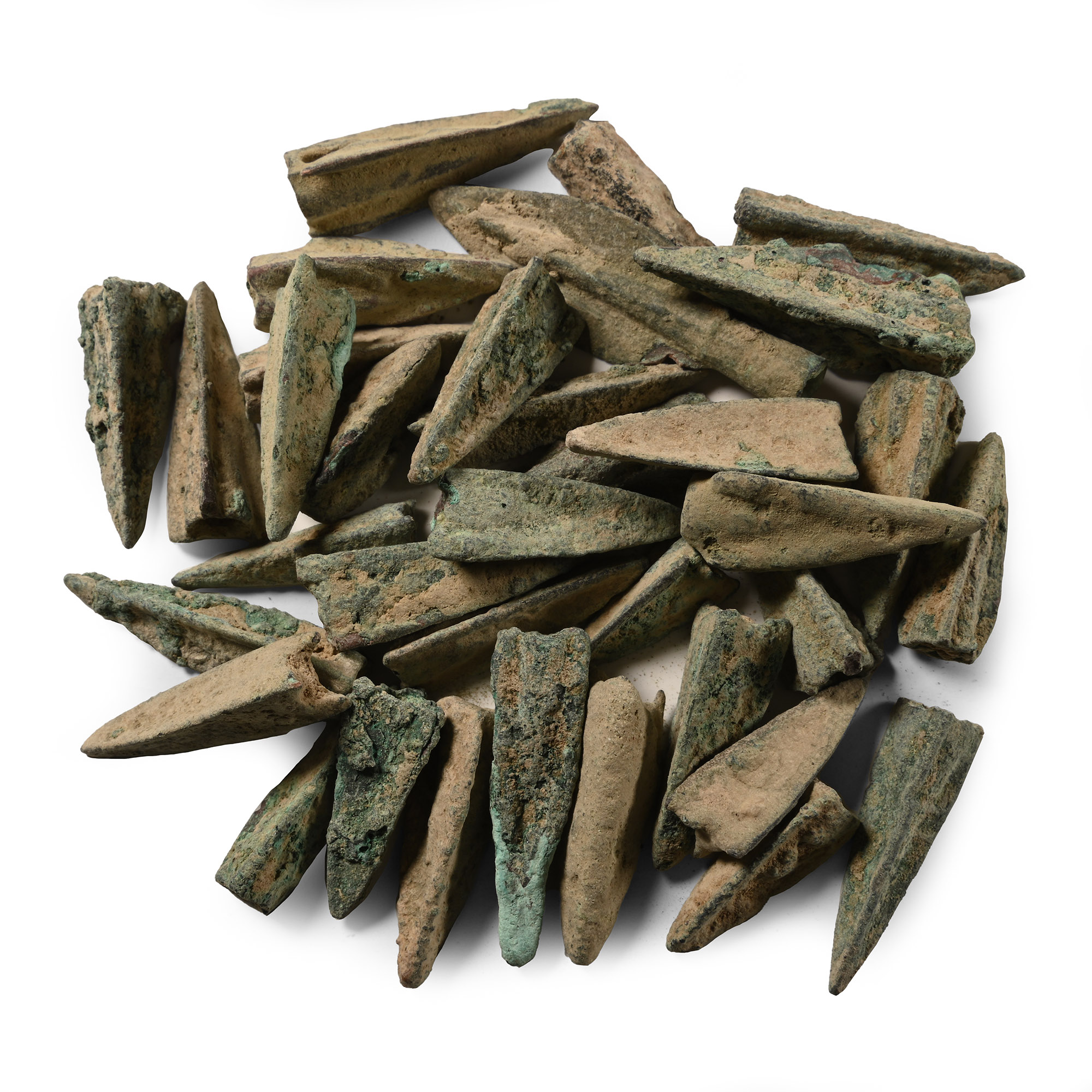
Greek Period Bronze Arrowhead Collection
CIRCA 5TH-3RD CENTURY B.C.
3/4 - 1 3/4 in. (115 grams total, 19 - 44 mm).
Including triangular-section, leaf-shaped and other types. [35]
ProvenanceAcquired in the 1990s.
Ex Abelita family collection.
This lot is accompanied by an illustrated lot declaration signed by the Head of the Antiquities Department, Dr Raffaele D'Amato.
TimeLine Auctions follows a vetting process to ensure the authenticity and legality of all items, reinforcing our commitment to integrity and responsible trading. Each antiquity, antique, and coin lot undergoes thorough examination by a vetting committee of at least ten external specialists, professional trade association members, scientists, and archaeologists: Our Vetting Process
AUCTIONS:
TimeLine is a leading auction house specialising in antiquities, ancient art, collectables, natural history, coins, medals, and books. Our auctions offer museums, collectors, historians, and enthusiasts the opportunity to acquire unique and historically significant pieces.
LOT 1459
Greek Period Bronze Arrowhead Collection
Estimate £100 - 140€120 - 160 (for guidance only)$140 - 190 (for guidance only)
-
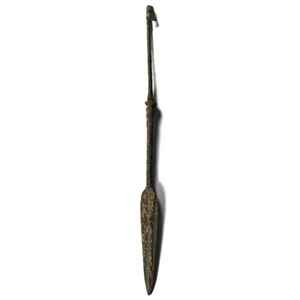
Large Mesopotamian Bronze Javelin Head
3rd-2nd millennium B.C.Sold for (Inc. bp): £124
Foliate blade, rhomboidal in section, raised mid-rib, medium length stem widening at the base and forming a small stop, rectangular-section tang with bent terminal. 187 grams, 45 cm
Ex London art market, 1980-1990s. This lot is accompanied by an illustrated lot declaration signed by the Head of the Antiquities Department, Dr Raffaele D'Amato.
The specimen belongs to the category of tripartite spears with long pointed biconvex blade and single bevelled tang. They seem to be a Mesopotamian and Susian (Elamite) variant, and this type also includes decorated blades, like the spear from Tello with the inscription 'King of Kish'. -
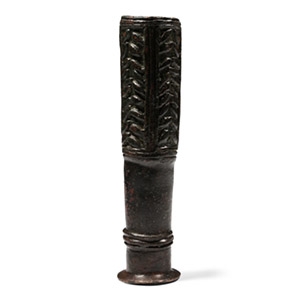
Large Luristan Bronze Gorz
Early 2nd millennium B.C.Sold for (Inc. bp): £364
Of tapering cylindrical form with flange to socket, the upper body displaying vertical columns of chevrons between plain bands. 374 grams, 14.5 cm
Acquired in the 1990s. Ex Abelita family collection. This lot is accompanied by an illustrated lot declaration signed by the Head of the Antiquities Department, Dr Raffaele D'Amato.
This gorz mace head belongs to the category of truncheon-shaped mace heads, a type developed on the Iranian plateau during the Bronze Age, used by Elamite and Luristan warriors since the 3rd millennium B.C. This category of objects was also interpreted as a part of a shaft or cudgel, but most scholars agree on the interpretation of use as a mace. -
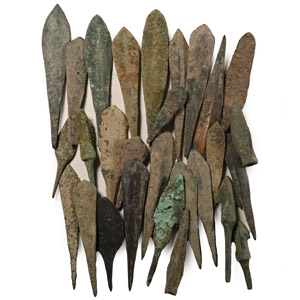
Western Asiatic Bronze Arrowhead Collection
18th-7th century B.C.Sold for (Inc. bp): £130
Including triangular, leaf-shaped, barbed, paddle-shaped with a flat, comparatively wide mid-rib, and others. 176 grams total, 33-77 mm
Ex London art market, 1980-1990s. This lot is accompanied by an illustrated lot declaration signed by the Head of the Antiquities Department, Dr Raffaele D'Amato.
Some of the represented arrowheads (paddle-shaped) were typical of the Old Babylonian Empire. The shoulders were pronounced and the arrowhead had a rectangular-section tapering tang. This simple form was popular throughout and are comparatively common finds in the Holy Land.
