
Loading, please wait...
LOT 0575
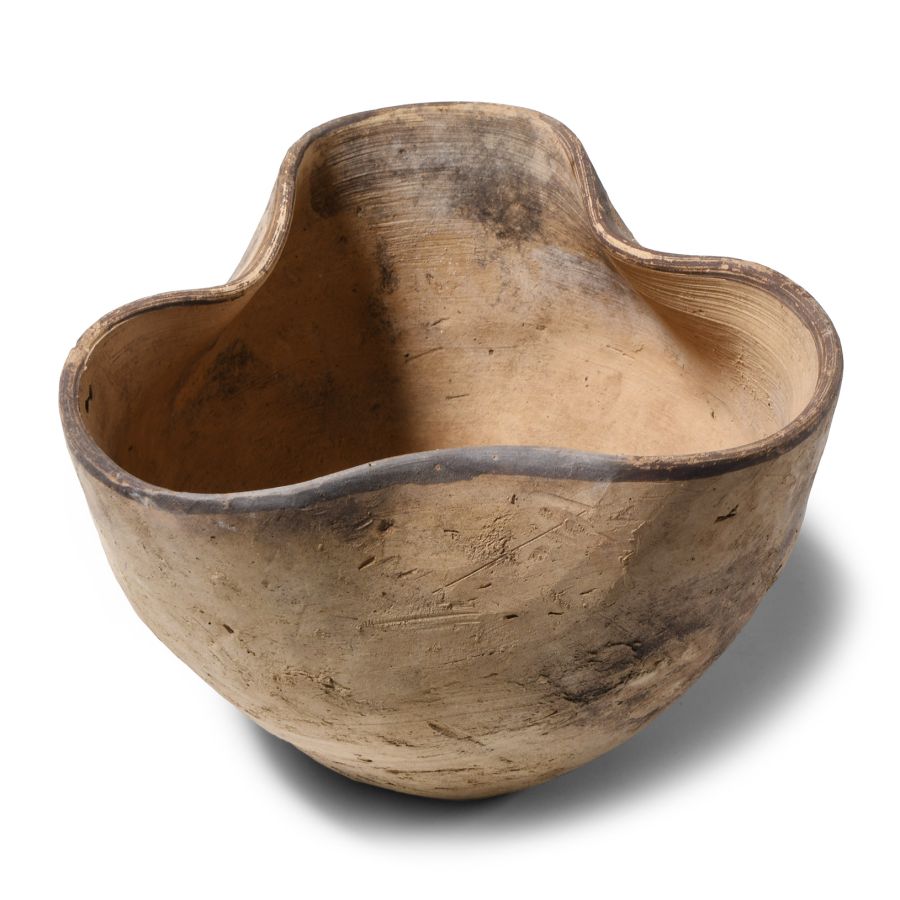
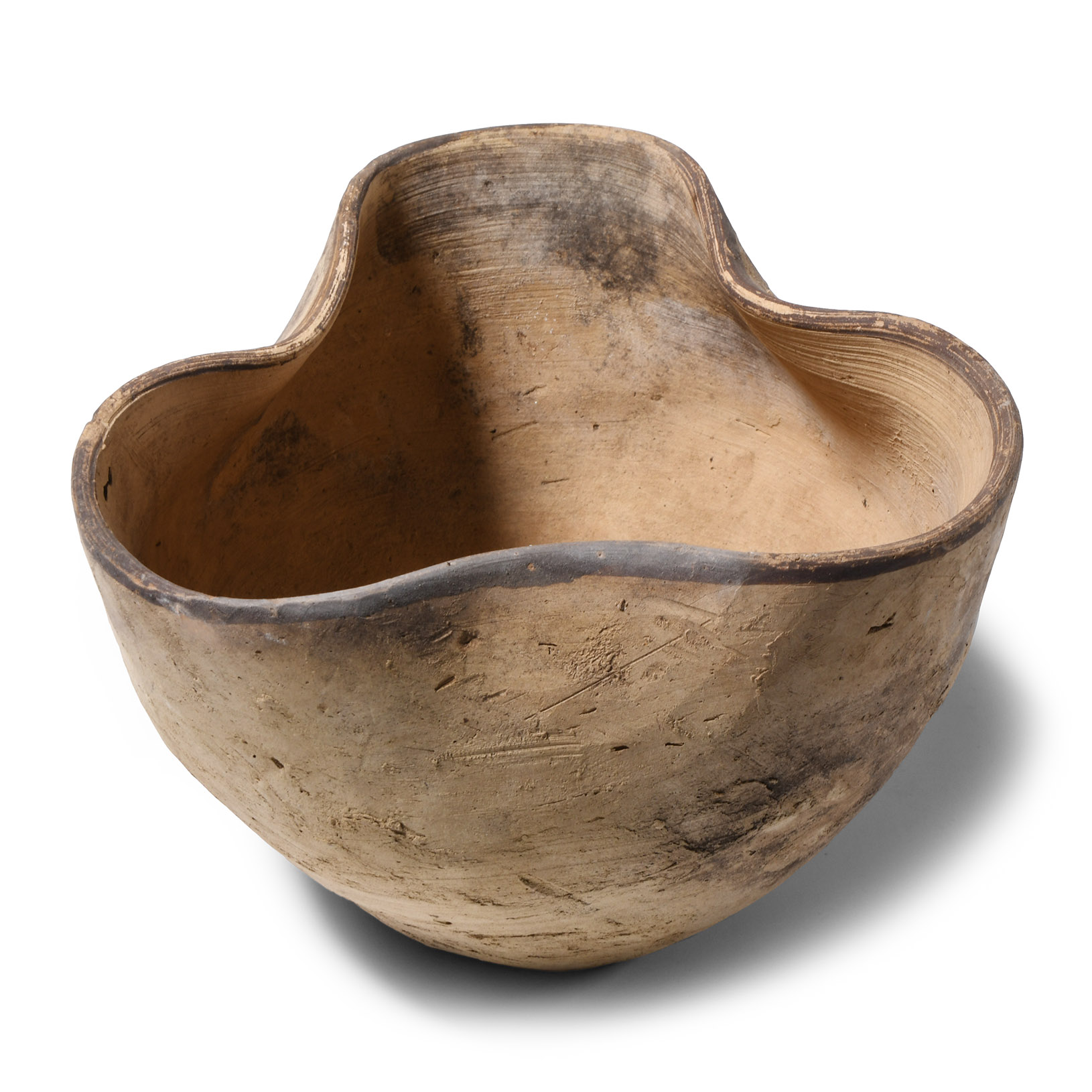
Greek Painted Terracotta Trefoil Cup
1ST MILLENNIUM B.C.
5 1/2 in. (421 grams, 14 cm wide).
Hemispherical in profile with pinched trefoil format, applied pigment to the rounded rim. [No Reserve]
ProvenanceFrom a collection acquired on the UK art market from various auction houses and collections mostly before 2000.
From an important Cambridgeshire estate; thence by descent.
See the American School of Classical Studies at Athens, An ancient shopping center, The Athenian Agora, Princeton, 1993, fig.51, for similar.
FootnotesIn many ancient houses a special domestic sacrifice was offered: the remains of burned offering of a chicken or small bird were deposited on the floor of the courtyard, along with certain characteristic small vessels: shallow saucers and plates, covered dishes, wine cups and lamps.
CONDITIONTimeLine Auctions follows a vetting process to ensure the authenticity and legality of all items, reinforcing our commitment to integrity and responsible trading. Each antiquity, antique, and coin lot undergoes thorough examination by a vetting committee of at least ten external specialists, professional trade association members, scientists, and archaeologists: Our Vetting Process
AUCTIONS:
TimeLine is a leading auction house specialising in antiquities, ancient art, collectables, natural history, coins, medals, and books. Our auctions offer museums, collectors, historians, and enthusiasts the opportunity to acquire unique and historically significant pieces.
-
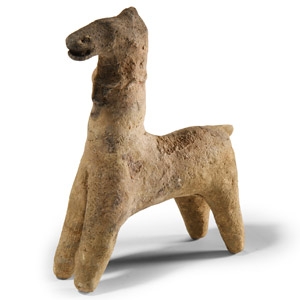
Boeotian Terracotta Horse Statuette
6th century B.C.Sold for (Inc. bp): £182
In static stance with forelegs straight and head erect, applied harness detailing. 130 grams, 11.1 cm high
From a collection acquired on the UK art market from various auction houses and collections mostly before 2000. From an important Cambridgeshire estate; thence by descent. -
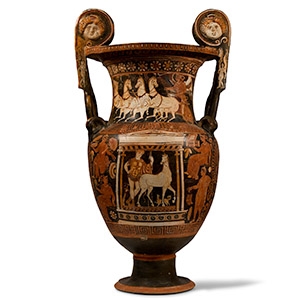
Monumental Apulian Red-Figure Volute Krater Attributed to the Licurgus Painter
Circa 330 B.C.Estimate: £50,000 - 70,000 (‡+bp*)
Opening Bid: £22,222
With a flared and carinated foot, meander patterns around the lower body, band of rosettes encircling the neck, gusseted handles with masks to the outer faces opening to two columnar legs, broad shoulder with loops flanking the handles; red-figure scenes to the neck and body: Side a: above, a quadriga with Nike at the reins, wings spread; below, naiskos with flanking columns, hero standing beside his horse, resting on his spear, wearing a muscled armour, surrounded by seated and reclining females and youths in various poses, one of the youths holding the hero's pointed boots in his hand; Side b: above, a palmette, below column with decorative ribbons flanked by two seated males and two females offering votive gifts; some restoration. 13.85 kg, 78.5 cm high
Private collection, Neuchâtel, Switzerland. Ex collection H.& P. Payot, Clarens, by descent. Accompanied an academic report by Dr Raffaele D’Amato. This lot has been checked against the Interpol Database of stolen works of art and is accompanied by a search certificate number no.12066-218199.
Monumental kraters such as this one are typical of the Apulian red-figure production that developed between circa 440 and 300 B.C. in the region of the Greek colonies of Taranto and Metaponto in Southern Italy, where they were used as tomb markers in cemeteries. Here the painter focuses on the celebration of the hero-warrior, surrounded by young women and men, the image of the victorious leader is emphasised by the full panoply and iconography of Nike. -
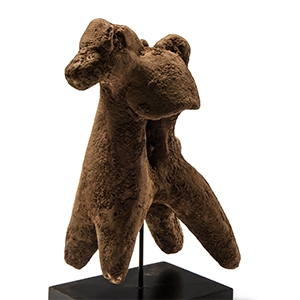
Archaic Greek Terracotta Figure of Mounted Warrior with Shield
7th-5th century B.C.Sold for (Inc. bp): £156
Comprising a stylised horse with elongated neck, mounted by a bearded rider figure holding a shield with right arm bent, restored; mounted on a custom-made display stand. 220 grams total, 13 cm including stand
Acquired before 1990. From an old German collection.
