
Loading, please wait...
LOT 0541
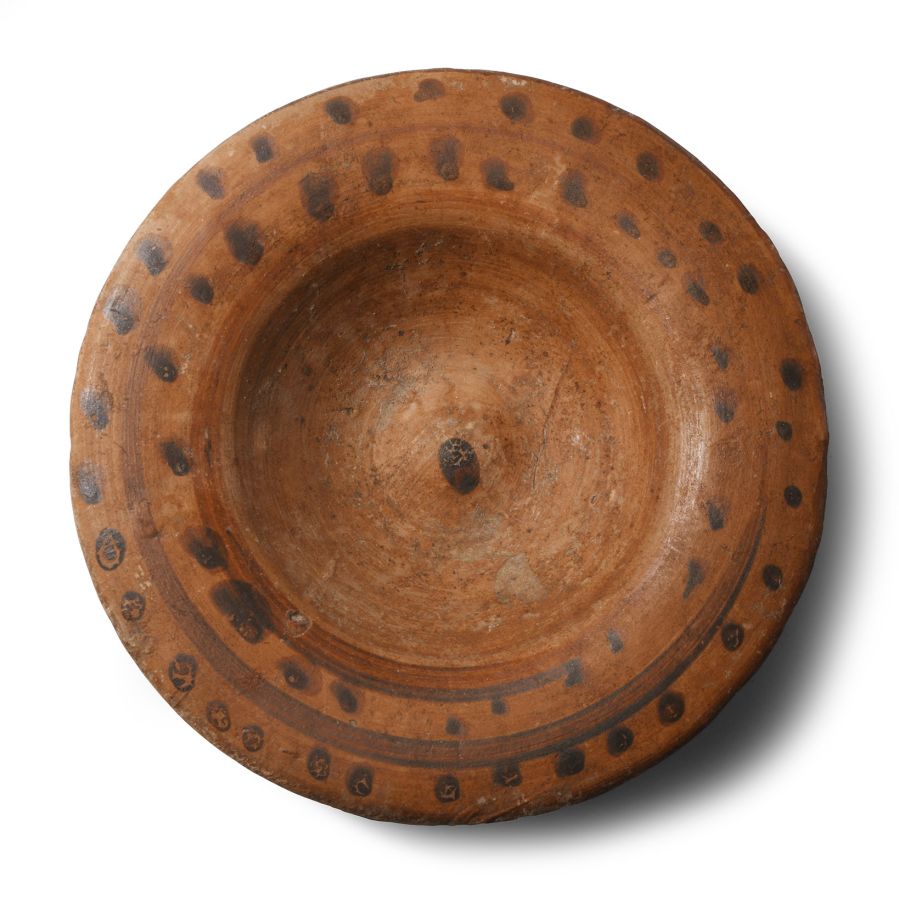
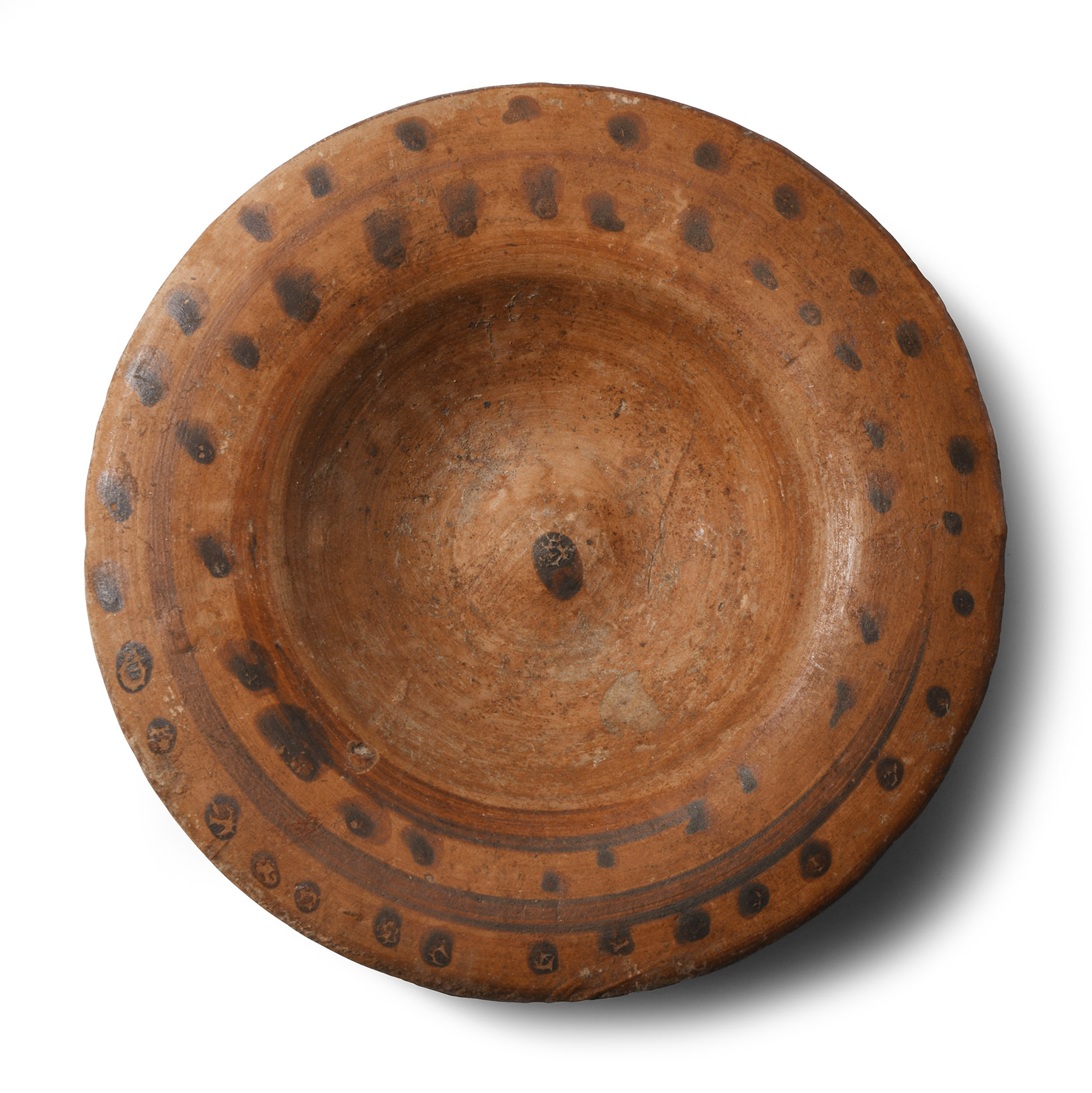
Greek Painted Terracotta Dish
CIRCA 6TH-5TH CENTURY B.C.
5 3/8 in. (129 grams, 13.5 cm).
With discoid base, central recess and broad flared rim, concentric painted bands and roundels to the upper face. [No Reserve]
ProvenanceFrom a collection acquired on the UK art market from various auction houses and collections mostly before 2000.
From an important Cambridgeshire estate; thence by descent.
TimeLine Auctions follows a vetting process to ensure the authenticity and legality of all items, reinforcing our commitment to integrity and responsible trading. Each antiquity, antique, and coin lot undergoes thorough examination by a vetting committee of at least ten external specialists, professional trade association members, scientists, and archaeologists: Our Vetting Process
AUCTIONS:
TimeLine is a leading auction house specialising in antiquities, ancient art, collectables, natural history, coins, medals, and books. Our auctions offer museums, collectors, historians, and enthusiasts the opportunity to acquire unique and historically significant pieces.
-
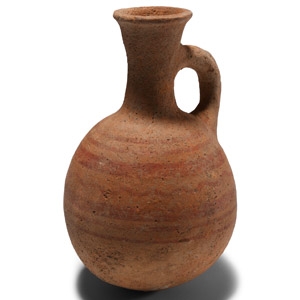
Cypriot Painted Terracotta Jug
1900-1600 B.C.Sold for (Inc. bp): £85
Of bulbous profile with loop handle and trumpet-shaped mouth, circumferential bands of red pigment. 213 grams, 13.5 cm
From a collection acquired on the UK art market from various auction houses and collections mostly before 2000. From an important Cambridgeshire estate; thence by descent.
The jug is a rare example of red-on-red ware (variant of the red-on-black painted ware) of Middle Bronze Age. In this ware there is a polished slip of red-brown on pink, on which matt-finish lines have been painted in red-brown or purple. -
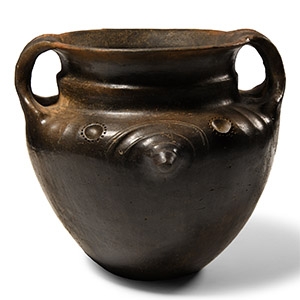
Villanovan Impasto Amphora with Anthropomorphic Decoration
Early 7th century B.C.Sold for (Inc. bp): £780
Burnished impasto amphora with lateral strap handles, everted rim, impressed dimples and other decoration to the broad shoulder; with some repairs. 948 grams, 17 cm high
Ex Galerie am Museum Jürgen Haering, Freiburg, Germany. From the collection of Dr Werner Cordes, Hagen, Germany, 1988. with Hammer Auktionen, Basel, Switzerland, sale 54, lot 121. Property of a South Australian private collector, with collection reference 21.25. Accompanied by detailed collector's catalogue pages including description and photograph. -
.jpg)
Eastern Greek Gold Horse Earrings with Pendants
Circa 4th century B.C. and laterSold for (Inc. bp): £1,950
Each composed of a pair of bifacial addorsed horse-heads with filigree and granule detailing, filigree loop to each mouth, coil to each forehead, six loops to the underside each with a chain and sheet gold fruit pendant; to each face an inset glass cabochon; one with twisted wire ear hook above; both earrings with ancient chain dangles, one with a replicant horse. 18.08 grams total, 58-64 mm
Previously acquired on the UK art market between 1978-1980. Ex property of a North West London gentleman.
