
Loading, please wait...
LOT 0596
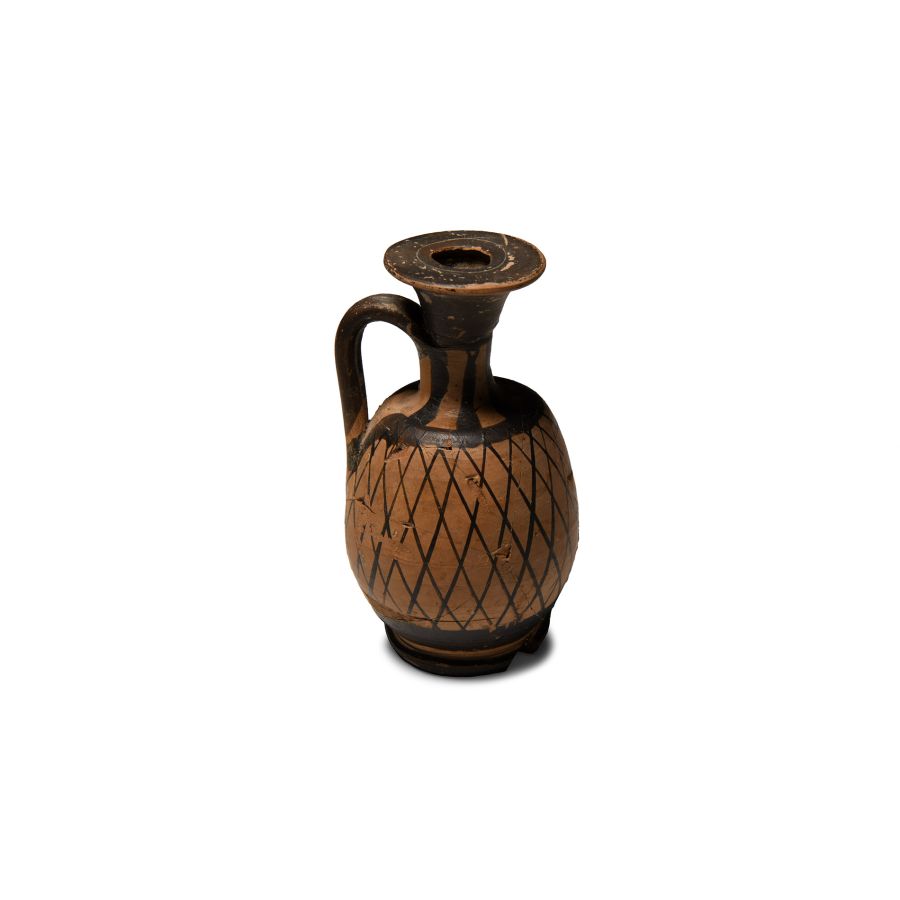
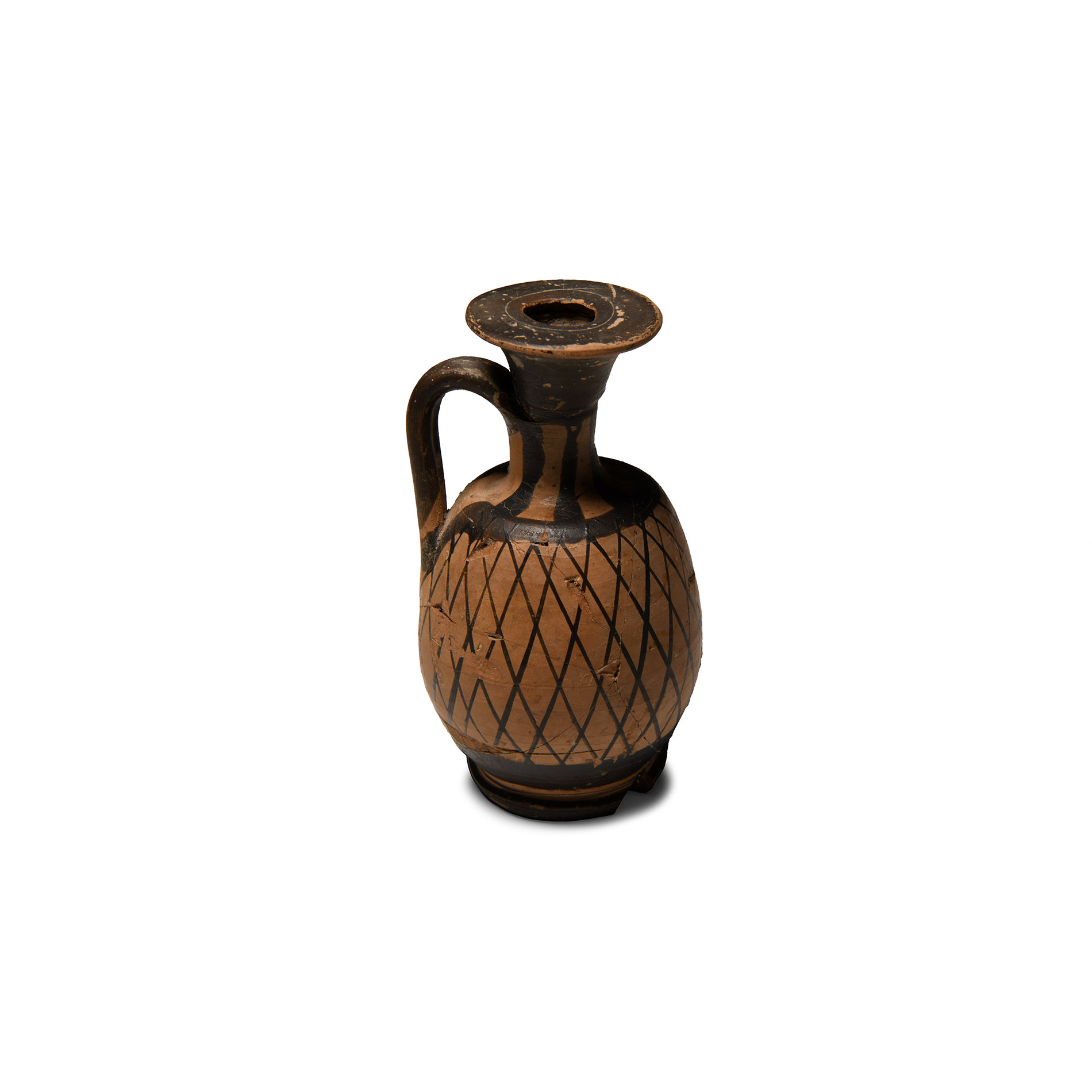
Greek Net-Painted Black-Figure Lekythos
APULIAN, 4TH CENTURY B.C.
3 5/8 in. (72 grams, 91 mm).
The ovoid body decorated with cross-hatching, solid band to the shoulder and vertical bands to the slender neck, trumpet-shaped mouth, strap handle and discoid foot; repaired.
ProvenanceEx Mister X. (1931-2017) private collection.
Sold in the benefit of the 'Croix-Rouge of Monaco'.
Cf. The Metropolitan Museum, New York, accession number 76.12.4, for similar.
CONDITIONTimeLine Auctions follows a vetting process to ensure the authenticity and legality of all items, reinforcing our commitment to integrity and responsible trading. Each antiquity, antique, and coin lot undergoes thorough examination by a vetting committee of at least ten external specialists, professional trade association members, scientists, and archaeologists: Our Vetting Process
AUCTIONS:
TimeLine is a leading auction house specialising in antiquities, ancient art, collectables, natural history, coins, medals, and books. Our auctions offer museums, collectors, historians, and enthusiasts the opportunity to acquire unique and historically significant pieces.
LOT 0596
Greek Net-Painted Black-Figure Lekythos
Estimate £400 - 600€460 - 700 (for guidance only)$540 - 810 (for guidance only)
-
.jpg)
Etruscan Gold Filigree Leech Brooch
7th century B.C.Estimate: £2,000 - 3,000 (+bp*)
Opening Bid: £1,000
Hollow-formed bow with applied floral detailing, filigree and granules, double-coiled spring and pin; tongue-shaped foot with dense granule detailing, globe finial with rosette above. 13.86 grams, 69 mm
Acquired in the 1970s. Property of a London lady, part of her family's collection. This lot has been checked against the Interpol Database of stolen works of art and is accompanied by search certificate no.12112-213116. -
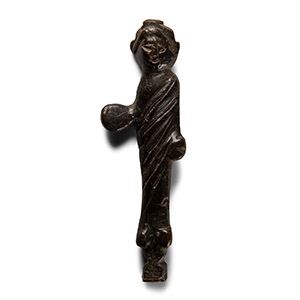
Etruscan Bronze Offering Statuette
4th century B.C.Sold for (Inc. bp): £312
Modelled in the round, standing figure in a tight-fitting wrapped mantle, patera in the right hand, dressed hair; possibly in an act of religious devotion. 27 grams, 73 mm
From a collection acquired on the UK art market from various auction houses and collections mostly before 2000. From an important Cambridgeshire estate; thence by descent. -
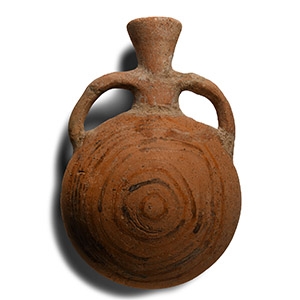
Cypro-Archaic Buff Pottery Pilgrim's Flask
Levant, circa 1050-700 B.C.Sold for (Inc. bp): £104
Biconvex body with trumpet-shaped mouth and two lateral loop handles; painted concentric circles to the body. 330 grams, 15.3 cm
From an old Lebanese family collection moved to Germany in the middle of the 1970s. Acquired from Bonhams, London, 20 October 2005, no.424 (part). From an important Cambridgeshire estate; thence by descent. Accompanied by copies of the relevant Bonhams catalogue pages and the original Bonhams lot tag.
