
Loading, please wait...
LOT 0051
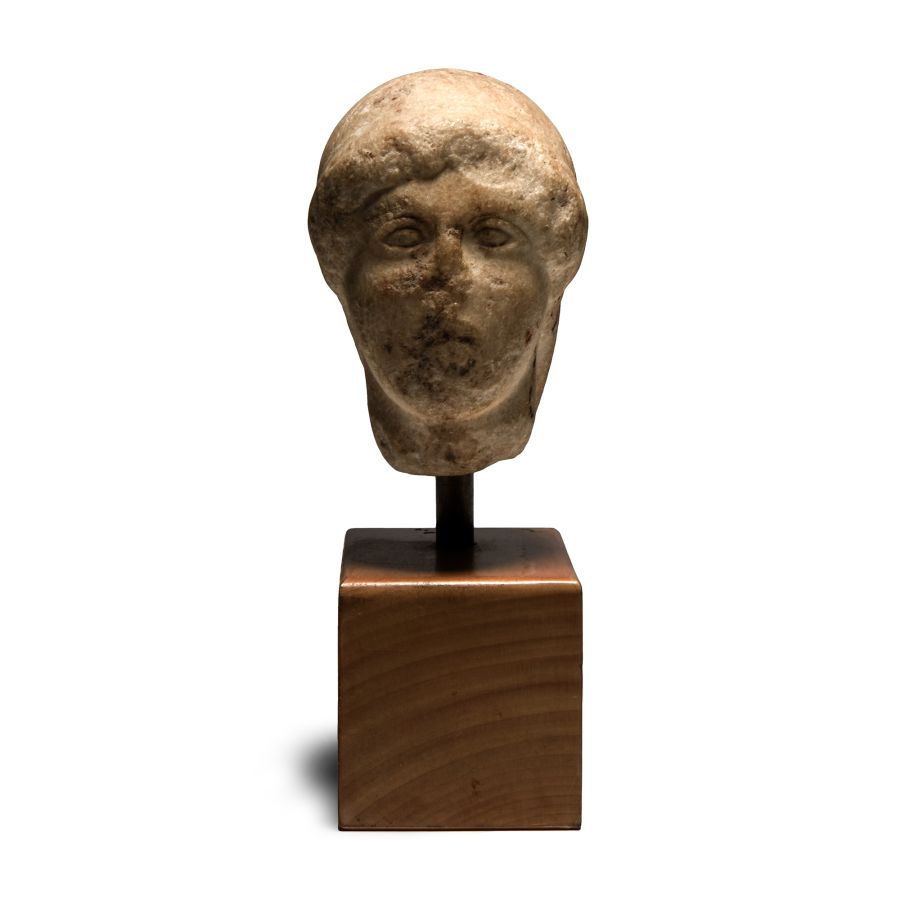
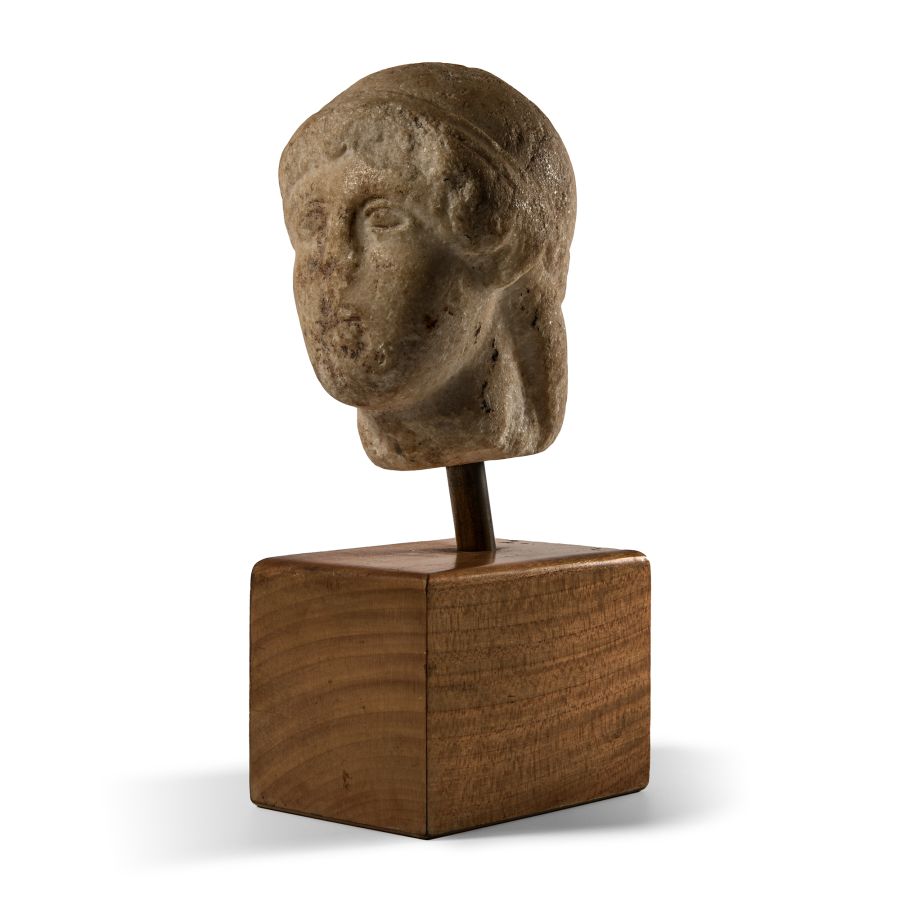
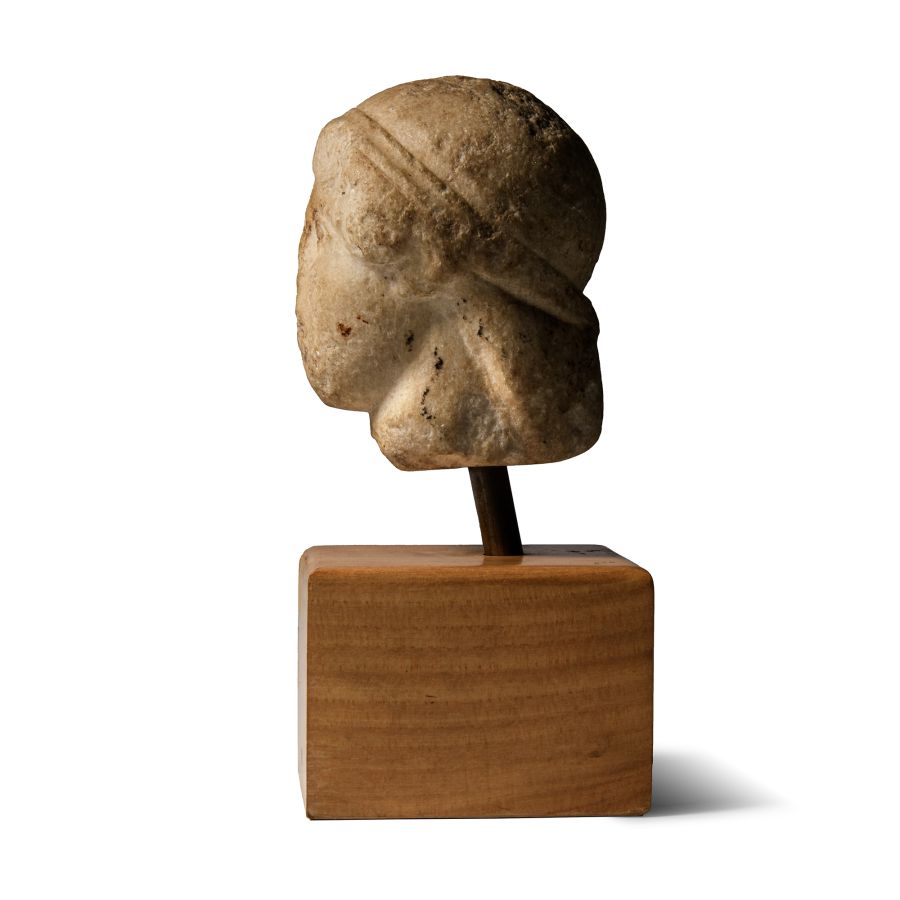
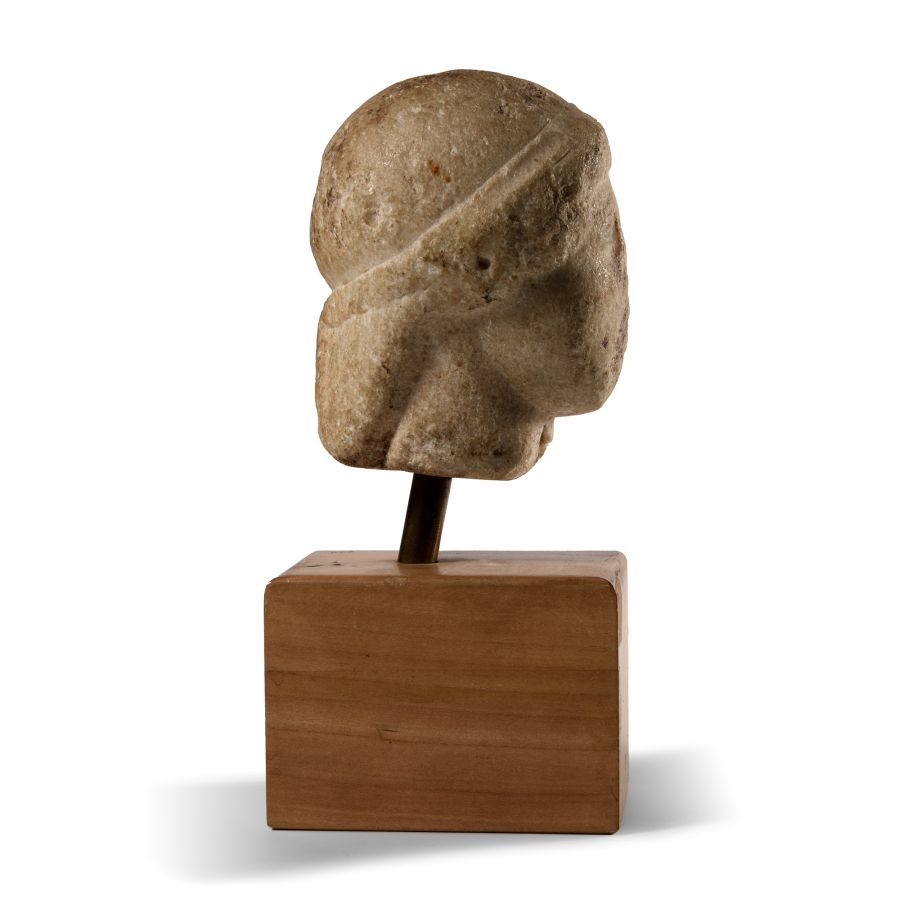
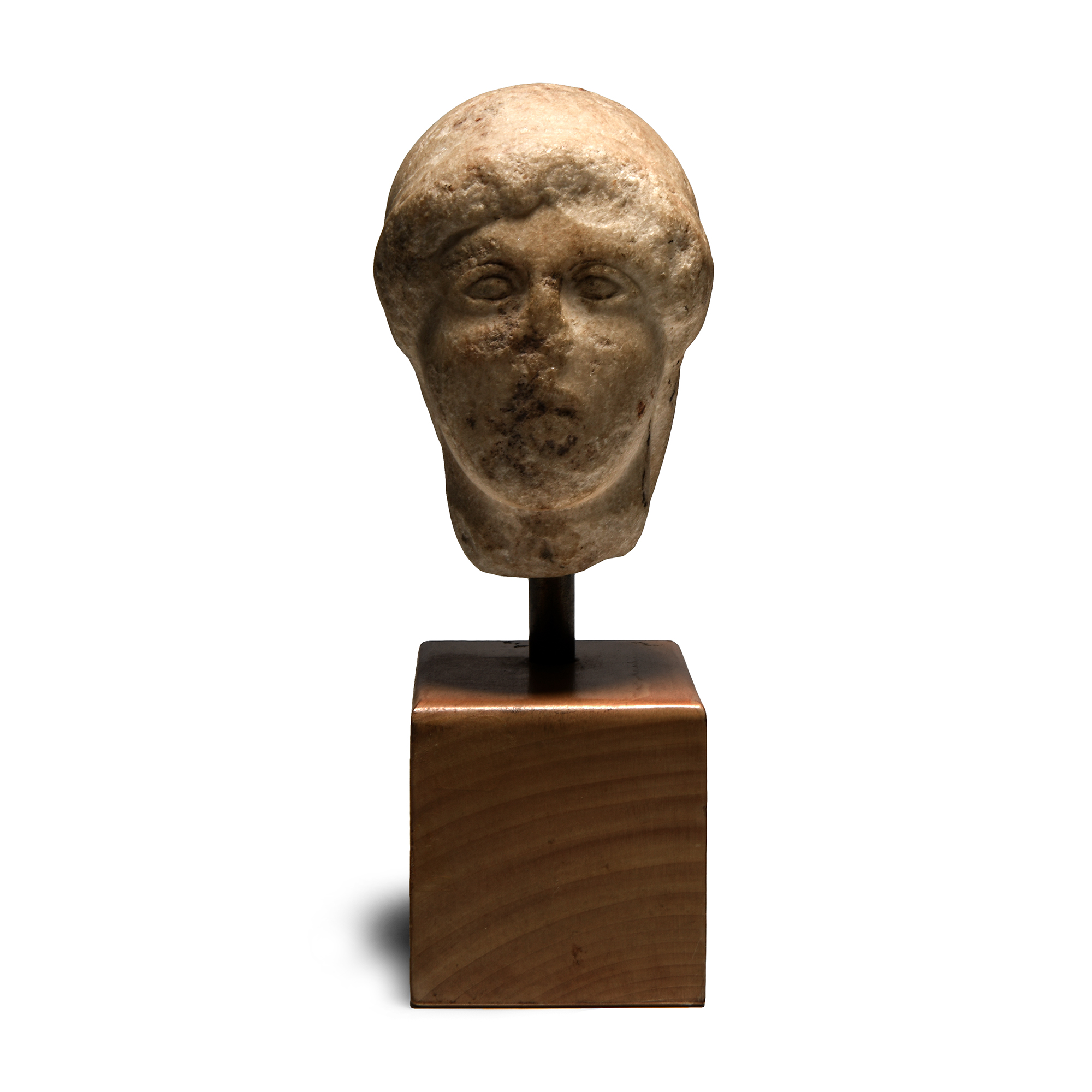
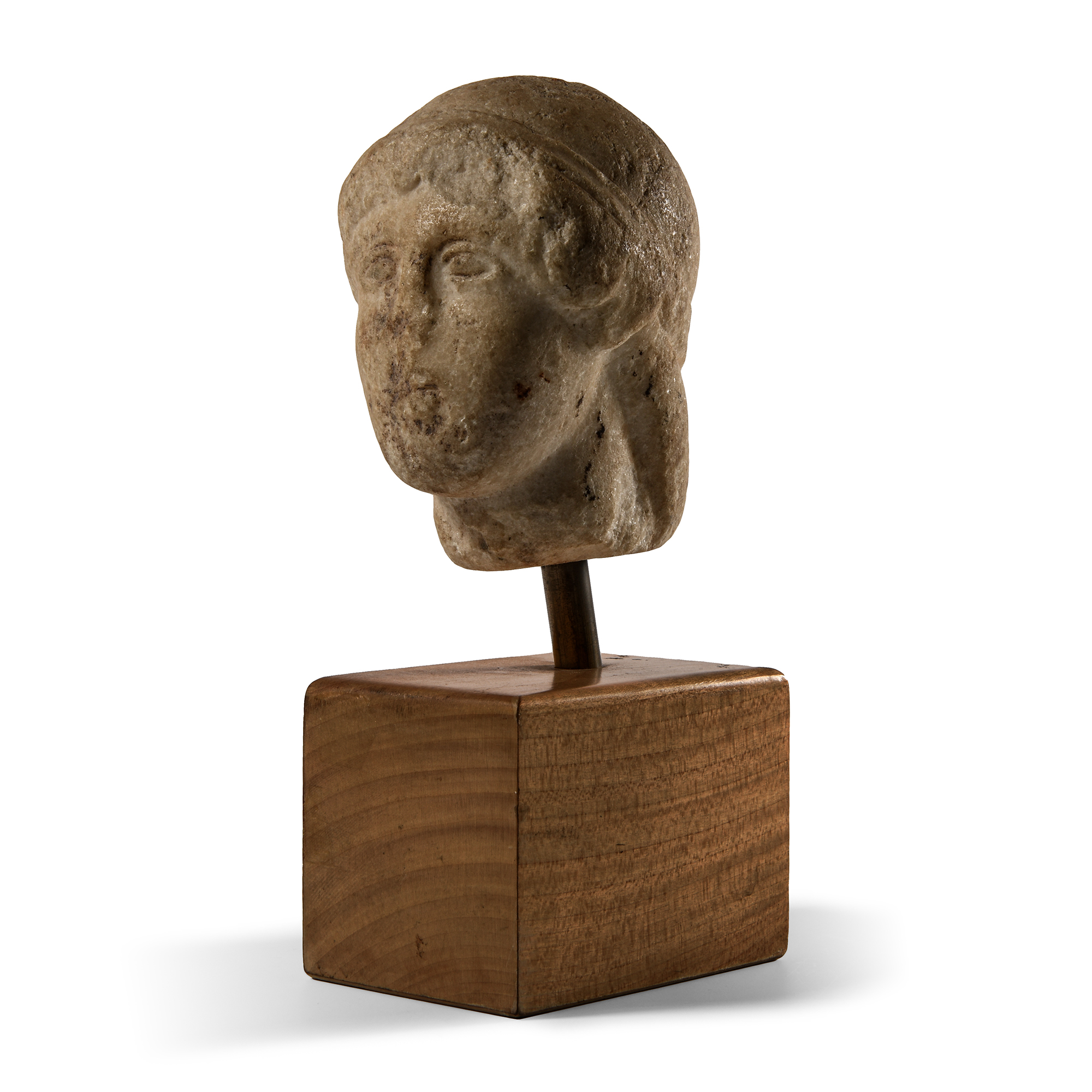
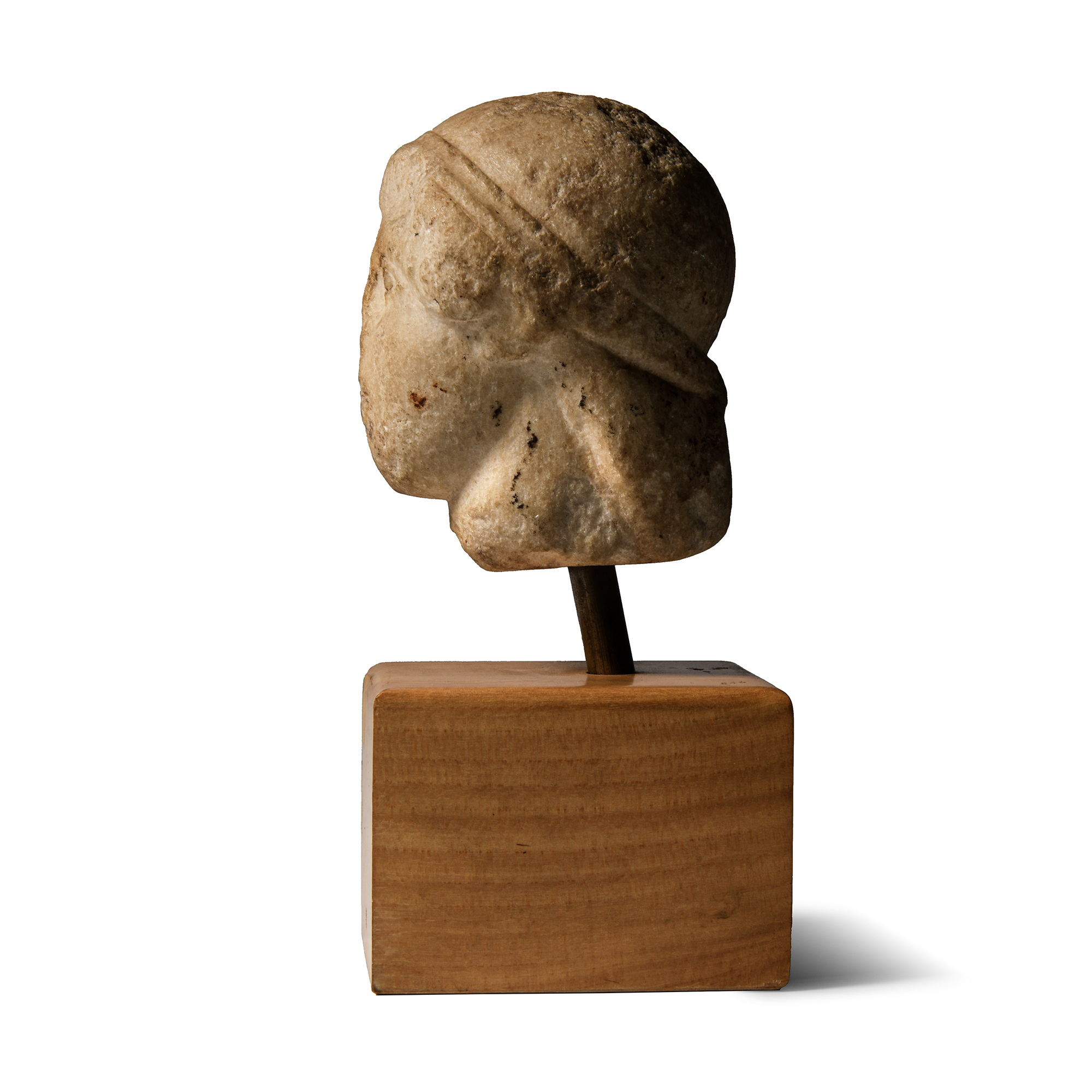
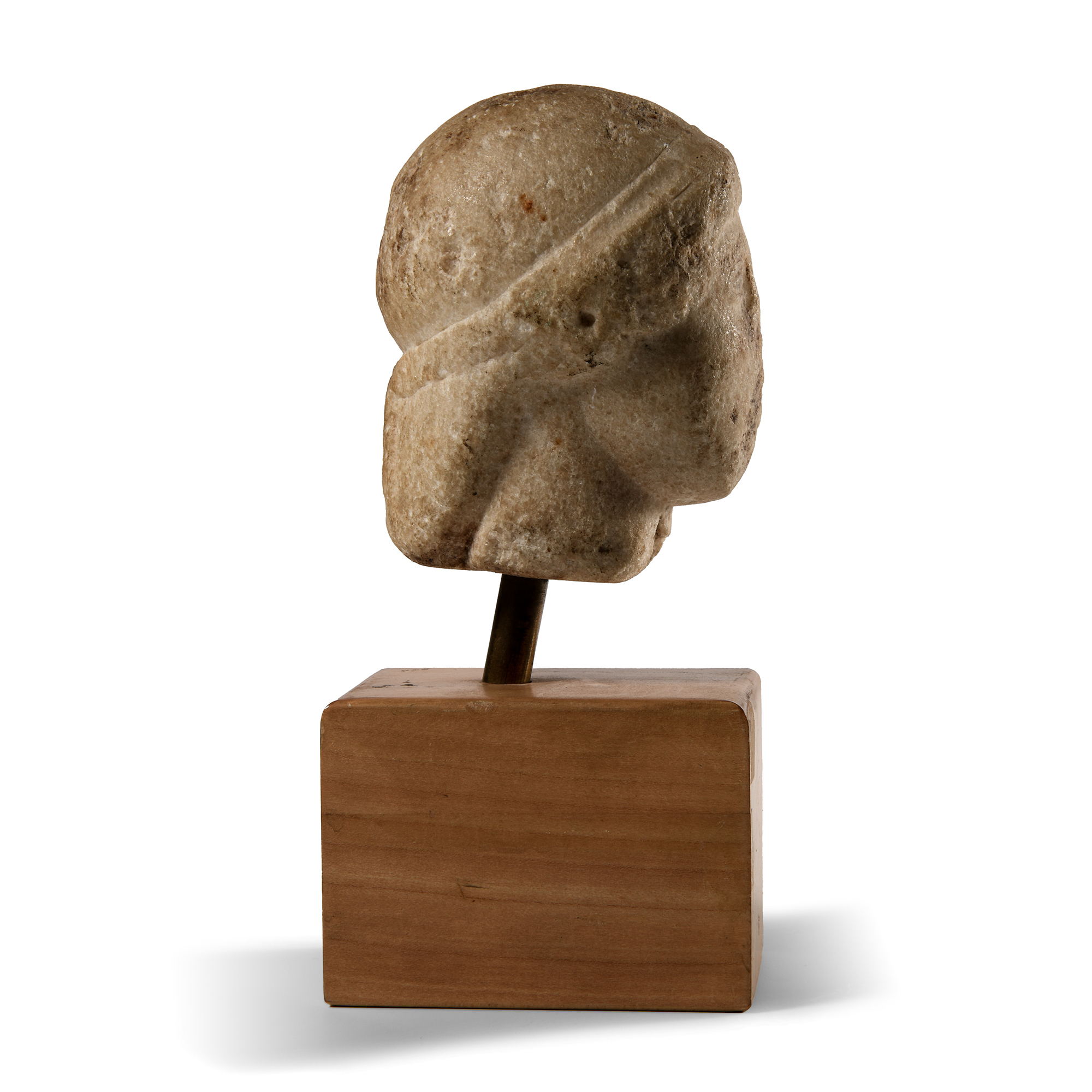
Greek Marble Head of a Youth
EARLY 5TH CENTURY B.C.
7 1/8 in. (879 grams total, 18 cm high including stand).
Carved in the round; semi-naturalistic anatomic and facial detailing, hair gathered loosely at the neck and tied with a taenia knotted at the nape of the neck; mounted on a custom-made display base.
ProvenanceEx old European private property, by inheritance to the previous owner.
Ex Schuler Auktionen, Zürich, 10 December 2020, no.1211.
Accompanied by an academic report by Dr Raffaele D’Amato.
This lot has been checked against the Interpol Database of stolen works of art and is accompanied by search certificate number no.11817-206512.
Cf. Metropolitan Museum of Art, accession no.1992.11.60, for a similar marble head of a Kouros, c.525-475 B.C., in Zimmerman, J.-L., Collection de la Fondation Thétis: Développements de l'Art Grec de la Préhistoire à Rome, Geneva, 1987, p.47, no.88; cf. also a slightly later head with tight, defined curls, likely to have come from a group within a funerary naiskos, no. 1972.118.111 at the Metropolitan Museum of Art, New York, in Von Bothmer, D. and d'Harnoncourt, R., Greek, Etruscan, and Roman Antiquities: An Exhibition from the Collection of Walter Cummings Baker, Esq. no. 59, p. 10, pl. 20, 1950, New York; see also Dörig, J., The Olympia Master and his collaborators, Leiden-New York-Köln-København, 1987.
FootnotesThe small statuette to which the head belonged was probably that of a naked youth, the so-called kouros, typical of archaic Greek sculpture from the 7th century B.C. onwards.
CONDITIONTimeLine Auctions follows a vetting process to ensure the authenticity and legality of all items, reinforcing our commitment to integrity and responsible trading. Each antiquity, antique, and coin lot undergoes thorough examination by a vetting committee of at least ten external specialists, professional trade association members, scientists, and archaeologists: Our Vetting Process
AUCTIONS:
TimeLine is a leading auction house specialising in antiquities, ancient art, collectables, natural history, coins, medals, and books. Our auctions offer museums, collectors, historians, and enthusiasts the opportunity to acquire unique and historically significant pieces.
LOT 0051
Greek Marble Head of a Youth
Estimate £2,500 - 3,500€2,900 - 4,060 (for guidance only)$3,380 - 4,730 (for guidance only)
-
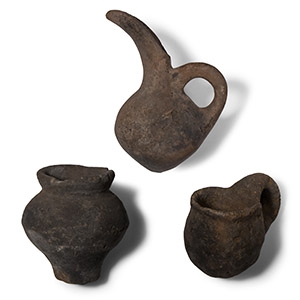
Cypriot Grey Ware Vessel Group
Middle Bronze Age, circa 2000-1650 B.C.Sold for (Inc. bp): £91
Comprising: dipper cup with loop handle; juglet with scooped spout; biconvex jar with carinated profile. 386 grams total, 7.3-10.9 cm
From a collection acquired on the UK art market from various auction houses and collections mostly before 2000. From an important Cambridgeshire estate; thence by descent. -
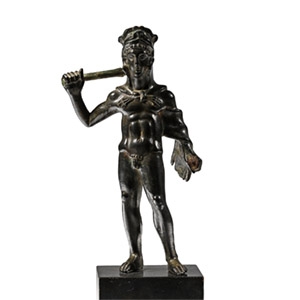
Etruscan Bronze Statuette of Herakles
4th-3rd century B.C.Sold for (Inc. bp): £18,200
Modelled in the round with a muscular nude body, his club resting on his shoulder and the hair dressed in rows of tight, close-set curls underneath the Nemean lionskin hood with cloak billowing over his left arm, the paws tied across his chest; mounted on a custom-made display stand. 290 grams total, 14.5 cm high (19.5 cm high including stand)
Fine condition, excellent uniform patina.
with Sotheby's, New York, 21 November 1985, no.60. Ex private New York collection. Accompanied by an academic report by Dr Raffaele D'Amato. This lot has been checked against the Interpol Database of stolen works of art and is accompanied by search certificate number no.11794-206497.
The statuette assumes the position of the 'attacking Hercules', which characterises numerous Etruscan statues of the hero of the classical era, however, with a less aggressive stance. The type was probably an Etruscan creation of the 5th century B.C., based on Greek models, which lasted until the end of the Hellenistic period, when Etruria was by then incorporated into the Roman world. This statuette, despite certain anatomical stylisation and an impersonal characterisation of the face, is the result of a good artistic and technical quality. The comparison of the artwork with the group identified as ‘Trieste’ from Colonna shows that this specimen is more recent and should be dated to the end of the Hellenistic Age. These small statuettes were probably offered ex-voto by the Romano-Etruscan aristocracy of the period. -
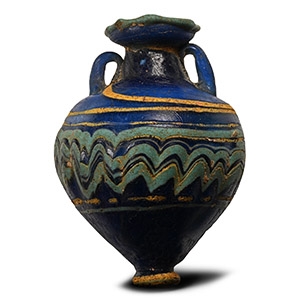
Greek Core-Formed Glass Aryballos
6th-5th century B.C.Sold for (Inc. bp): £1,404
Of squat piriform profile with applied ring to the foot and rim, applied strap handles o the shoulder; the equator with horizontal hoops and dragged marvered trail decoration. 50.1 grams, 71 mm
Private collection, England.
