
Loading, please wait...
LOT 0065
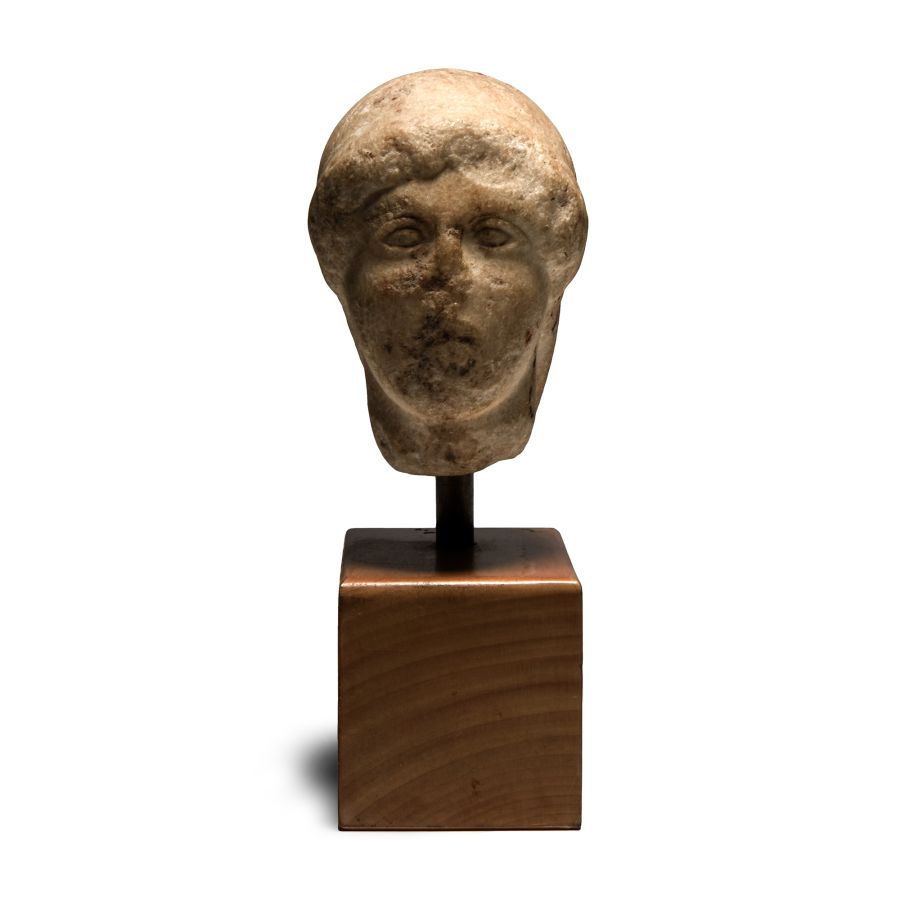
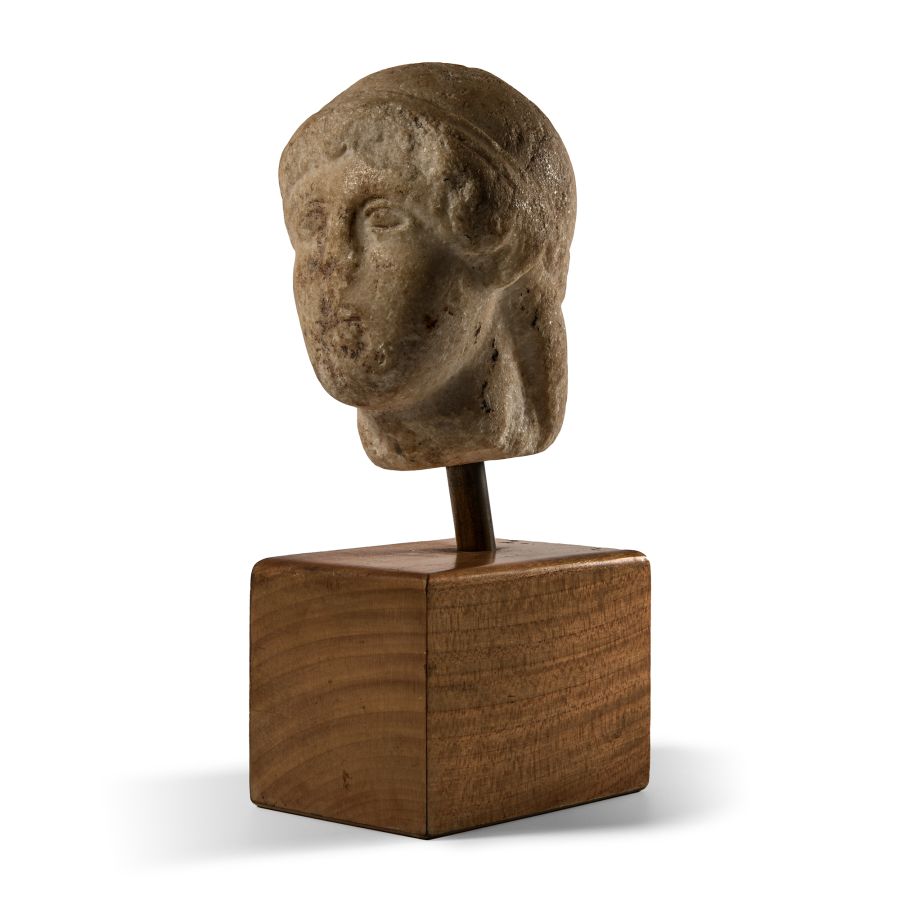
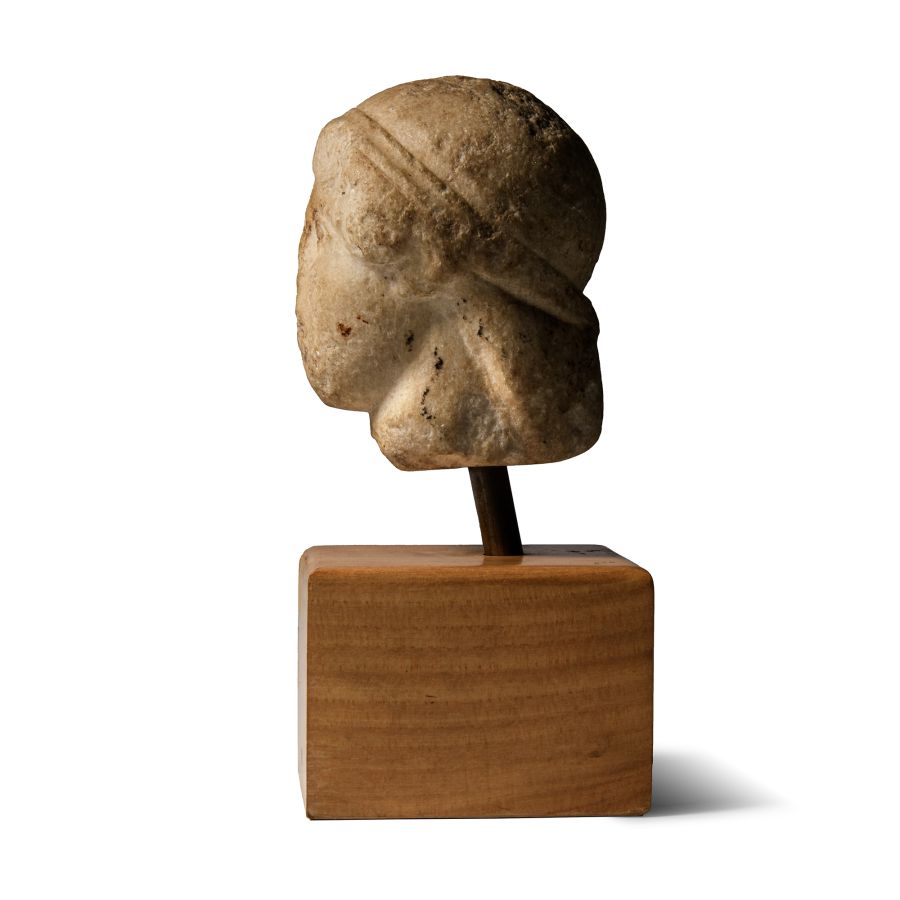
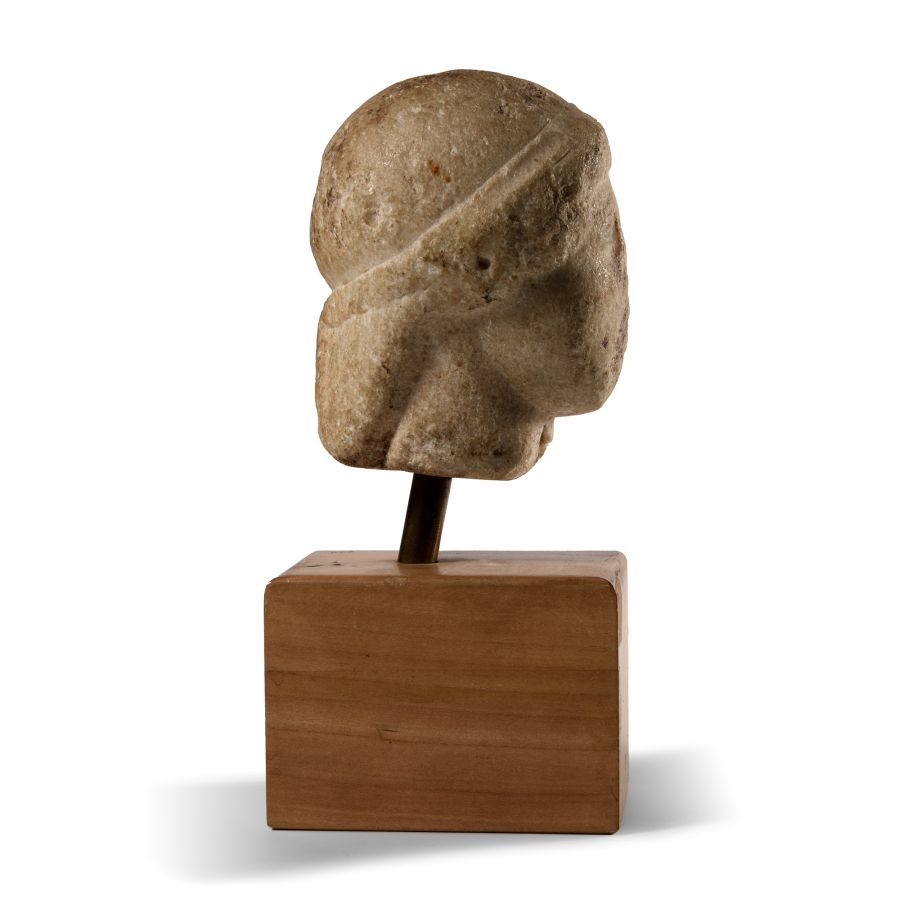
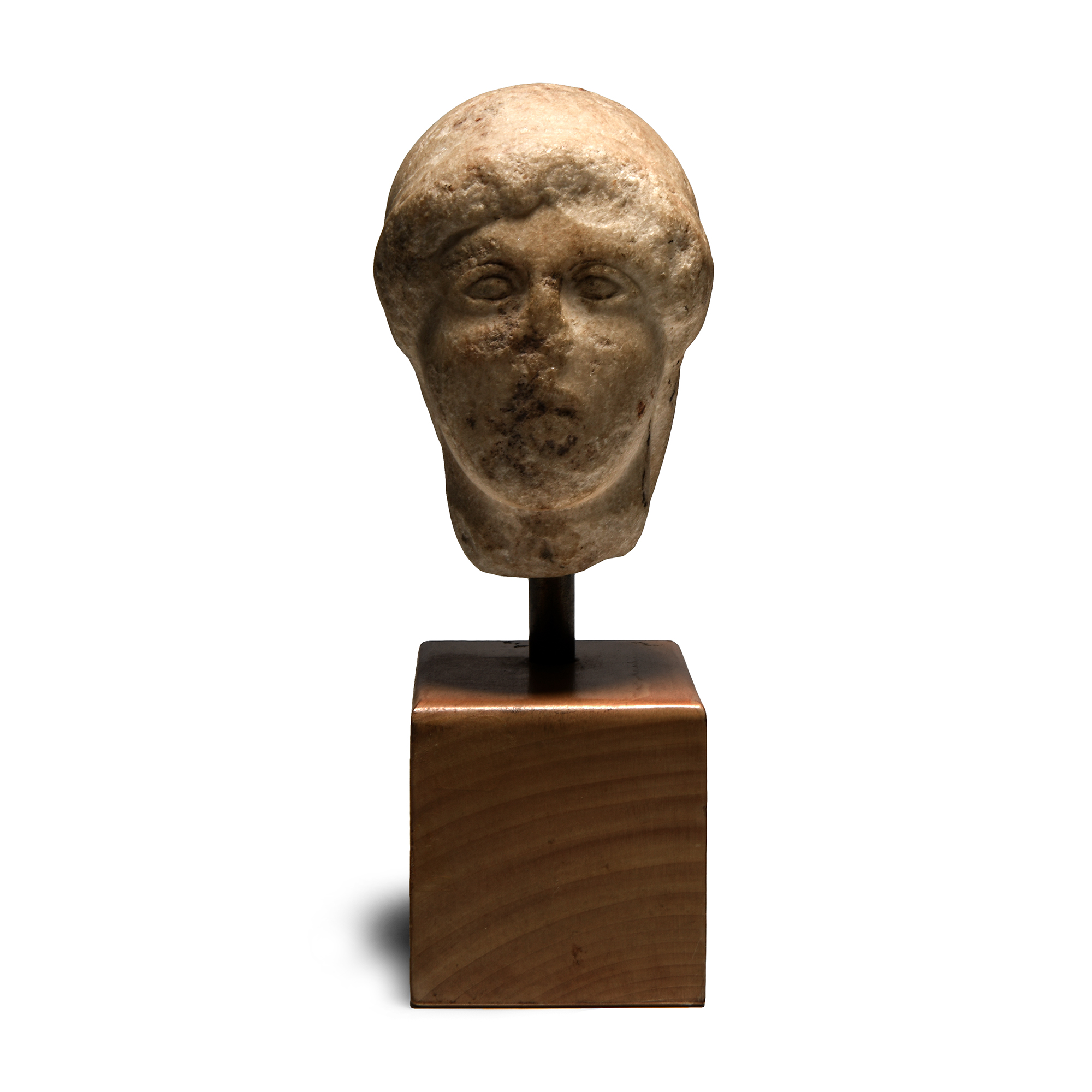
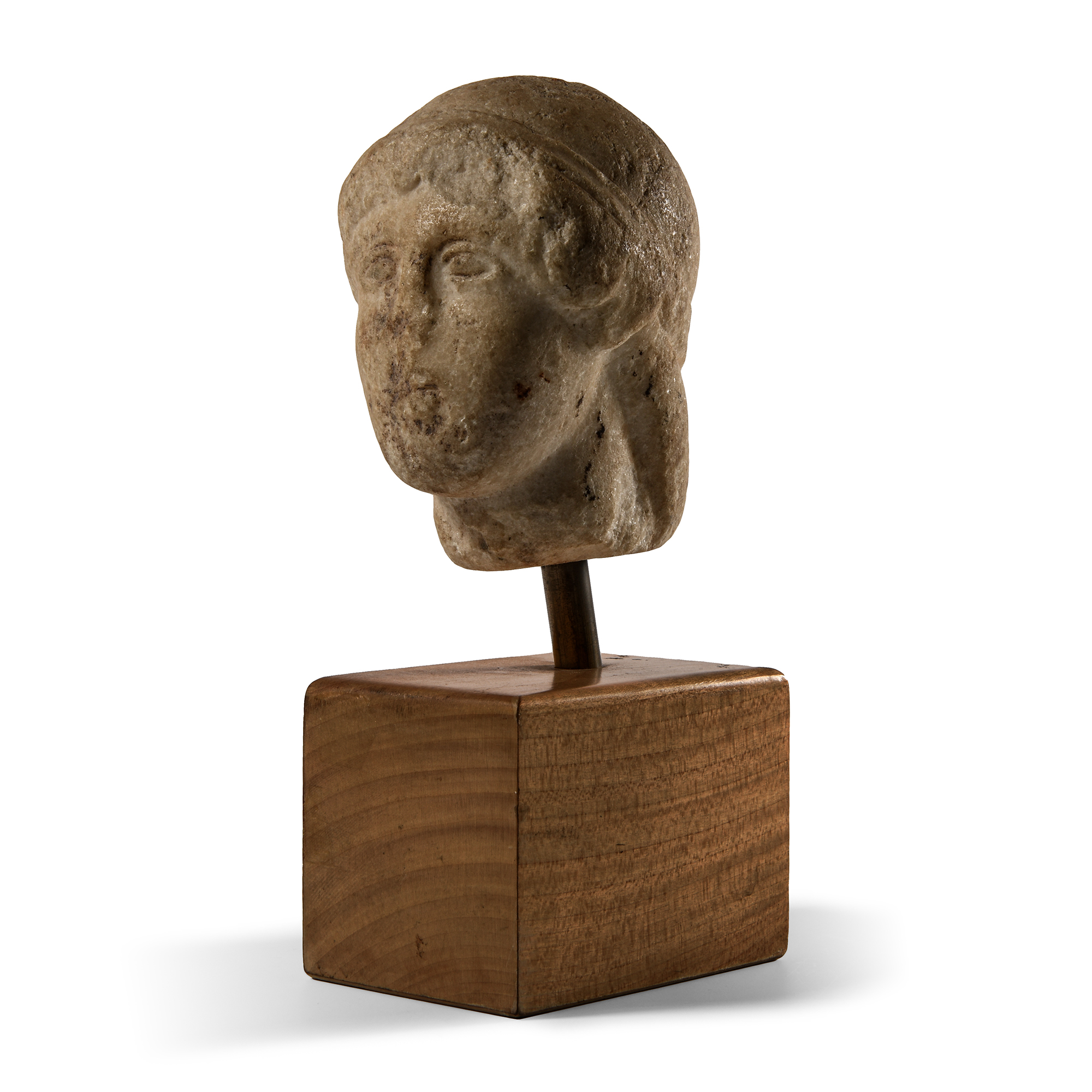
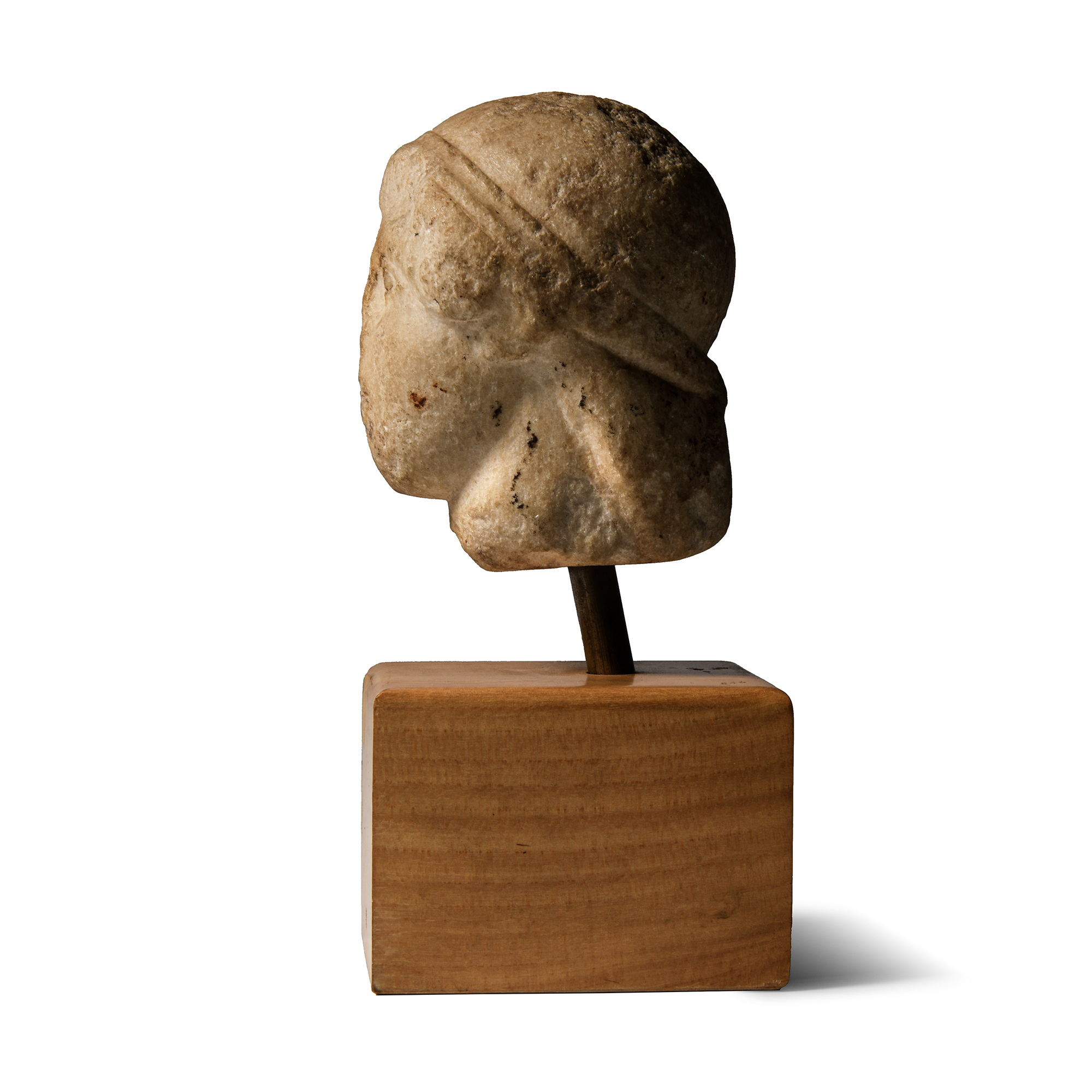
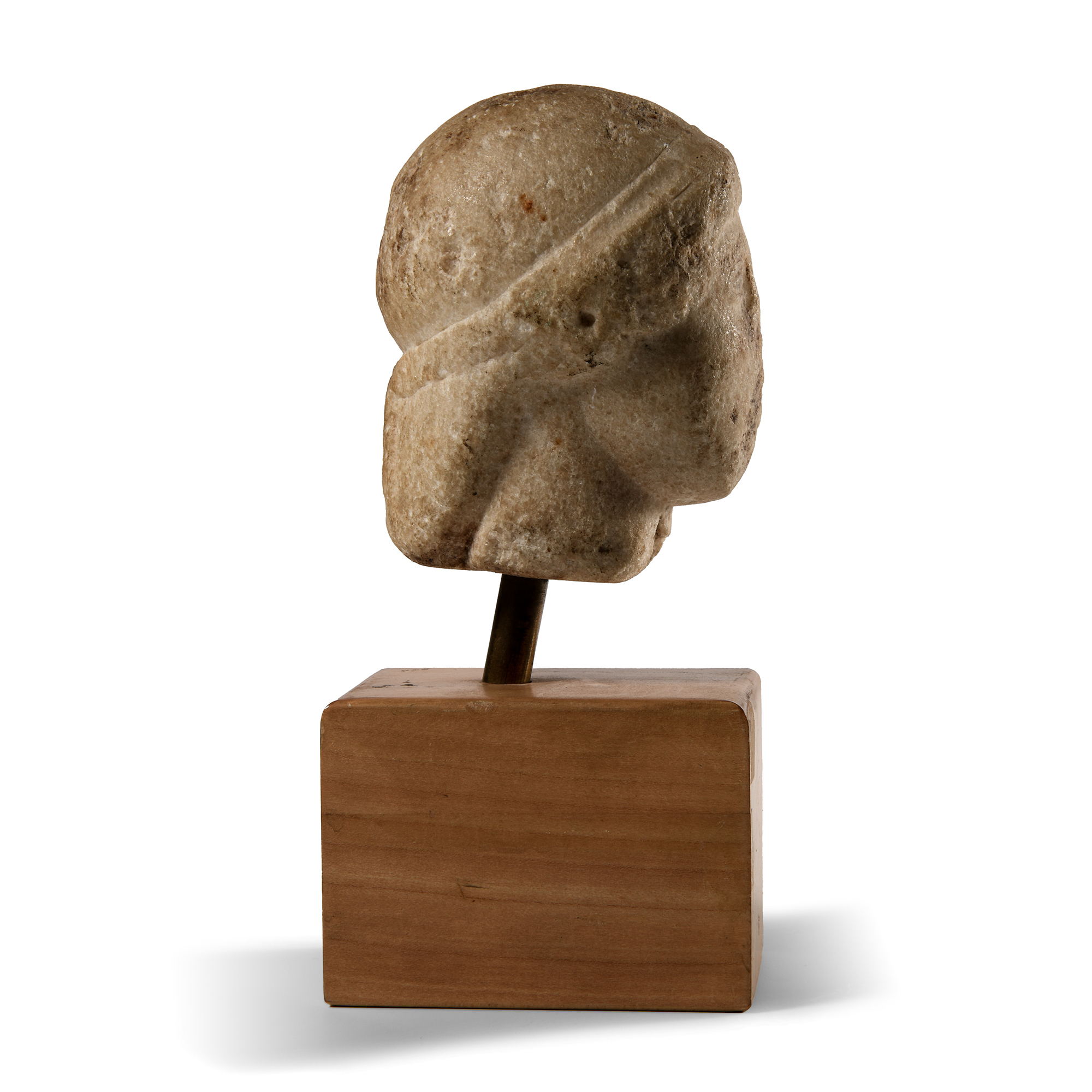
Greek Marble Head of a Youth
EARLY 5TH CENTURY B.C.
7 1/8 in. (879 grams total, 18 cm high including stand).
Carved in the round; semi-naturalistic anatomic and facial detailing, hair gathered loosely at the neck and tied with a taenia knotted at the nape of the neck; mounted on a custom-made display base.
ProvenanceEx old European private property, by inheritance to the previous owner.
Ex Schuler Auktionen, Zürich, 10 December 2020, no.1211.
Accompanied by an academic report by Dr Raffaele D’Amato.
This lot has been checked against the Interpol Database of stolen works of art and is accompanied by search certificate number no.11817-206512.
Cf. Metropolitan Museum of Art, accession no.1992.11.60, for a similar marble head of a Kouros, c.525-475 B.C., in Zimmerman, J.-L., Collection de la Fondation Thétis: Développements de l'Art Grec de la Préhistoire à Rome, Geneva, 1987, p.47, no.88; cf. also a slightly later head with tight, defined curls, likely to have come from a group within a funerary naiskos, no. 1972.118.111 at the Metropolitan Museum of Art, New York, in Von Bothmer, D. and d'Harnoncourt, R., Greek, Etruscan, and Roman Antiquities: An Exhibition from the Collection of Walter Cummings Baker, Esq. no. 59, p. 10, pl. 20, 1950, New York; see also Dörig, J., The Olympia Master and his collaborators, Leiden-New York-Köln-København, 1987.
FootnotesThe small statuette to which the head belonged was probably that of a naked youth, the so-called kouros, typical of archaic Greek sculpture from the 7th century B.C. onwards.
CONDITIONTimeLine Auctions follows a vetting process to ensure the authenticity and legality of all items, reinforcing our commitment to integrity and responsible trading. Each antiquity, antique, and coin lot undergoes thorough examination by a vetting committee of at least ten external specialists, professional trade association members, scientists, and archaeologists: Our Vetting Process
AUCTIONS:
TimeLine is a leading auction house specialising in antiquities, ancient art, collectables, natural history, coins, medals, and books. Our auctions offer museums, collectors, historians, and enthusiasts the opportunity to acquire unique and historically significant pieces.
LOT 0065
Greek Marble Head of a Youth
Estimate £3,000 - 4,000€3,480 - 4,640 (for guidance only)$4,050 - 5,400 (for guidance only)
-
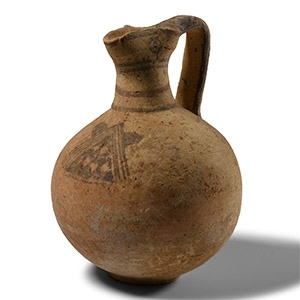
Cypriot 'Eyed' Trefoil-Mouthed Pottery Jug with Geometric Motif
Iron Age, circa 1200-600 B.C.Sold for (Inc. bp): £520
White ware globular jug with pinched trefoil mouth and strap handle to the rear; painted 'eye' detailing to mouth, serpent pattern to handle, hatched triangle motif to the body. 300 grams, 16 cm high
Ex Peter Cran collection, Scotland, who worked as an engineer for the Cypriot public works department 1931-1946; thence by descent. Acquired from Bonhams, London, 23 May 2012, no.6 (part). From an important Cambridgeshire estate; thence by descent. Accompanied by copies of the relevant Bonhams catalogue pages and original lot tag. -
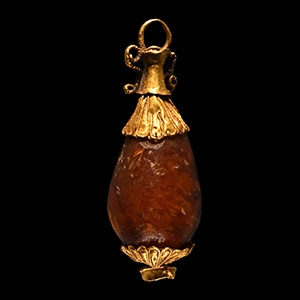
Hellenistic Gold Amphora-Shaped Pendant
3rd-1st century B.C.Estimate: £600 - 800 (‡+bp*)
Opening Bid: £300
Piriform carnelian centre with gold fittings, filigree loop handles. 3.64 grams, 30 mm
Acquired from the collection of Mrs L.G., an Italian noble woman. European private collection. -
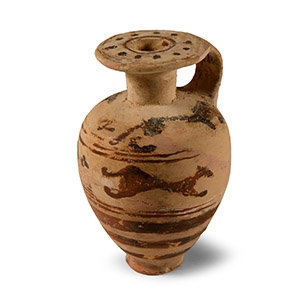
Italo-Corinthian Terracotta Piriform Juglet with Animals
6th-5th century B.C.Sold for (Inc. bp): £195
With applied handle and integral foot, medial frieze of running animals and horizontal lines; band of pellets to the mouth. 40 grams, 71 mm high
From an early French collection, pre 1960.
