
Loading, please wait...
LOT 0091
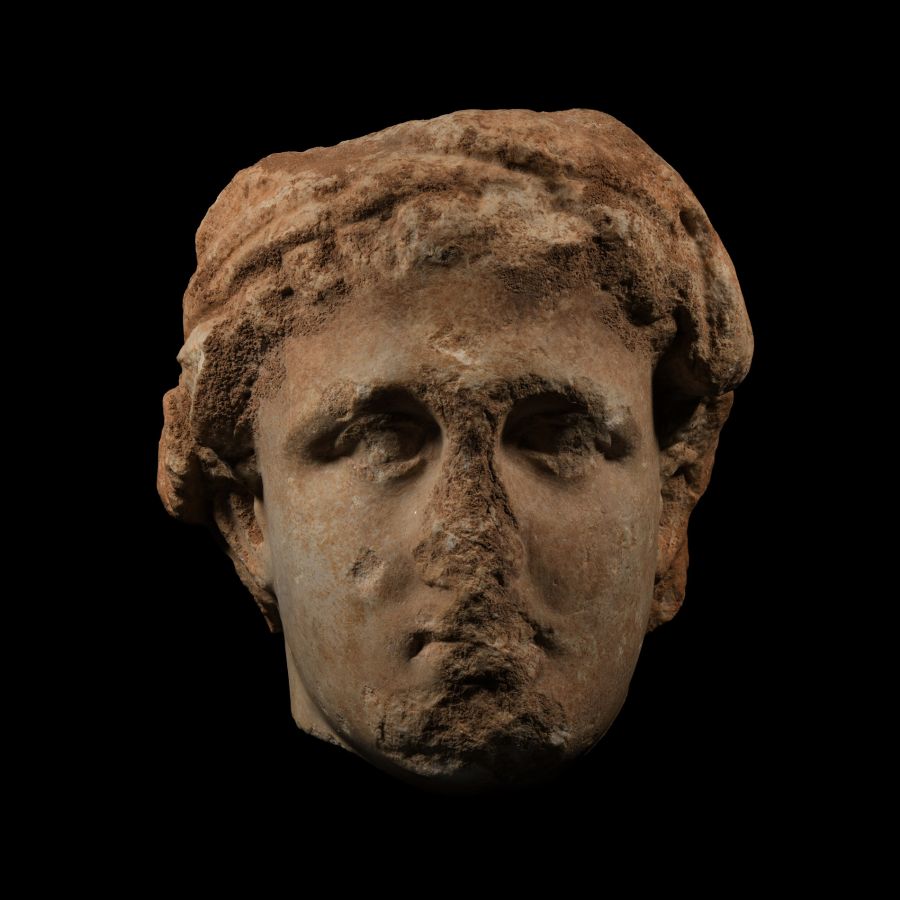
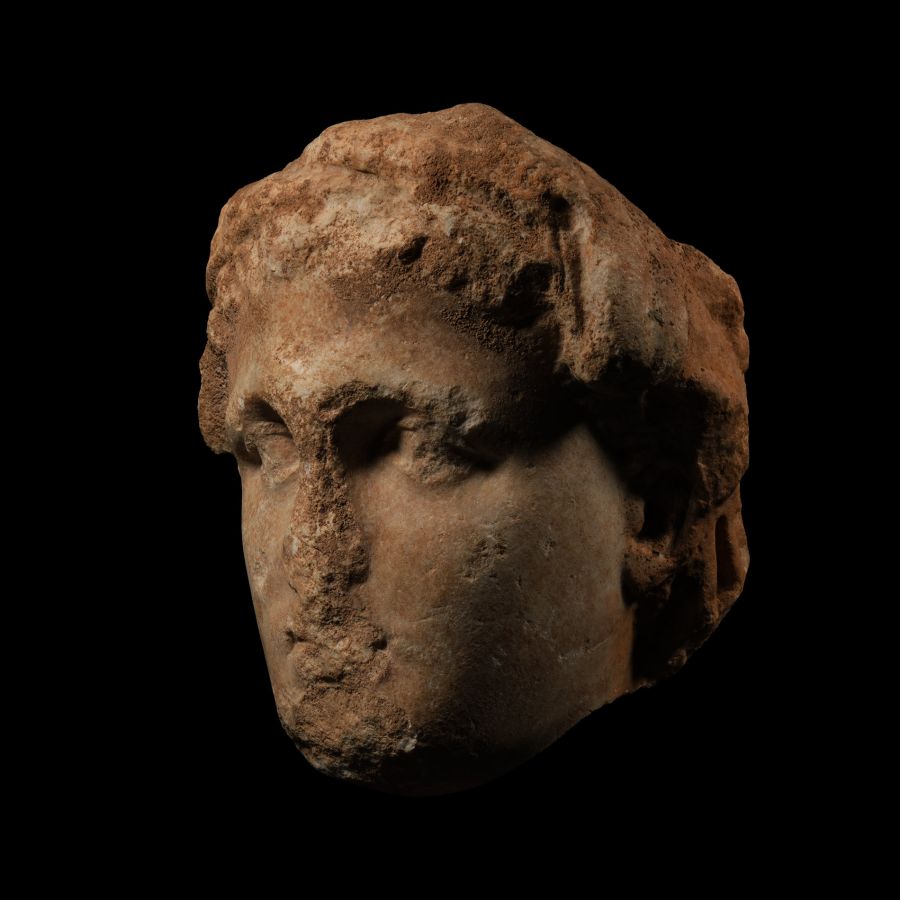
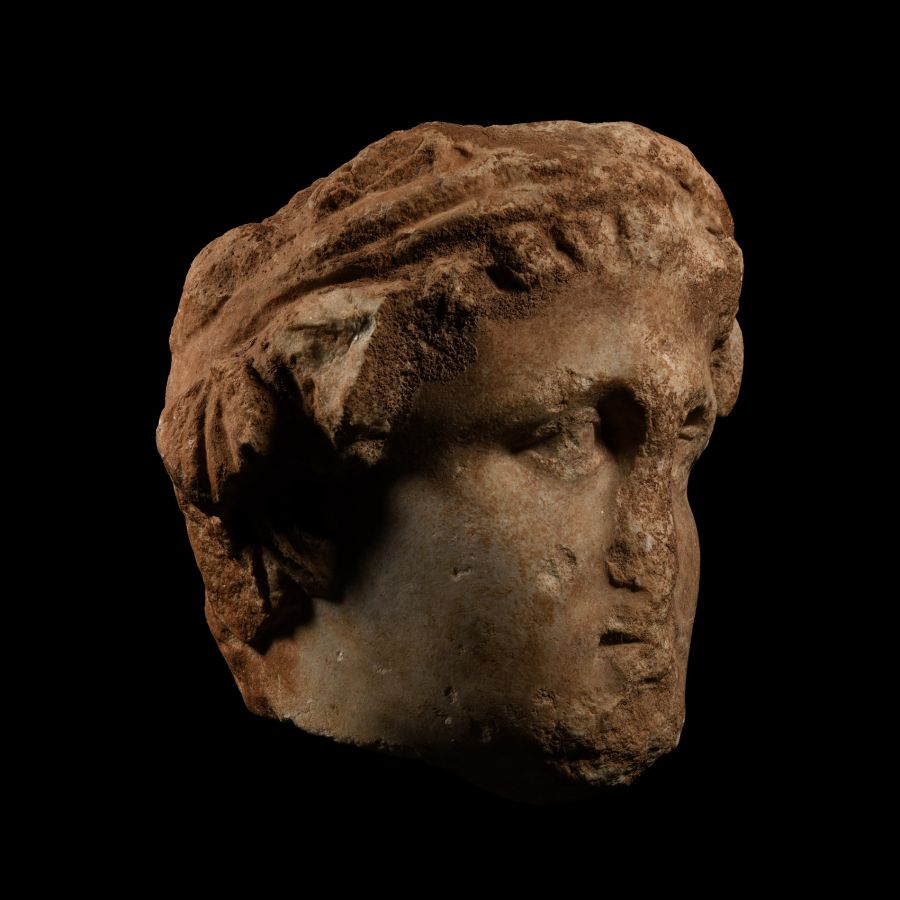
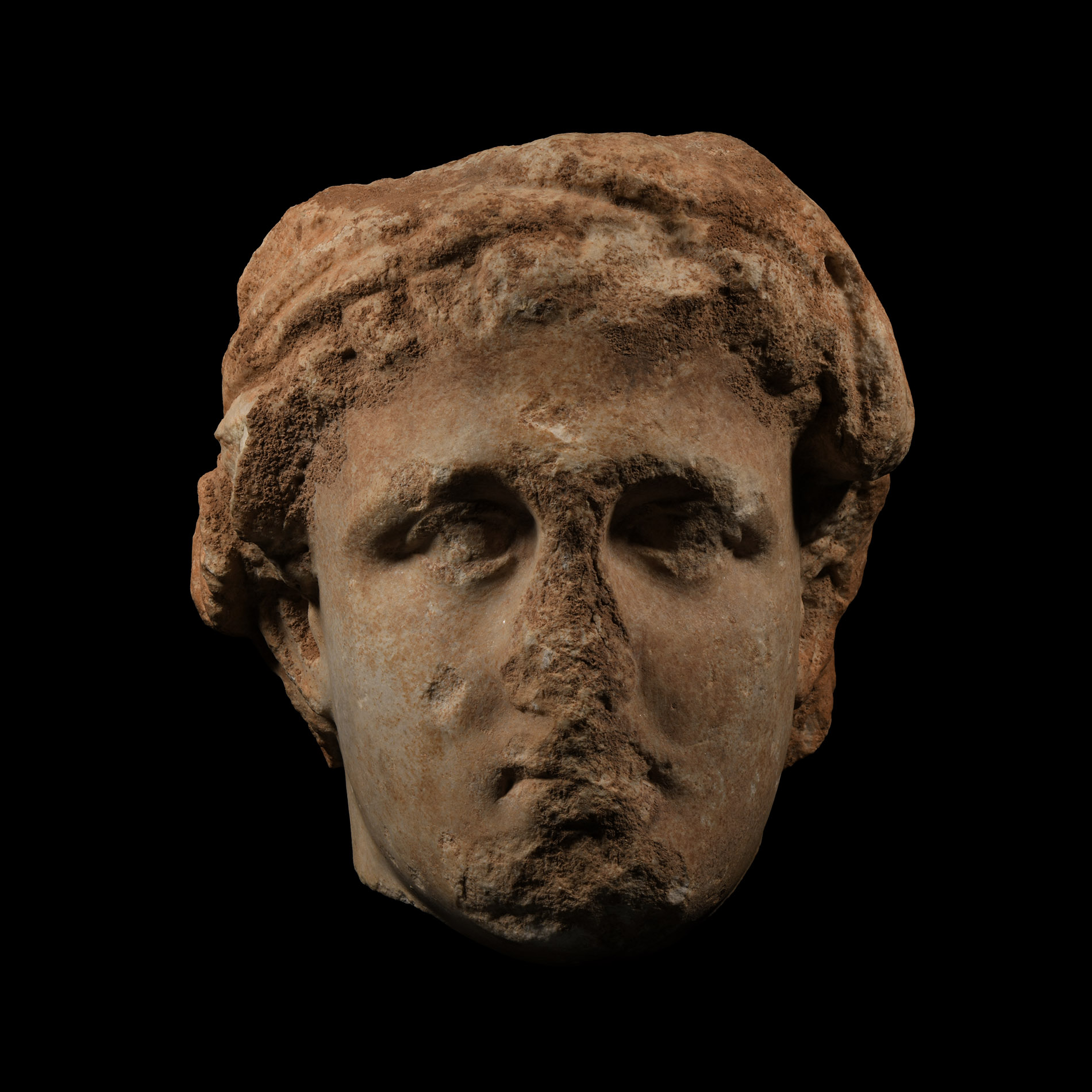
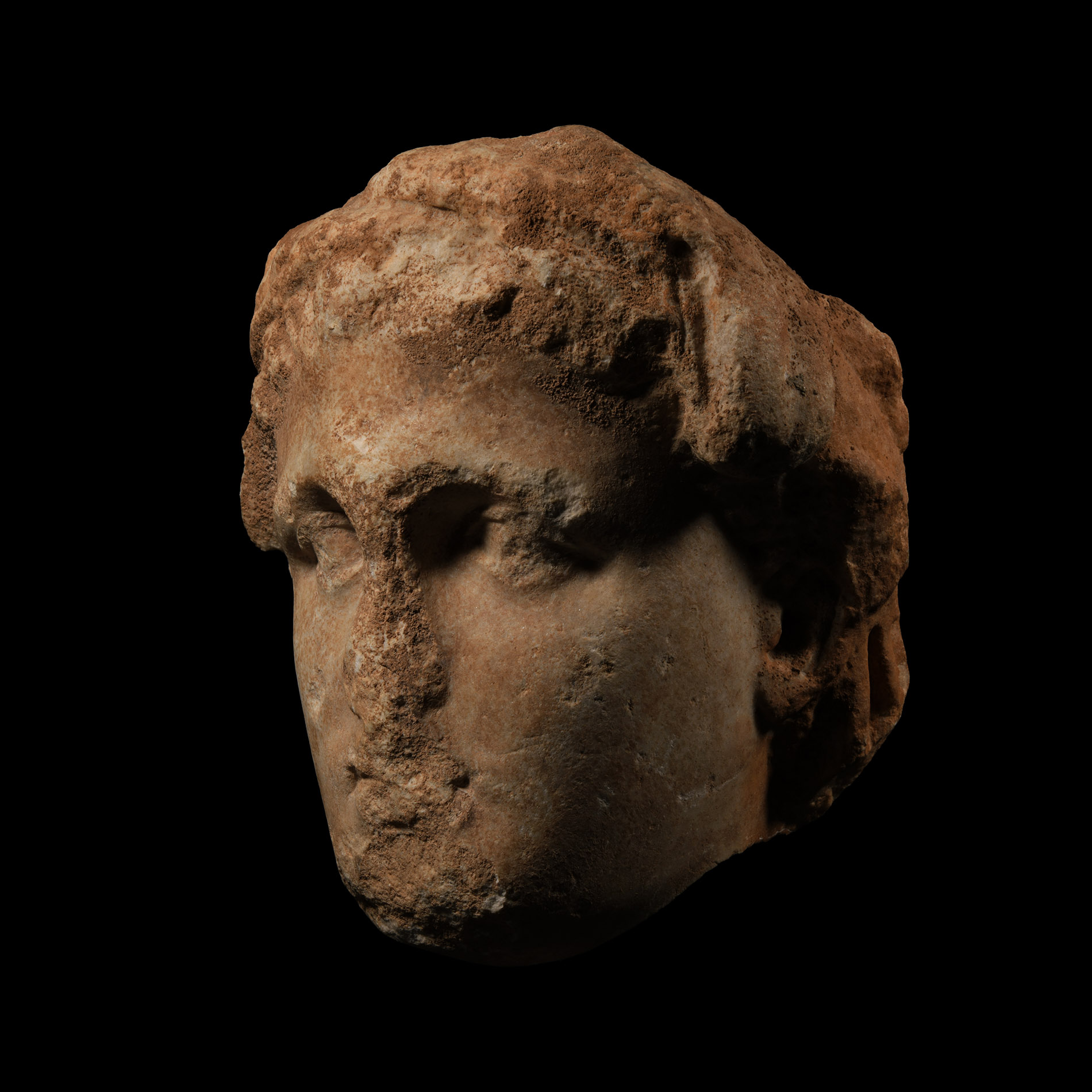
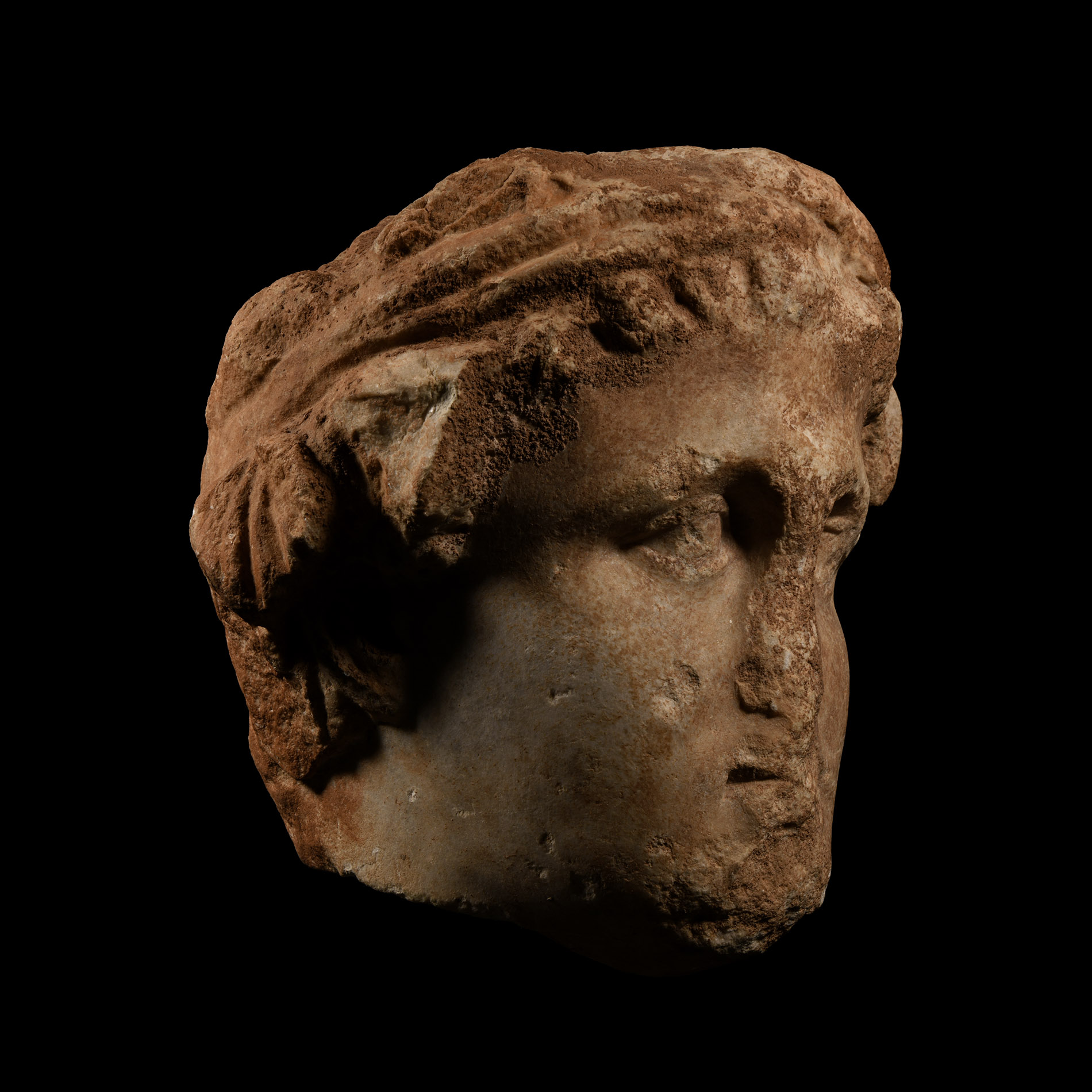
Greek Marble Head of a Ruler
HELLENISTIC, 3RD-1ST CENTURY B.C.
16 3/4 in. (23.7 kg total, 42.5 cm including stand).
Carved in the round with thick wreath of laurel leaves to the brow, short tousled hair, stern face with thick jaw; mounted on a custom-made stand.
Provenancewith Artemis Gallery, Munich, Germany, before 1998.
with Oliver Forge, London, UK.
Private collection, acquired from the above.
Accompanied by a copy of an Art Loss Register certificate.
Accompanied by an academic report by Prof. Neritan Ceka.
This lot has been checked against the Interpol Database of stolen works of art and is accompanied by a search certificate number no.12092-218139.
The life-size head represents an adult male, probably still in his youth. The man is depicted with a short hair, and probably wearing a diadem of which the lower edge is partially visible. The size, the use of marble, and the quality of this work suggest that it was a portrait of a nobleman or possibly a prince of the Hellenistic period.
CONDITIONTimeLine Auctions follows a vetting process to ensure the authenticity and legality of all items, reinforcing our commitment to integrity and responsible trading. Each antiquity, antique, and coin lot undergoes thorough examination by a vetting committee of at least ten external specialists, professional trade association members, scientists, and archaeologists: Our Vetting Process
AUCTIONS:
TimeLine is a leading auction house specialising in antiquities, ancient art, collectables, natural history, coins, medals, and books. Our auctions offer museums, collectors, historians, and enthusiasts the opportunity to acquire unique and historically significant pieces.
-
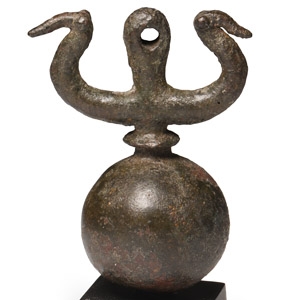
Etruscan Globular Pendant with Birds' Heads
Circa 8th-7th century B.C.Sold for (Inc. bp): £104
Comprising a spherical body with biconvex collar, lateral arms ending in stylised bird-heads, pierced lobe above; mounted on a custom-made display stand. 113 grams total, 69 mm including stand
From a collection acquired on the UK art market from various auction houses and collections mostly before 2000. From an important Cambridgeshire estate; thence by descent.
These globular pendants surmounted by two opposed birds heads belong to the early Iron Age phase of the Etruscan-Villanovan culture. The heads are those of aquatic birds, whose motif is often repeated on the embossed belt-cuirasses decorating the waists of high-status men and women. -
.jpg)
Villanovan Impasto Kyathos with Openwork Handle
Circa 8th century B.C.Sold for (Inc. bp): £234
Modelled with wide and squat body; raised, biforal handle, saddle-shaped on top and grooved on the front with cross-hatch below; small projections emerging from the sides and an incised zigzag line around the lower body. 170 grams, 13 cm wide
Ex Carlton collection, Los Angeles, acquired 1965-1980. Acquired from Artemis Gallery, Colorado, USA, 21 November 2017, lot 24. Property of a South Australian private collector, with collection reference 17.08. Accompanied by detailed collector's catalogue pages including description and photograph. Accompanied by an Artemis certificate of authenticity dated 27 November 2017.
Di Genarro notes that the pottery forms appearing as standard grave goods are designed for containing, serving and drinking a beverage, which suggests the consumption of wine as a focus of funerary ideology. -
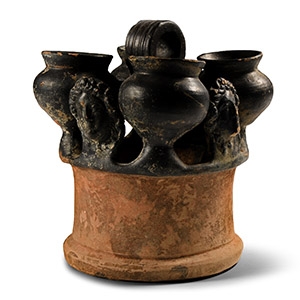
Greek Campanian Black-Glazed Kernos
Late 4th century B.C.Sold for (Inc. bp): £1,560
Comprising a round pedestal supporting four small offering pots, interspersed with four female face protomes; looped handle to the centre with parallel strokes in low-relief. 623 grams, 16 cm high
From the West German collection of H.W. Acquired from the De Mynter, Belgium, in 2011. with Gorny and Mosch, Munich, 3 June 2017, no.52. Private Portuguese R.M. collection. Accompanied by a previous catalogue information slip.
The kernos can be recognised by a series of small cups on the lip, with examples dating back to the Bronze Age. It was used to store offerings made to the gods, specifically in cults pertaining to Demeter and Persephone. The receptacles probably contained foodstuffs, or perhaps flowers, and a lamp was sometimes placed in the centre. Kernoses, such as this, were often carried in processions at the Eleusinian Mysteries (secret initiation rites celebrating the goddesses Demeter and Persephone) and were an important object for Greek religious life. Kernoses are thus closely related to the agrarian cult and to the myth of Persephone and Demeter, the goddess of fertility and agriculture. The myth is recounted in an Homeric Hymn (c. 650 B.C.) according to which Persephone, Demeter’s daughter, was seized by Hades, the king of the underworld, who brought her to his kingdom to make her his wife. Distraught, Demeter caused a terrible drought, which continued until Persephone returned to her mother from the underworld. Having consumed pomegranate seeds whilst she was in the Underworld, she was only able to be with her for a few months of the year.
