
Loading, please wait...
LOT 0566
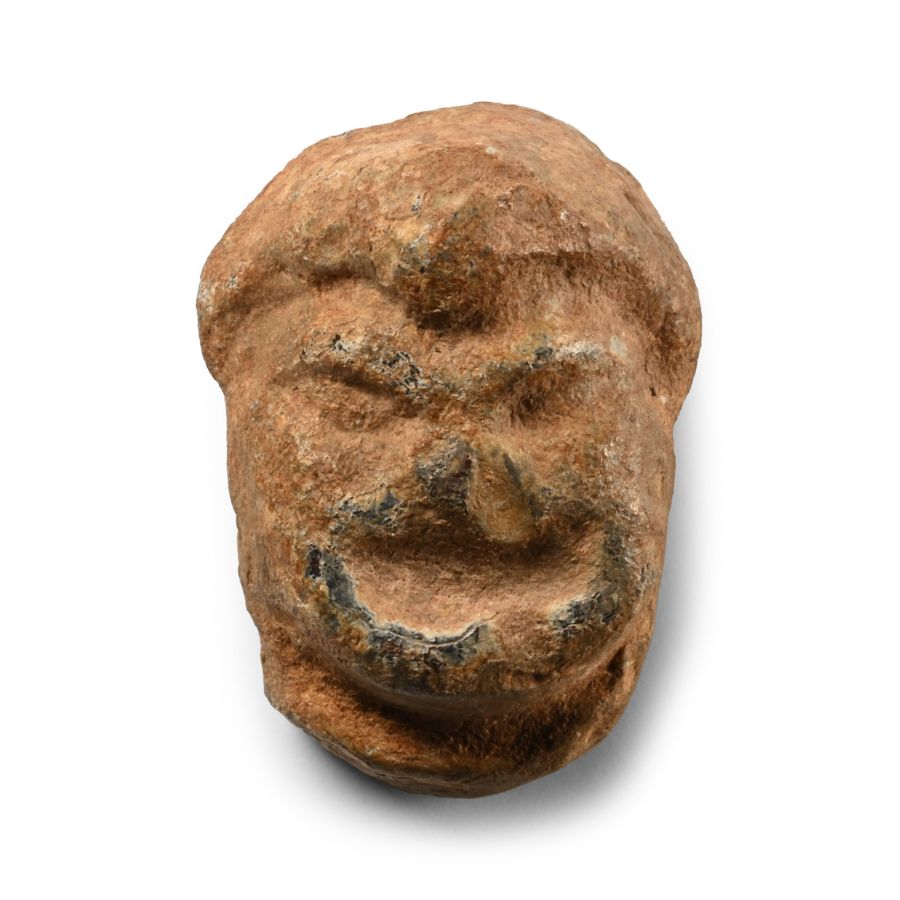
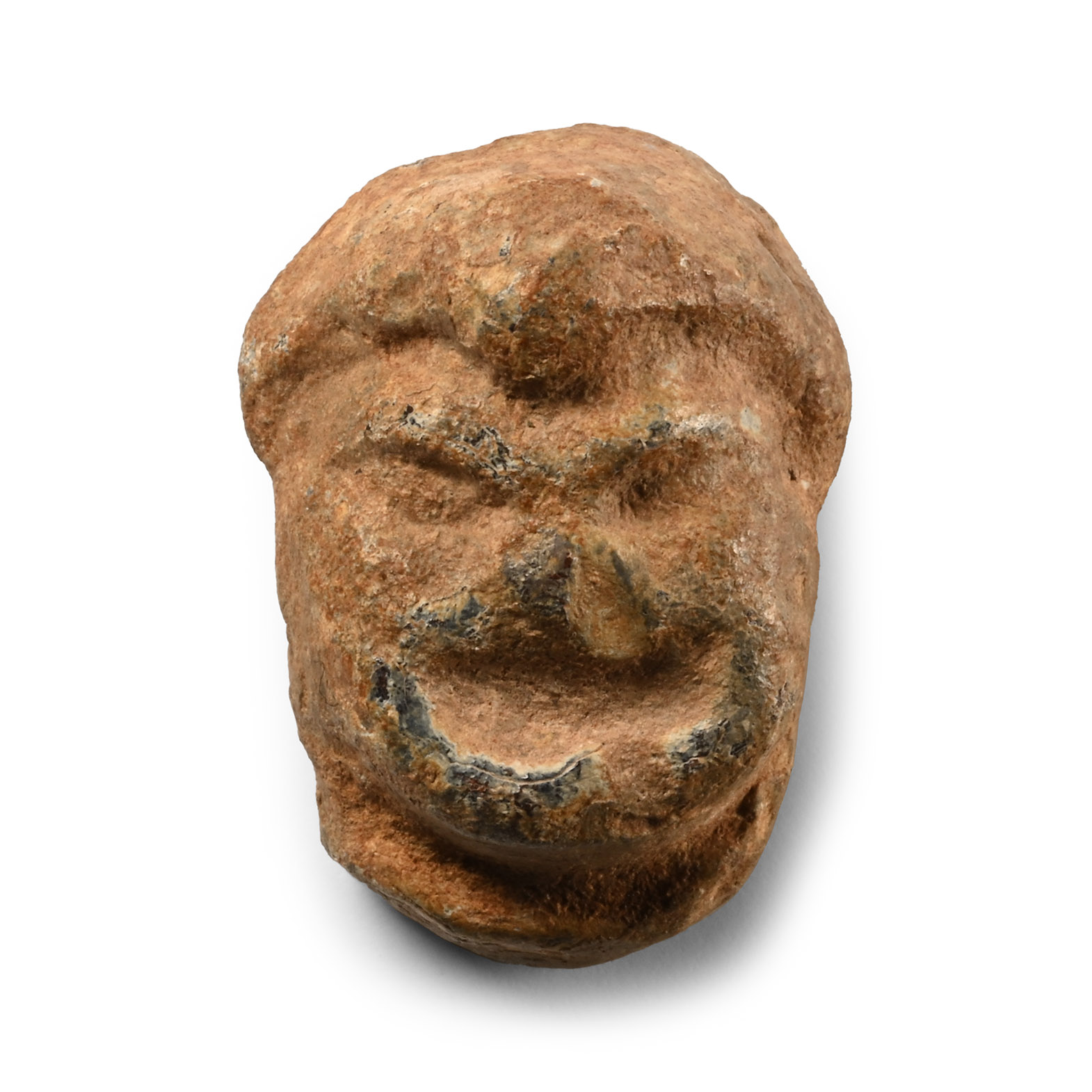
Greek Lead Actor's Mask Weight
CIRCA 4TH-2ND CENTURY B.C.
1 in. (31.1 grams, 26 mm).
D-shaped and plano-convex in section with raised hair, lentoid eyes, large cup-shaped mouth. [No Reserve]
ProvenanceFrom a collection acquired on the UK art market from various auction houses and collections mostly before 2000.
From an important Cambridgeshire estate; thence by descent.
TimeLine Auctions follows a vetting process to ensure the authenticity and legality of all items, reinforcing our commitment to integrity and responsible trading. Each antiquity, antique, and coin lot undergoes thorough examination by a vetting committee of at least ten external specialists, professional trade association members, scientists, and archaeologists: Our Vetting Process
AUCTIONS:
TimeLine is a leading auction house specialising in antiquities, ancient art, collectables, natural history, coins, medals, and books. Our auctions offer museums, collectors, historians, and enthusiasts the opportunity to acquire unique and historically significant pieces.
-
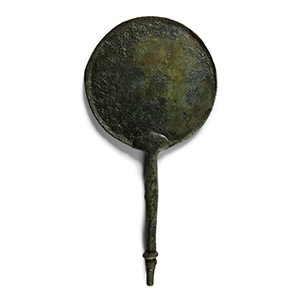
Greek Bronze Handled Mirror
Hellenistic, 2nd-1st century B.C.Sold for (Inc. bp): £585
Comprising a broad disc with raised rim to one face, pelta-shaped junction developing to a balustered handle with acorn finial. 194 grams, 24 cm
From the private collection of a London gentleman, from his grandfather's collection formed before the early 1970s. -
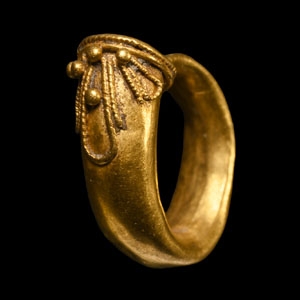
Greek Gold Earring
Circa 4th-3rd century B.C.Sold for (Inc. bp): £286
Formed as a horn with applied filigree and granule detailing below the rim. 0.59 grams, 12 mm
Ex collection of the Chierroni family, Paris, France, formed between 1980-1990s. Property of a French collector. -
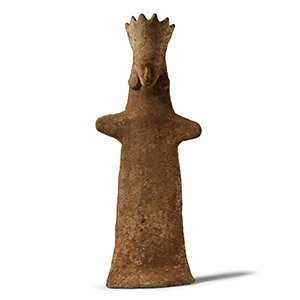
Boeotian Plank Idol of a Goddess
Circa 6th century B.C.Sold for (Inc. bp): £910
Tapering flat-section body with ledge base, stub arms, applied facial detailing, tall polos headdress. 157 grams, 23 cm
From a collection acquired on the UK art market from various auction houses and collections mostly before 2000. From an important Cambridgeshire estate; thence by descent. Accompanied by a thermoluminescence analysis report from Oxford Authentication no.N124d7. This lot has been checked against the Interpol Database of stolen works of art and is accompanied by a search certificate number no.12087-214721.
