
Loading, please wait...
LOT 0618
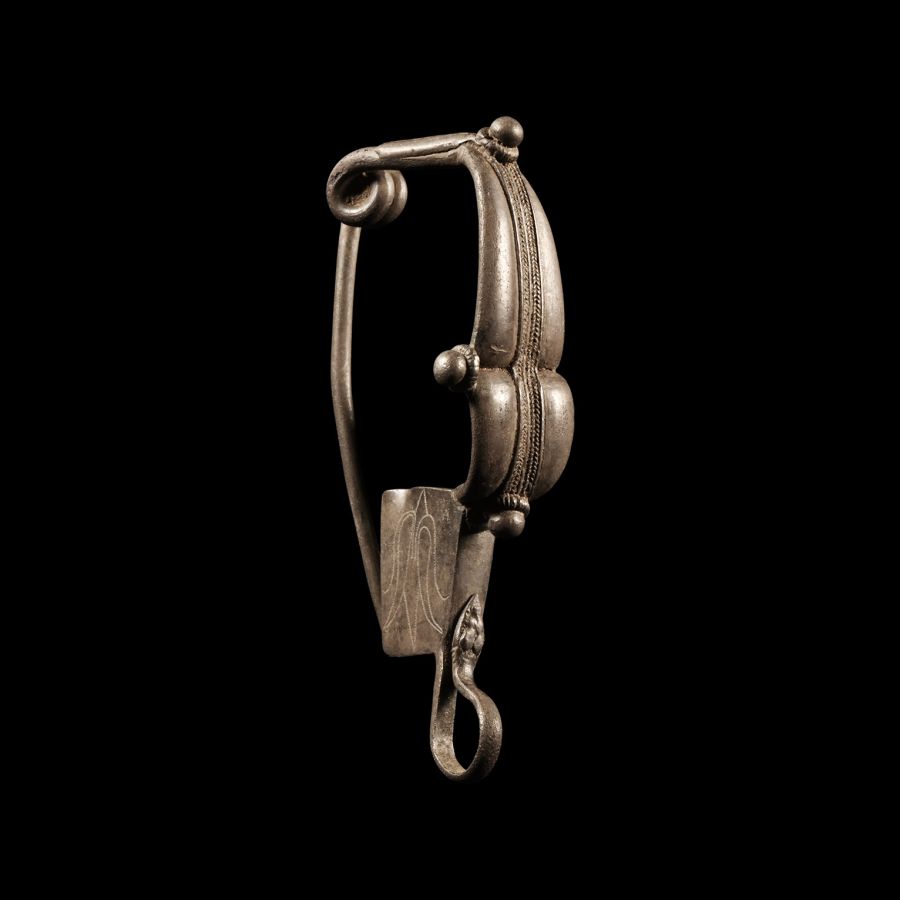
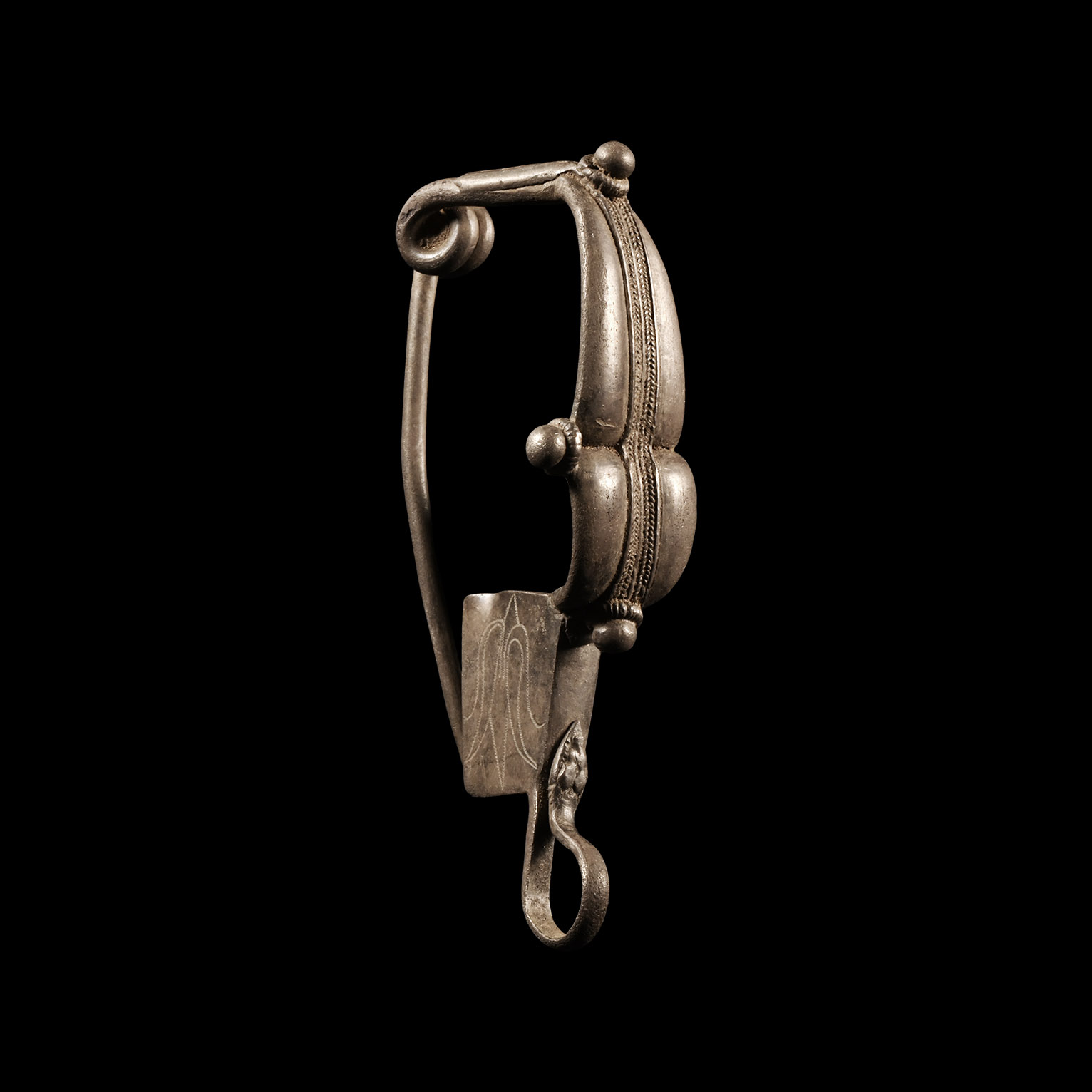
Greek Italic Silver Fibula
5TH-4TH CENTURY B.C.
2 1/2 in. (13.5 grams, 63 mm).
Segmented body with central filigree wiring, collared knops to three corners, integral coiled pin and trapezoidal catchplate with lotus flower engraved to the outer face, loop with stylised serpentine head to base.
ProvenanceAcquired in Europe before 1994.
European collection.
TimeLine Auctions follows a vetting process to ensure the authenticity and legality of all items, reinforcing our commitment to integrity and responsible trading. Each antiquity, antique, and coin lot undergoes thorough examination by a vetting committee of at least ten external specialists, professional trade association members, scientists, and archaeologists: Our Vetting Process
AUCTIONS:
TimeLine is a leading auction house specialising in antiquities, ancient art, collectables, natural history, coins, medals, and books. Our auctions offer museums, collectors, historians, and enthusiasts the opportunity to acquire unique and historically significant pieces.
LOT 0618
Greek Italic Silver Fibula
Estimate £500 - 700€580 - 810 (for guidance only)$680 - 950 (for guidance only)
-
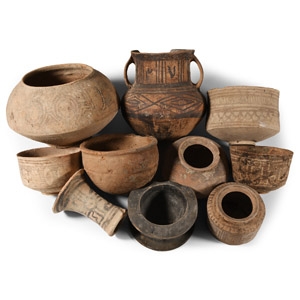
Greek and Indus Valley Terracotta Vessel Collection
3rd-1st millennium B.C.Sold for (Inc. bp): £260
Mixed group of vessels including biconvex bowl, drum-shaped jar and other types, some with painted ornament. 2.1 kg total, 7.8-18 cm
From a collection acquired on the UK art market from various auction houses and collections mostly before 2000. From an important Cambridgeshire estate; thence by descent. -
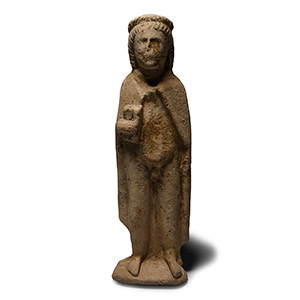
Cypro-Archaic Standing Limestone Male Scribe
Circa 4th-3rd century B.C.Sold for (Inc. bp): £780
Modelled in the half-round, standing nude male with mantle to the shoulders, clutching a codex in the right hand; with carefully dressed hair and diadem; D-shaped base. 536 grams, 27 cm
Acquired Bonhams, London, UK. From a collection acquired on the UK art market from various auction houses and collections mostly before 2000. From an important Cambridgeshire estate; thence by descent. -

South Italian Gnathian Ware Pottery Oinochoe
Circa 4th century B.C.Estimate: £800 - 1,000 (‡+bp*)
Opening Bid: £400
Piriform bodied with U-shaped spout and high handle, polychrome painted egg, zigzag, bar, dot and laurel pattern with a flower arranged in rows to the front face. 193 grams, 20.2 cm high
Acquired in Europe before 2001. European collection.
