
Loading, please wait...
LOT 0607
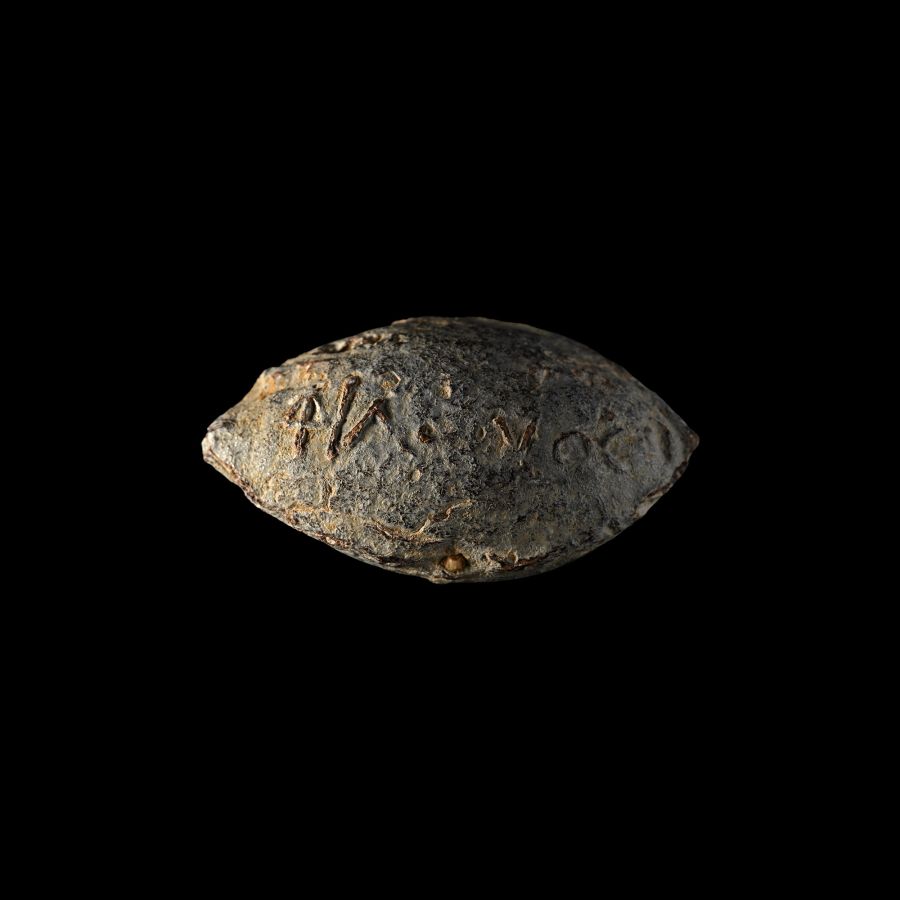
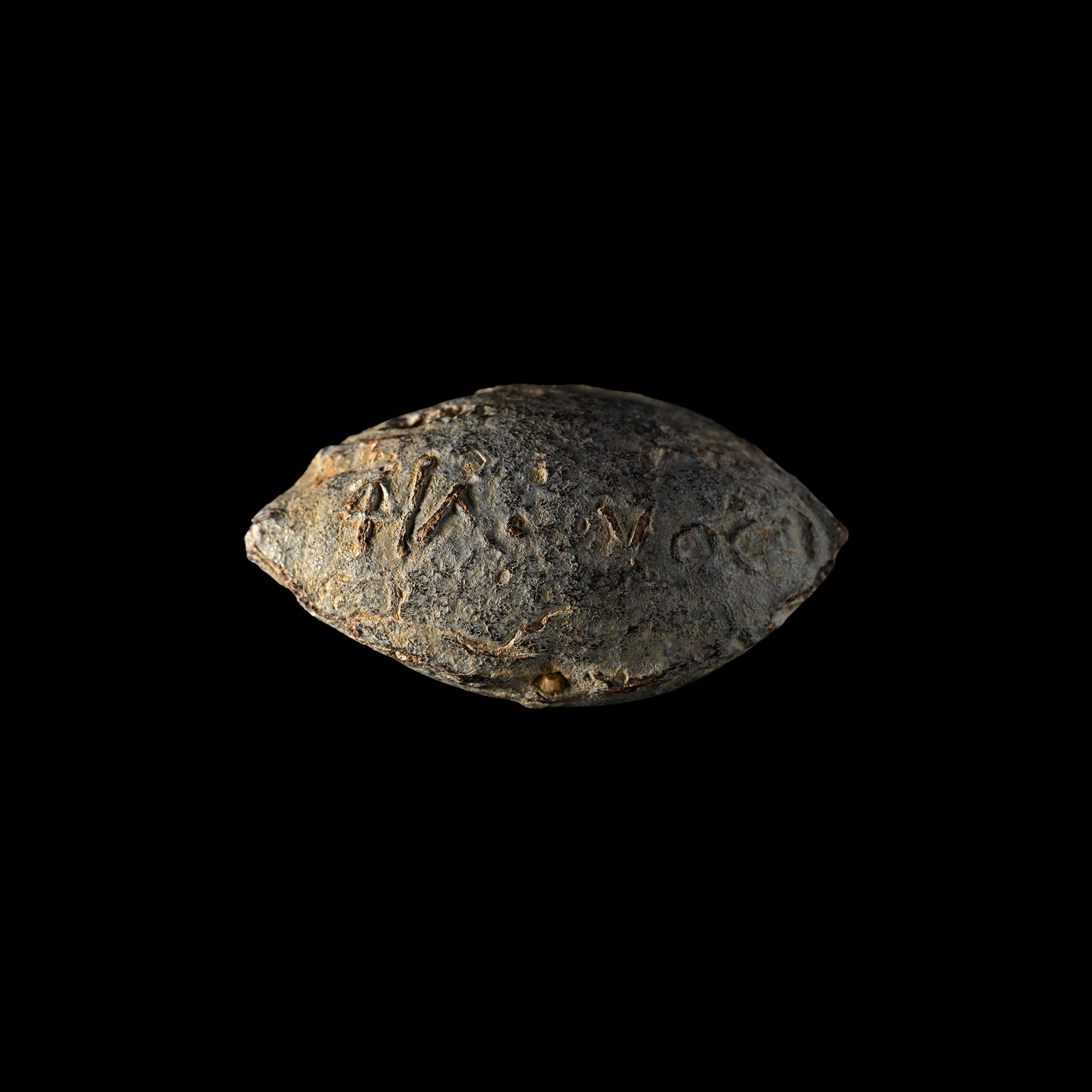
Greek Inscribed Lead Slingshot
4TH CENTURY B.C.
1 1/4 in. (35.8 grams, 30 mm).
Biconical in profile with casting seam and reserved legend 'ΦΙΛ[.]VOC (PHILIPPOS)'. [No Reserve]
ProvenanceAcquired on the German art market before 2000.
Private collection, Munich, Germany.
Cf. Manov, M., Torbov, N., 'Inscribed Lead Sling Bullets with the name of Alexander the Great and with other names and symbols found in Thrace' in Archaeologia Bulgarica, XX, 2, pp.29-43, figs.1ff, for similar.
FootnotesThe leaden bullets, thrown with slings, were called in Greek molivdainai (μολύβδαιναι), and in Latin glandes; the former indicating the material ‘lead’, the latter the shape ‘acorns’. These bullets were cast in a mould and bore letters or devices, or both, on two sides or only on one. In form, they were more like an almond than an acorn, but many are pointed at both ends.
CONDITIONTimeLine Auctions follows a vetting process to ensure the authenticity and legality of all items, reinforcing our commitment to integrity and responsible trading. Each antiquity, antique, and coin lot undergoes thorough examination by a vetting committee of at least ten external specialists, professional trade association members, scientists, and archaeologists: Our Vetting Process
AUCTIONS:
TimeLine is a leading auction house specialising in antiquities, ancient art, collectables, natural history, coins, medals, and books. Our auctions offer museums, collectors, historians, and enthusiasts the opportunity to acquire unique and historically significant pieces.
-
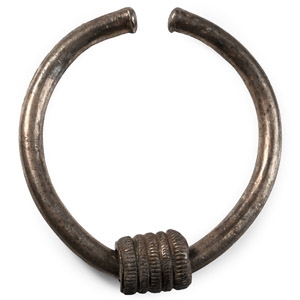
Large Lydian Silver Bar Bracelet
7th-6th century B.C.Sold for (Inc. bp): £442
Comprising a round-section penannular body with clubbed finials, a free-running repoussé collar and a flat-section coiled band on the body. 235 grams, 11.4 cm
Ex Paul Munro-Walker, Bournemouth, Hampshire, UK, 1980s. From a UK collection since before 1990. -
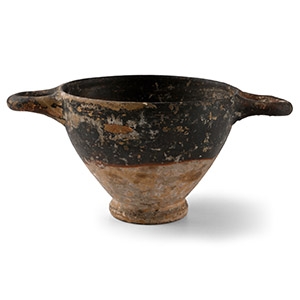
Greek Black Ware Skyphos
Apulian, 5th century B.C.Sold for (Inc. bp): £221
With a short stem and ring pedestal base, a steep-sided bowl and two looped round-section handles below the rim. 96 grams, 14.2 cm
From an old Canterbury collection formed in the early 20th century. From the property of a late Lincolnshire, UK, gentleman. -
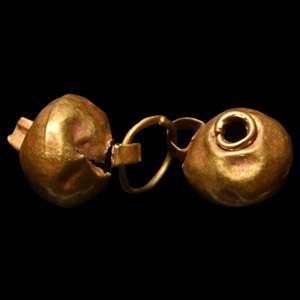
Greek Gold Pomegranate Pendant
Circa 4th century B.C.Sold for (Inc. bp): £164
Hollow-form body with detailed calyx below, the suspension formed as a hollow collared bead with a thin connecting loop. 0.28 grams, 16 mm
From the collection of a late Japanese collector, 1970s.
