
Loading, please wait...
LOT 0626
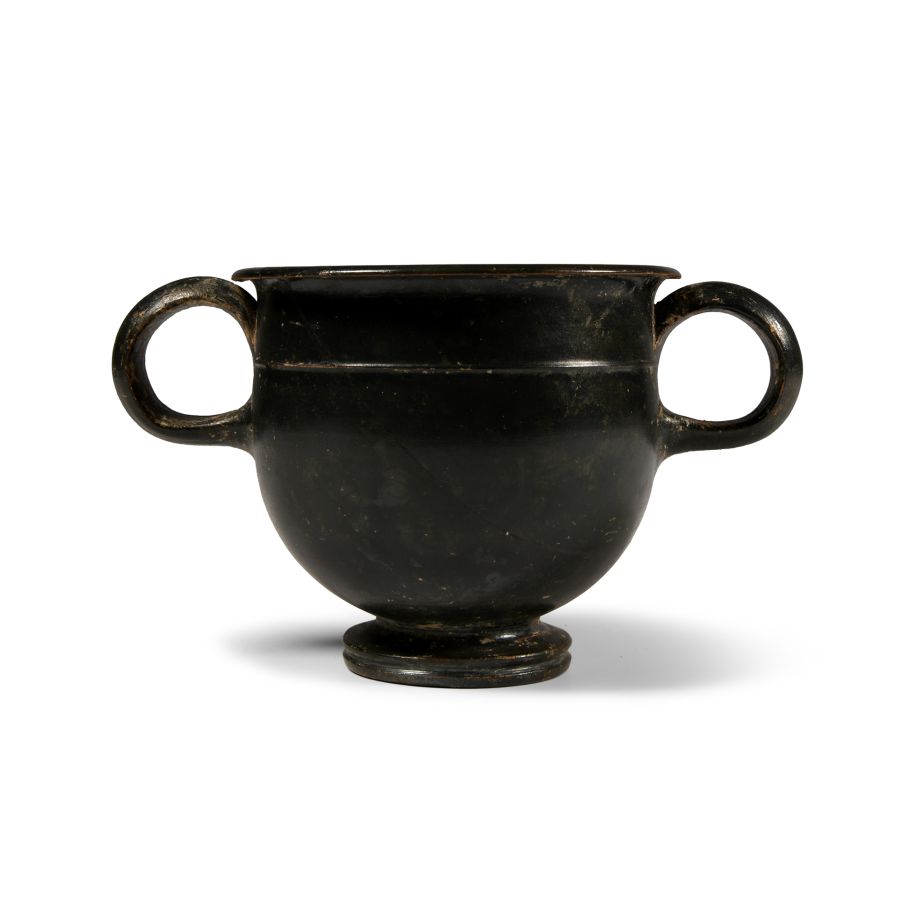
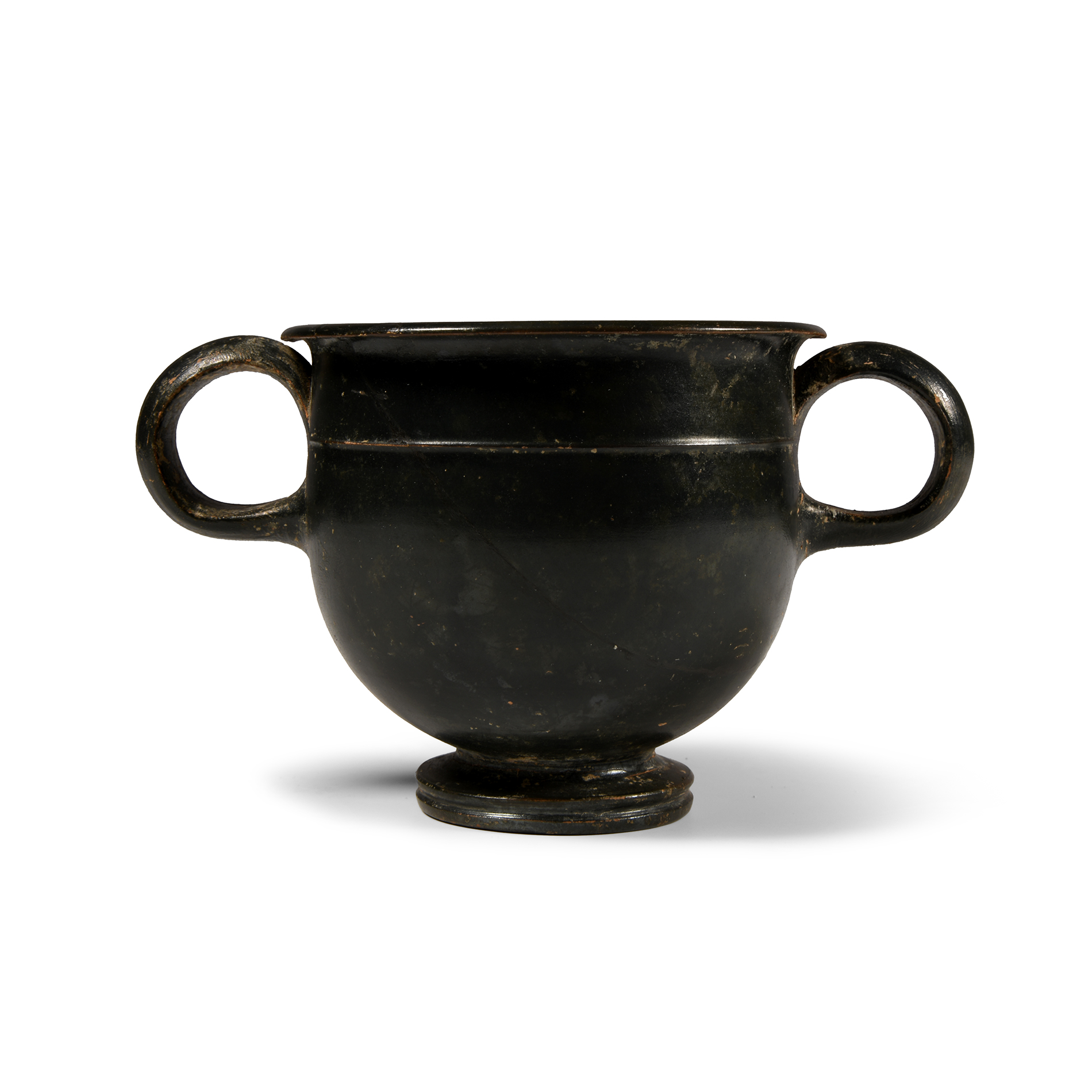
Greek High-Glazed Cup with Handles
5TH-3RD CENTURY B.C.
5 in. (96 grams, 12.8 cm wide).
The body with an inverted bell shape, foot with channeled sidewall, two loop handles with carinated upper faces; repaired.
ProvenanceAcquired in Europe before 2001.
European collection.
TimeLine Auctions follows a vetting process to ensure the authenticity and legality of all items, reinforcing our commitment to integrity and responsible trading. Each antiquity, antique, and coin lot undergoes thorough examination by a vetting committee of at least ten external specialists, professional trade association members, scientists, and archaeologists: Our Vetting Process
AUCTIONS:
TimeLine is a leading auction house specialising in antiquities, ancient art, collectables, natural history, coins, medals, and books. Our auctions offer museums, collectors, historians, and enthusiasts the opportunity to acquire unique and historically significant pieces.
LOT 0626
Greek High-Glazed Cup with Handles
Estimate £700 - 900€810 - 1,040 (for guidance only)$950 - 1,220 (for guidance only)
-
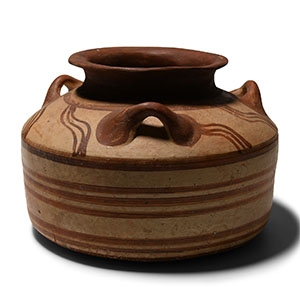
Large Mycenaean Three-Handled Terracotta Alabastron
Circa 1550-1200 B.C.Sold for (Inc. bp): £650
Squat, drum-shaped body with broad shoulder and low neck, everted rim to the mouth; three applied strap handles to the shoulder; painted circumferential bands to the body, concentric bands to the underside, trilinear s-motifs to the shoulder, slip red to the mouth and handles; rim restored. 585 grams, 17.5 cm wide
From a collection acquired on the UK art market from various auction houses and collections mostly before 2000. From an important Cambridgeshire estate; thence by descent. -
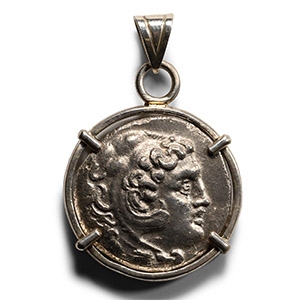
Silver Alexander the Great Tetradrachm Coin Pendant
3rd century B.C. and laterSold for (Inc. bp): £416
Silver tetradrachm with profile bust to obverse, seated figure with bird to reverse; clasp-mounted in a modern silver frame with ring and baile. 21.9 grams, 46 mm
Ex German art market, 2000s. Acquired from an EU collector living in London. From the collection of Surrey, UK, gentleman. -
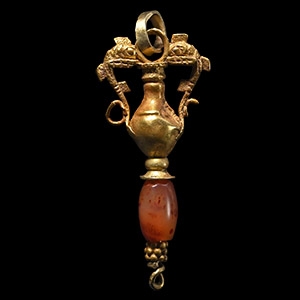
Hellenistic Gold Dolphin Amphora Pendant
2nd-1st century B.C.Estimate: £500 - 700 (+bp*)
Opening Bid: £250
Formed as an amphora with dolphin handles, oblate carnelian bead below with granulated collar; loop and suspension ring above. 2,2 grams, 32 mm
Ex property of a late Japanese collector, 1970s-2000s.
