
Loading, please wait...
LOT 0547
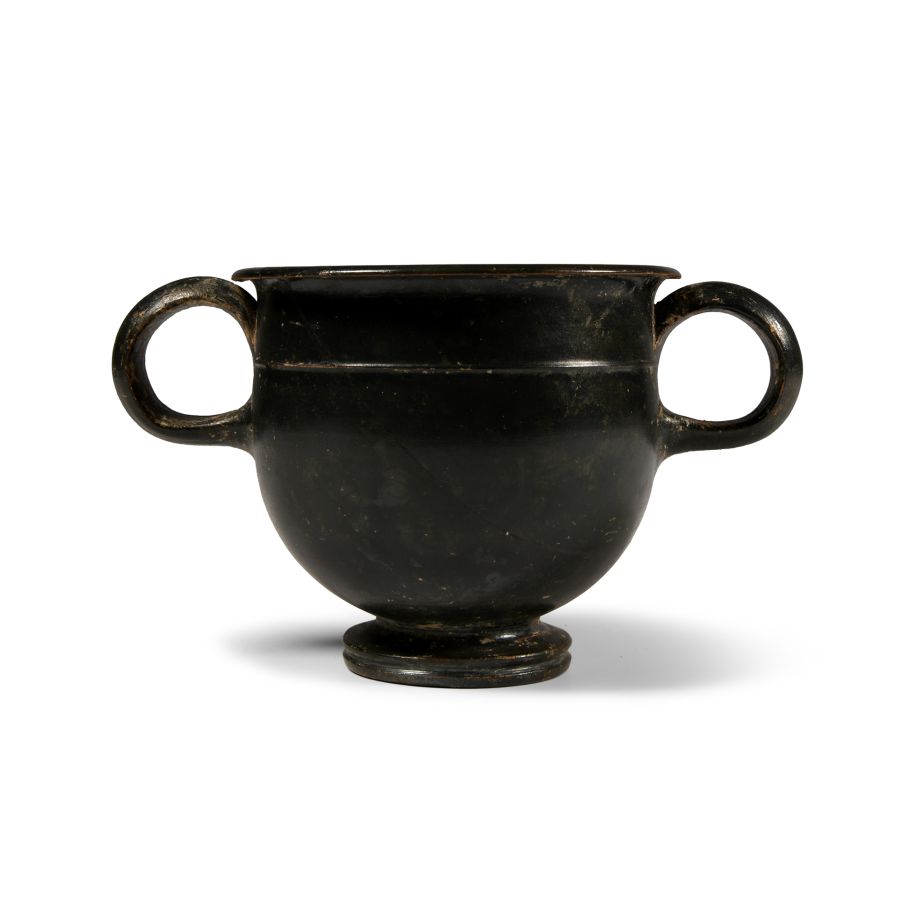
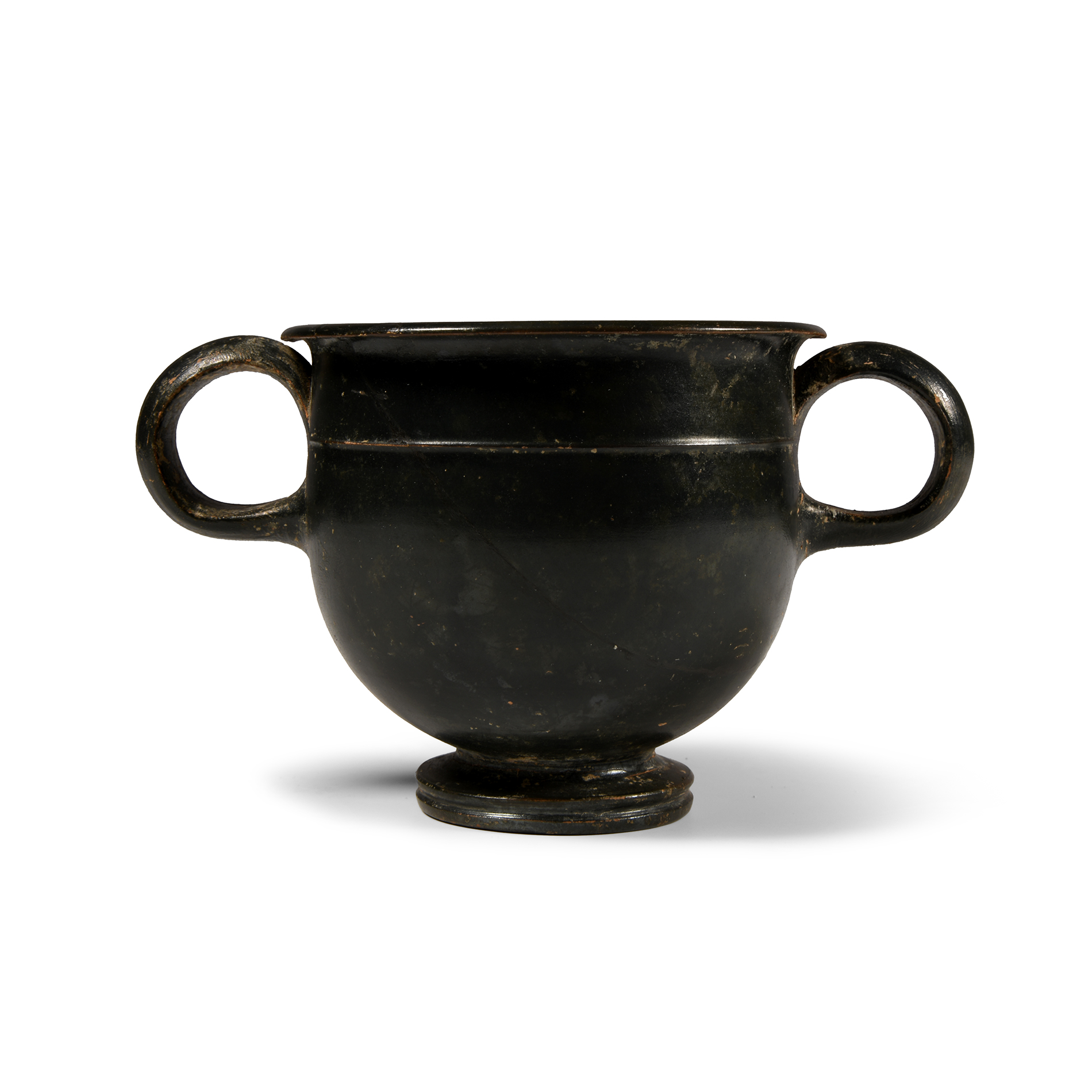
Greek High-Glazed Cup with Handles
5TH-3RD CENTURY B.C.
5 in. (96 grams, 12.8 cm wide).
The body with an inverted bell shape, foot with channeled sidewall, two loop handles with carinated upper faces; repaired.
ProvenanceAcquired in Europe before 2001.
European collection.
TimeLine Auctions follows a vetting process to ensure the authenticity and legality of all items, reinforcing our commitment to integrity and responsible trading. Each antiquity, antique, and coin lot undergoes thorough examination by a vetting committee of at least ten external specialists, professional trade association members, scientists, and archaeologists: Our Vetting Process
AUCTIONS:
TimeLine is a leading auction house specialising in antiquities, ancient art, collectables, natural history, coins, medals, and books. Our auctions offer museums, collectors, historians, and enthusiasts the opportunity to acquire unique and historically significant pieces.
LOT 0547
Greek High-Glazed Cup with Handles
Estimate £800 - 1,000€930 - 1,160 (for guidance only)$1,080 - 1,350 (for guidance only)
-
.jpg)
Etruscan Bronze Figure of Warring Mars
6th century B.C.Estimate: £6,000 - 8,000 (‡+bp*)
Opening Bid: £3,000
The Etrusco-Italic warrior Laran (Roman Mars) modelled in the round, representing a young muscular hero with long torso and rounded shoulders, wearing a high-crested Illyrian helmet with grooved perimeter, a hole above each ear for attaching an ornament; mounted on a custom-made display stand. 326 grams total, 16.2 cm high including stand
Ex Koutoulakis collection. Ex Gorny & Mosch, Munich, 17 June 1999, no.2051. with Sotheby's, New York, 12 June 2001, no.16. Accompanied by an academic report by Dr Raffaele D'Amato. This lot has been checked against the Interpol Database of stolen works of art and is accompanied by search certificate number no.11803-206793.
The statuette assumes the position of the 'warring Mars', which characterises the numerous Etruscan and Italic statues of the god produced as votive offerings to the temples or for private lararia. The god is depicted as taking part in a military march with his left leg advancing, his raised right would have held a spear and the left hand a shield. -
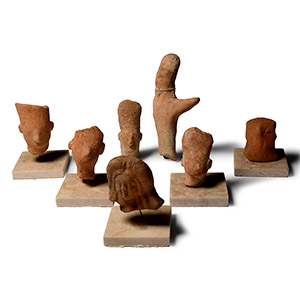
Cypriot Terracotta Figure Head Collection
Circa 1000 B.C.Sold for (Inc. bp): £468
Group of terracotta heads from figurines, one with moulded facial detailing, the others pinched. 476 grams total, 4.5-10.5 cm
One with antique tag: 'CYPRUS / C.1000 BC / Terracotta Fragment of / Mother-Goddess.' From a collection acquired on the UK art market from various auction houses and collections mostly before 2000. From an important Cambridgeshire estate; thence by descent. -
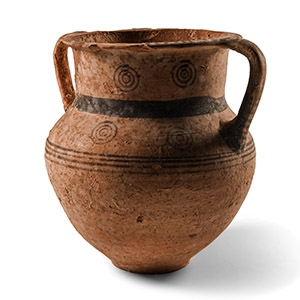
Cypriot Buff Pottery Neck Amphora
Late Bronze Age, circa 850-600 B.C.Sold for (Inc. bp): £195
Squat unglazed vessel with conical body, narrow shoulder, broad tubular neck and everted rim, two strap handles; painted with radiating segments to rim, ring-and-dot motifs to neck and shoulder, horizontal bands. 341 grams, 14 cm wide
Private American collection. Acquired from Bonhams, London, 29 April 2009, no.341 (part). From an important Cambridgeshire estate; thence by descent. Accompanied by copies of the relevant Bonhams catalogue pages and original lot tag.
