
Loading, please wait...
LOT 0611
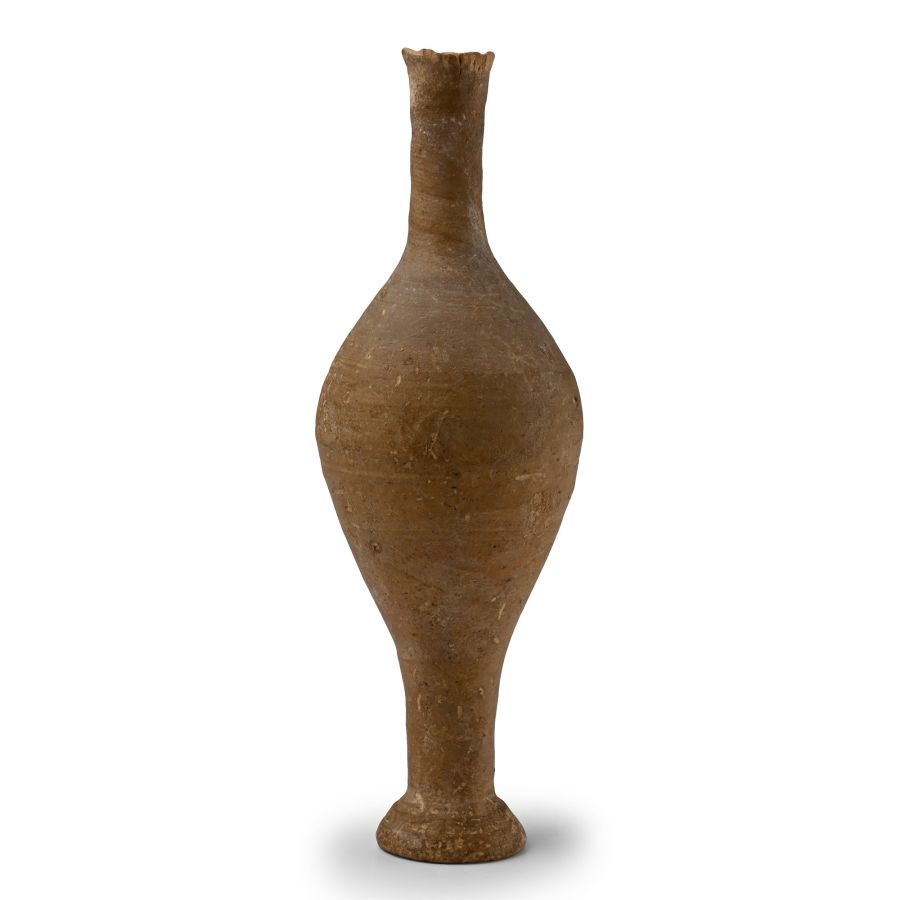
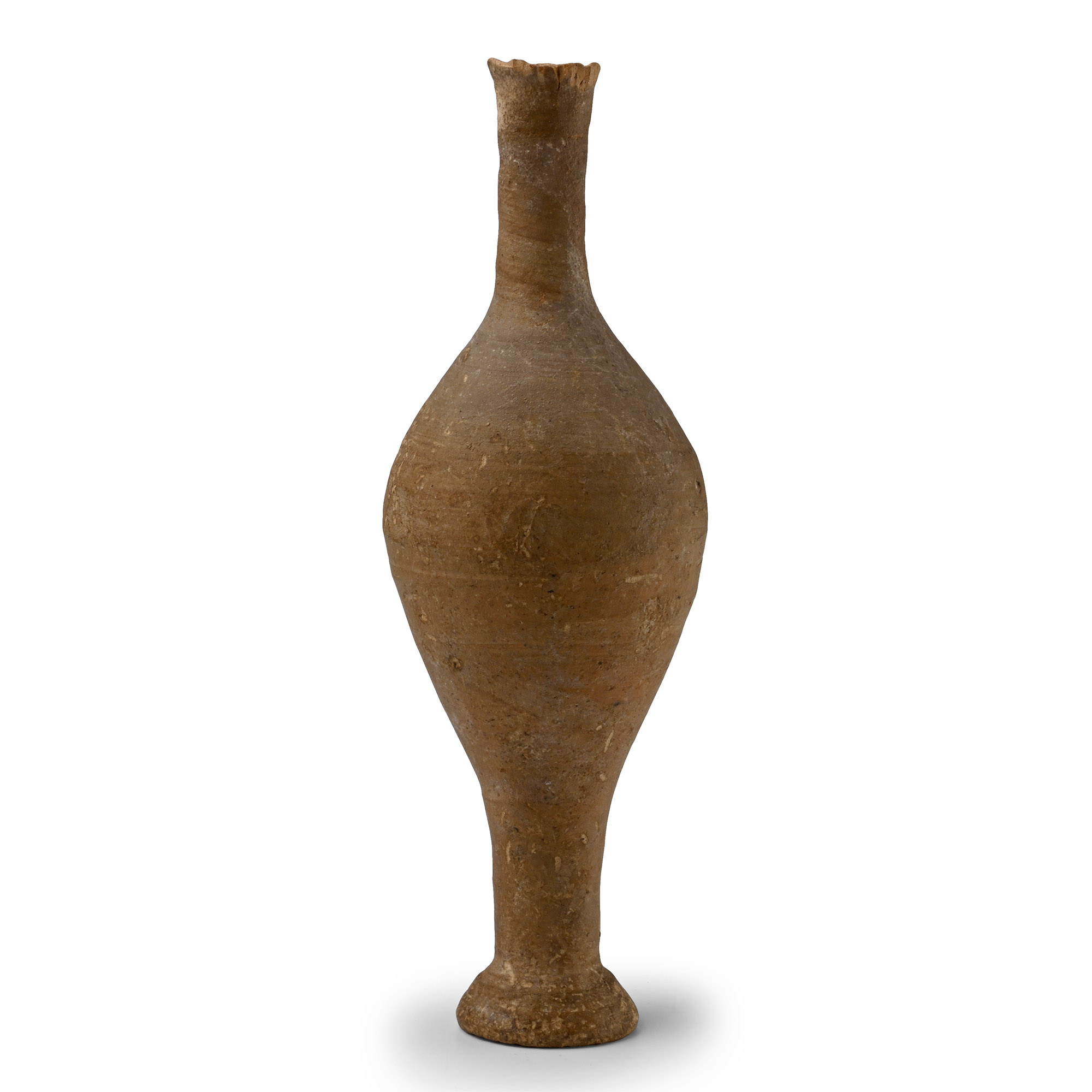
Greek Hellenistic Terracotta Spindle Flask
4TH-3RD CENTURY B.C.
6 1/2 in. (155 grams, 16.5 cm).
With long narrow neck developing to a fusiform body and flared foot. [No Reserve]
ProvenancePrivate Derby, UK, antiquities collection.
From the property of a late Lincolnshire, UK, gentleman.
TimeLine Auctions follows a vetting process to ensure the authenticity and legality of all items, reinforcing our commitment to integrity and responsible trading. Each antiquity, antique, and coin lot undergoes thorough examination by a vetting committee of at least ten external specialists, professional trade association members, scientists, and archaeologists: Our Vetting Process
AUCTIONS:
TimeLine is a leading auction house specialising in antiquities, ancient art, collectables, natural history, coins, medals, and books. Our auctions offer museums, collectors, historians, and enthusiasts the opportunity to acquire unique and historically significant pieces.
-
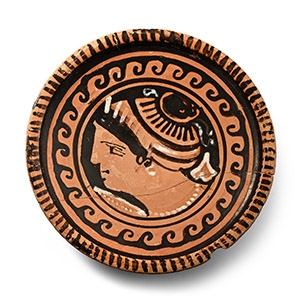
Greek Apulian Red-Figure Footed Plate with Lady of Fashion
South Italic, circa 4th century B.C.Sold for (Inc. bp): £364
With raised rim, carinated profile and low stepped foot; rim with radiating black lentoid strokes, tondo with reserved ring and wave-pattern band enclosing a profile female bust with white detailing to the necklace, stephane and sakkos. 125 grams, 12.8 cm wide
Ex David Miller, Hemel Hempstead, London, UK. From the private collection of a West London, UK, gentleman, formed since the early 2000s. -
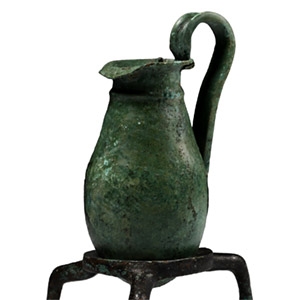
Greek Bronze Olpe
6th century B.C.Sold for (Inc. bp): £780
Pear-shaped body with rounded base, raised circumferential hoop at the neck and everted rim; applied high, ribbed handle with an engraved palmette at the base; accompanied by a stand. 145 grams, 12.5 cm (250 grams total, 15 cm including stand)
Private collection Dr L.M., Zurich, Switzerland. with Galerie Rhéa, Zurich, Switzerland. -
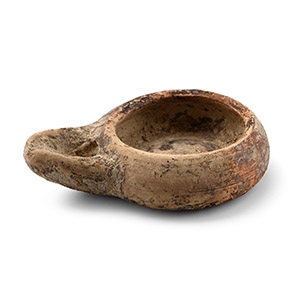
Greek Terracotta Oil Lamp
Apulian, 4th century B.C.Sold for (Inc. bp): £59
Squat with a low sidewall, triangular U-section nozzle with a rear hole. 24 grams, 67 mm
Ex private Birmingham, UK, archaeological collection. From the property of a late Lincolnshire, UK, gentleman.
