
Loading, please wait...

LOT 0612
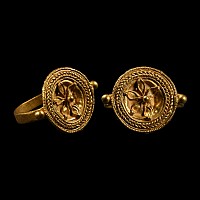
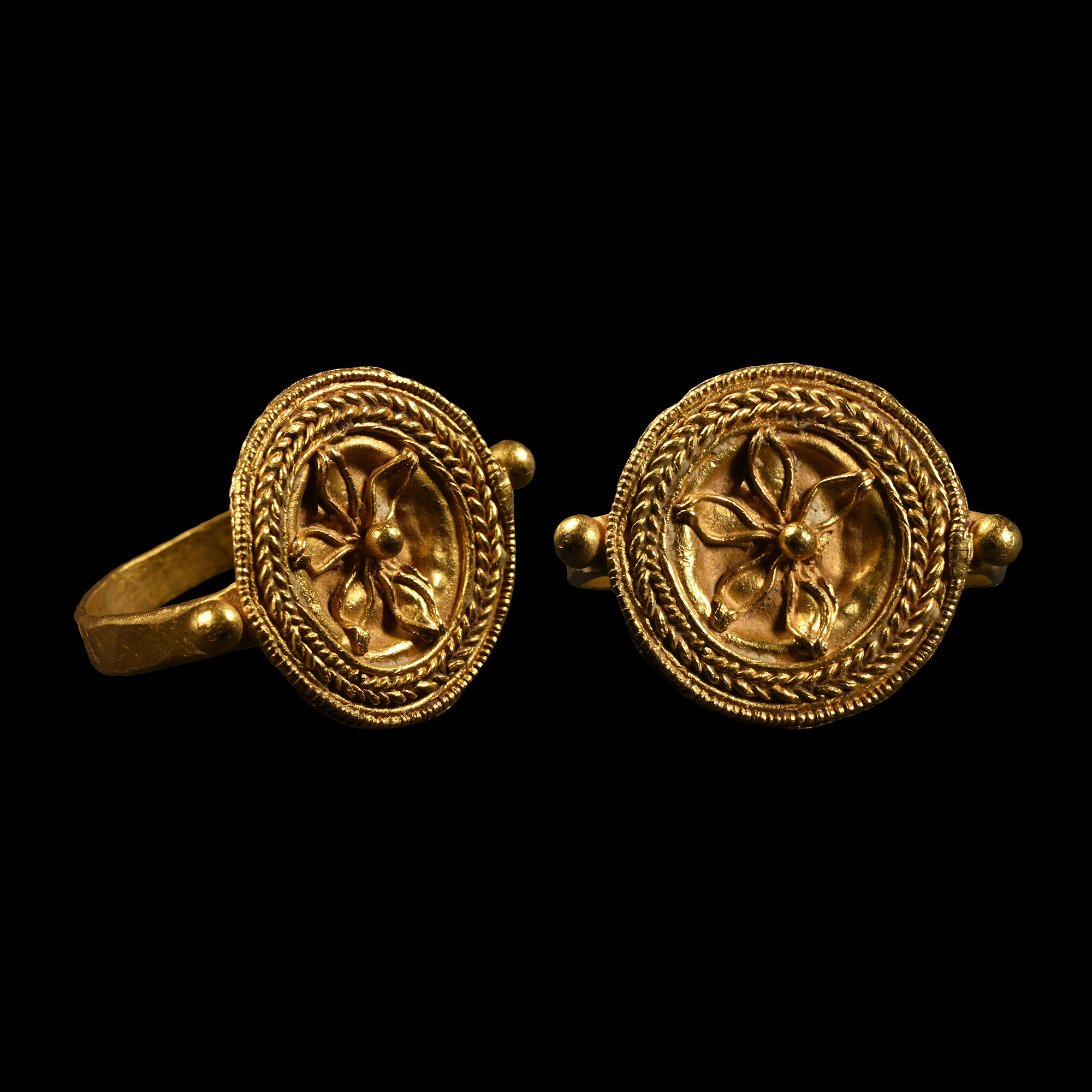
Greek Gold Ring with Rosette and Filigree
5TH-4TH CENTURY B.C.
1 in. (6.37 grams, 25.62 mm overall, 22.66 mm internal diameter (approximate size British R 1/2, USA 8 3/4, Europe 19.38, Japan 18)).
With granule to each shoulder, discoid bezel with beaded wire rim, ropework band and central cinquefoil motif.
ProvenanceAcquired in the mid 1980s-1990s.
Private collection, Switzerland, thence by descent.
Private collection, since the late 1990s.
This lot has been checked against the Interpol Database of stolen works of art and is accompanied by a search certificate number no.12388-226931.
Cf. Chadour, A.B., Rings. The Alice and Louis Koch Collection, volume I, Leeds, 1994, item 66.
CONDITIONTimeLine Auctions follows a vetting process to ensure the authenticity and legality of all items, reinforcing our commitment to integrity and responsible trading. Each antiquity, antique, and coin lot undergoes thorough examination by a vetting committee of at least ten external specialists, professional trade association members, scientists, and archaeologists: Our Vetting Process
AUCTIONS:
TimeLine is a leading auction house specialising in antiquities, ancient art, collectables, natural history, coins, medals, and books. Our auctions offer museums, collectors, historians, and enthusiasts the opportunity to acquire unique and historically significant pieces.
-
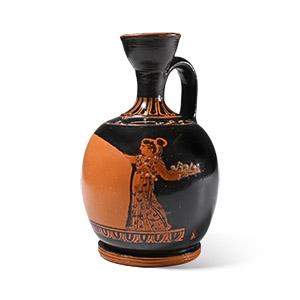
Greek Attic Red-Figure Squat Lekythos Attributed to the Meidian Painter
Circa 420-400 B.C.Estimate: £1,800 - 2,400 (‡+bp*)
Opening Bid: £900
Comprising a bulbous body with narrow neck and handle to the rear; radiating petals on the neck with a band of volute scrolls below, the body showing a female in a dynamic pose, dressed in an elaborate long dress and holding a plate of fruit with her left hand, a seated female before her; attributed to the Meidian Painter; some restoration. 95 grams, 10.9 cm
Ex Prof. Dr Hans (1918-1984) and Dr Ines (1922-2013) Jucker, classical archaeologists, Bern, Switzerland. with Galerie Rhéa, Zurich, Switzerland. This lot has been checked against the Interpol Database of stolen works of art and is accompanied by a search certificate number no.12645-236462.
Dancing women are a characteristic of the Meidian Painter. They are depicted as young women, wearing Doric costumes, earrings, pearls surmounting diadems, and golden bracelets, holding a patera and (probably originally here too) a thimiaterion. -
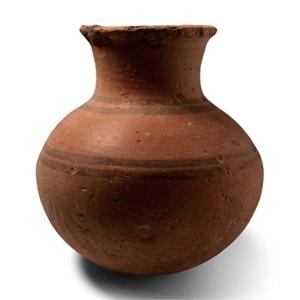
Greek Geometric Terracotta Vessel
9th-7th century B.C.Sold for (Inc. bp): £72
With bulbous body and rounded underside, trumpet-shaped mouth, concentric painted bands. 323 grams, 12 cm
Fine condition.
Private collection, Cambridgeshire, UK; acquired prior to 2000. From the private collection of John Meredith, acquired since the 1990s; thence by descent. -
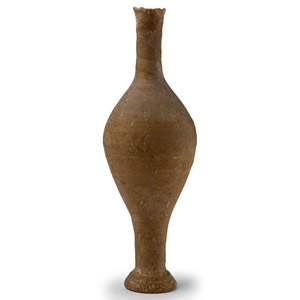
Greek Hellenistic Terracotta Spindle Flask
4th-3rd century B.C.Sold for (Inc. bp): £111
With long narrow neck developing to a fusiform body and flared foot. 155 grams, 16.5 cm
Private Derby, UK, antiquities collection. From the property of a late Lincolnshire, UK, gentleman.
