
Loading, please wait...
LOT 0058
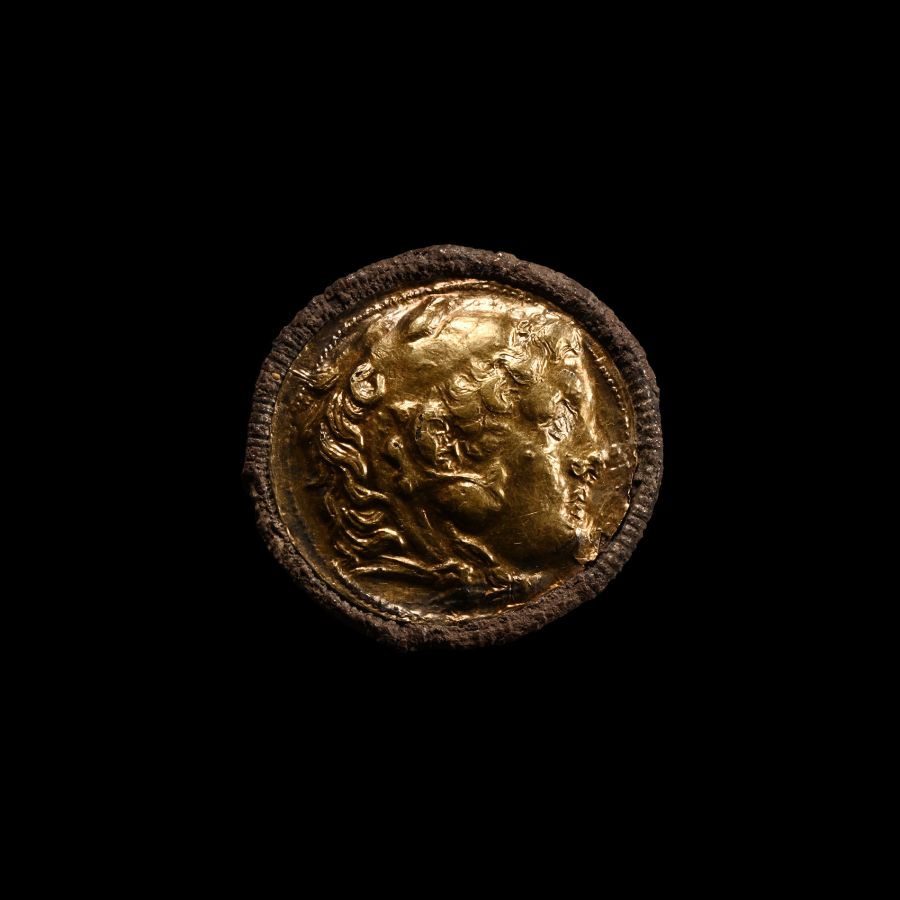
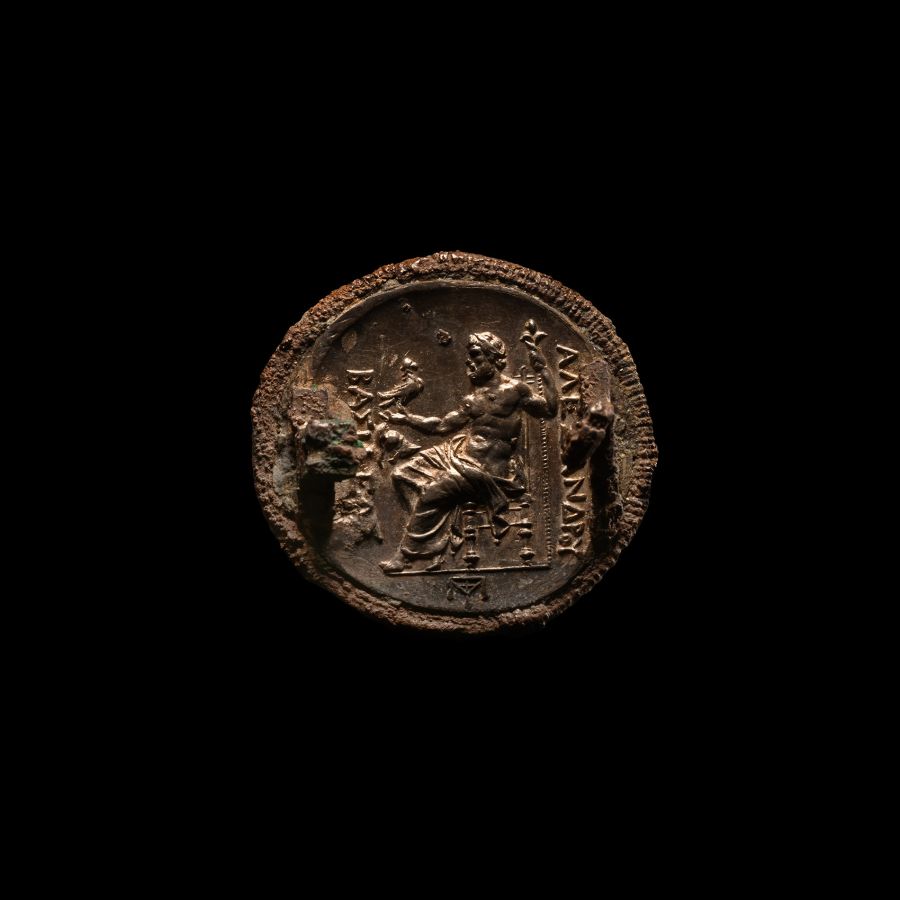
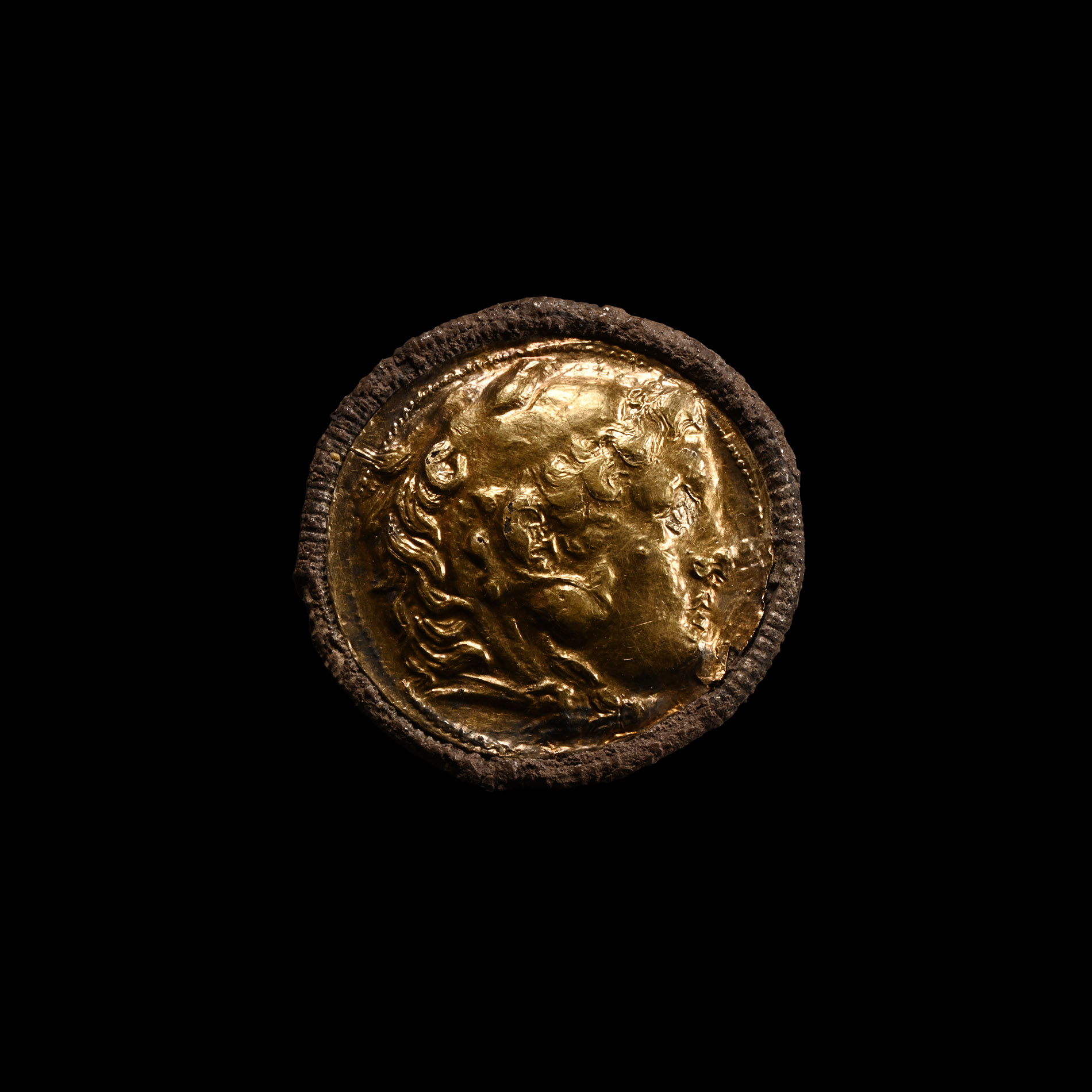
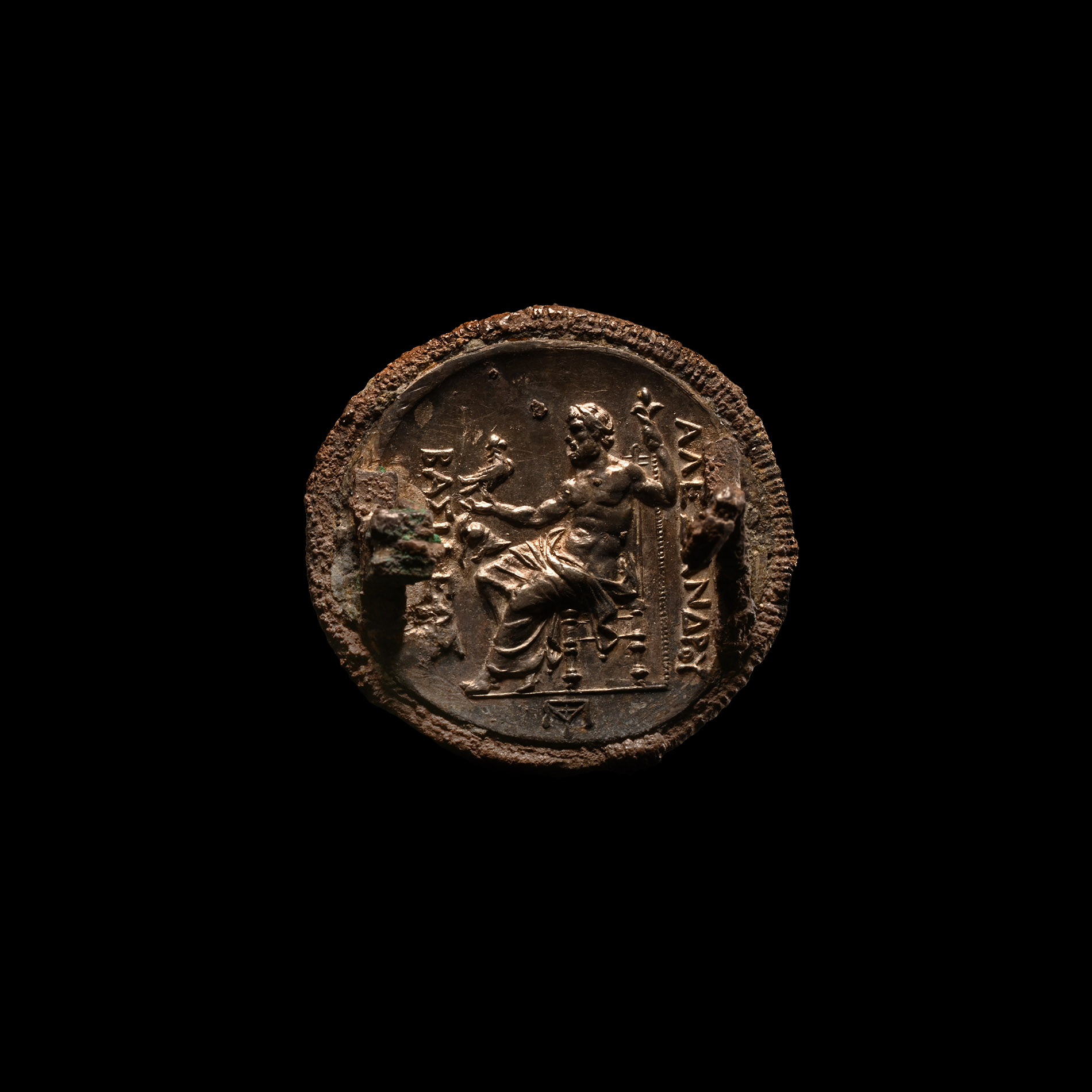
Greek Gold-Foiled Alexander the Great Coin Brooch
CIRCA 3RD CENTURY B.C.
1 1/4 in. (22.03 grams, 33 mm).
Comprising a tetradrachm coin of Alexander III of Macedonia depicting his profile bust right wearing a lion-skin and, to the reverse, Zeus, seated left holding an eagle; set in a surround with hinge and catch affixed to the reverse.
ProvenanceAcquired 1990s-early 2000s.
East Anglian private collection.
TimeLine Auctions follows a vetting process to ensure the authenticity and legality of all items, reinforcing our commitment to integrity and responsible trading. Each antiquity, antique, and coin lot undergoes thorough examination by a vetting committee of at least ten external specialists, professional trade association members, scientists, and archaeologists: Our Vetting Process
AUCTIONS:
TimeLine is a leading auction house specialising in antiquities, ancient art, collectables, natural history, coins, medals, and books. Our auctions offer museums, collectors, historians, and enthusiasts the opportunity to acquire unique and historically significant pieces.
-
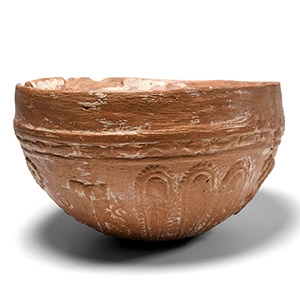
Graeco-Roman Megarian Terracotta Cup with Nymphs
2nd century B.C.Sold for (Inc. bp): £208
Hemispherical in form with decoration in relief featuring fluting alternating with nymphs and symbols beneath an architectural border, cracked and chipped. 257 grams, 11.9 cm wide
Private Dutch collection, 1970-2010. Ex private Dutch collection, 2010-2018.
The term ‘Megarian’ bowl applied to this type of pottery is a modern convention for academic purposes. The name ‘Megarian’ was first given to this type of mould-made relief bowl in the late 19th century, because some of the first known examples were said to have come from the city of Megara. In reality, such terracotta items originated in Athens in the 3rd quarter of the 3rd century BC, and from that point were made in all major Greek cities for the duration of the Hellenistic period and into the Roman, especially in Alexandria. This relief-decorated pottery became more popular than painted pottery during the Hellenistic period. This class of hemispherical bowl was made in moulds and was characterised by decoration imitating metallic beakers. When the finished bowl was taken from the mould, it was probably dipped in varnish or dull paint and fired. According to Prof. P.V.C. Baur, the stamps used for making moulds were not produced in every manufacturing centre of ‘Megarian’ bowls, but were made only in important centres such as Athens, Pergamon, Antioch and Alexandria, and sold to potters throughout the Hellenistic world. The fact that the edge of the bowl is turned outwards suggests Athenian production, and a comparison with the decorative petals on the Delian Cup (no.1913.199 of the Rebecca Darlington collection) is also plausible. -
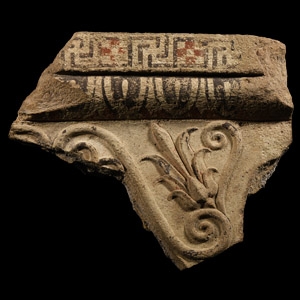
Etruscan Painted Terracotta Architectural Cornice
5th-4th century B.C.Sold for (Inc. bp): £3,900
A fragment of amorphous form, decorated in relief with scrolling tendrils and anthemion, painted egg-and-dart ornament above, surmounted by moulded bands and a frieze of meander and chequerboard panels; remains of red and black painted pigment. 5.1 kg, 34.5 cm wide
Private collection, Switzerland, 1960s. From the Sir Claude Hankes-Drielsma collection, prior to 2006. with Christie's, London, The Stanford Place Collection of Antiquities, 26 April 2006, lot 36. Accompanied by a copy of an Art Loss Register certificate number S00209802, dated 14 June 2021. Accompanied by a detailed collector's catalogue pages including description and photograph. This lot has been checked against the Interpol Database of stolen works of art and is accompanied by search certificate number no.203716. -
.jpg)
Scythian Bronze Mirror with Panther Handle
5th-4th century B.C.Sold for (Inc. bp): £2,340
Comprising a discoid body with raised rim, ribbed handle and openwork stylised panther to the terminal; mounted on a custom-made display stand; some restoration. 1.8 kg total, 45 cm high including stand
Acquired 1971-1972. From the collection of the vendor's father. Property of a London, UK, collector. This lot has been checked against the Interpol Database of stolen works of art and is accompanied by search certificate number no.202711.
The 'Olbian type' mirror takes its name from the Greek colony of Olbia, a port on the Black Sea, which enjoyed close commercial links with the neighbouring Scythian territories. Olbian mirrors form an important element in this trade network, although whether the craftsmen who made them were Scythians or Greeks working in Scythian style for the Black Sea market is still undecided. The animal ornament of the mirrors reproduces the zoomorphic art used elsewhere by the Scythian elite.
