
Loading, please wait...
LOT 0505
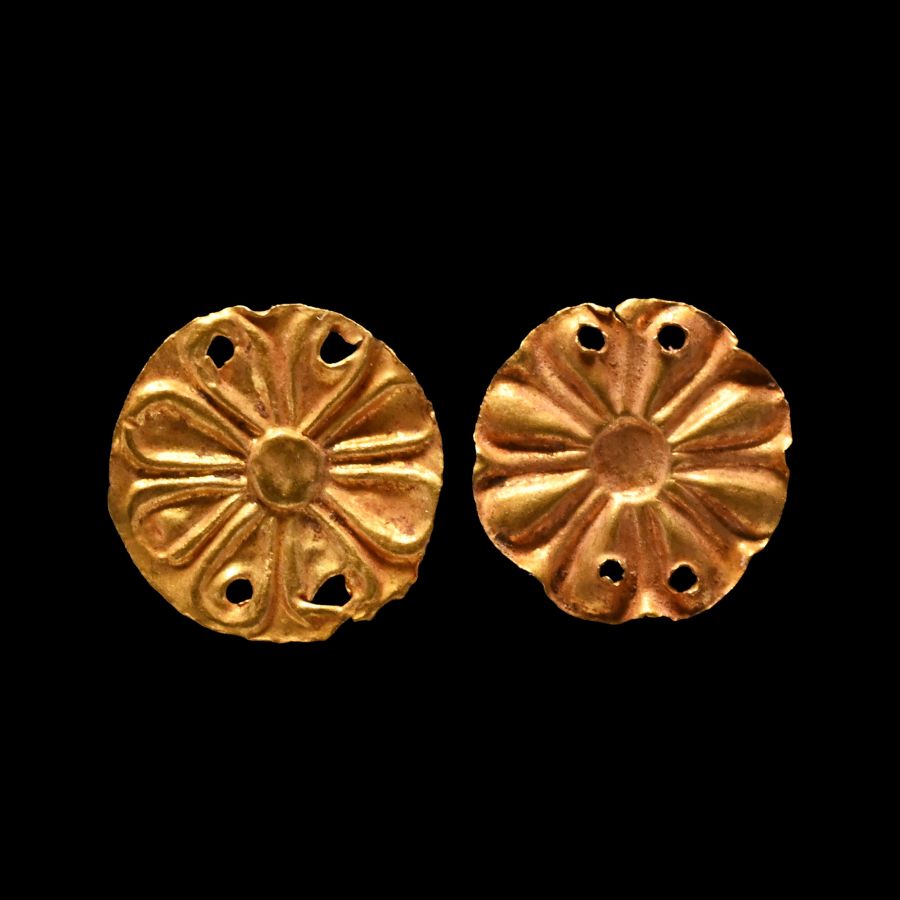
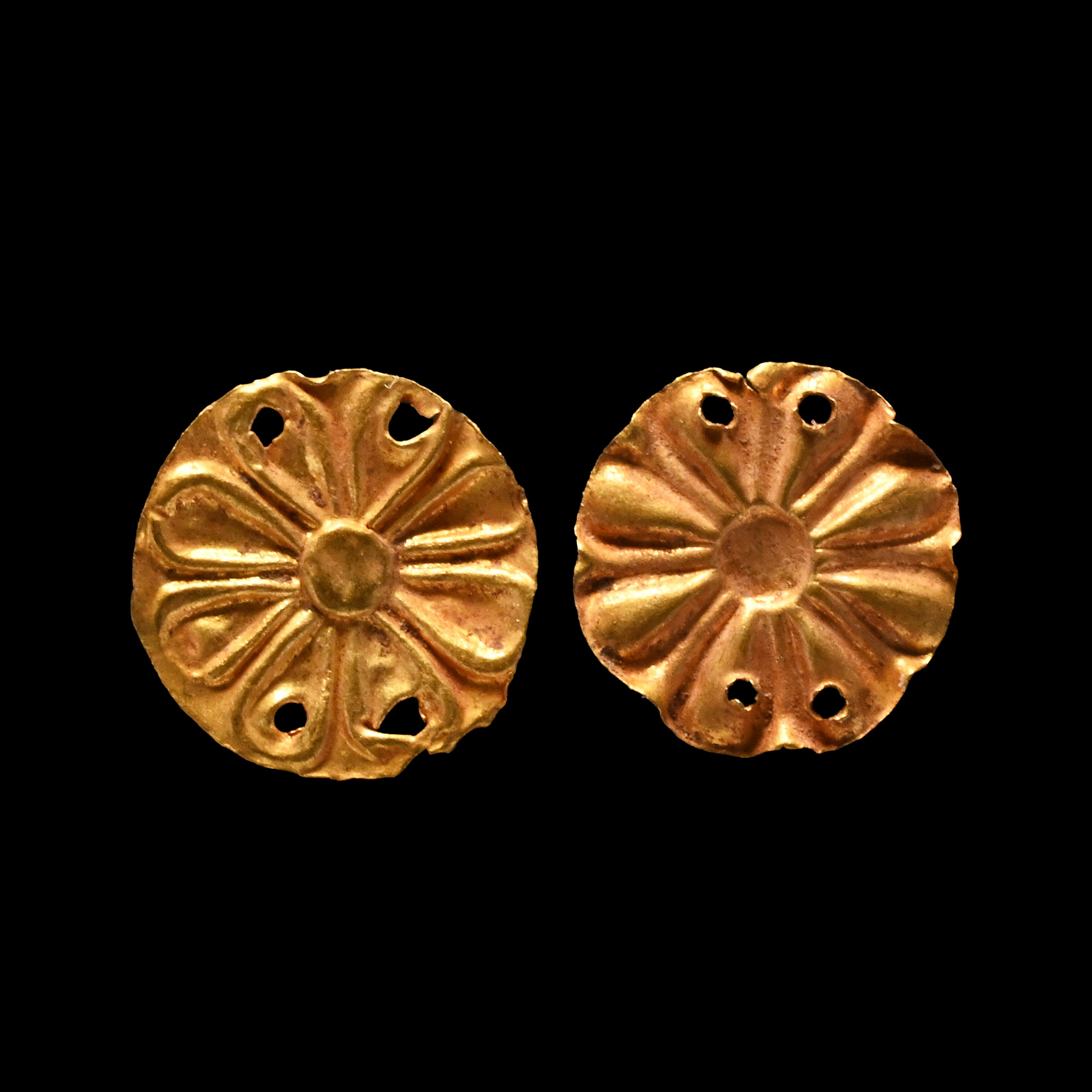
Greek Gold Floral Applique Pair
CIRCA 5TH-3RD CENTURY B.C.
3/8 in. (0.21 grams total, 9-10 mm).
Comprising two sheet-gold repoussé mounts depicting eight-petalled flowers, two pairs of piercings to the outer edge. [2, No Reserve]
ProvenanceEx property of a late Japanese collector, 1970-2000s.
This lot is accompanied by an illustrated lot declaration signed by the Head of the Antiquities Department, Dr Raffaele D'Amato.
TimeLine Auctions follows a vetting process to ensure the authenticity and legality of all items, reinforcing our commitment to integrity and responsible trading. Each antiquity, antique, and coin lot undergoes thorough examination by a vetting committee of at least ten external specialists, professional trade association members, scientists, and archaeologists: Our Vetting Process
AUCTIONS:
TimeLine is a leading auction house specialising in antiquities, ancient art, collectables, natural history, coins, medals, and books. Our auctions offer museums, collectors, historians, and enthusiasts the opportunity to acquire unique and historically significant pieces.
-
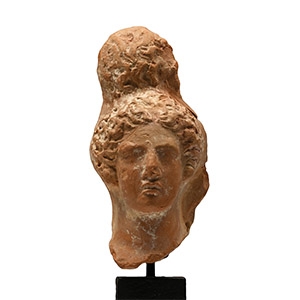
Greek Terracotta Head of a Goddess
Circa 4th-3rd century B.C.Sold for (Inc. bp): £208
An attractive head from a statuette of a goddess, thick hair ornately coiffed, lips pouted, and the traces of the artisan’s fingerprints preserved along the neck; mounted on a custom-made display stand. 64 grams total, 10.9 cm high including stand
From the private collection of C.R., Ticino, Switzerland, before 1970. with Galerie Rhéa, Zurich, Switzerland. This lot is accompanied by an illustrated lot declaration signed by the Head of the Antiquities Department, Dr Raffaele D'Amato.
The cults of Demeter and her daughter Persephone (kore) were particularly prominent in Magna Graecia, and likely this is a representation of one of these goddesses. -
.jpg)
Greek Terracotta Head Collection
1st millennium B.C.Sold for (Inc. bp): £390
Comprising: a head of a kore wearing a tall polos crown; head of Eros; a head of a lady with almond-shaped eyes and Archaic smile; a rectangular plaque with low-relief nude figure; all mounted on custom-made display stands. 118 grams total, 4-10.5 cm including stand
Private collection, before 1970. with Galerie Rhéa, Zurich, Switzerland. This lot is accompanied by an illustrated lot declaration signed by the Head of the Antiquities Department, Dr Raffaele D'Amato. -
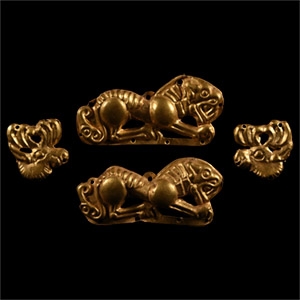
Scythian Gold Appliqué Collection
5th-3rd century B.C.Sold for (Inc. bp): £4,680
Group of sheet-gold appliqué mounts with repoussé detailing comprising a pair of advancing lions with coiled tail and open mouth; a pair of elk heads with curved antlers; supplied with a custom-made presentation mount. 5.28 grams total, 19-47 mm (124 grams total, mount: 11.5 cm high)
German art market. European private collection, 1970s-early 2000s. Acquired from the above; thence by descent. Private collection, London, UK. This lot has been checked against the Interpol Database of stolen works of art and is accompanied by a search certificate number no.12670-234552. This lot has been cleared against the Art Loss Register database, and is accompanied by an illustrated lot declaration signed by the Head of the Antiquities Department, Dr Raffaele D'Amato.
