
Loading, please wait...
LOT 0524
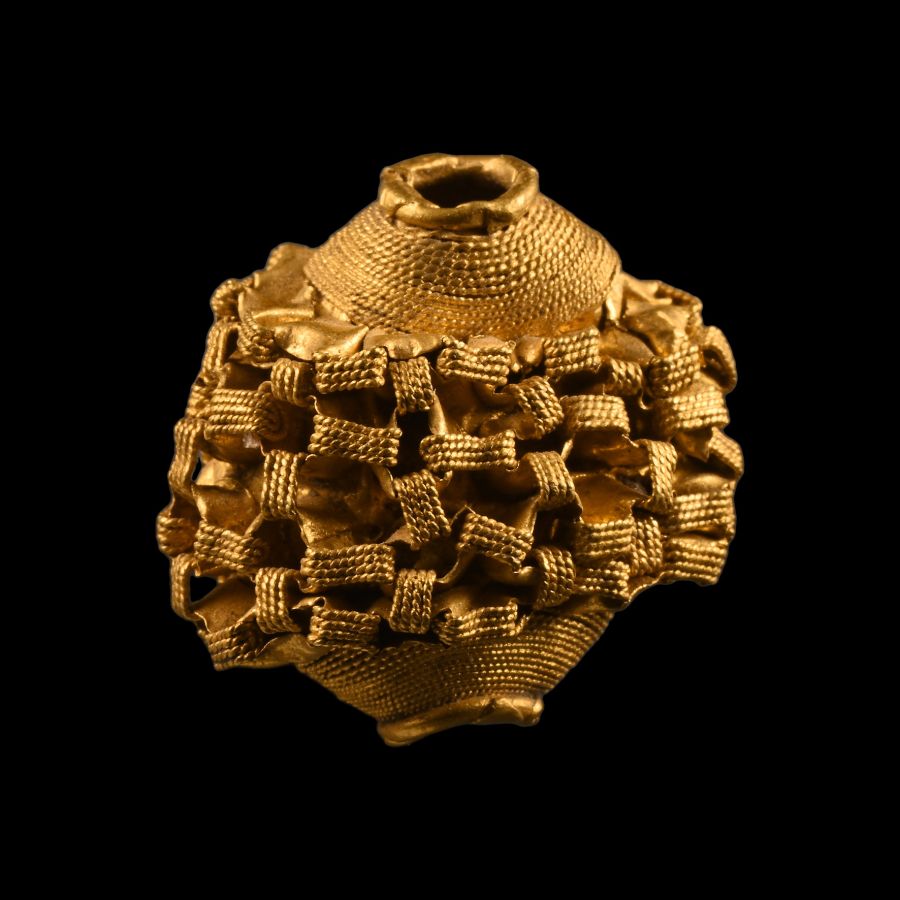
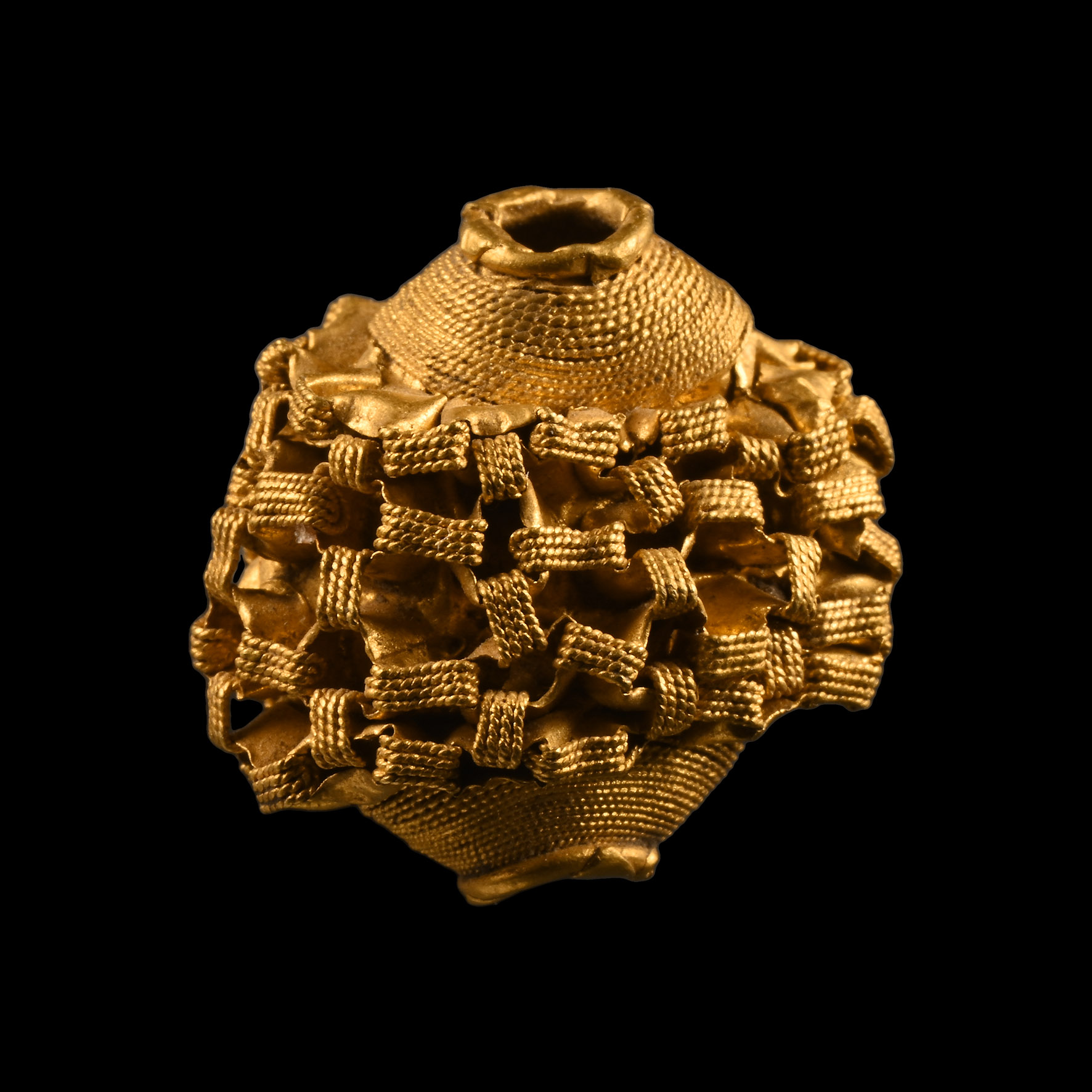
Greek Gold Filigree Bead
5TH-3RD CENTURY B.C.
3/4 in. (4.13 grams, 20 mm).
Of bulbous form adorned with circular cells bridged by filigree straps; squashed. [No Reserve]
ProvenanceFrom the collection of a North American gentleman, formed in the 1990s.
CONDITIONTimeLine Auctions follows a vetting process to ensure the authenticity and legality of all items, reinforcing our commitment to integrity and responsible trading. Each antiquity, antique, and coin lot undergoes thorough examination by a vetting committee of at least ten external specialists, professional trade association members, scientists, and archaeologists: Our Vetting Process
AUCTIONS:
TimeLine is a leading auction house specialising in antiquities, ancient art, collectables, natural history, coins, medals, and books. Our auctions offer museums, collectors, historians, and enthusiasts the opportunity to acquire unique and historically significant pieces.
-
Early Parthian Bronze Vase
Circa 3rd century B.C.Sold for (Inc. bp): £442
Featuring a squat piriform body, flared cylindrical neck and short waisted stem with everted foot. 227 grams, 21 cm high
UK collection, early 1990s and before. Acquired on the UK art market since the early 2000s. From a private collection, Lancashire, UK. -
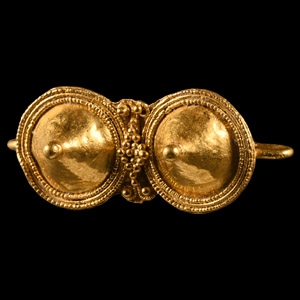
Hellenistic Gold Double Boss Brooch
3rd-2nd century B.C.Sold for (Inc. bp): £585
Or an attachment, comprising two conjoined conical bosses, each with a central knop and rim with two narrow bands of granulation; to the centre, a delicate granulated lozenge with scrolling details to the upper and lower points; to the reverse, an applied double hook for attachment; Alexandrian. 4.42 grams, 36 mm
UK art market, acquired prior to 1985. -
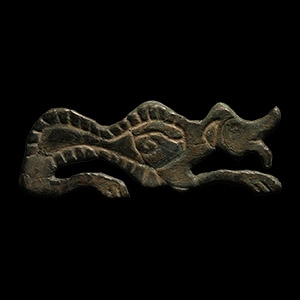
Scythian Bronze crouching Wolf Mount
Late 1st millennium B.C.Sold for (Inc. bp): £169
Facing right, simple stylised detailing to the body and head. 19.1 grams, 66 mm
From the collection of a North American gentleman, formed in the 1990s.
