
Loading, please wait...
LOT 0557
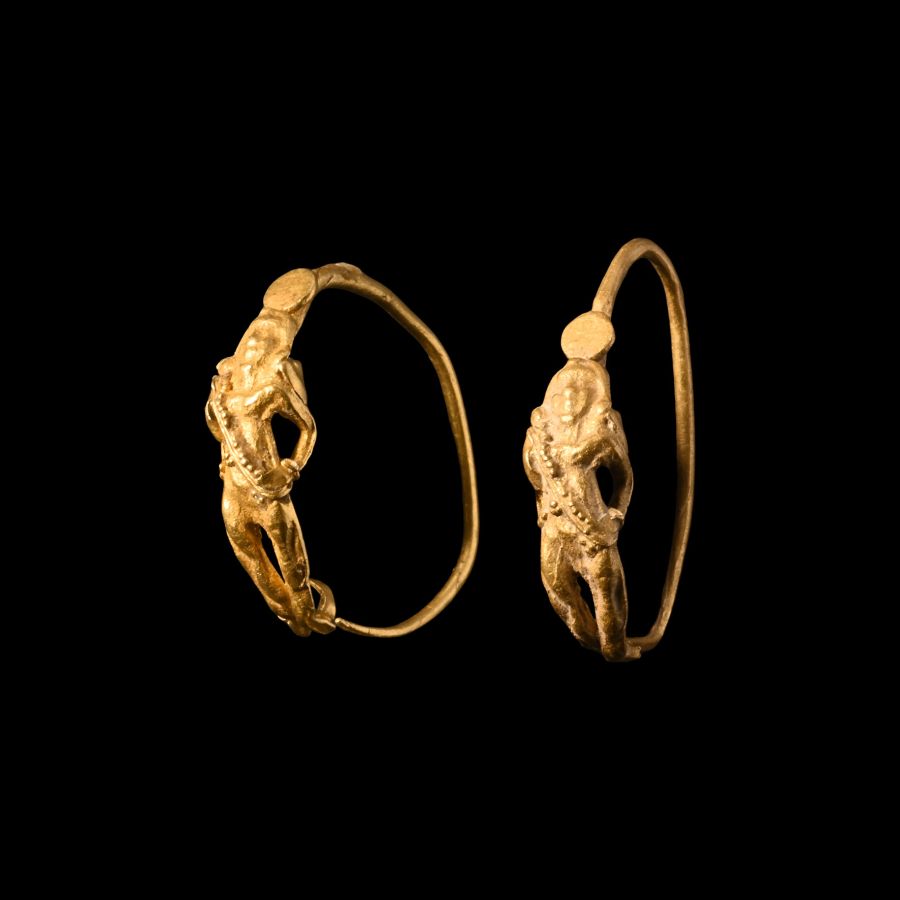
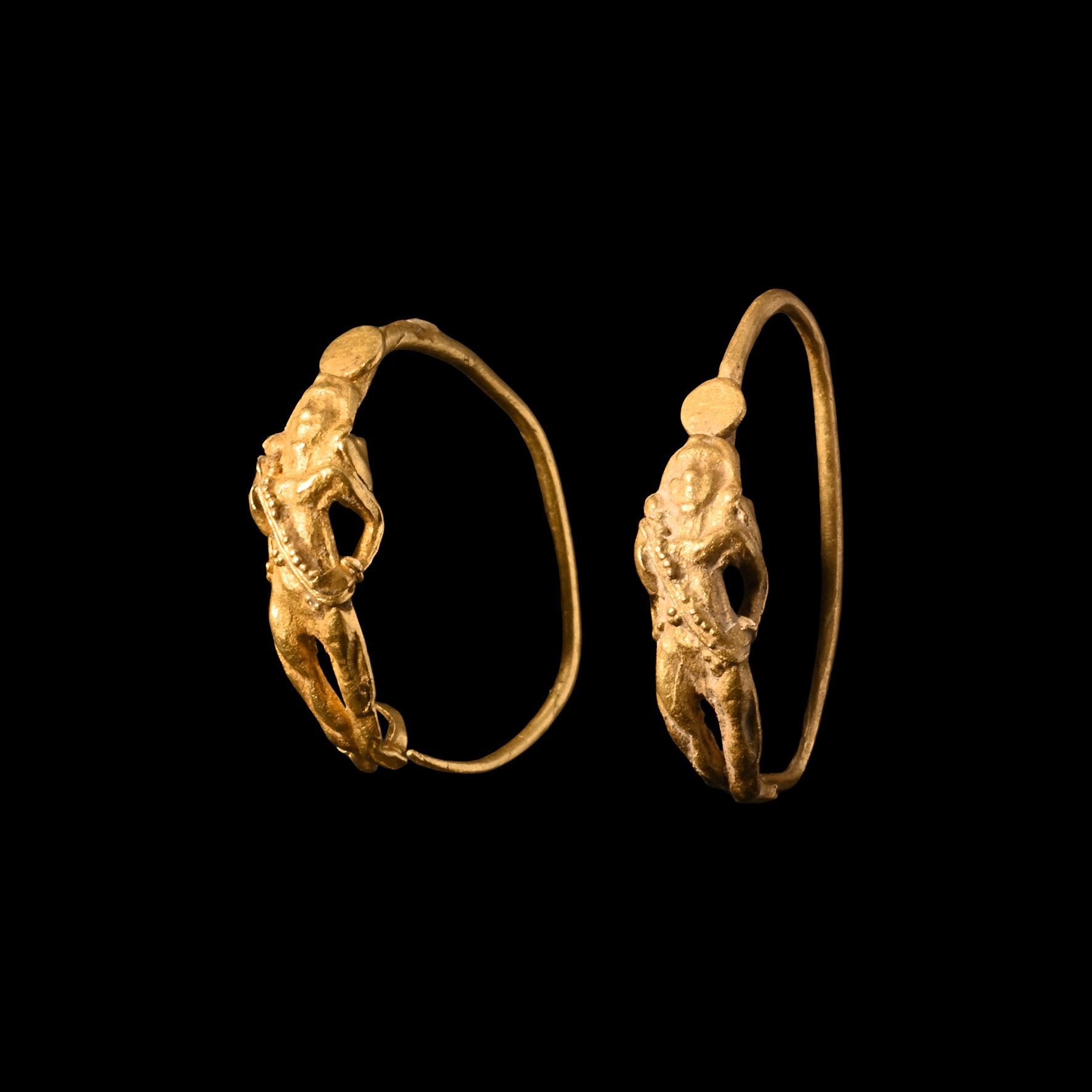
Greek Gold Eros Earrings
3RD-2ND CENTURY B.C.
3/4 in. (2.01 grams total, 18-20 mm).
Composed of tapering penannular hoops with figural plaque, discoid plaque above. [2]
ProvenanceAcquired 1960s-1990s.
Late Alison Barker collection, a retired London barrister.
Cf. The Metropolitan Museum, New York, accession number 74.51.3508, for similar.
CONDITIONTimeLine Auctions follows a vetting process to ensure the authenticity and legality of all items, reinforcing our commitment to integrity and responsible trading. Each antiquity, antique, and coin lot undergoes thorough examination by a vetting committee of at least ten external specialists, professional trade association members, scientists, and archaeologists: Our Vetting Process
AUCTIONS:
TimeLine is a leading auction house specialising in antiquities, ancient art, collectables, natural history, coins, medals, and books. Our auctions offer museums, collectors, historians, and enthusiasts the opportunity to acquire unique and historically significant pieces.
-
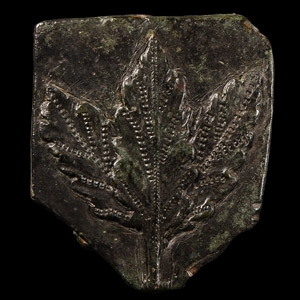
Hellenistic Bronze Acanthus Jewellery Matrix
4th-2nd century B.C.Estimate: £100 - 140 (+bp*)
Opening Bid: £56
Likely for jewellery production, bearing an acanthus leaf motif in relief to one face, with delicate detailing. 78 grams, 57 mm
German collection before 2000. Collection of Mr.D.H., formed in UK, from the EU art market. Property of a Surrey gentleman.
In antiquity, matrices for raising jewellery elements, ornaments and plaques were made of bronze, stone or reinforced terracotta. Matrices with designs in relief were used as an alternative to matrices with hollow designs or intaglio matrices. -
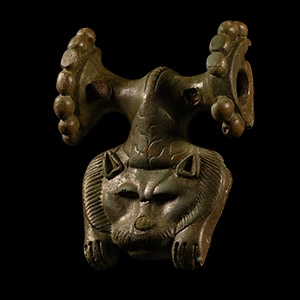
Greek Bronze Handle with Lion-Skin Head
Circa 5th-4th century B.C.Estimate: £1,000 - 1,400 (+bp*)
Opening Bid: £400
Formed as the skinned head and forepaws of a lion, together with two lateral handles with fastening holes surmounted by a pearled edge. 159 grams, 80 mm
Acquired on the UK art market 2000s.
The handle appears to be a device once attached to a wine vessel or pan-like vessels. The vessel handles were usually formed as divinities or animals linked with gods (ie. lions for Herakles). The lion's skin is hanging down like in the images representing Herakles resting and drinking after his labours. -

Greek Terracotta Kantharos
4th-3rd century B.C.Estimate: £1,500 - 2,000 (+bp*)
Opening Bid: £700
Trumpet-shaped cup with narrow stem and flared foot, two elaborate scrolled loop handles with lateral spurs, Side A: painted female profile busts each with detailed stephane and drop earrings, the hair dressed in a kekryphalos, flanked by two white cross or sword symbols; Side B: similar but lacking the swords. 421 grams, 20 cm high
From a German auction. Ex Paris gallery, 2000s.
