
Loading, please wait...
LOT 0545
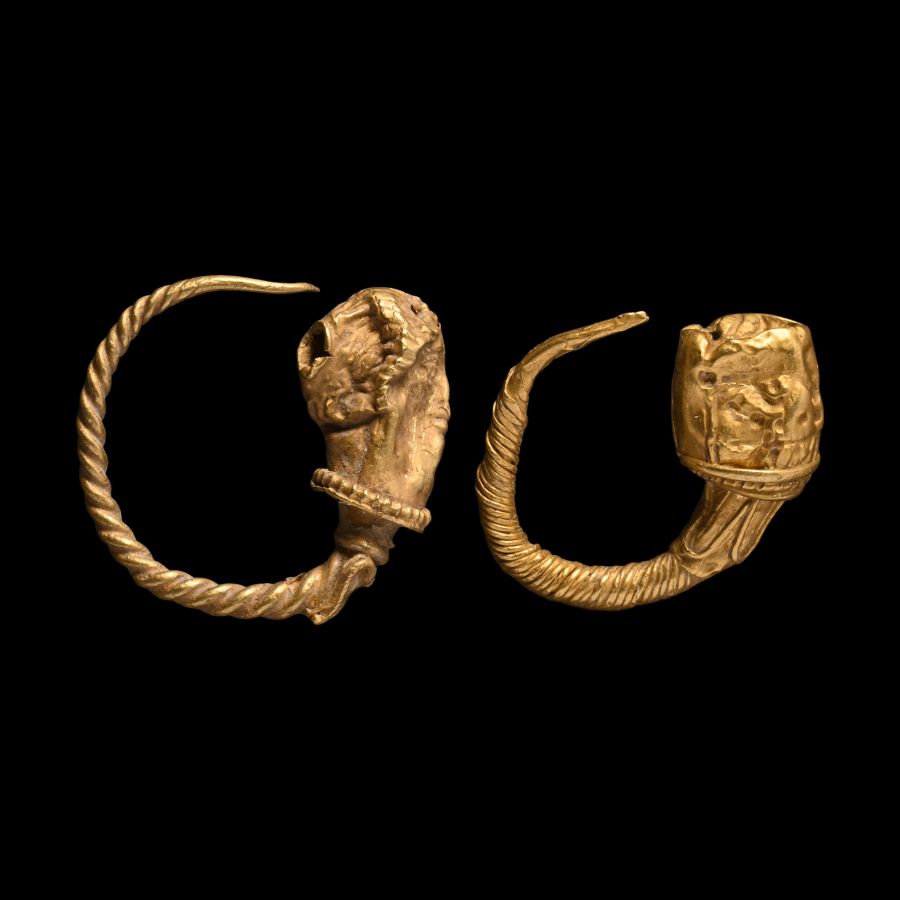
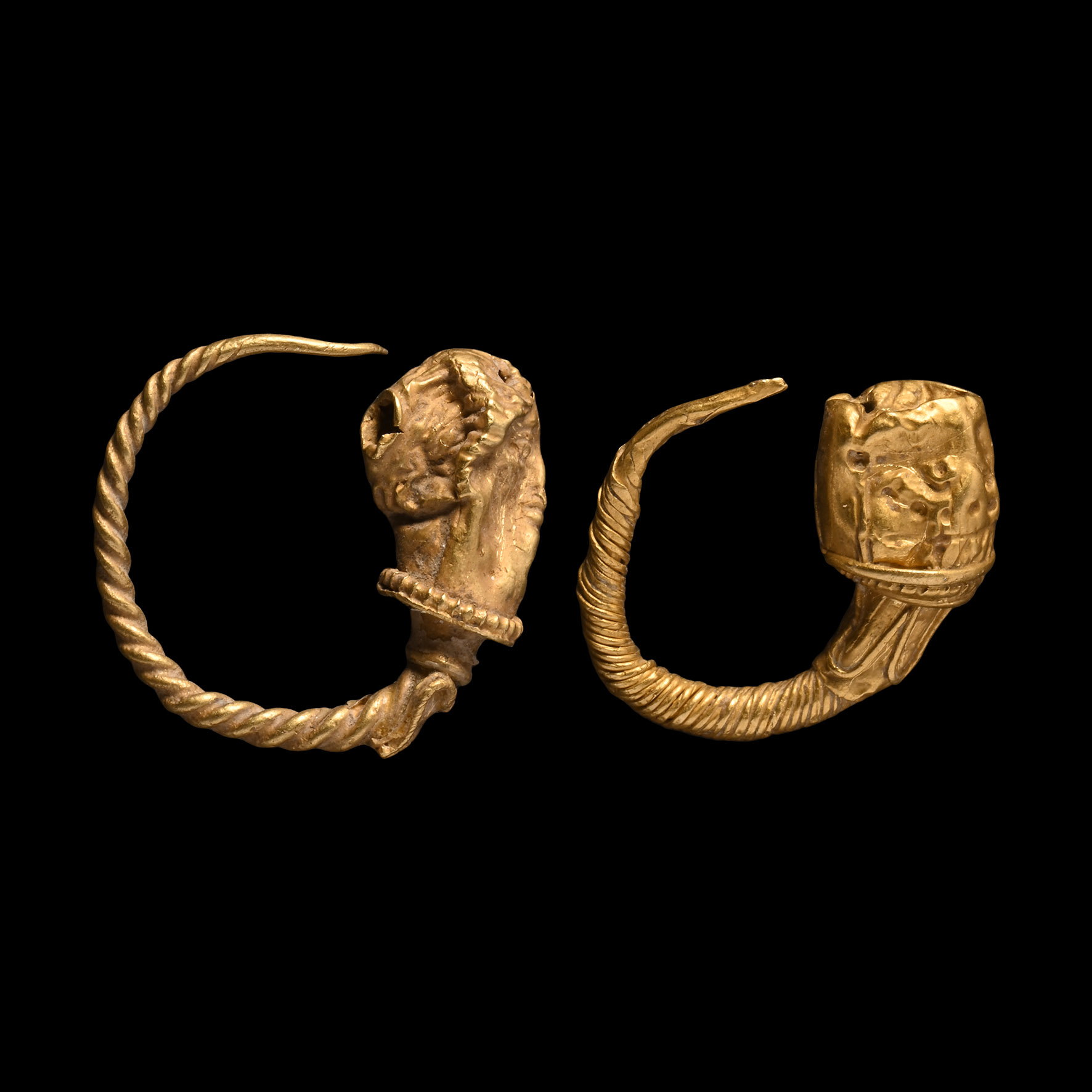
Greek Gold Earrings
4TH-3RD CENTURY B.C.
3/4 in. (2.46 grams total, 18 mm each).
Each penannular in form with decoratively twisted body; one terminating in a lions' head, the other with the head of a woman wearing a necklace. [2]
ProvenanceAcquired 1970-2010.
Collection of a late Japanese gentleman.
TimeLine Auctions follows a vetting process to ensure the authenticity and legality of all items, reinforcing our commitment to integrity and responsible trading. Each antiquity, antique, and coin lot undergoes thorough examination by a vetting committee of at least ten external specialists, professional trade association members, scientists, and archaeologists: Our Vetting Process
AUCTIONS:
TimeLine is a leading auction house specialising in antiquities, ancient art, collectables, natural history, coins, medals, and books. Our auctions offer museums, collectors, historians, and enthusiasts the opportunity to acquire unique and historically significant pieces.
-
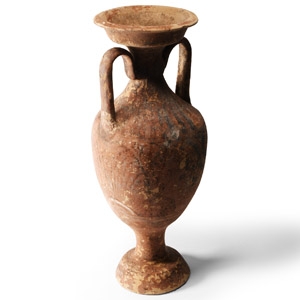
Greek Terracotta Amphora with Palmettes and Standing Figure
Apulian, 4th century B.C.Sold for (Inc. bp): £572
Piriform-bodied with two handles flanking a stepped neck and mouth, stemmed foot with chamfered edge; polychrome painted shell ornament together with a figural panel; possibly a marriage. 1.6 kg, 37.5 cm high
Ex collection of a Suffolk, UK, gentleman, 1990s. -

Scythian Bronze Mirror with Panther Handle
5th-4th century B.C.Sold for (Inc. bp): £2,340
Comprising a discoid body with raised rim, ribbed handle and openwork stylised panther to the terminal; mounted on a custom-made display stand; some restoration. 1.8 kg total, 45 cm high including stand
Acquired 1971-1972. From the collection of the vendor's father. Property of a London, UK, collector. This lot has been checked against the Interpol Database of stolen works of art and is accompanied by search certificate number no.202711.
The 'Olbian type' mirror takes its name from the Greek colony of Olbia, a port on the Black Sea, which enjoyed close commercial links with the neighbouring Scythian territories. Olbian mirrors form an important element in this trade network, although whether the craftsmen who made them were Scythians or Greeks working in Scythian style for the Black Sea market is still undecided. The animal ornament of the mirrors reproduces the zoomorphic art used elsewhere by the Scythian elite. -
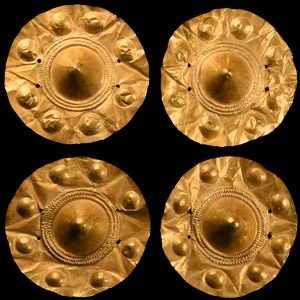
Sarmatian Gold Dress Mount Group
1st-3rd century A.D.Sold for (Inc. bp): £975
Each composed of a sheet-metal disc with central repoussé conical dome, concentric borders of faux strip twist wire; the edge with shallow domes and a sunburst motif, four fastening holes to each element. 14.75 grams total, 63-66 mm wide
From the collection of a North American gentleman, formed in the 1990s.
Ornamental discs of this type decorated the long dresses of Sarmatian princesses, arranged vertically on long garments, on shawls, and on the upper shoulders. They were fixed to the garments through sewing, using the fastening holes.
