
Loading, please wait...
LOT 0089
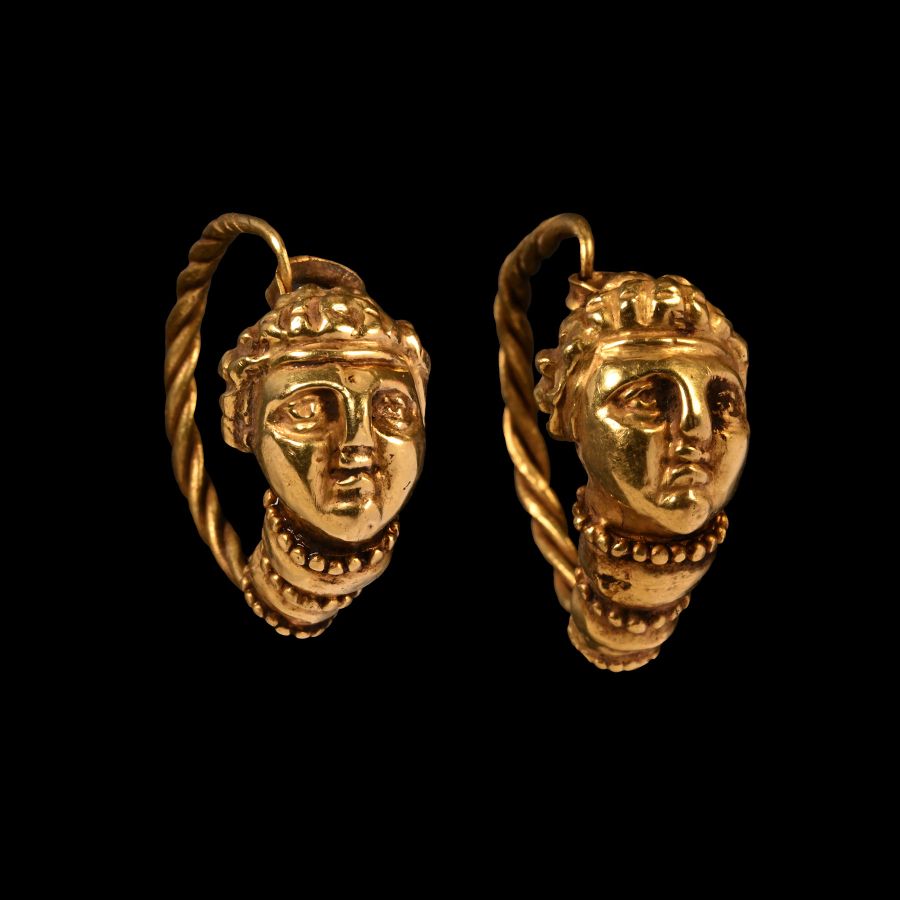
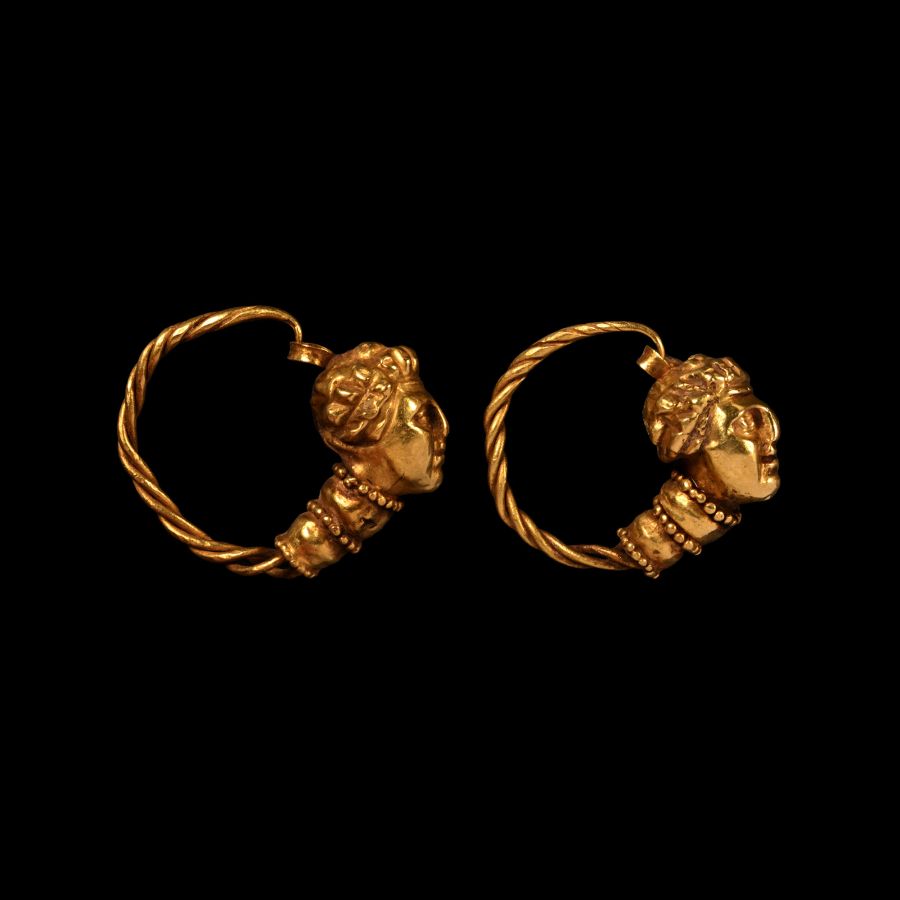
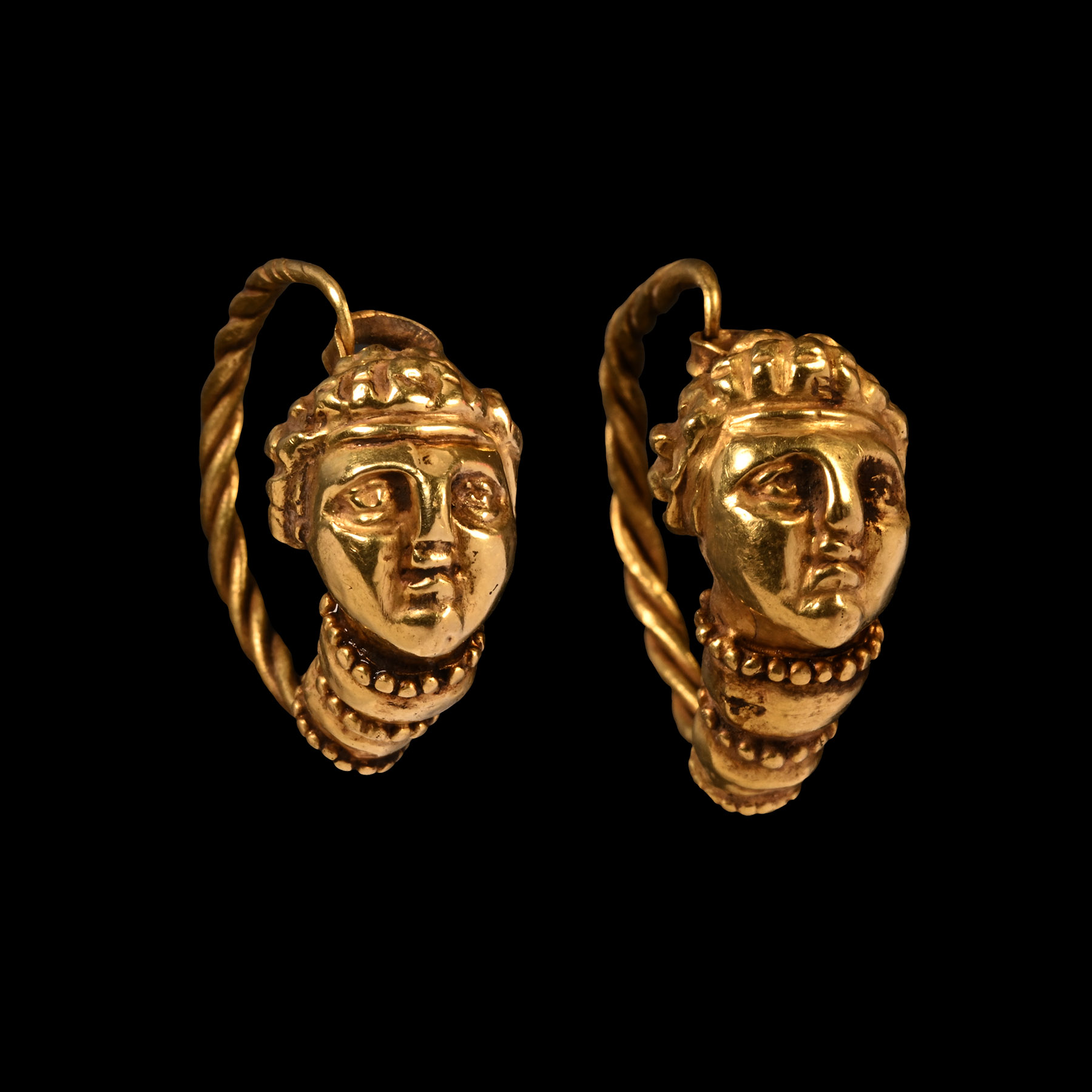
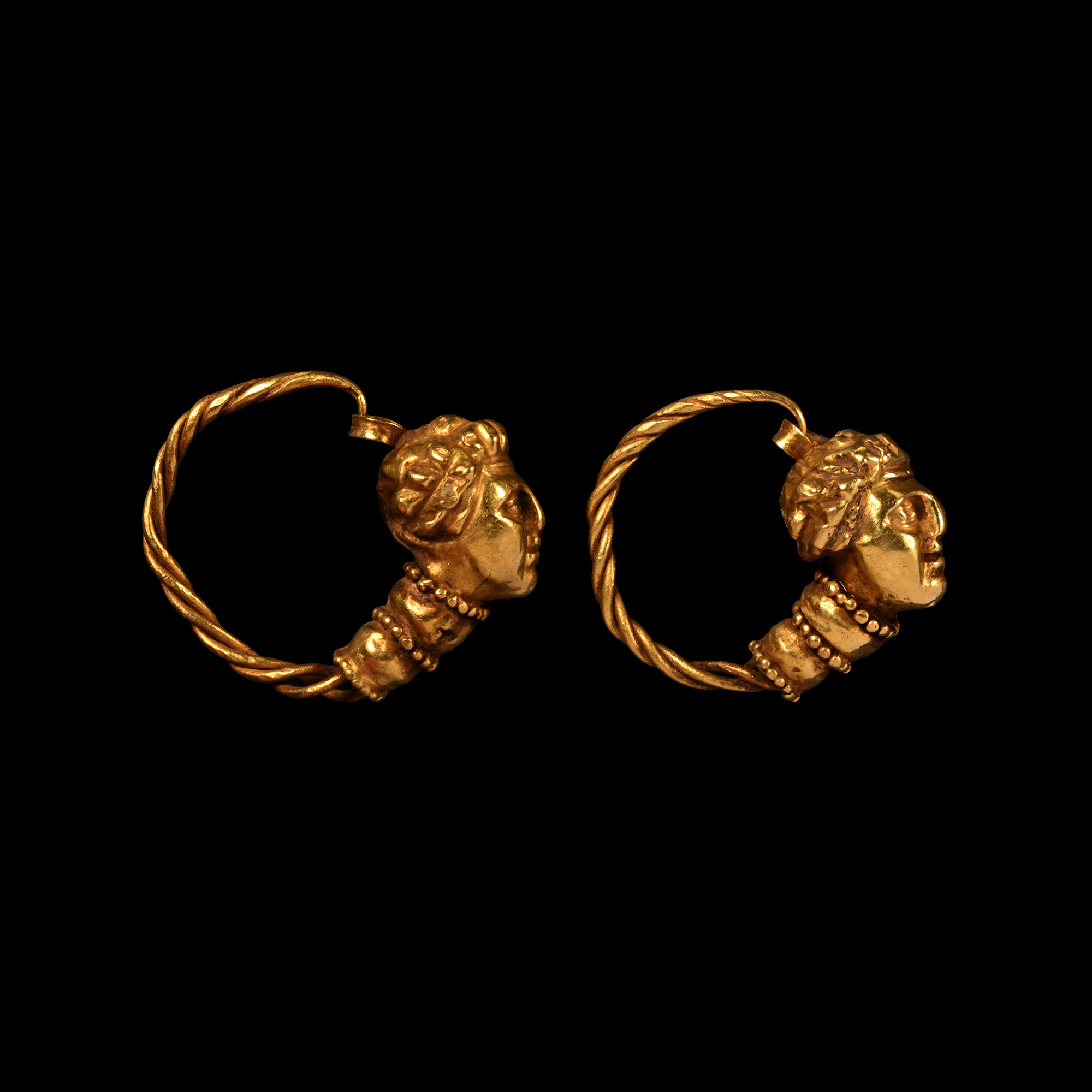
Greek Gold Earrings with Female Heads
HELLENISTIC, 2ND-1ST CENTURY B.C.
1 - 1 1/8 in. (5.93 grams total, 25-28 mm).
Each a hollow-formed female head with stephane to the brow, granulated collars flanking biconvex bulbs, tapering twisted shank curved to meet the gussetted loop above the head. [2]
ProvenanceFrom the collection of a gentleman, acquired on the London art market in the 1990s.
LiteratureCf. Marshall, F.H., Catalogue of the Jewellery, Greek, Etruscan and Roman, in the Department of Antiquities, British Museum, London, 1911, item 1706, for type.
CONDITIONTimeLine Auctions follows a vetting process to ensure the authenticity and legality of all items, reinforcing our commitment to integrity and responsible trading. Each antiquity, antique, and coin lot undergoes thorough examination by a vetting committee of at least ten external specialists, professional trade association members, scientists, and archaeologists: Our Vetting Process
AUCTIONS:
TimeLine is a leading auction house specialising in antiquities, ancient art, collectables, natural history, coins, medals, and books. Our auctions offer museums, collectors, historians, and enthusiasts the opportunity to acquire unique and historically significant pieces.
LOT 0089
Greek Gold Earrings with Female Heads
Estimate £1,500 - 2,000€1,740 - 2,320 (for guidance only)$2,030 - 2,700 (for guidance only)
-
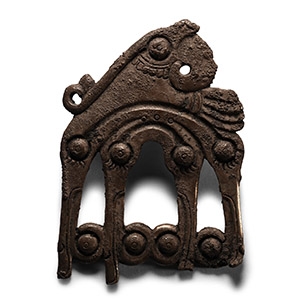
Thracian Silver Pendant
6th-3rd century B.C.Estimate: £500 - 700 (‡+bp*)
Opening Bid: £250
Openwork plaque depicting a stylised horse with curved body, bosses to the hips and shoulders, head turned backwards along the spine with looped reins; ribbed loop to the reverse. 41.5 grams, 75 mm
Acquired in the mid 1980s-1990s. From the family collection of Mr S.A., Switzerland, thence by descent. Private collection since the late 1990s. -
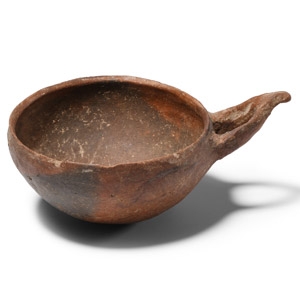
Cypriot Red Burnished Ware Dipper Cup
Middle Bronze Age, circa 1900-1650 B.C.Sold for (Inc. bp): £169
A black and red slip-coated pottery dipper cup with a hemispherical body and a pointed conjoined handle. 199 grams, 16.2 cm wide
From a collection acquired on the UK art market from various auction houses and collections mostly before 2000. From an important Cambridgeshire estate; thence by descent. -
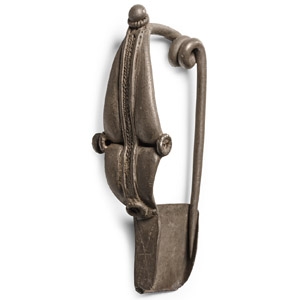
Greek Silver Fibula
5th-4th century B.C.Sold for (Inc. bp): £234
Comprising an ellipsoid bow with lateral knops (one absent) and applied collars, longitudinal band of applied filigree braid, knop finial with collar, perpendicular two-coil spring and long pin; footplate with incised saltire with gammadion crossbar, square catchplate with incised gammadion. 13.58 grams, 58 mm
Acquired in the mid 1980s-1990s. From the family collection of Mr S.A., Switzerland, thence by descent. Private collection since the late 1990s.
