
Loading, please wait...
LOT 0059
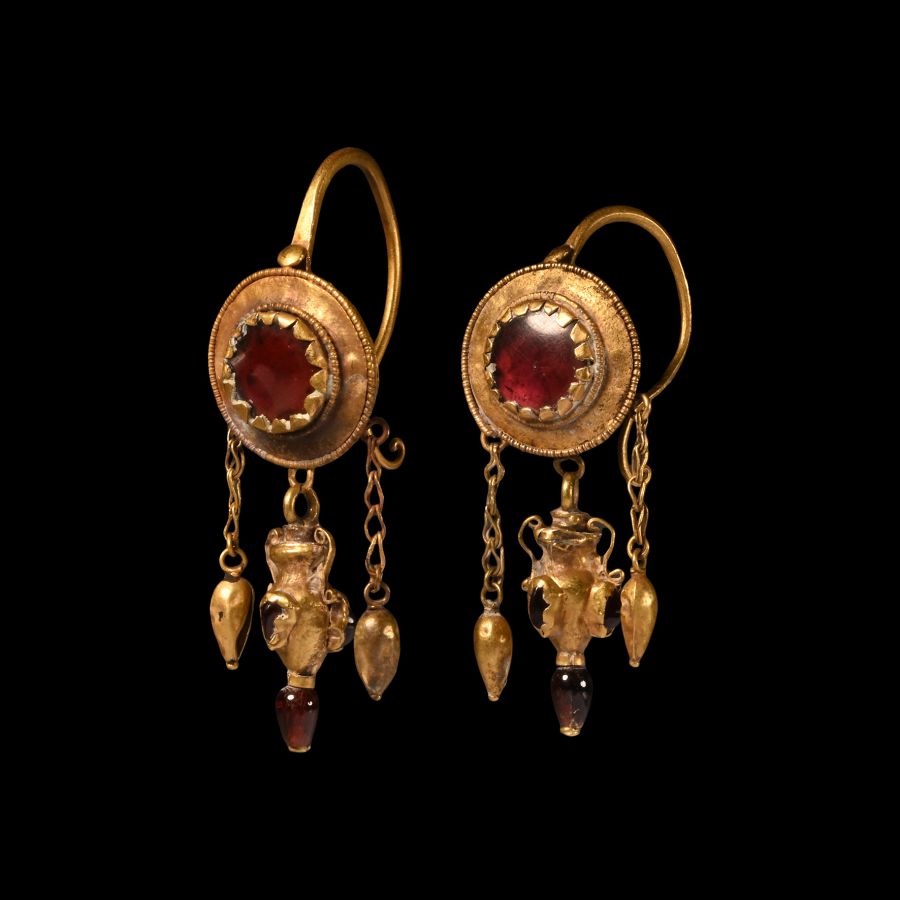
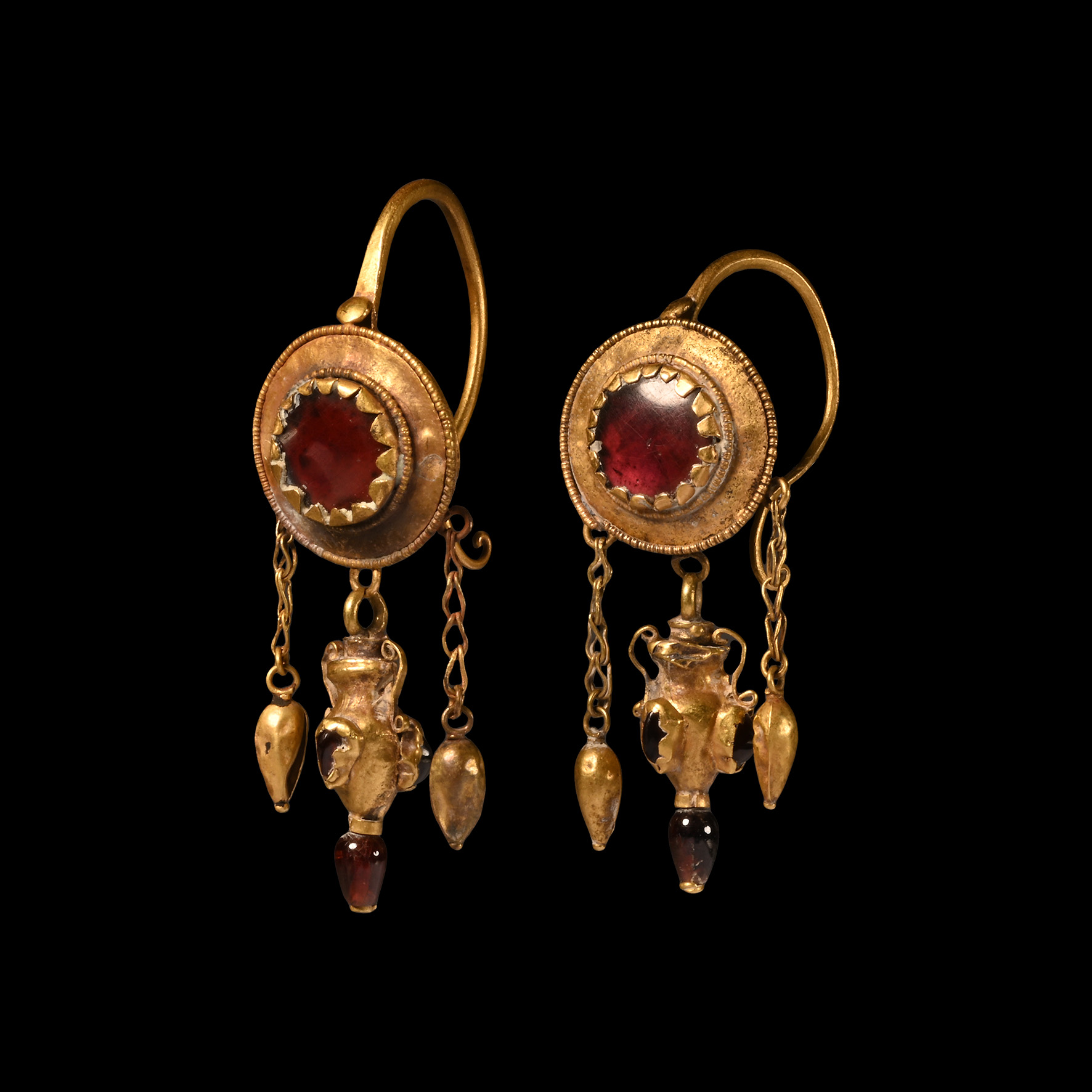
Greek Gold Earrings with Amphora Drops
CIRCA 2ND CENTURY B.C.
2 - 2 1/4 in. (14.28 grams total, 52-57 mm).
Each composed of a tiered discoid head with polished garnet inlays in claw settings, filigree to the outer perimeter, tapering hook to reverse and three dangles below, the central one formed as an amphora with scrolled handles, three polished garnet cabochons to the equator and a garnet bead to base; flanked by two lotus or bud-shaped charms on short lengths of chain. [2]
ProvenanceAcquired 1970-2010.
From the collection of a late Japanese gentleman.
Cf. The Metropolitan Museum, New York, accession number 95.15.203, 95.15.204, for a similar pair dated 2nd century B.C.
CONDITIONTimeLine Auctions follows a vetting process to ensure the authenticity and legality of all items, reinforcing our commitment to integrity and responsible trading. Each antiquity, antique, and coin lot undergoes thorough examination by a vetting committee of at least ten external specialists, professional trade association members, scientists, and archaeologists: Our Vetting Process
AUCTIONS:
TimeLine is a leading auction house specialising in antiquities, ancient art, collectables, natural history, coins, medals, and books. Our auctions offer museums, collectors, historians, and enthusiasts the opportunity to acquire unique and historically significant pieces.
-
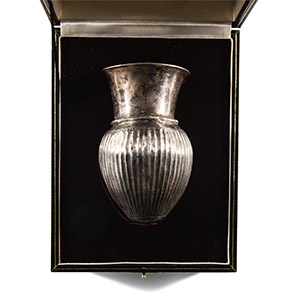
Eastern Greek Ribbed Silver Vase
Circa 3rd century B.C.Sold for (Inc. bp): £1,560
Of piriform shape with a small foot, multi-petalled rosette within the shallow kick-up to base, vertically fluted body, ovolo ornament to the shoulder and flared mouth with rolled rim; six strain holes to the shoulder; held within a custom-made felt-lined display box. 132 grams, 13.5 cm high ( 765 grams total, 22 x 17 cm including box)
with the Mahboubian Gallery, London, UK; acquired before 1972. with Bonhams, London, 26 October 2007, lot 213. Acquired on the London art market.
The straining holes are an indication that the vessel possibly once had a spout. -
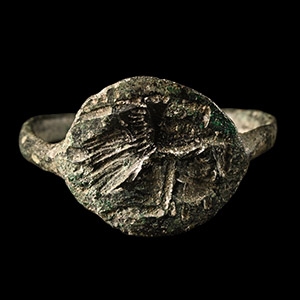
Hellenistic Bronze Ring with Horse Motif
Circa 2nd-1st century B.C.Sold for (Inc. bp): £52
Displayed in relief on a broad elliptical bezel. 2.16 grams, 20.95 mm overall, 18.48 mm internal diameter (approximate size British Q, USA 8, Europe 17.49, Japan 16)
Acquired 1990s-early 2000s. East Anglian private collection. -
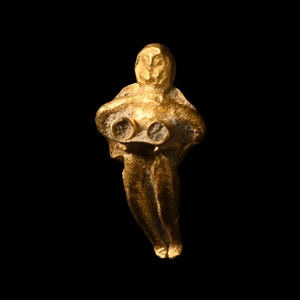
Greek Gold Eros Figure
3rd-1st century B.C.Estimate: £120 - 170 (+bp*)
Opening Bid: £60
Formed with a curved profile, the figure holding a tray or other object before him, his wings part-spread. 0.72 grams, 12 mm
Acquired 1970-2010. Collection of a late Japanese gentleman.
